Stop the coup in the United States! Vote! Resist! Persist!
On our visit to France in Fall 2024, we wanted to experience both the right and left bank wine Chateaus of Bordeaux. We sought recommendations from our host Valentino at Chateau Tanesse de Tourny near Bayon-sur-Gironde France. He strongly suggested Chateau Franc Mayne near St. Emilion as the best right bank winery to visit.
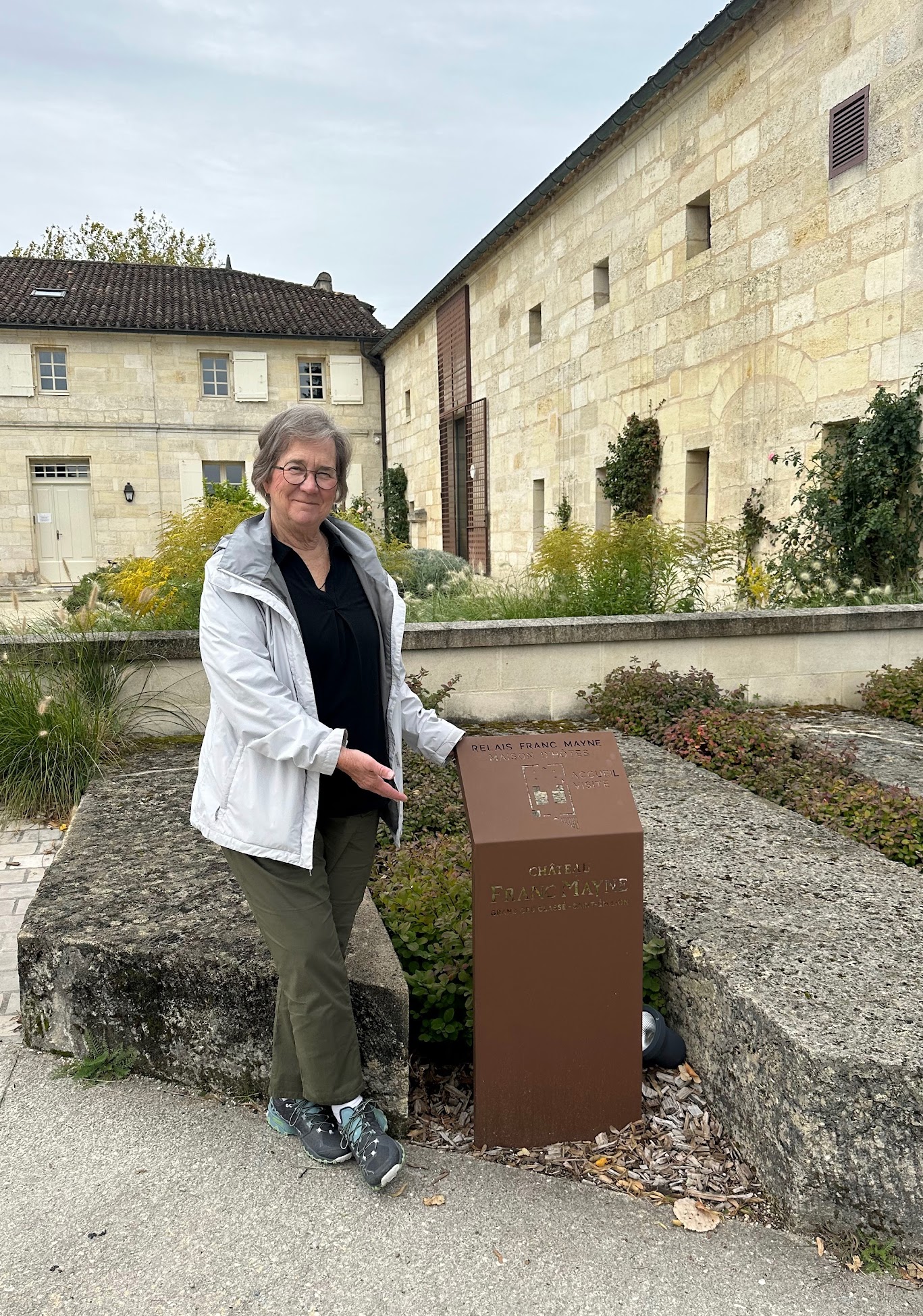
While we expected to taste excellent wines, we didn’t expect that we would be walking into a living history museum. The ancient history started the minute we entered the vineyards. The entrance road was part of the French Way of the Camino de Santiago.
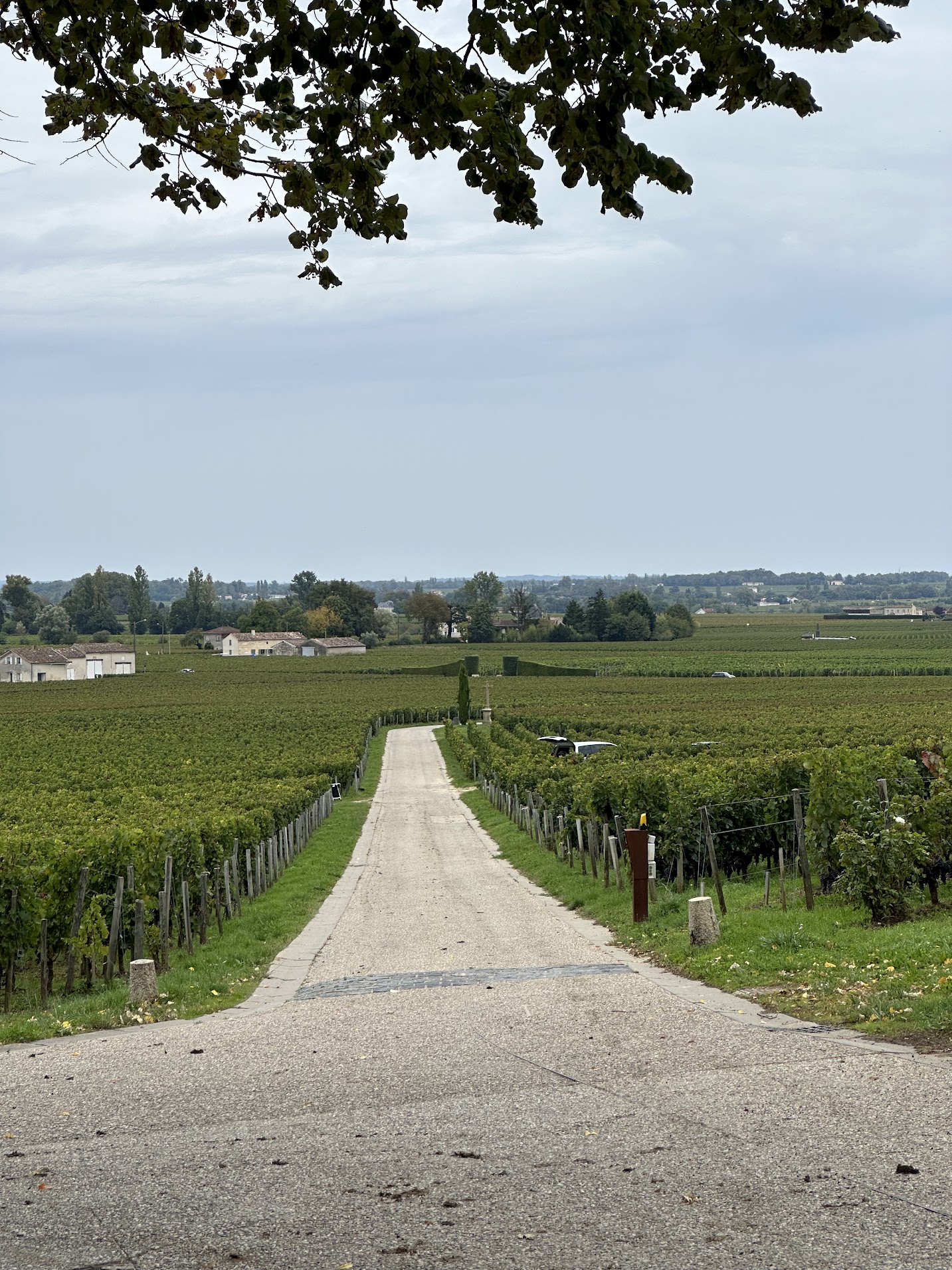
Because the Camino passes through the vineyards and winery, the road must remain open 24 hours a day in order that pilgrims may freely pass through.
As our tour guide led us through the vineyards and to an old hostel house for pilgrims on the Camino, we walked on a 2000 year old Roman Road that passes through the vineyards.
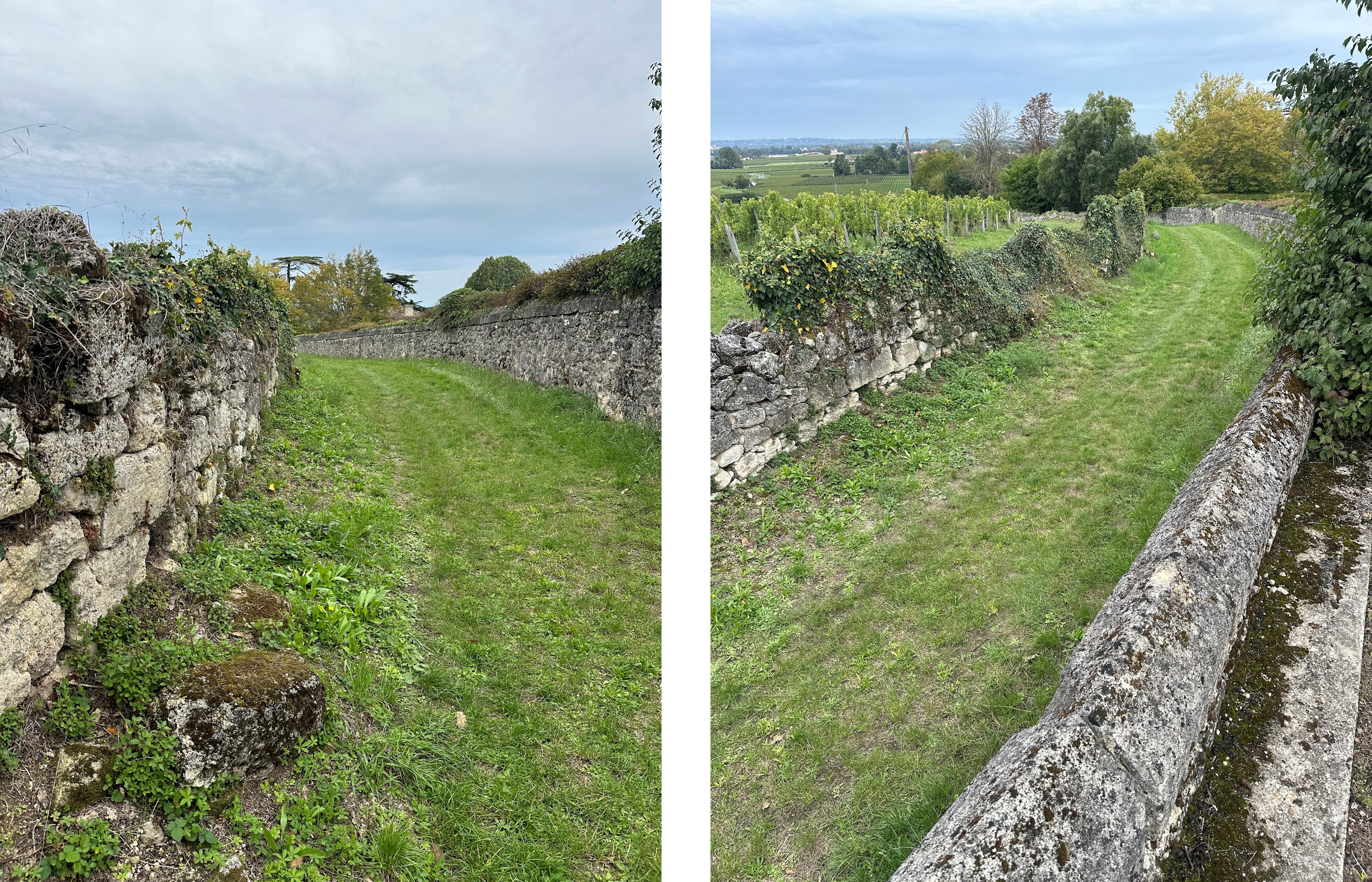
We walked on this 2000 year old road to a several hundred year old hostel that provided accommodations for the Camino pilgrims. As I write this six months later, I still cannot believe that we just casually walked along a 2000 year old road.
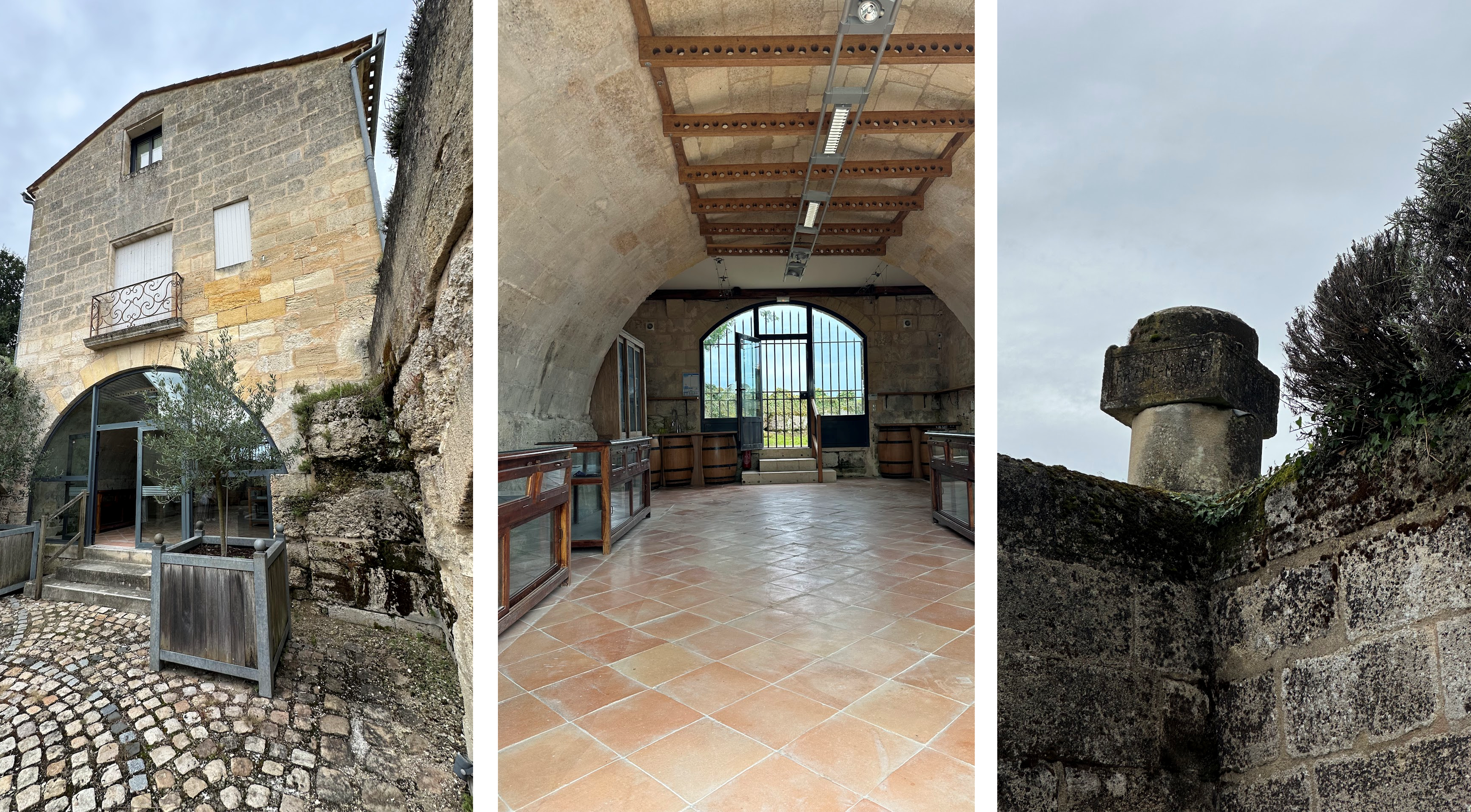
The stone wall that we faced as we walked out of the hostel had a door that led into the start of 200 kilometers of limestone caves surrounding the village of St. Emilion.
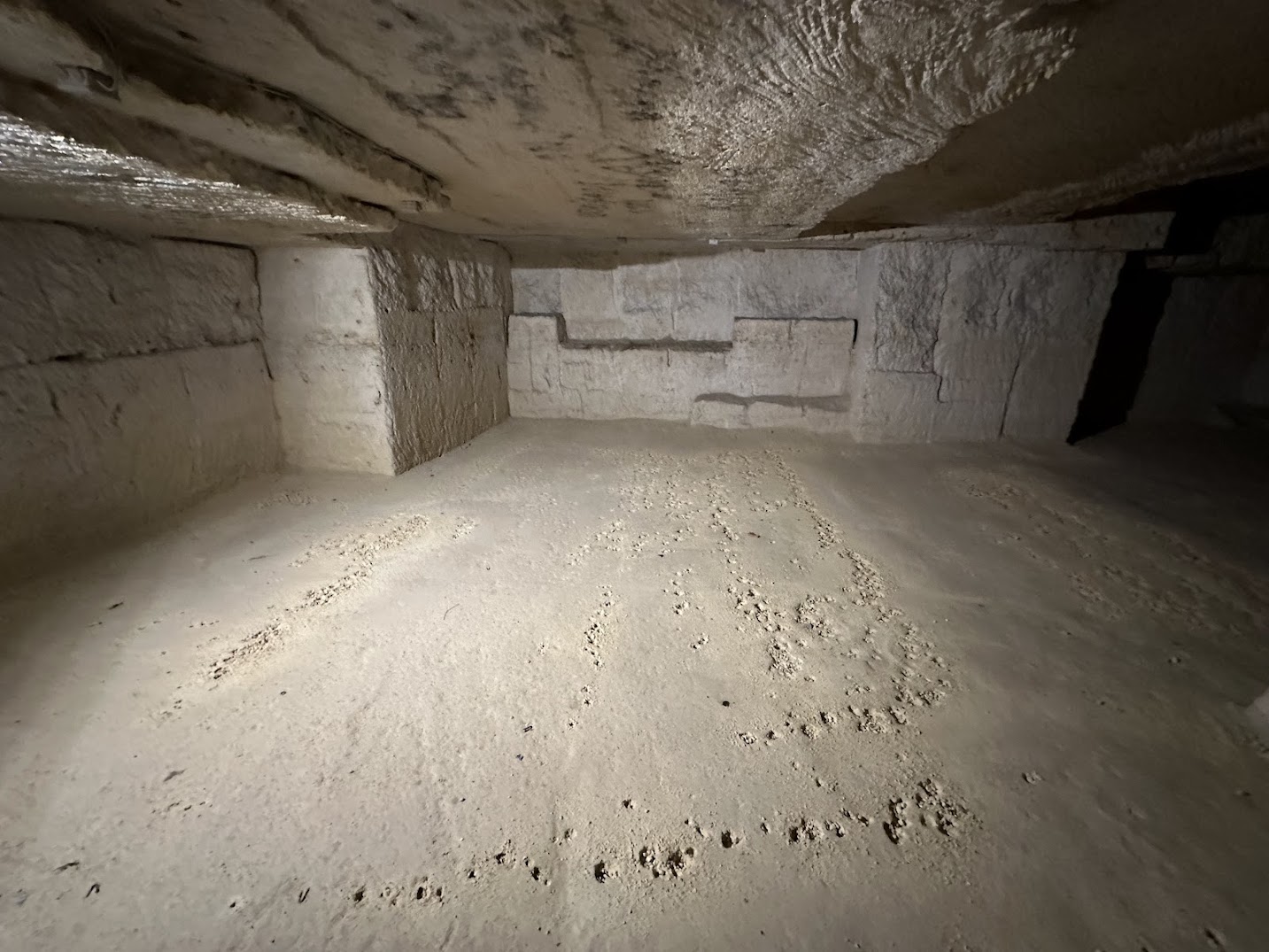
The limestone caves are what remains of 200 km of ancient Roman mines. The limestone from these mines was used to build great works throughout the Roman empire.
Since we tourists always need something more than just winding our way through ancient mines, Chateau Franc Mayne provided several curated scenes of historical events which occurred in the mines.
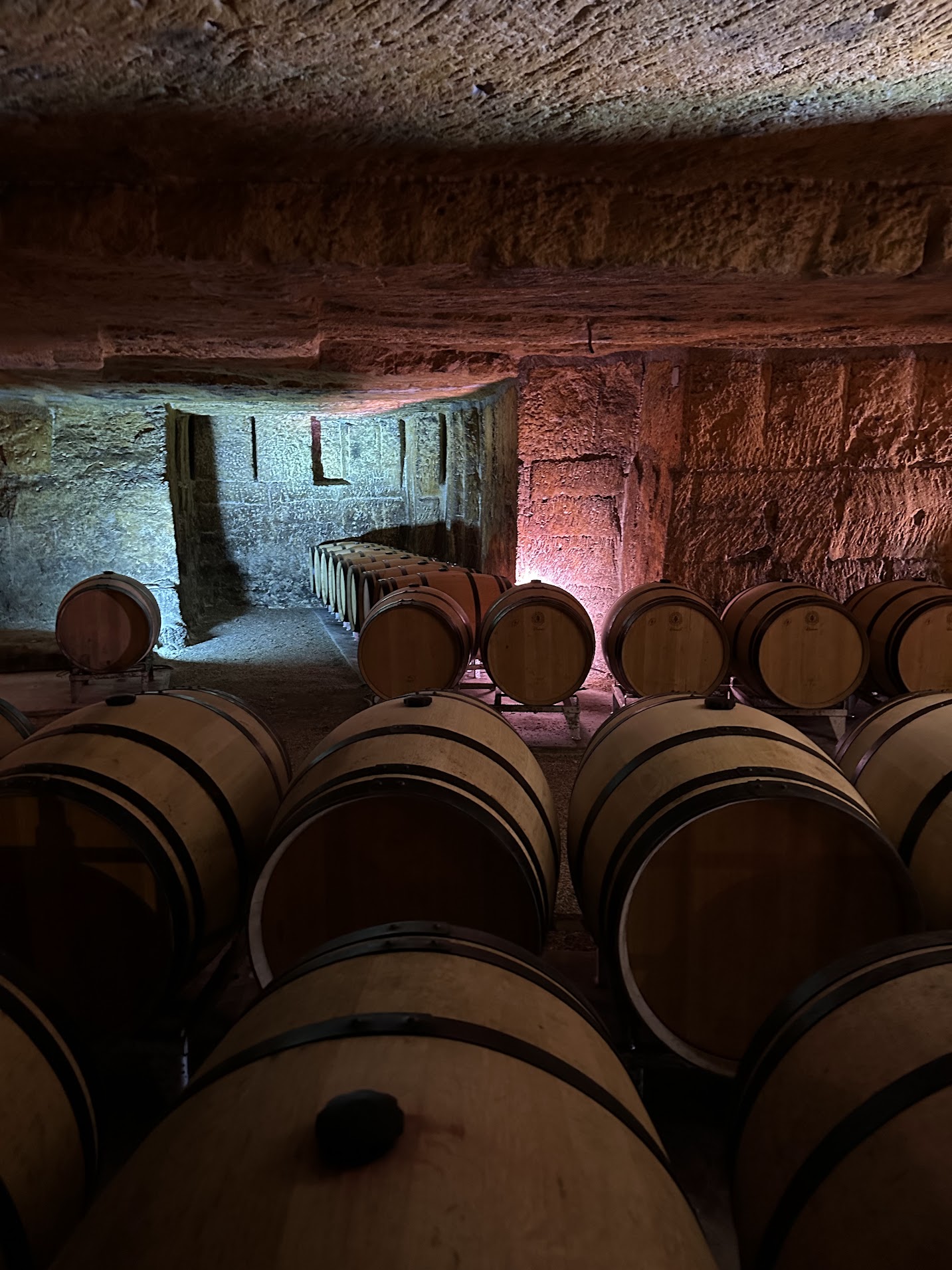
The ancient mines were not just a tourist attraction. Chateau Franc Mayne and many of the other St. Emilion wineries use the cool dark caves to age their barrels of wine.\
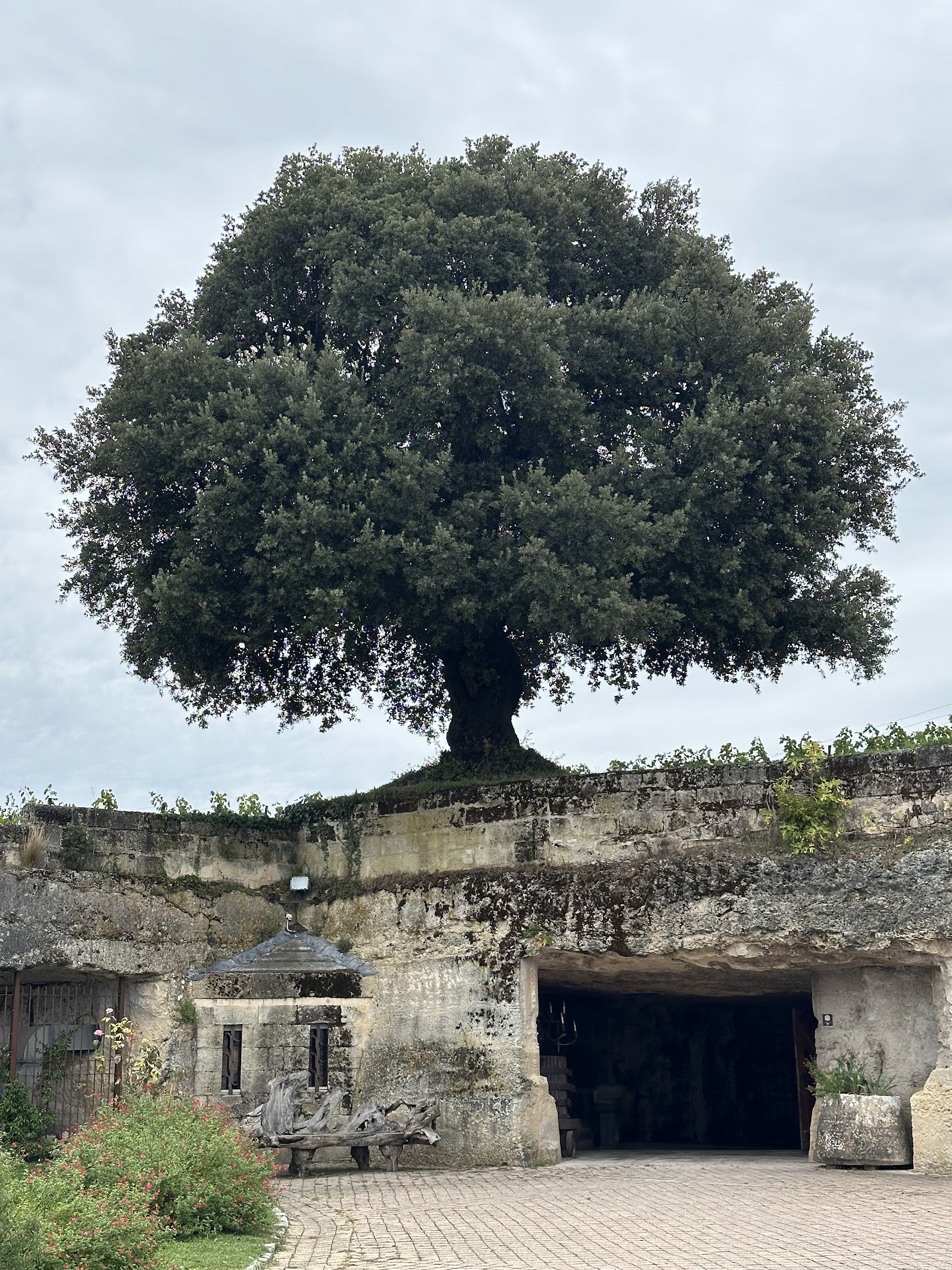
As we exited the caves, we looked up to see the iconic oak tree that serves as the logo for the Chateau Franc Mayne winery. As I walked around this cave entrance, I looked up to see the incredibly thin layer of soil that held the oak tree along with the acres of vines. Our guide shared that all of their Merlot vines grow in this very shallow soil that sits atop the thick layer of limestone. It always amazes me how grape vines can grow in seemingly impossible conditions.
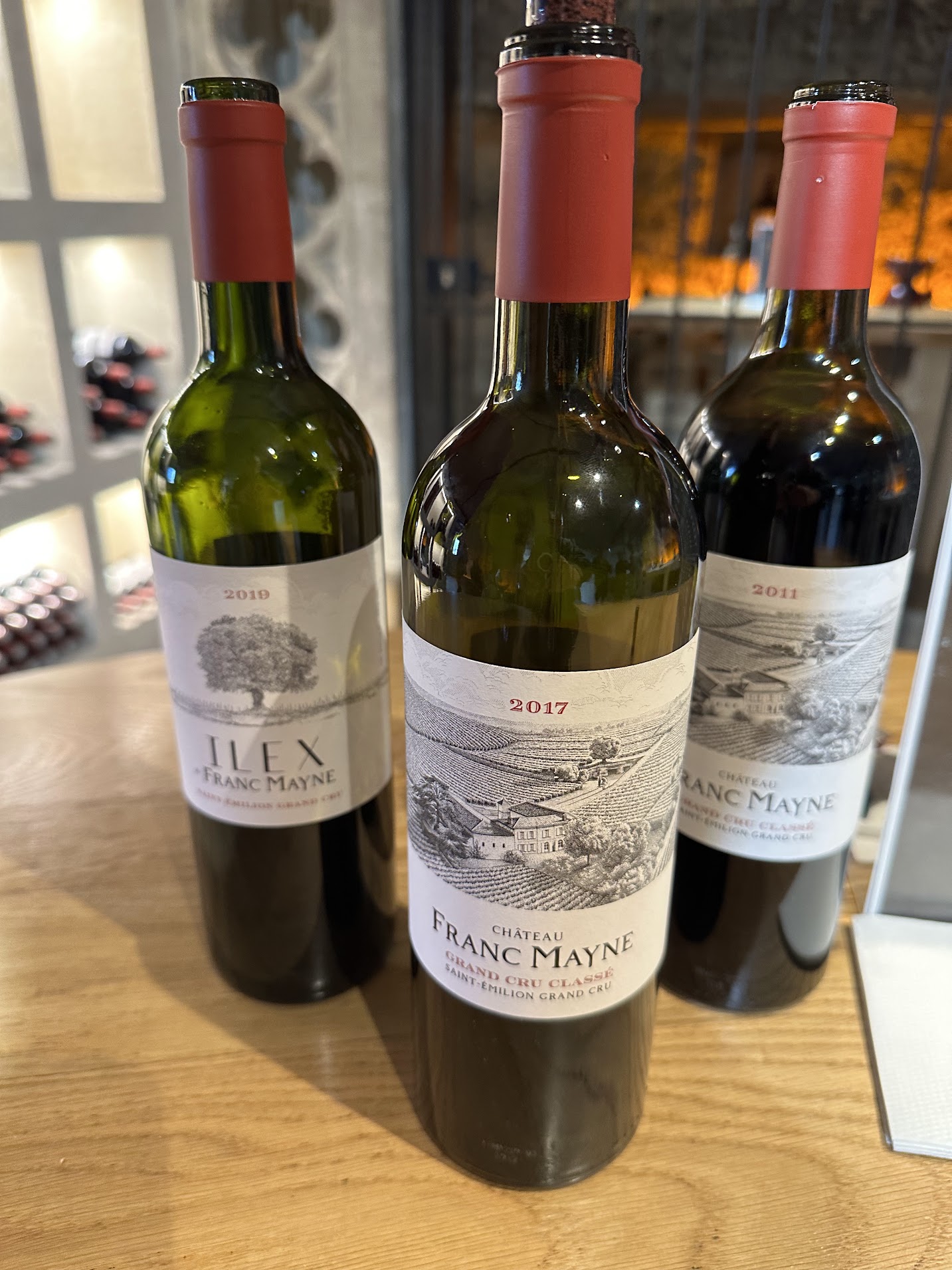
Our guide through the property was also our guide through the tasting of Chateau Franc Mayne wines.
The wines were so good, we had to buy a few for our continued journey through France.
While we enjoy experiencing “profoundly France” wines and the food, it is the unexpected history lessons we gain along the way that make venturing into rural areas so enlightening. I had no idea that there were 200 kilometers of ancient Roman mines under St. Emilion. I also had no idea how many ways the mines were used to protect local citizens during times of war and to hide fugitives and refugees during those wars.
Peace.


 On the Way to Somewhere Else