Stop the Coup in the United States!
In a previous post I shared that I travel to experience the colors of a new/old country and the movement and colors of their cultures. Recently, Maria Popova shared a post “Goethe on the Psychology of Color“:
“Color is an essential part of how we experience the world, both biologically and culturally. One of the earliest formal explorations of color theory came from an unlikely source — the German poet, artist, and politician Johann Wolfgang von Goethe (August 28, 1749–March 22, 1832), who in 1810 published Theory of Colors, his treatise on the nature, function, and psychology of colors.
“One of Goethe’s most radical points was a refutation of Newton’s ideas about the color spectrum, suggesting instead that darkness is an active ingredient rather than the mere passive absence of light.
Light and darkness, brightness and obscurity, or if a more general expression is preferred, light and its absence, are necessary to the production of color… Color itself is a degree of darkness.
“But perhaps his most fascinating theories explore the psychological impact of different colors on mood and emotion — ideas derived by the poet’s intuition, which are part entertaining accounts bordering on superstition, part prescient insights corroborated by hard science some two centuries later, and part purely delightful manifestations of the beauty of language.”
My mood and emotions are uplifted when I bask in the colors and majesty of stained glass windows in a cathedral, or the tangled cultivated vines of a vineyard, or the creativity of an abstract artist. In each case I am surprised by joy as I contemplate the genius and creativity that goes into these labors of love.
Europe is a treasure trove of colors as this blogster elaborates.
“Europe is a continent of vibrant diversity, where every corner offers a kaleidoscope of colors waiting to be explored. From the ethereal dance of the Northern Lights to the playful mosaics of Park Güell, the continent’s colorful palette is a feast for the senses.”
Three of the surprises on our 2023 trip to Portugal and Spain were a local parish church in Oeiras Valley Portugal, a steep hillside vineyard in the Douro Valley, and a unique work of art by Jean Miro in Barcelona.
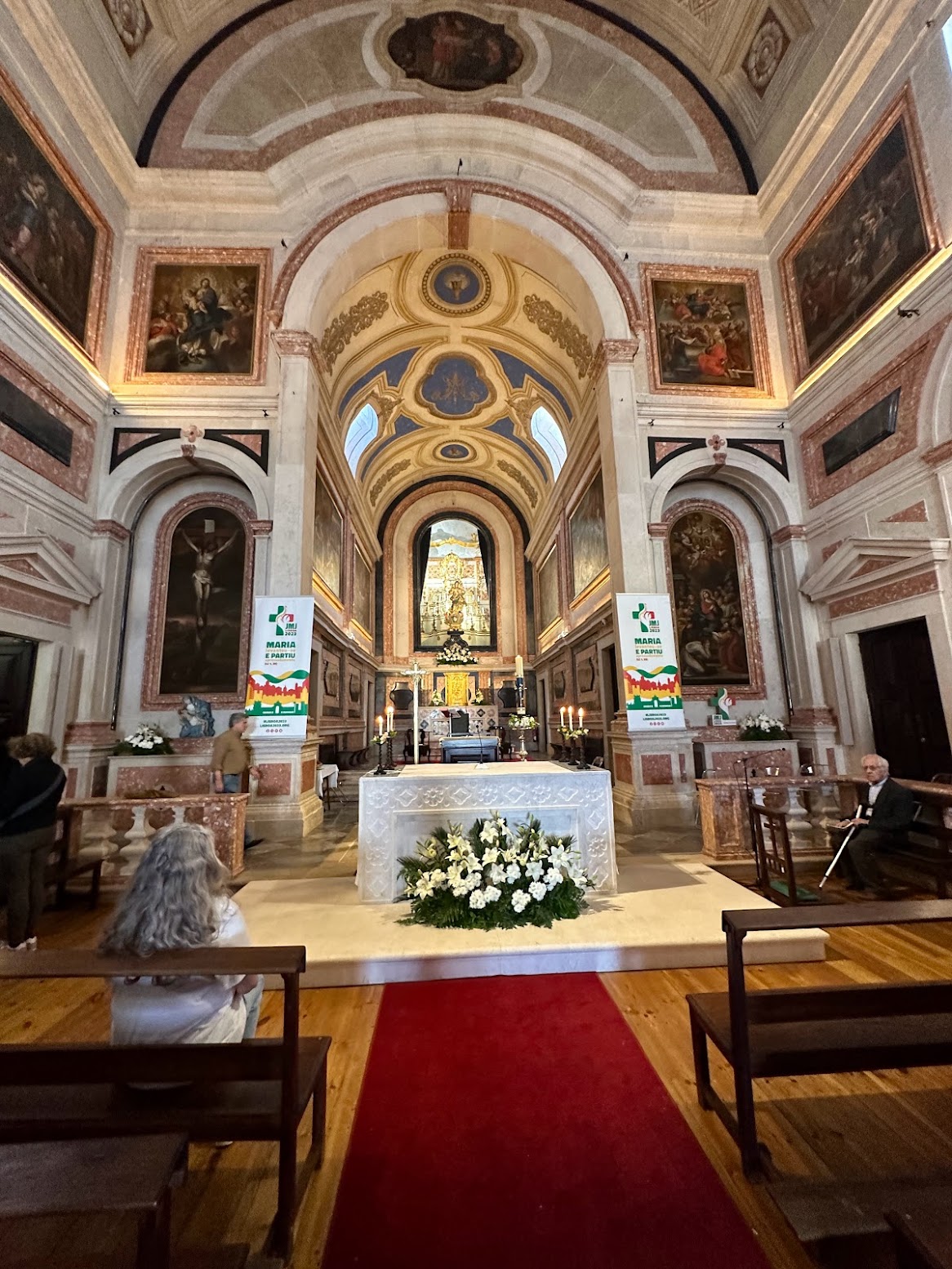
We wanted to stay away from the bustle of Lisbon, yet be close enough to visit by commuter train. Little did we know that the Oeiras Valley was the “Silicon Valley” of Portugal. Yet, when it came time to attend Easter Mass at the local parish church, we were awed by the art and vibrancy and colors that surrounded me as I listened to the mass in Portuguese. This church was just a small out of the way gathering place, yet as awe inspiring as a great museum.
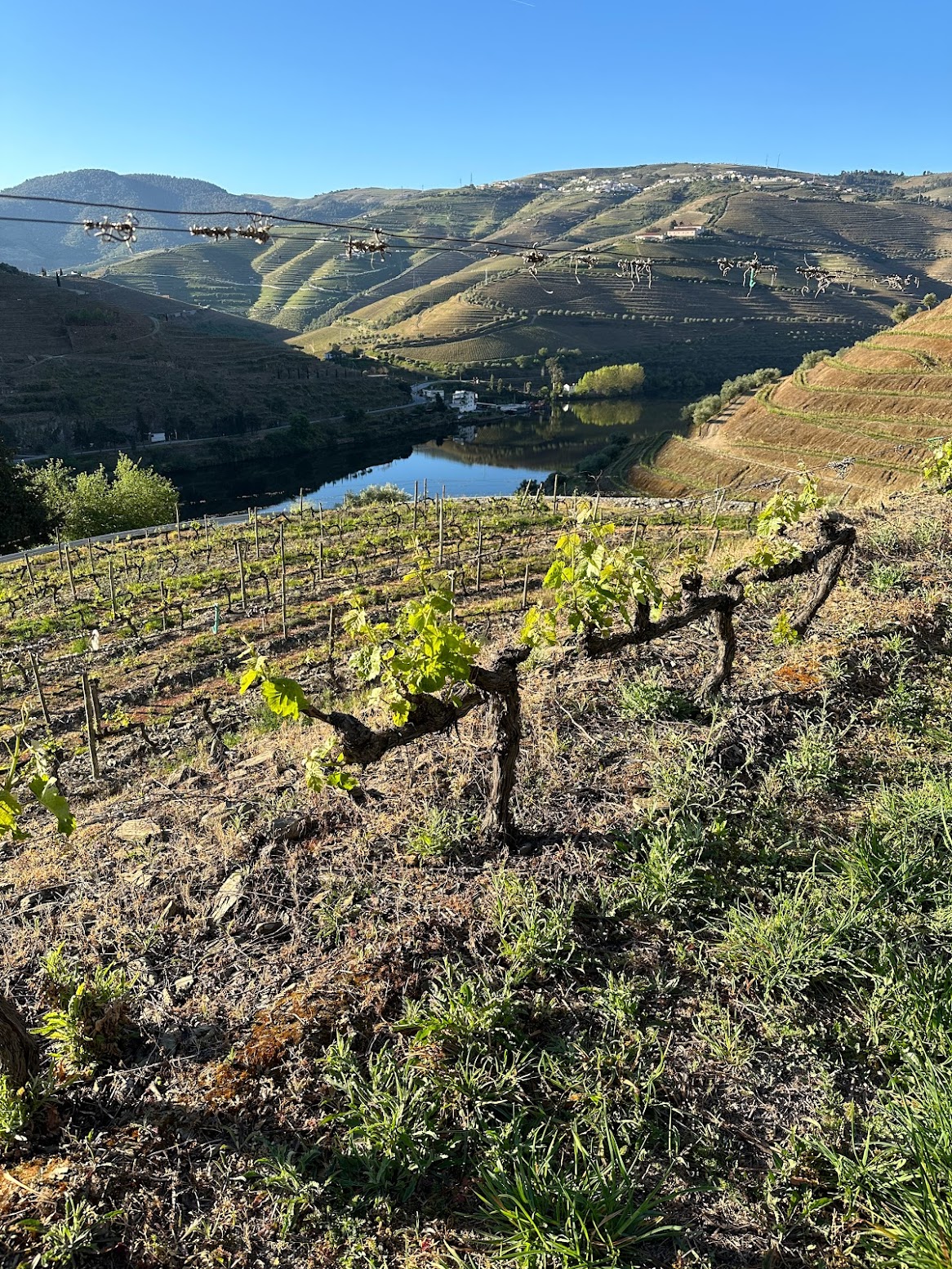
We drove north to Porto and to a stay at a winery up the Douro Valley. Nature has a very different color scheme than the works of man. As I walked up the steep hillsides the leaves were just starting to emerge on these 70 year old vines. In every direction I looked there were vines covering the hills just emerging into the springtime. The greens of the vines merged with the dusky browns of the rocky hillsides. This intersection of natures geological forms and man’s tending of the vines in their regular patterns shower my eyes with color.
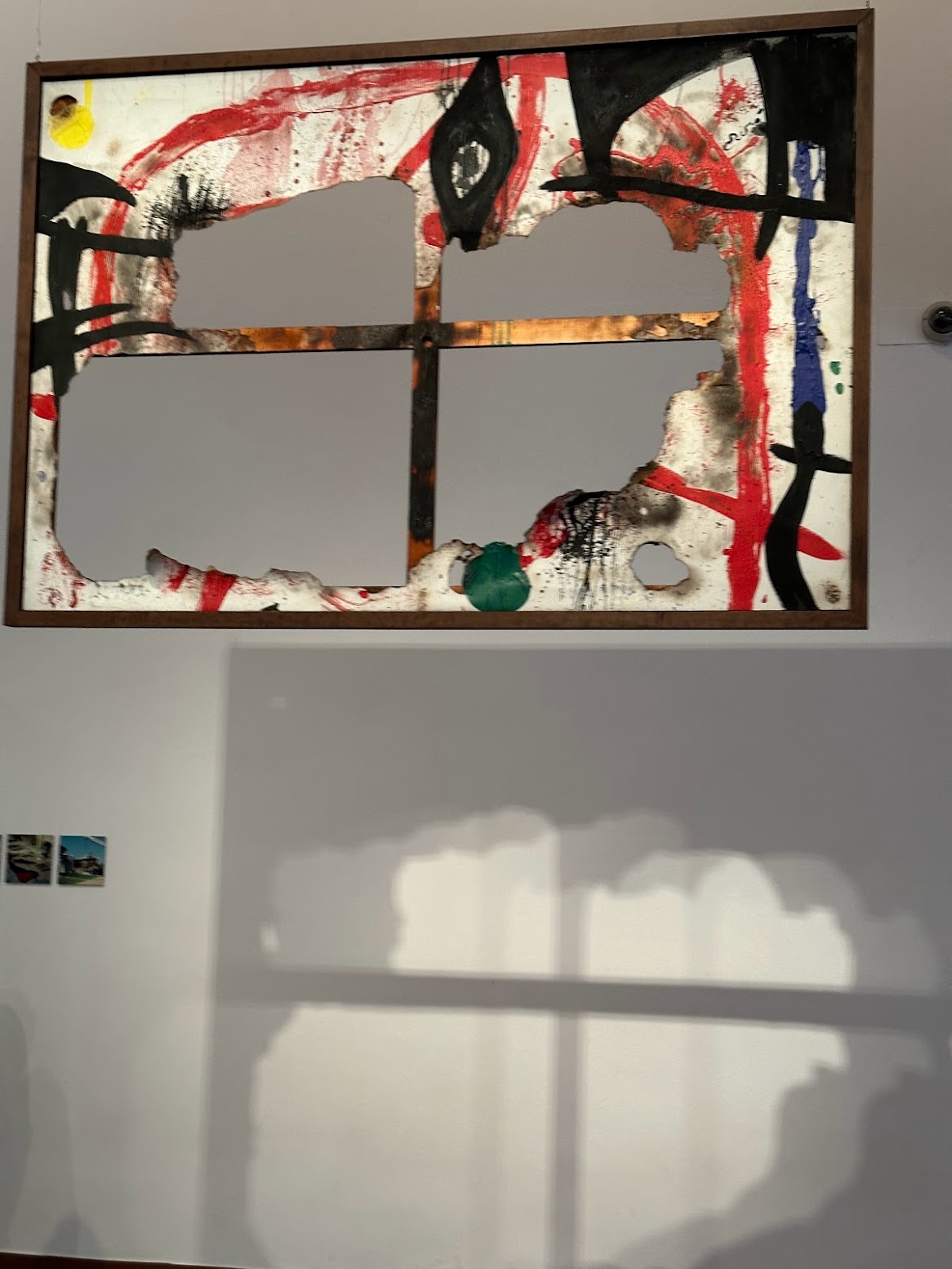
After touring through many great cathedrals in Portugal and Spain, we ended up in Barcelona at a museum collection of Jean Miro. This “anti-painting” and its shadow mesmerized me for 30 minutes. I couldn’t leave. I really didn’t want to know what it was about or Miro’s meaning. I had never seen a “creation” and its shadow that so captured the colors and shadows of Europe.
I travel to find these juxtapositions of color and pattern and shapes that man and nature and creators share with us.


 On the Way to Somewhere Else