Stop the coup in the United States! Vote! Resist! Persist!
I am planning our next trip to Europe – our fifth in the last four years. I never realized how much harder it is to plan a lengthy leisure trip than it was to plan a business trip. For 40+ years of business travel covering 100,00+ air miles per year, planning was never a big deal. I knew where I was going. I knew where I needed to be and when. I was usually meeting colleagues or customers or suppliers. Someone would recommend where I should stay and good places to go eat. Once I got to where I was going, I spent countless hours in a bland conference room and stayed in yet another nameless business hotel. No sight seeing got in my way of doing business. Planning for one of these trips took no more than an hour of getting a plane reservation, a hotel reservation and maybe a rental car reservation. I was rarely gone for more than a week.
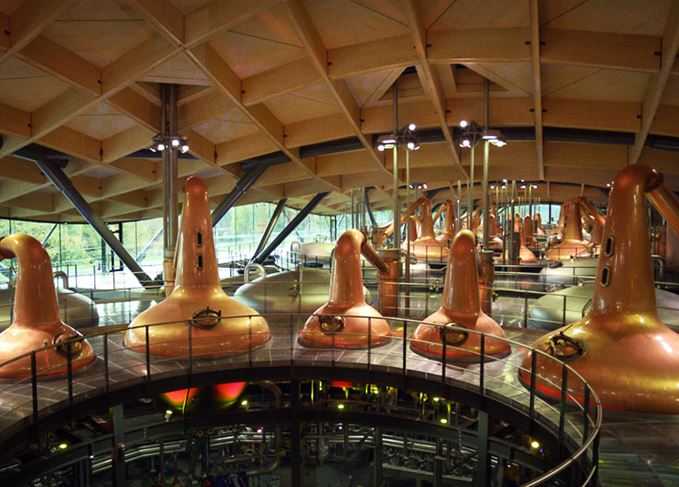
Leisure travel for 4-6 weeks at a time outside of the US requires a different type of research and planning. I could make it easy and go on a cruise or sign up with a tour company or have a travel agent do all the planning. But I hate travelling with other people (other than family) and having to follow a rigid schedule (“bags out at 7 am tomorrow everyone!”). I also like to mix historical and cultural visits with side trips to wineries, breweries and distilleries.
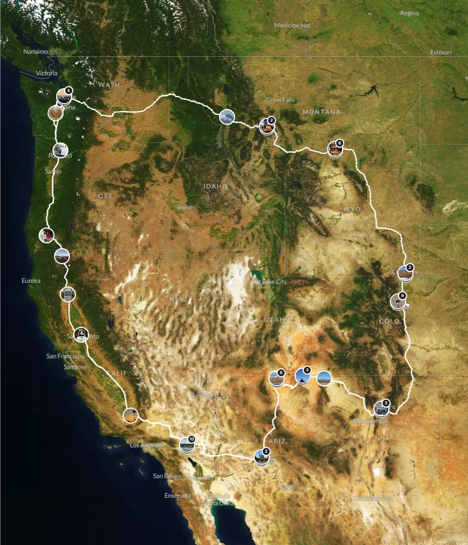
Foreign travel is still different than my leisure travel in the US. I recently embarked on a 5000+ mile drive around the west and southwest US. My planning consisted of checking to see if my daughter and family would let me stay with them for a week later in the journey and packing the car. Since I didn’t know how far I would get each day, I didn’t make hotel reservations until late each day. Because this was a winter trip, I didn’t know how much snow and ice would affect my journey. I knew many places I would like to visit and hike but I didn’t know how long I would stay in each location. The image below from Polarsteps captures the route I took and where I captured a lot of photos. I am not yet as comfortable in being as completely unplanned when visiting Europe. I want to at least make sure we have a place to stay each evening.
When planning foreign travel, I don’t want to make the same kind of mistake that tours do and schedule everything so tightly that there is no time for the synchronicity of visiting a different culture. My purpose for leisure travel is very different than business travel. I want to go to a place that is rich in history and art and that is different than my day to day life on Bainbridge Island, WA.
The challenge for these trips is to achieve a balance between being a tourist versus a traveler versus a pilgrim versus a student of other cultures. Panama Jack defines the difference:
“Are you a Tourist or a Traveler? Well, let’s see here, what is the difference between the two words? The Merriam-Webster dictionary seems to think that they are nearly one and the same. The trusted book defines a tourist as “one that makes a tour for pleasure or culture” and a traveler as “one that goes on a trip or journey.” There really isn’t much of a distinction between the two.
However, in the pompous travel community, a big, intimidating line has been drawn between these two similar terms. Being called a tourist is more condescending than being called a traveler. The tourist has been distinguished as a sort of amateur traveler, and a traveler has been distinguished as more of an experienced tourist. It sounds strange, but let’s see if we can clear things up a bit.
You need to be a child before you can be an adult, likewise, you need to be a tourist before you can be a traveler. An all-grown-up traveler knows what it’s like to be a tourist and actively avoids most (if not all) “tourist activities.” Tourist activities are things like planning a short week-long trip out weeks in advance and hitting all the popular sights, it’s staying in a nice hotel, eating at fancy restaurants, taking photos of yourself so it looks like you’re holding up the Leaning Tower of Pisa…just to show your friends back home.
The traveler avoids these over-crowded activities and seeks the road less travelled as to appreciate the real culture of the destination. Trust me, you want to be a traveler if you want respect from both the locals and other travelers alike.
All in all, the most important difference between a traveler and a tourist is time. A tourist is only on a vacation with little time. Resulting in a rushed, consumer oriented, crowded, sight-seeing, and photo heavy vacation. A traveler has more time; time to get lost and not miss a flight, time to understand a region through all the senses, time to learn the language, and time to be carefree and unburdened by a trip planner.”
While I spend a lot of time planning a trip, I try to leave large blocks of time free to adjust to the weather and to spontaneity. Once we get to a place, the things listed in my itinerary provide a range of options which we can decide on as our physical state and the weather guide us.
Excerpt from Edward T. Hall’s The Silent Language:
“Culture hides much more than it reveals, and, strangely enough what it hides, it hides most effectively from its own participants. Years of study have convinced me that the real job is not to understand foreign culture but to understand our own. I am also convinced that all that one ever gets from studying foreign culture is a token understanding.”
“The ultimate reason for such study is to learn more about how one’s own system works. The best reason for exposing oneself to foreign ways is to generate a sense of vitality and awareness – an interest in life which can come only when one lives through the shock of contrast and difference.”
From Rick Steves:
“But more important than the “how” we travel is the “why” we travel: Thoughtful travelers do it to have enlightening experiences, to meet inspirational people, to be stimulated, to learn, and to grow.”
Steves, Rick. Travel as a Political Act . Avalon Publishing. Kindle Edition.
The first challenge in planning is to figure out where we want to go. Over the years we have had the good fortune to take vacations to Australia, London and Southern England, Israel, the primary tourist spots in Italy (Rome, Florence, Venice), Paris and Burgundy in France, Japan and most of the states and provinces in the US and Canada. These trips were mostly as tourists quickly seeing the main attractions in a compressed period of time.
Now that we are retired, we want to spend four to five weeks in a single country at a time or a part of a country and take our time to slow down and experience their unique culture. We have a long list of primarily European countries we want to visit and revisit. We prioritized our first set of countries to visit:
- Portugal and the edges of Spain (Santiago de Compostela, Seville, Barcelona) [2023]
- Northern Italy Wine Regions [2023]
- Spain (Madrid, Segovia, Toledo, Bilbao, Barcelona) [2024]
- France (Normandy, Bordeaux, the Rhone River, Reims, Loire Valley, Paris) and Belgium [2024]
- Ireland and Scotland [2025]
- Germany, Austria and Czechia
- Denmark, Norway, Sweden
- England and Wales
- Poland and Hungary
- Southern Italy and Sicily
- Greece
- Turkey
- Southern Spain and Morocco
I shared our way of planning with another retired colleague who is more analytical than I am. He shared his process for how many extended trips he takes a year. Steve shared “I made a list of all the places in the world that I wanted to visit. I then consulted actuarial tables for my life expectancy and how long I am likely to be healthy enough to travel. I then divided the places I wanted to visit by the number of years I have left and calculated that we needed to take three trips per year.”
I loved it. But that is too analytical for me.
At the beginning of a year we decide on the two places we want to visit that year and then plan for two “shoulder” season trips – one in May and one in September/October. I’ve learned through my business travels and a couple of shorter vacations that travelling to Europe in the summer is a non-starter. There are just too many tourists and the local citizens take their vacations. It is harder to be a traveler.
Once we decide on a destination, we look at our schedules to find a 4-5 week window when we don’t have any family, community or medical obligations. I start looking for airline reservations to a city near where we want to go and look for the days that are likely to have the cheapest airfares. I then purchase one or more of the Rick Steves books to get an overview of what the more interesting attractions are. I also sign up for email notifications for the country and city tourist bureaus. The Ireland and Scotland tourist bureaus have been fantastic in helping plan for off the beaten path locations for our upcoming Spring 2025 trip. I love the regular emails that showcase the history and natural beauty of each country.
We’ve learned over the last two years that as we get older jet lag seems harder to deal with. So we try to spend 5-7 days in a larger city at the beginning of our trip where we can gently overcome jet lag and not have to have a rental car. We then rent a car to tour the rural areas of a country and then try and finish in a larger city where we won’t need a car. Our first long trip to Portugal showed us how important it is to get into the rural parts of a country. A colleague, who owns a part of a vineyard in Burgundy, calls these rural agricultural areas “profoundly France.” By making a priority to visit wineries, agritourismos, and rural distilleries we prioritize getting to experience the non-touristy “profound” areas of a country.
The next decision stream is to pick the places where we want to spend 2-4 days in the middle part of the trip. For me this is the hardest set of decisions to make as there are so many different places and things I want to experience – visiting cathedrals, absorbing museums, seeing ancient Roman artifacts, tasting the local wines, experiencing a wide range of restaurants that have authentic and profound food, taking cooking classes and doing some day hikes weather permitting. Once the locations are selected, then I look for accommodations. Surprisingly, this step requires the most research. When doing business travel, I never had to worry about where to stay. There was always a colleague who would make a recommendation based on quality and convenience to our meetings. With personal travel, I have to rely on a wide range of ratings and recommendations on Google Maps, Expedia, Booking.com, Forbes and many more. Calibrating the recommendations and reading between the lines is an art form.
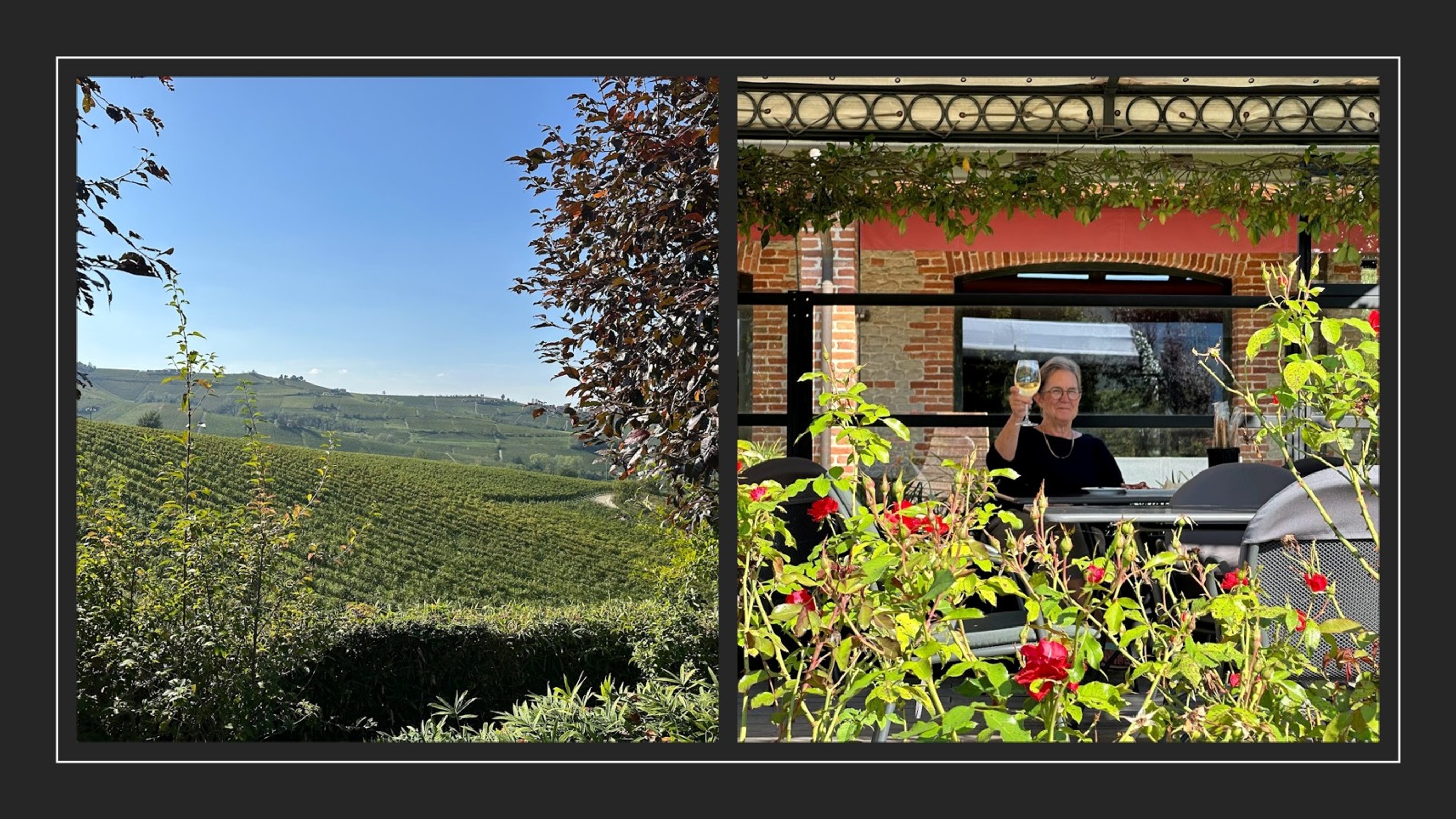
After picking the intermediate places and the time allocation, it is time to start making reservations. I lock in the airline reservations first and then start with the hotels and rural agritourismos. We’ve grown to love agritourismos, particularly in Italy. With our interest in wines and viticulture, we try to find a smaller facility that also has vineyards and a winery attached. If the agritourismo has a restaurant, that is even better. We’ve learned that most agritourismos with a restaurant offer cooking classes from the chef. Over the years we’ve found that we learn more about local cultures from the cooking classes than we do in museums. Waking up and being able to walk in a vineyard just after sunrise is an exquisite pleasure for me. Coming back to the agritourismo after wandering the countryside and sitting on the veranda with a glass of the hosts unique wine as the sun sets is a special pleasure.
The next set of planning goes on at a more leisurely pace. I now look for what are the things that we could do when we get to a specific place. I list them in our “itinerary document” with pointers to websites along with comments from reviews or travel writers. The list is generally far longer than we could or would ever attempt to accomplish. This list is the preparation for the synchronicity when we get to where we are going. When we begin each day on the trip we let the weather and our stamina determine what we should do that day. We mostly try to do just one thing from the list or at most two. We also add to the list from recommendations by others we encounter along the way. When we are in a city, we like to wander and experience the neighborhoods and parks along the way.
Finally the day arrives for us to embark on our “voyage.” We are finally ready for the synchronicity part of our journey. The synchronicity almost always involves either encounters with “new friends” along the journey or alcohol or both. Here are a few of the “unplanned” encounters we really enjoyed.
Paxa Winery Portugal
As part of the planning for our Portugal trip, we knew we wanted to experience the wines of the Douro Valley so we planned on staying at Quinta de la Rosa for a few days. But we didn’t know much about Portuguese wines so we didn’t plan on visiting any other wineries outside of the Douro Valley and Porto. As we wandered the narrow streets of Olhao in southern Portugal, we came across an inviting little seafood restaurant. We wanted to try a local Algarve wine. Our waitress recommended a wonderful Paxa reserve wine. It was fantastic. So I looked up the winery and found that it was close by. I made a reservation for the next day and off we went.
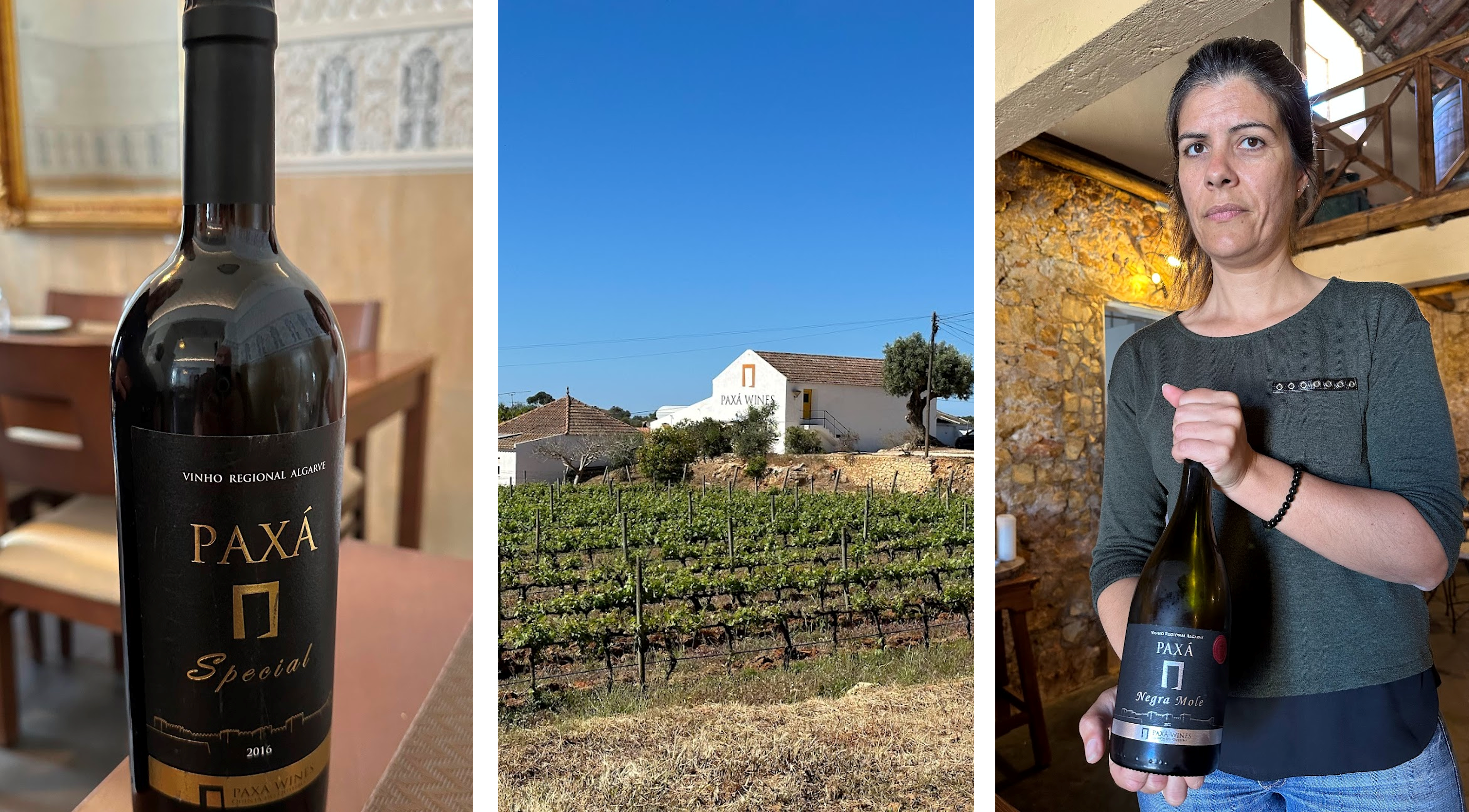
To get to the winery, we really had to get off the beaten path. The journey to the winery was quite different than the expressways that we used to travel around Portugal and Spain. While we rely heavily on Google Maps, my wife and navigator decided to take a short cut. As we got on narrower and narrower roads and the pavement turned to dirt and I found myself in the middle of a vineyard, I expressed a wee bit of frustration. We could see the winery, but we couldn’t get there. So we backtracked to the original Google directions and arrived safe and sound at the winery.
What a pleasant surprise we encountered. Paxa has a wide range of white and red wines. Each wine we tried was better than the next. For our last wine taste, we tried the Negra Mole varietal which I’d never heard of. It tasted somewhere between a Pinot Noir and a Gamay Noir. I didn’t want to order any wine to send home but we did grab a few bottles to have on our remaining journey. The really good news is that Paxa had recently joined the Yon Wine distribution company to the US. So we are able to order their wines whenever we want.
Our host for the visit was quite knowledgeable and spoke excellent English. Since we were the only visitors that day, we had plenty of time to enjoy the wines and learn more about our hostess. We complimented her on her fantastic English. She laughed and shared that she hated taking required English classes in school. But now most of the people who visit the winery are from England or America. She shared that when somebody from Portugal visits she has to translate her presentations and answers in her head from English back to Portuguese. How amazing it would be if I could ever learn another language and have to do something like she did so naturally.
The visit was not planned but we followed our curiosity and found a part of Portugal we were glad we’d travelled to.
Futbol Conversations in a Beer Garden in Seville Spain
When I did my research on where to stay in Seville, Spain, I had no idea that our hotel would be a block from the Real Betis futbol stadium. I also had no idea that Manchester United would be in the city to play a UEFA Champions League Match against Sevilla.
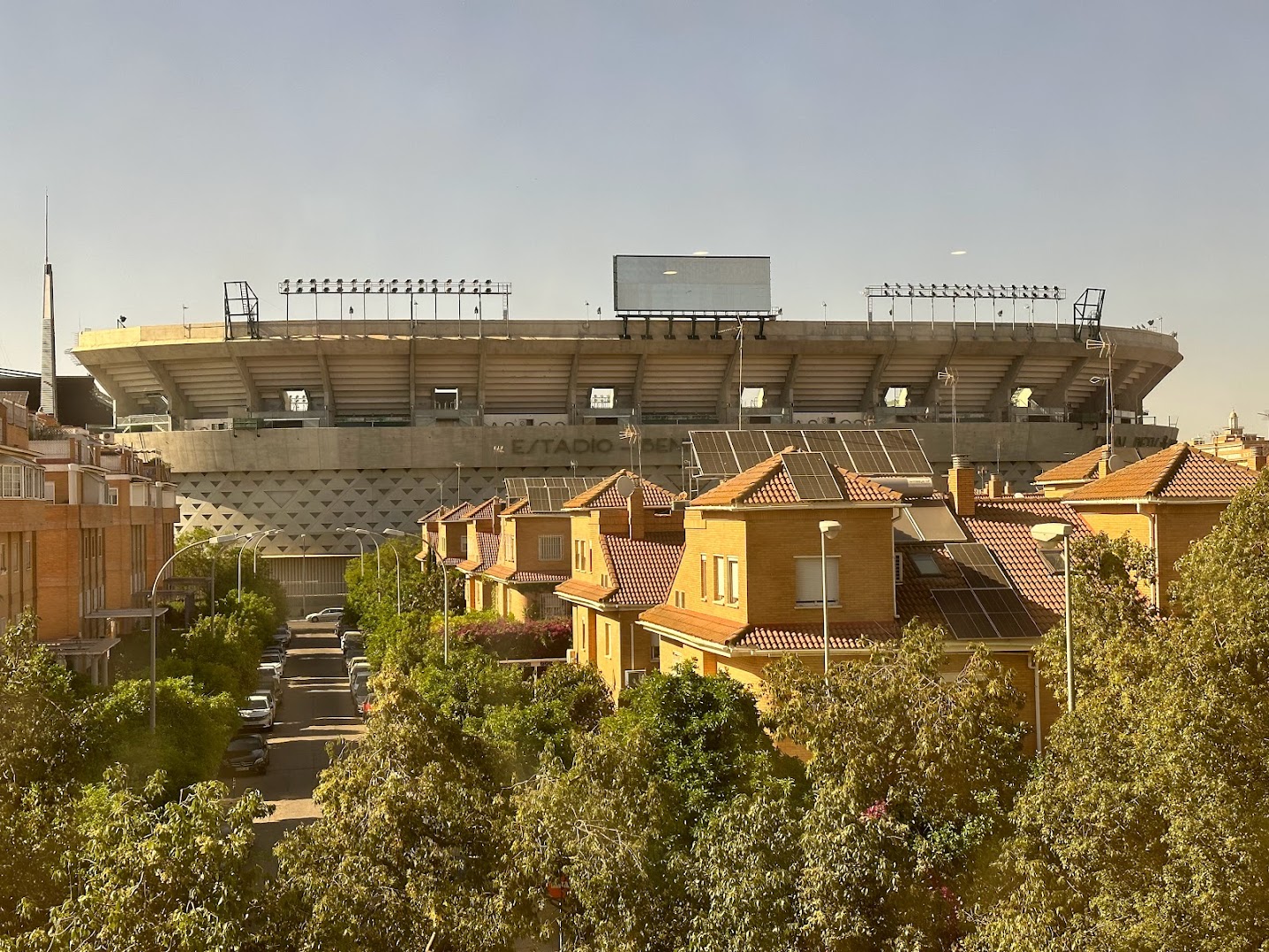
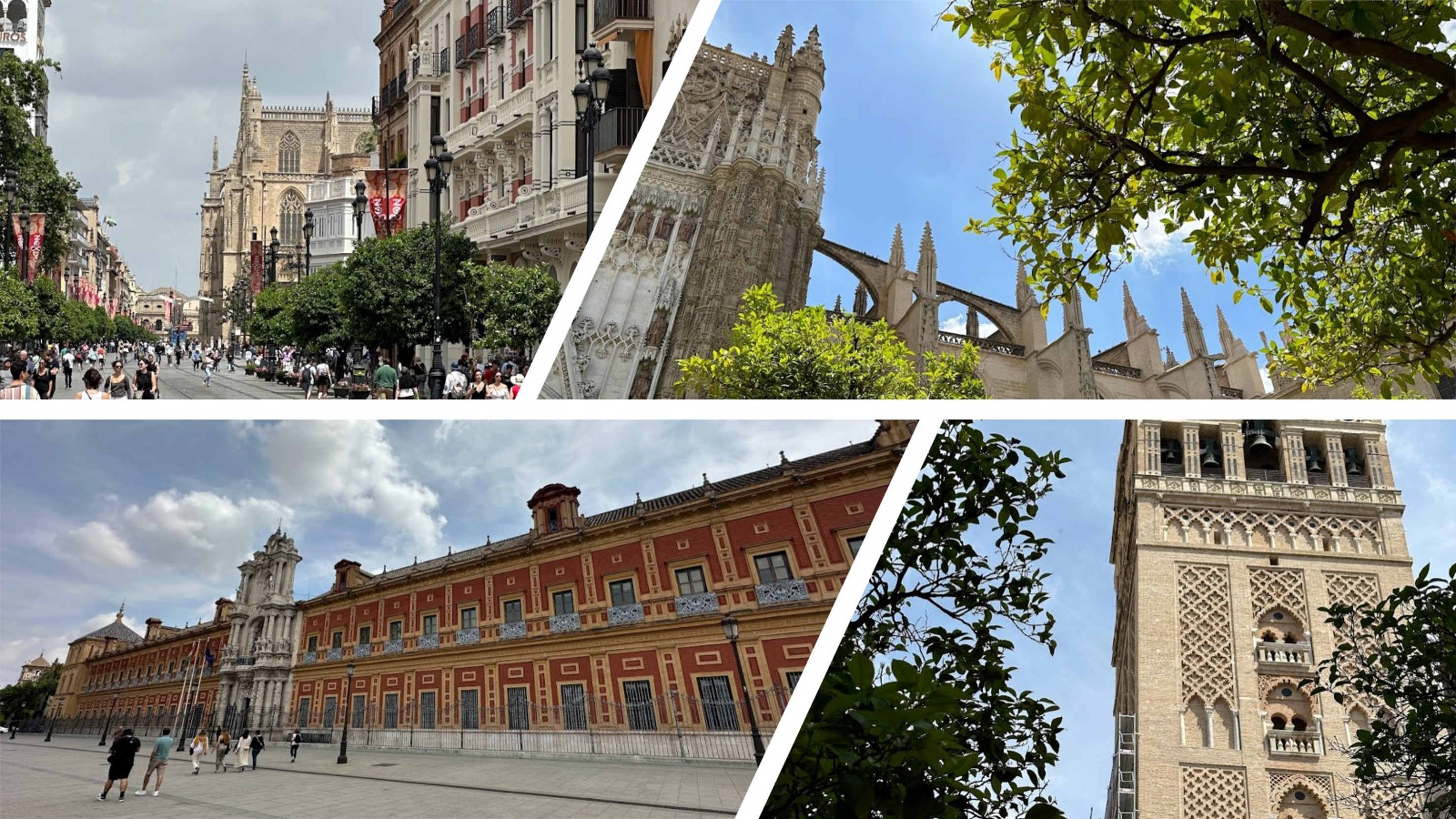
After a long hot day of wandering around Seville and visiting the Cathedral and a few museums we came back to our hotel to rest a bit before dinner. Before going to our room, we declared that it was “Beer O’clock” and we needed to find the beer garden near the swimming pool.
As we walked into the deserted bar area, I heard a distinctive deep English accent uttering the “F word” several times.
I was really confused as I looked around because I could swear it was the deep bass voice of Roy Kent from Ted Lasso played by Brett Goldstein. As Sean looked up and saw these two old fart Americans enter the beer garden, he said to his son “Jonny, you need to watch your language. There are others present here.”
I laughed and said “That’s OK, I thought I heard the voice of Roy Kent.”
Jonny immediately shouted “Wow. A Ted Lasso fan here in Seville.”
We all had a good laugh that started a great conversation and a lasting connection.
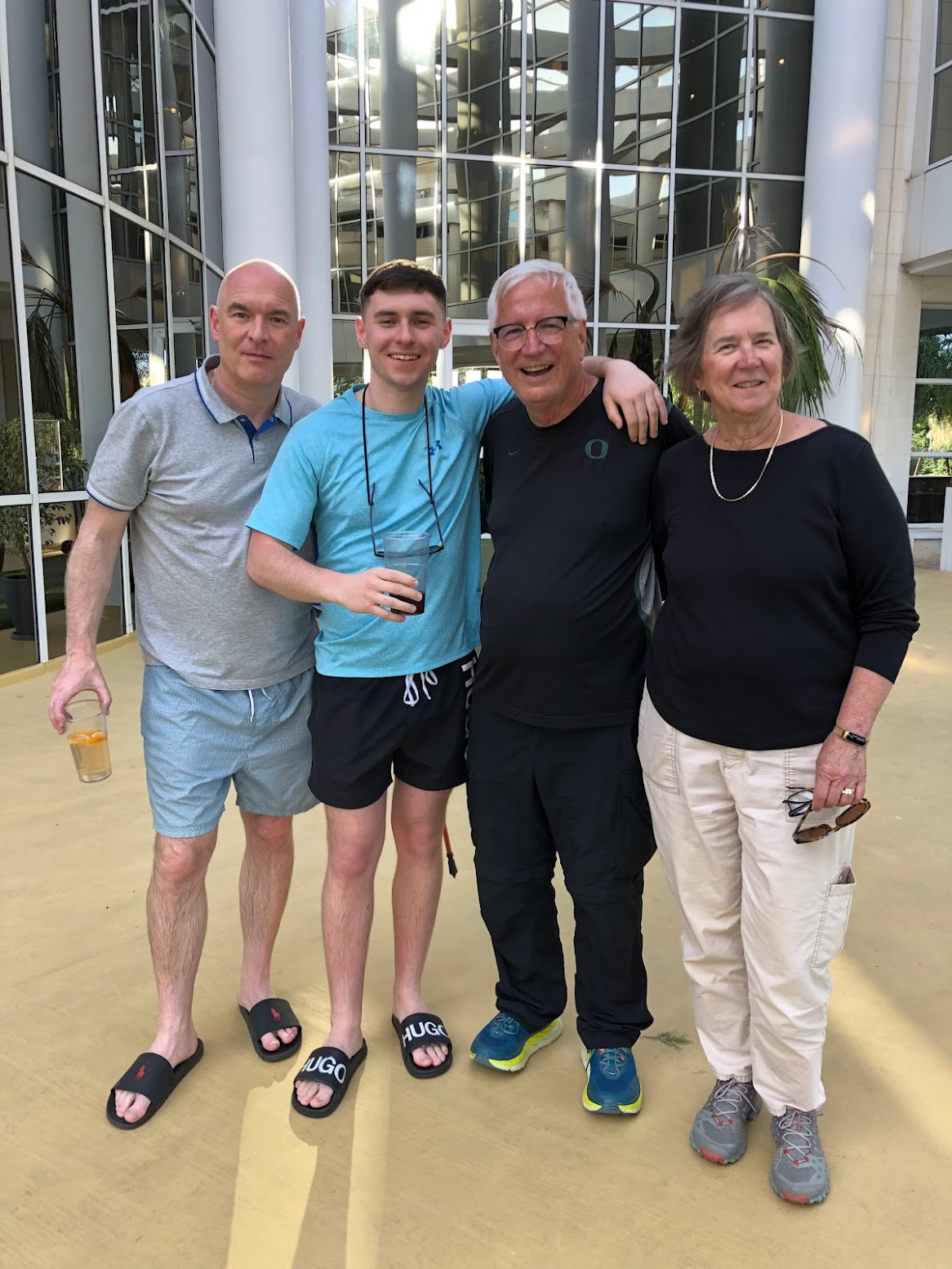
We quickly found out that Sean and Jonny were rabid Manchester United fans and were in Seville for the Champions League match. I debated whether to share that I was a Manchester City fan and then decided to go for it. For the next 30 minutes we gave each other a hard time. Sean accused me of not knowing any of the Man City players and of course my mind went blank. I was finally able to name a few of the players and prove that I indeed did watch some of their matches. Sean shared that the two of them have season tickets to Man U and try to go to as many Champions League matches as possible. Of course he is an England national team fan as well.
I asked if he is coming to the World Cup 2026 in the US, Mexico and Canada. Sean and Jonny both got excited and explained that they were going to spend the whole summer in the US following the England Team. I knew that there were going to be six world cup games in Seattle so we all hoped that England would be in one of the games in Seattle. Of course, I invited them to come visit us on Bainbridge Island. Suddenly it was time for the two of them to go to the match. We exchanged mobile phone numbers.
After we said our goodbyes, my lovely bride turned to me and said “who are you? I don’t think I know you. You are such an introvert and you just spent 30 minutes talking with complete strangers as if they were long lost friends.”
“Welcome to the ‘hail fellow well met’ that I so enjoy about travelling Brits,” I laughed.
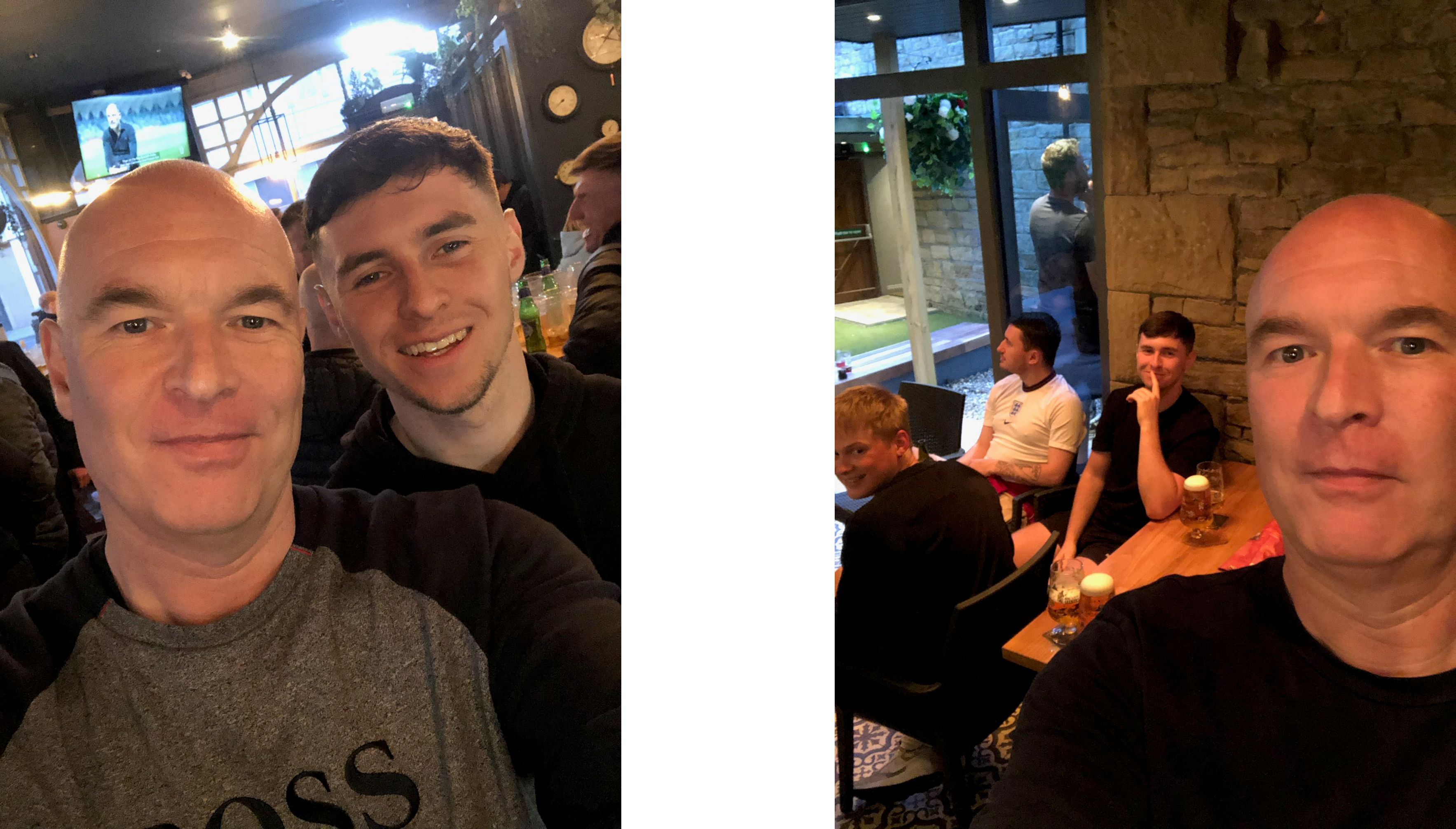
Sean and I text all the time now, particularly during the English Premier League season. I give him grief about Man United and he gives me all kinds of nonsense about Man City. When we are on one of our Europe trips I will send photos of the Futbol stadiums that we visited and the matches that we able to get tickets for. Sean shares photos of he and Jonny as they travel by train to away matches or gathering in a local pub for the away games they can’t get to.
The meeting was not planned but the synchronistic long distance connection remains. And yes, there was a little alcohol involved.
Guernica
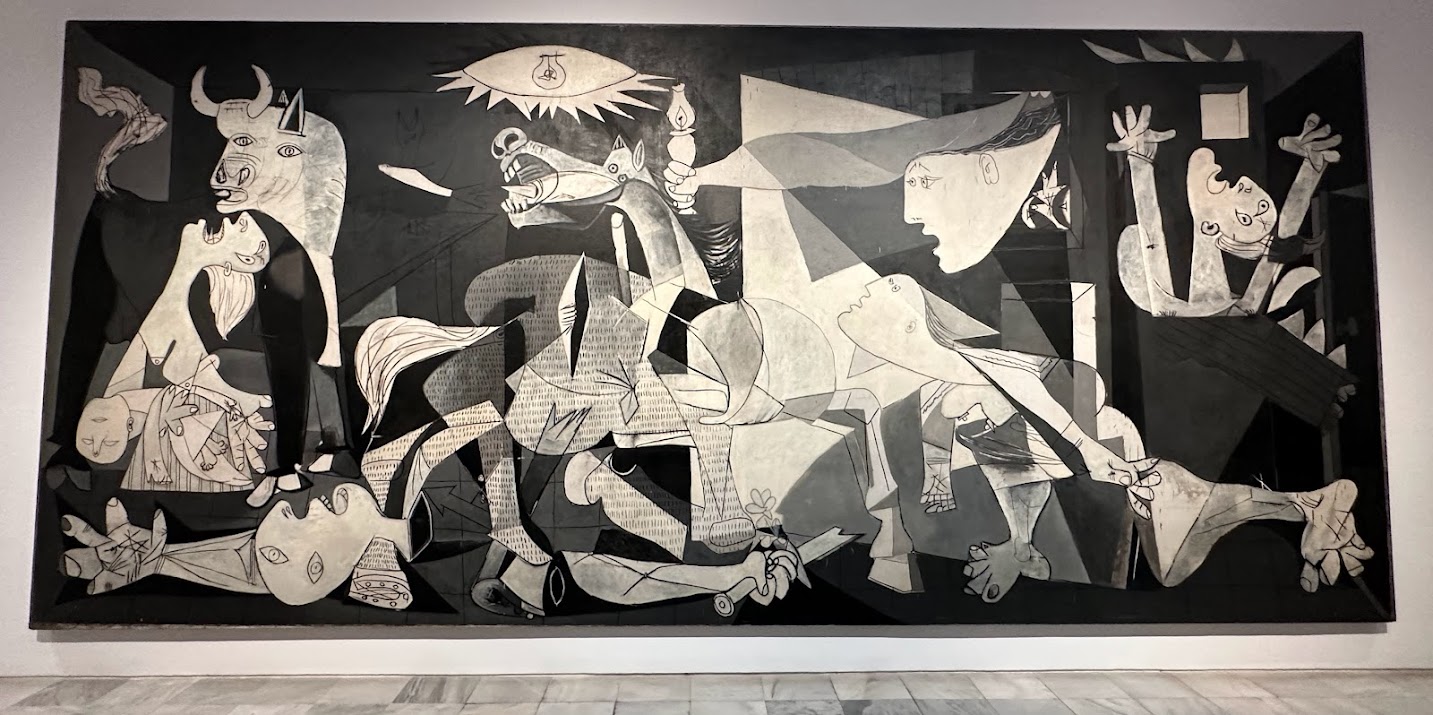
One of my all time favorite paintings is Picasso’s Guernica. Therefore it was a priority when we visited Madrid to see the painting in the Museo Nacional Centro de Arte Reina Sofia. I am drawn to the black and white and many shades of gray in this stark abstract painting. Seeing it in person made me want to learn more about the history behind the painting.
I downloaded a couple of books about the painting and the history of the events in Gernika in Basque country. I looked at a map and realized that it was close to Bilbao which we would be visiting later on the trip. Visiting Gernika wasn’t in our plans, but now it was a priority.
We spent most of our time in Gernika at the Gernikako Bakearen Museoa. It was the first museum I ever entered where we had to go through an interview to make sure we were entering with the right mindset.
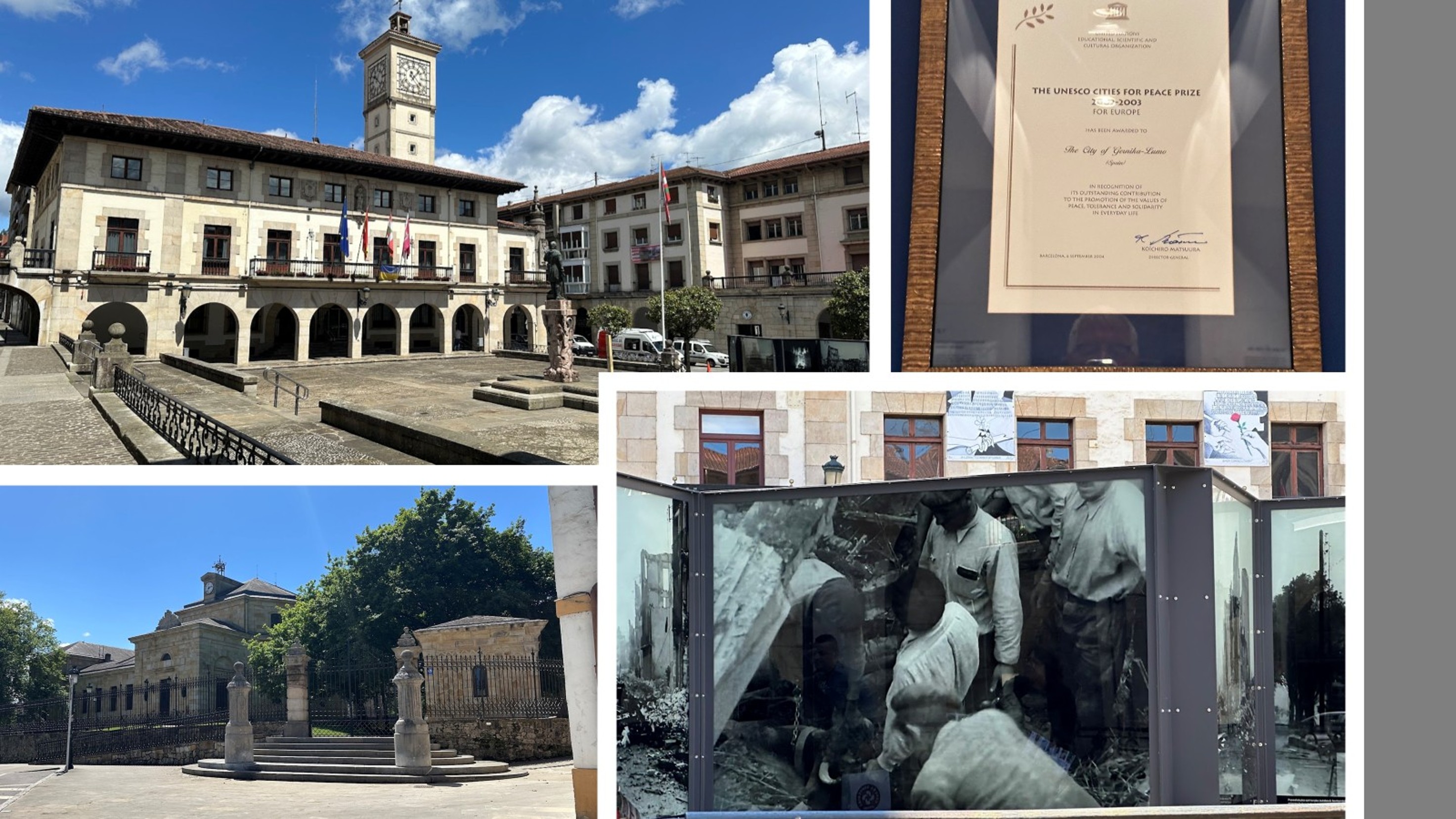
While I have viewed photos of the Guernica painting many times, I was stunned at how deeply it touched me. However, going through the history museum and seeing the awful photos and seeing videos from the survivors was even more moving.
While the research for planning is important, having the time and flexibility to follow up on that which surprises me is so worth the travelling slowly.
Normandy and D-Day
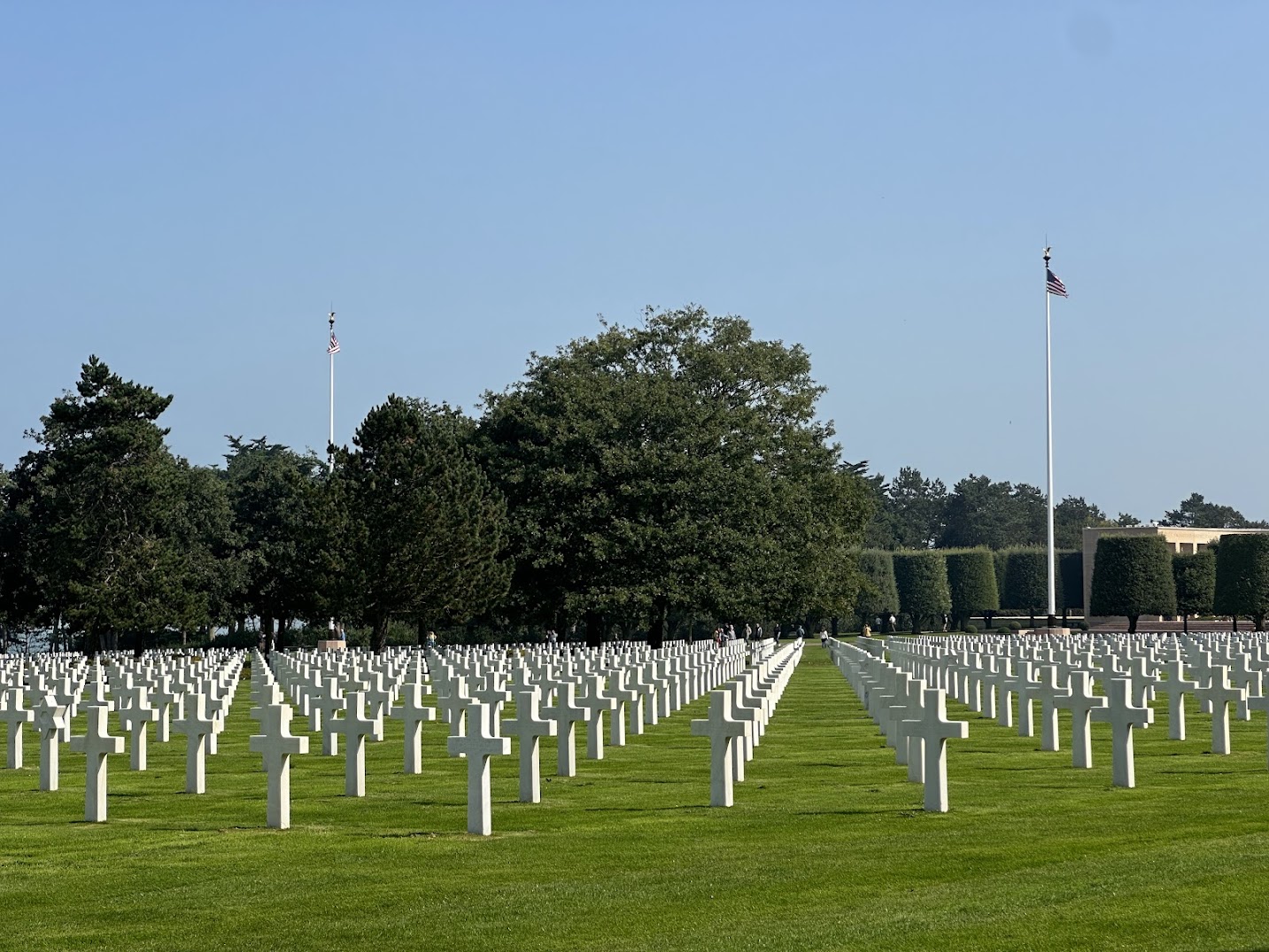
Our Fall 2024 trip to France had a primary objective of experiencing D-Day by staying right on Omaha Beach. We also wanted to loosely follow the Band of Brothers story arc by visiting Normandy and then Bastogne, Belgium, to get a sense of the Battle of the Bulge. We also stopped by the Luxembourg American Cemetery where General Patton is buried. At the Normandy beaches we expected to see the cemeteries and to walk the beaches.
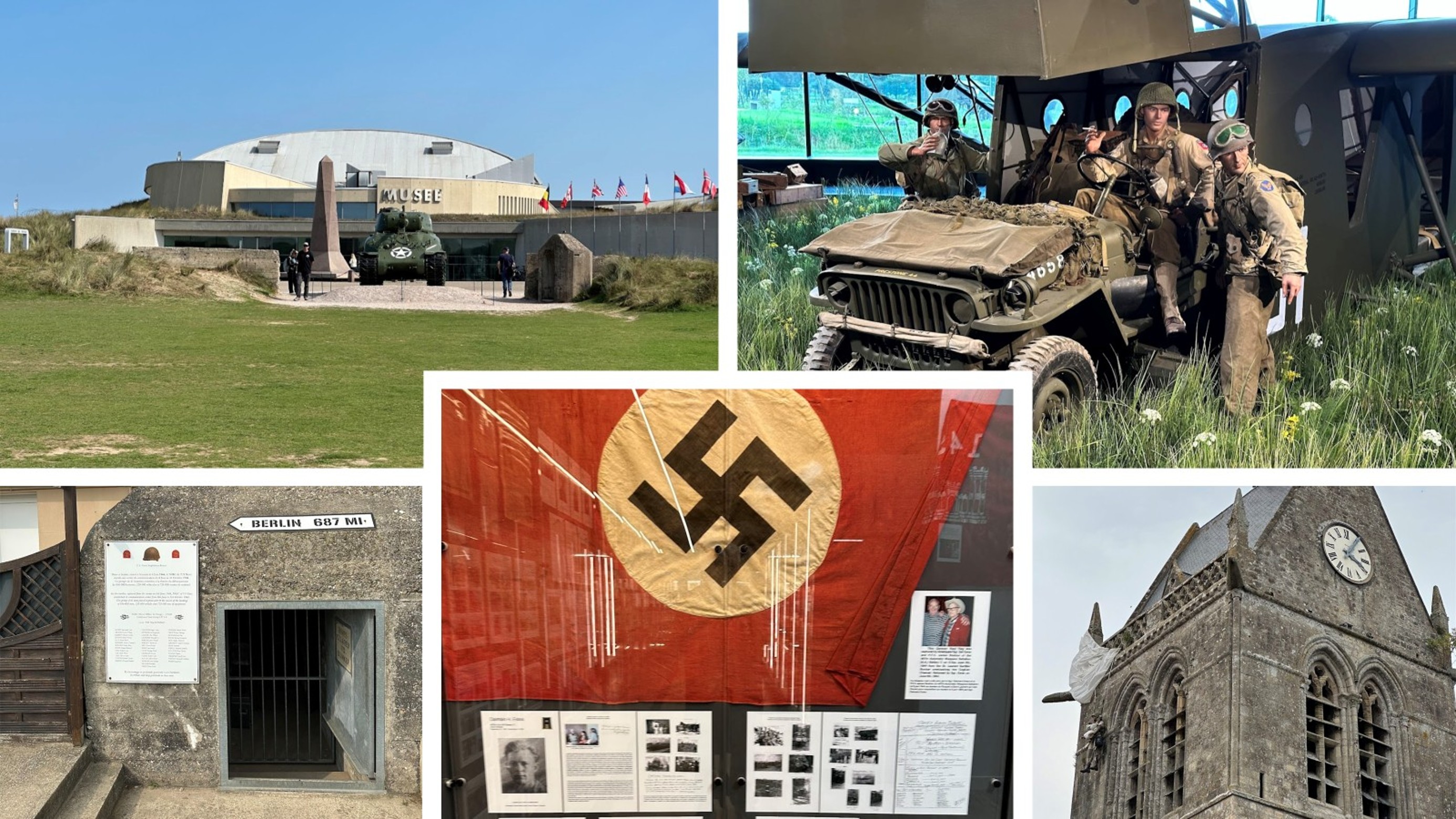
What we didn’t expect was the wide range of small museums that dotted the villages behind the beaches. Each of these little museums was a treasure trove of local memories of what D-Day was like. There were captured artifacts and first person stories. Each museum put together a short video that captured local residents talking about what it was like on D-Day and the aftermath.
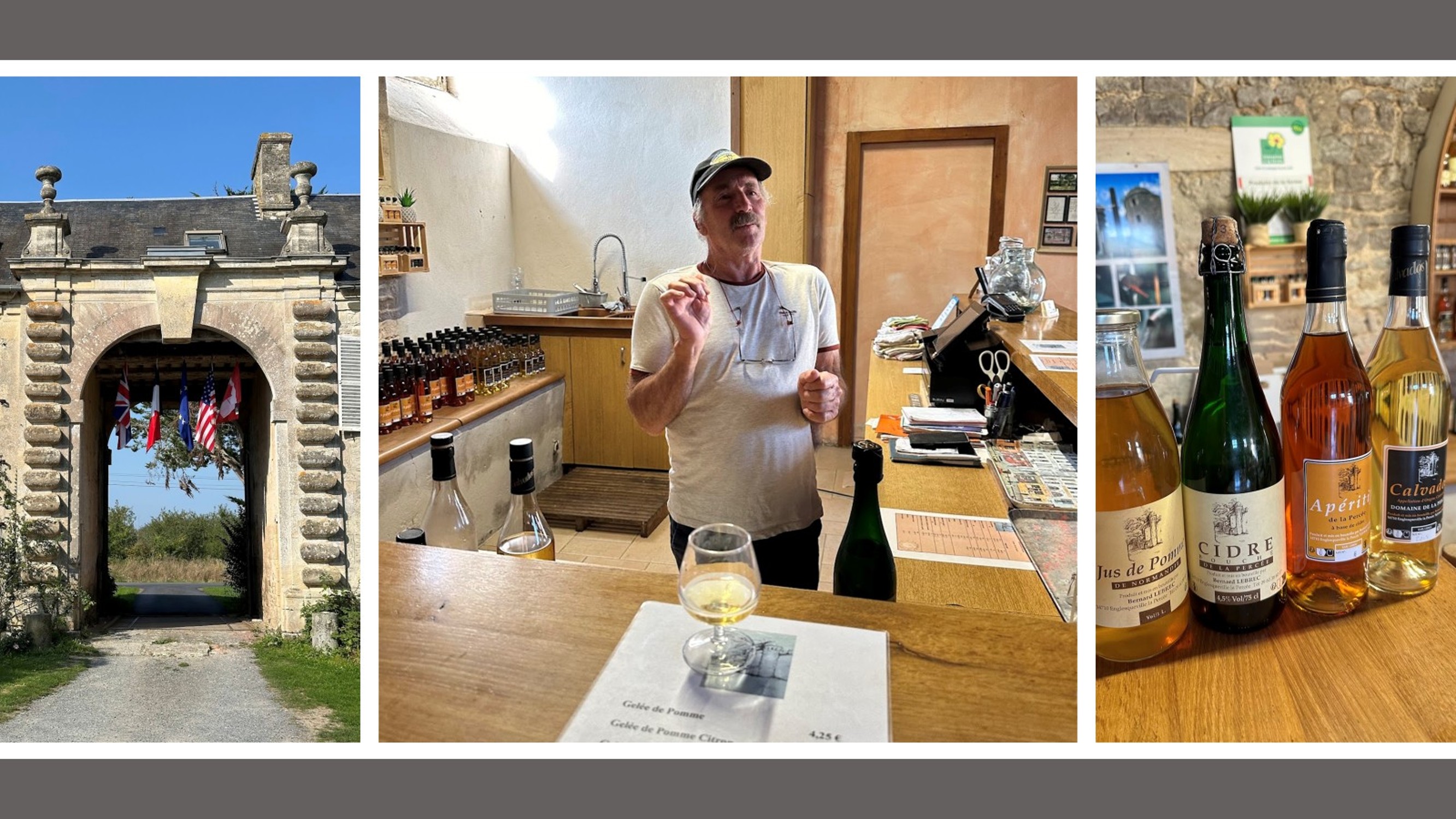
On our way back from Pont du Hac to Omaha Beach we stopped at a cidery to taste their range of products – cider, hard cider and Calvados. Bernard was a fountain of information. He was the bar keep, the owner, an apple grower, and a wonderful historian. His chateau served as Allied HQ after the D-Day invasion and an airfield was created across the street to carry medics and nurses in and wounded back to England. There was an excellent restaurant onsite that we never managed to get to.
Bernard easily switched languages for the many guests he was serving – English for us and German and French for the other patrons at the bar.
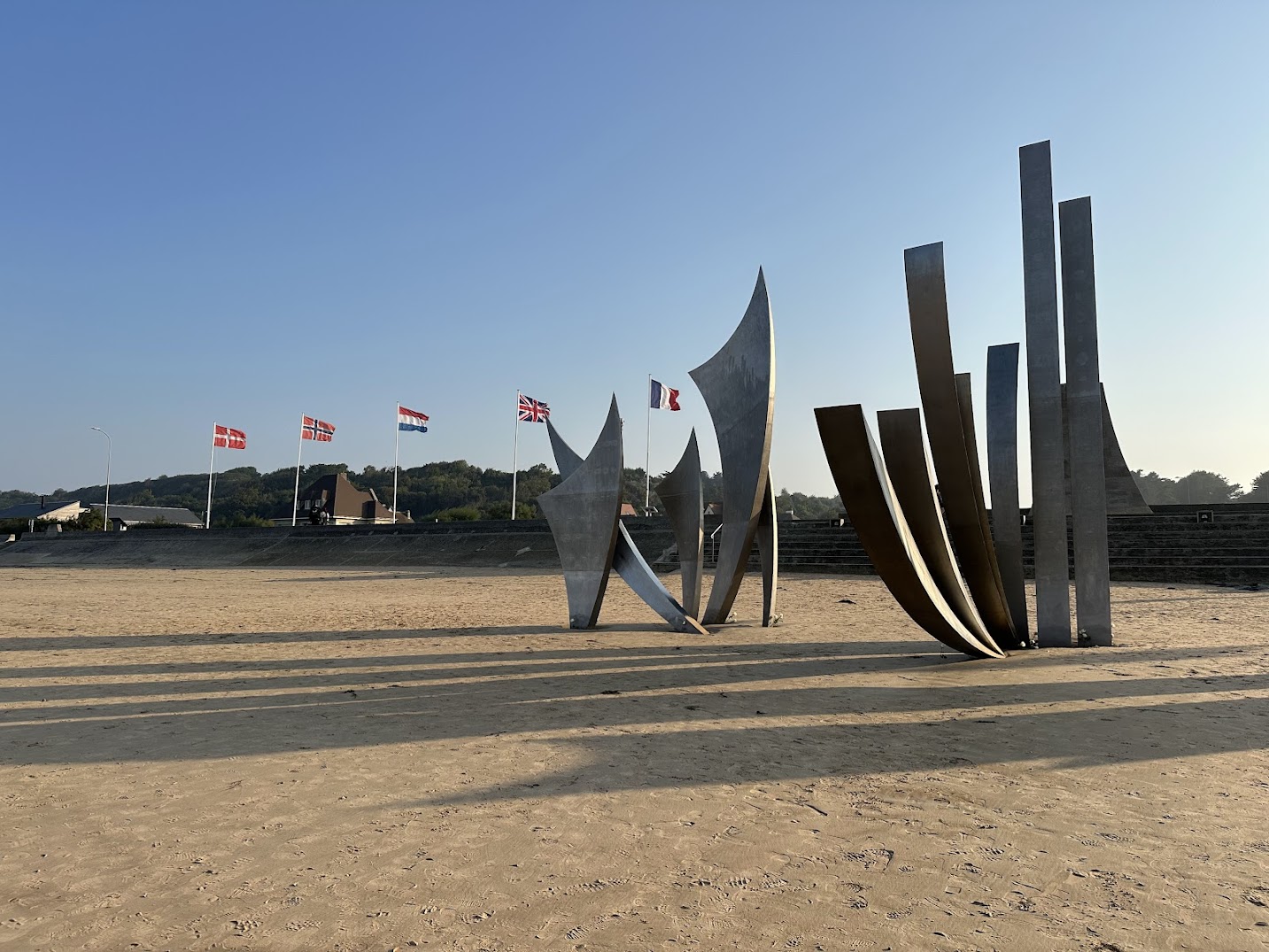
It is hard to believe that it was 80 years ago that so much death and destruction littered this beautiful wide beach in Normandy. This simple sculpture that shows itself fully at low tide and is half underwater during high tide captures so much of what the Allies endured so that we could have our freedom today.
We remember the welcoming people of Normandy with great fondness. They were so gracious to share what their grand parents and older neighbors had gone through.
However, it was while sitting in a mass at the church in Bastogne that served as a hospital during the Battle of the Bulge, that I looked around me and realized there were several parishioners who could have been alive here 80 years ago. History comes alive through the people we meet when we travel.
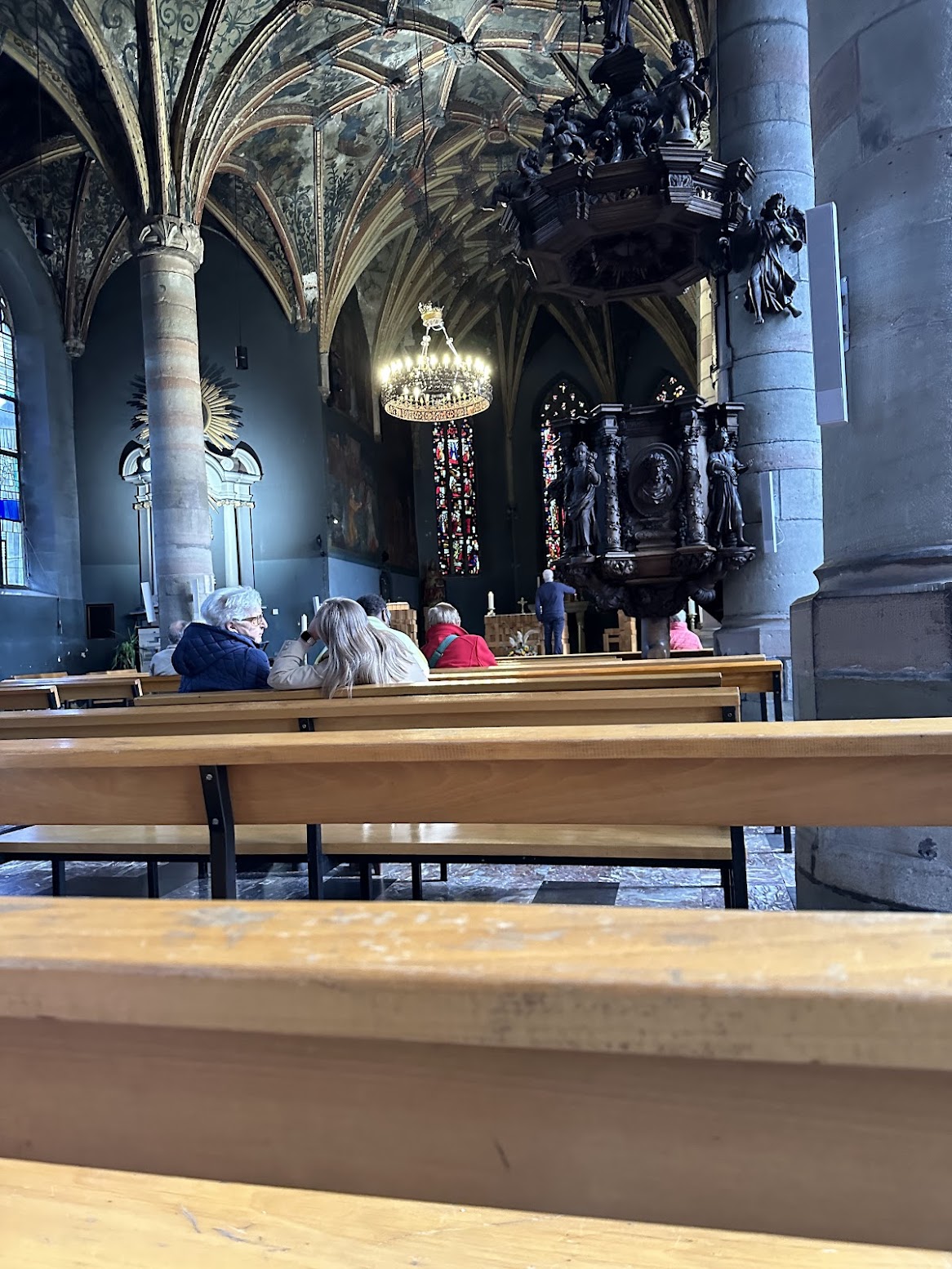
Peace be with you.


 On the Way to Somewhere Else
Hi Skip:
We’ve been to Ireland 3 times so if you want any suggestions, let me know. Of course, it depends on your route. We went to Northern Ireland last year. Being Irish Catholic, it was a bit of an eye opener. Although I’ve read a lot, seeing Belfast was upsetting. They still have a wall separating the Shankill road from Falls road. We took a black cab tour and I wish we would have requested a catholic driver. Anyway, would be happy to talk further if your have any interest. The Titanic Museum in Belfast is well worth going to. And we liked Derry and the Giants Causeway.
Hope all is well with you and Jamie.
Peggy