
Wine Blending and Designing – A Contrast in Seminar Styles

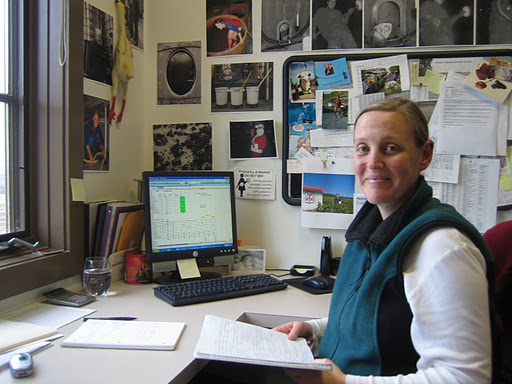
Anna Matzinger at Archery Summit

“Hi. I’m Anna Matzinger, the winemaker for Archery Summit Winery. Today we’re holding one of our annual wine blending seminars but I’m going to make it tough for you today. Instead of having wine from three different vineyards to blend, I’ve gathered wine from three different blocks of the Arcus Vineyard. Hopefully, you’ll be able to tell the difference between each sample of wine. We wanted to introduce you to the subtleties of blending this year.”

Seated in the caves which cellar the Archery Summit 35 gallon French Oak barrels for their luscious Pinot Noirs, 36 of us were eagerly awaiting guidance on how to blend wine. On either side of me were my 23 year old daughter, Maggie, and my 21 year old son, John. We’d chatted before hand with wine club members from Corvalis, OR, Vancouver, WA, and Portland, OR. We’d played the small world game and found some acquaintances in common. But we were ready to go now. In front of us were the basics for wine blending. We each had three 750 ml carafes of the three different wines from the Arcus Estate 40 acre bowl shaped vineyard. A 100ml graduated mixing column with funnel stood sharply next to the empty bottle we would fill with our blend of wine. A one page wine maker’s note was placed in front of us along with blank labels for our wine bottle.

All of my senses were in play as we got ready to blend. The smells from the aging wine continued to drift past, the faint lighting of the mined cellars provided a cool environment. Ground water dripped slowly on the one piece of exposed volcanic rock that surrounded us in the cave. Our taste buds were eager to encounter the fresh from the barrel wines having already been stimulated by a taste of the 2002 Red Hills estate wine. How sensory rich this experience was compared to the energy sapping seminar and workshop I’d just gotten back from.

Fleetingly, I reflected on the difference a hands on seminar was from an abstract, academic workshop that was talking about engineering, design and design education. I was at the fifth annual Harvey Mudd Design and Education seminar the three days prior to the wine blending seminar. I’d gotten up at 3:00am on Thursday morning to fly from Seattle to Claremont, CA. I stumbled into the Olin Science building and walked down steep steps into the auditorium. For three long days we sat in the elevated auditorium looking down on the speaker of the moment. Once the seminar got going and I had a chance to figure out the patterns of the presentations and questions, it felt like the audience was both the Romans and the Lions as one speaker after another was fed onto the coliseum floor to have their research and ideas chewed up. There was no easy way to carry on a conversation, even with one’s neighbor. There would be no break out sessions. There was no place to even put flip chart paper onto the walls and start the flow of connecting ideas and thoughts and brainstorms to create new designs. For a conference about design and design education, there was no design going on. Just a bunch of very bright people broadcasting at each other. Even the meal times were structured with yet more talks. The saddest energy sapper was the last speaker getting up to make a presentation to us telling us what we’d learned in the three days.

As my mind quickly came back to the wine blending, I realized that here was a great way to run a design seminar. Anna started describing how she goes about tasting a given block of wine before thinking about how to blend them. “What I want you to do is taste each of the three wines. While it’s not socially couth, here’s the method that a winemaker uses to taste. First pour just a little bit of wine in the specially designed Riedel Pinot Noir Vinum Extreme glass. Swirl it around to really let loose the aromatics. Then pour the wine into your mouth and swish it all around your palette. Suck in some air with a low gurgling sound to let the wine get even more air across it as it passes over your palette.”

“Now notice how each of the three wines affects different parts of your palette. The Arcus 667 affects the front part of your palette and you might taste blue fruit like blue berries. The Arcus 777 affects the back and sides of your palette. The WARC is woody so you will taste more tannins with it.”

We tried each of the wines and realized that indeed each of them were quite distinct. And then as I stared at the chemistry class equipment in front of me, I realized that I was about to enter a “design of experiment” without any strategy. Do I systematically start mixing? How do I vary the percentages? Do I get the three of us to take very different strategies? Or do I let nature take its course and see what strategy each of us takes? How much time do we have? This could take hours trying to find a winning strategy to blend each of them. Oh my. This task is enormously complicated and we only have three wines to blend. I asked Anna how many components she used for the blending the 2004 Arcus Estate. She laughed and replied that this year she used 15 different components. And I thought three was a tough job. I got yet another glimpse of the complexity and the number of variables that a winemaker has to balance to get a great tasting wine.

Knowing that even with a couple of hours to do the blending, we would only scratch the surface of how many wines we could test, I dove into it. Anna suggested that a good blend would affect all parts of palette. “You noticed how each of the wines affected a different part of the palette. However, you are going to be surprised that just by blending an equal amount, it won’t necessarily taste the same on all parts of the palette. The blend changes what is tasted.” She then went on to describe her own method “As I’m tasting I’m always thinking in terms of shapes. Tasting is also a visual experience for me. Thinking of the palette in three dimensions, how is the blend creating a shape in my mind? I will usually sketch the shape of the blend so that I can remember the smell and taste that I want to achieve. The sketches also help me compare blends across different years.”

It’s been years since I was in a chemistry lab so trying to pour the wines into the measuring column was an unnatural and messy act. My first attempt was simply to mix 1/3 of each of the three wines. Nice try. Didn’t smell very good and didn’t taste very good. So then I took a strategy of using mostly the one of the three varieties that I liked the most (667) for 60% and then 20% of the other two. I really liked the nose and aroma of that blend, but it didn’t taste very good. On it went until finally it was time to pick one of the blends and bottle it (time to ship, Skip). I landed on a 75% 667 and 12.5% of the other two components. Meanwhile, Maggie decided that she really didn’t like the taste of the 777, so she blended just two of the components. John really liked what he ended up with and Maggie and I agreed that it was the best blend from the three of us. One of the couples at our table asked to try John’s wine and he agreed that it was much better than what he had blended. Maybe we have a budding expert in our family.

So off we went to a family style three course dinner while Anna tasted our wines to see what the winemaker thought of our blends. It was a delight to have three of the Archery Summit wines with our three course dinner. As we finished up, Anna “awarded” the best in the class of the blends. There was a last place award for the worst of the bunch which was a pair of Archery Summit labeled boots. She smiled sweetly and said that this blend should be poured out and started over. We all got a great laugh out of that. Then the runners up and winner were announced. All of us really wanted to know what the winning blend was. The “designer” quickly shared that he blended 53% of the 777, 28% of the 667, and 19% of the WARC. I rolled my eyes as I couldn’t even begin to make out the markings on my measuring equipment to get that precise.

We gathered up our private labeled wine bottles and had one last design to accomplish. They had fresh flowers of all varieties so Maggie was kind enough to design a bouquet to take back to Mom.

In the course of the blending, the side bar discussions with Anna were very informative along with her vineyard manager, Leigh Bartholomew. In talking about their strategy for picking the grapes and deciding which blocks of the vineyard will go together in the different fermentation tanks, they further revealed how many more variables went into designing each vineyard designate wine. I was so impressed with Anna’s using a visual vocabulary to describe the blends I asked if I could come down and interview her for our book. She eagerly agreed and also agreed to show me several years of the sketches in her notebook.

On the way home I continued to marvel at the energy creating format of the wine blending and the energy sapping format of the Harvey Mudd workshop. There is a message here. At its heart, designing is about designing. Teaching design is about designing. You can’t separate the abstract from the doing. While the wine seminar was only a couple of hours, I learned a ton and I walked away with a product of my learning. John Heskett’s “Design is to design a design to produce a design” which we’d used as the structure of our paper at the Mudd conference was echoing in my mind. During the course of the blending seminar we got to experience each of the meanings of design. Each of us is our own winemaker. Each of us is our own designer. And best of all we produced a great tasting Pinot Noir “design” to take away with us.
Posted in Wine | Tagged , | 2 Comments

Enjoying a Riedel Glass Tasting

The email arrived one dreary, rainy March day – come to a Riedel tasting at Archery Summit Winery. What’s a Riedel tasting? Don’t they make wine glasses? Are we supposed to eat the wine glass and then slug down some wine afterwards? Intrigued and looking for anything that would brighten my day I kept reading. Maximilian Riedel, designer of the Riedel “O” series crystal wine glasses, was giving a seminar on the differences that a wine glass makes to the taste of wine. This I’ve got to see. See? No, this I’ve got to taste. Of courese, everybody knows that the glass doesn’t make any difference to the taste of a wine.

Deciding it was time to discover something new, I RSVP’d and also signed up my 27 year old cognitive psychologist daughter. I figured that I might succumb to mass hypnosis about the difference that a leaded crystal glass makes versus a regular wine glass, but I knew that Elizabeth was too much of a scientist to let that happen to her. Her young palette is so different from mine that I figured that would also be a good test.

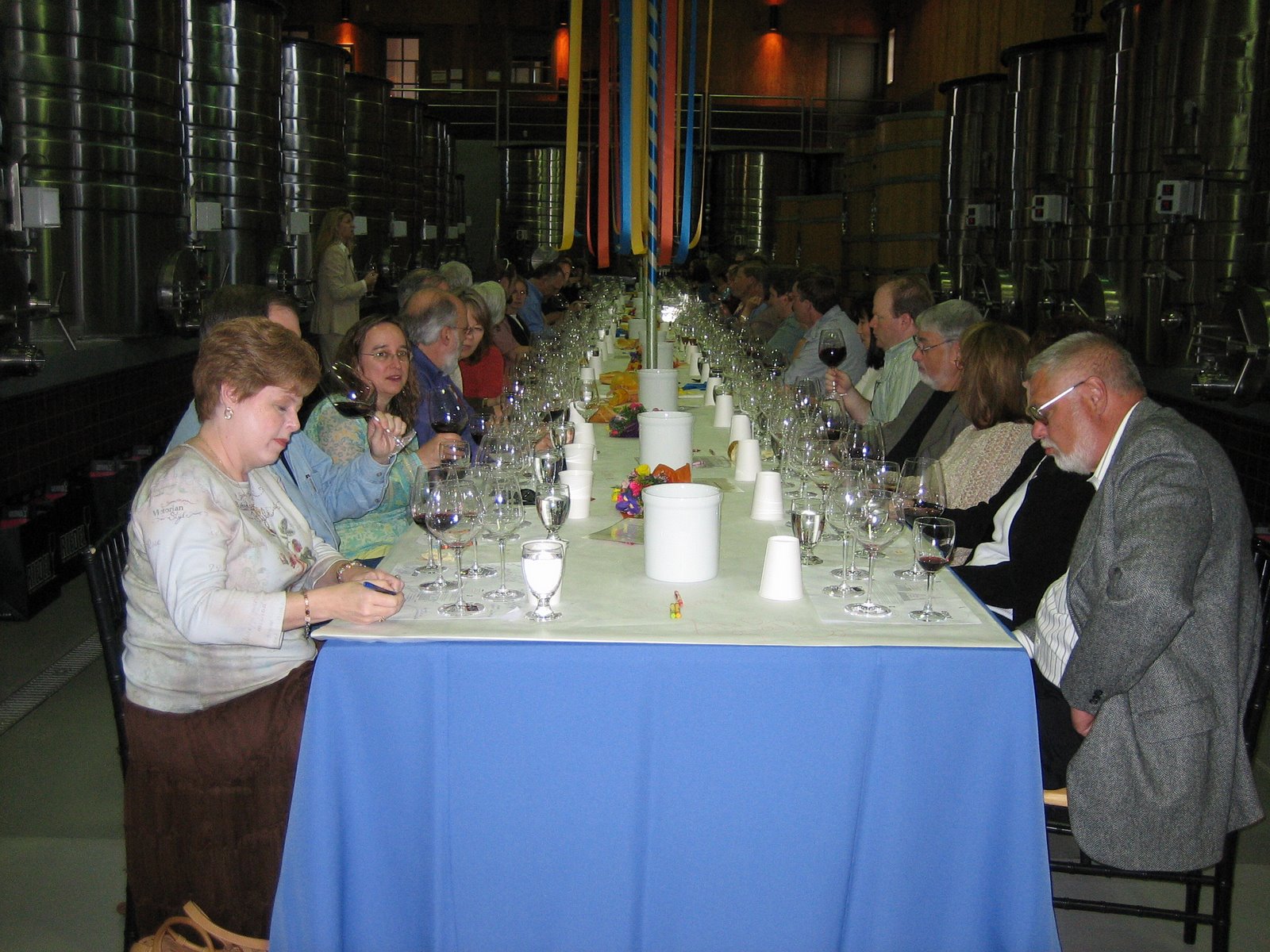
After a pleasant reception in the Archery Summit barrel aging caves sipping on their 2002 Red Hills Estate Pinot Noir, one hundred of us “Bad to the Beaune” Wine Club members moved into the fermentation room where long rows of tables were laid out. Each place setting had five wine glasses plus water glasses. Maximilian Riedel started the seminar with a history of the 11 generations of Riedel glass makers and how he got interested in designing wine glasses. As he switched from history to glass tasting, he reminded us that 70% of the taste of a wine actually comes from our sense of smell, the aroma, the nose of the wine, the bouquet (recent research suggests that 90% of our taste is actually smell). He then went into the basics of a good wine glass – it must be lead crystal; it must be completely clear; it must have the appropriate volume to allow the bouquet to collect but not overwhelm; and it must allow for “three fingers” of wine with plenty of room for the bouquet.


“OK. OK. Come on get on with it,” I thought. I’ve got these four great wines in front of me, let’s get on with the tasting. As if he heard my thoughts, Riedel said “Let’s cut from the theory and get to the experience.” Our wines were laid out on a placemat with an empty “Joker” glass on the left at the start of a semi-circle. To the right of the Joker class were the Chardonnay, Sauvignon Blanc, Pinot Noir and Cabernet Sauvignon glasses. Each wine came in its own differently shaped Riedel Vinum Extreme wine glass.

“We’re going to start with the Sauvignon Blanc in front of you,” Riedel directed. “Go ahead and pick up the glass and give it a good swirl. We want to really aerate the wine and get a good smell going. Now, stick your nose into the glass and drink deeply of the bouquet. Try that again two or three times. OK, go ahead and taste the wine. Wonderful, right?”

“On your left you have what we call a Joker glass. It is a glass that you will find in 95% of the restaurants that you go to and is probably the kind of glass you drink from at home. It is used for both red and white wines. Now I want you to pour your Sauvignon Blanc into the Joker glass and go through the same routine. Swirl, smell and then taste.”

Elizabeth and I nearly banged into each other as we turned to simultaneously exclaim –“There’s no taste to this wine! What happened to that wonderful tasting wine we just had? It’s a trick.” We quickly poured the wine back into the Riedel glass and Voila!, there was our great tasting wine again. I couldn’t believe it. So back and forth I poured the wine between the Riedel glass and the Joker glass. Riedel glass – tasty. Joker glass – barely tasteable, and a not very good wine. What was going on here?

Riedel asked rhetorically “So what’s going on here? Let’s run another experiment. Notice that the Joker glass has a rolled lip and the Riedel glasses have a cut, almost sharp edge. Try pouring some liquid from each glass. Note that with the Joker glass in order to pour the liquid you have to jerk the glass to get the liquid over the edge. With the Riedel glass the liquid pours smoothly to exactly where you want it to go. What this means is that with the Joker glass you are always “tossing” the wine into the back of your palette, to the back of your mouth. In front of you is a piece of paper that shows which part of the tongue and palette are sensitive to which tastes. We taste sweet things on one part of the tongue, bitter things on another etc. Riedel glasses are designed through the smooth edge and the shape of the opening to pour the wine onto the appropriate part of the palette that is best affected by the wine varietal (Chardonnay, Pinot Noir, Merlot, and Cabernet Sauvignon) that you are tasting.

“So let’s try the next experiment. Taste the Chardonnay in its Riedel glass – remember to swirl, smell, swirl, smell, swirl and taste. Then pour the Chardonnay into the Joker glass. Big difference, right? Now pour the Chardonnay into the Sauvignon Blanc Riedel glass. It certainly tastes better than the Joker glass, but not as good as the Riedel Chardonnay glass, right?” One hundred heads bob in unison. We were all clearly noticing the difference along with savoring the wonderful Chardonnay.

“So it is not just the quality of the crystal glass versus normal glass, it is also the shape,” Maximilian explained (having this much wine and fun we were now on a first name basis). “The shape matters. One of the things that differs between varietals is the alcohol content. So the more alcohol in the wine, the more we have to dissipate the alcohol smell. Many of your probably got some tears in your eyes when taking a good whiff of the Chardonnay in the Sauvignon Blanc glass. That’s the alcohol overpowering the unique fragrances of the Chardonnay. Notice that the Riedel Chardonnay glass opening is much larger than the Sauvignon Blanc and there is a much larger bowl. The larger opening allows the alcohol smell to escape and the larger bowl collects the subtler fragrances. Now reverse, put the Sauvignon Blanc in the Chardonnay glass. Notice that the Sauvignon Blanc aromas are dissipated. It doesn’t taste the same as in its own glass.”

Elizabeth was so excited, “this glass tasting is what I would dearly love to use in the psychology Perception class that I teach at the University of Oregon. It’s so hard to get across so clearly the differences in the world that affect our senses and perceptions.” Then she muttered, “Damn. I can’t do this with the undergraduate students because they are underage or might have religious restrictions. Not to mention how could I afford to get 150 sets of glasses and the appropriate wines.” We both laughed.

We continued with our education as we tried each of the four wines in each of the five glasses. Each variety of wine tasted far better in the glass designed specifically for it. As I was drinking the Archery Summit 2002 Arcus Estate Pinot Noir in the Riedel glass, I had one of those wonderful “Ah hah” moments. It seems every time I taste a fine wine in a tasting room and love the taste, I get home and it never tastes as good. It’s the glass. Oh, my bank account is in trouble now. The greatest gift of the evening was taking the Riedel Vinum Extreme glasses home. In the intervening months, I’ve run the “glass tasting” experience with over three hundred friends with ages ranging from 21 to 60 and interest in wine from the “I don’t care” to the serious wine lover. In every case, the glass tasters have noticed the big difference that an appropriately designed glass can make.

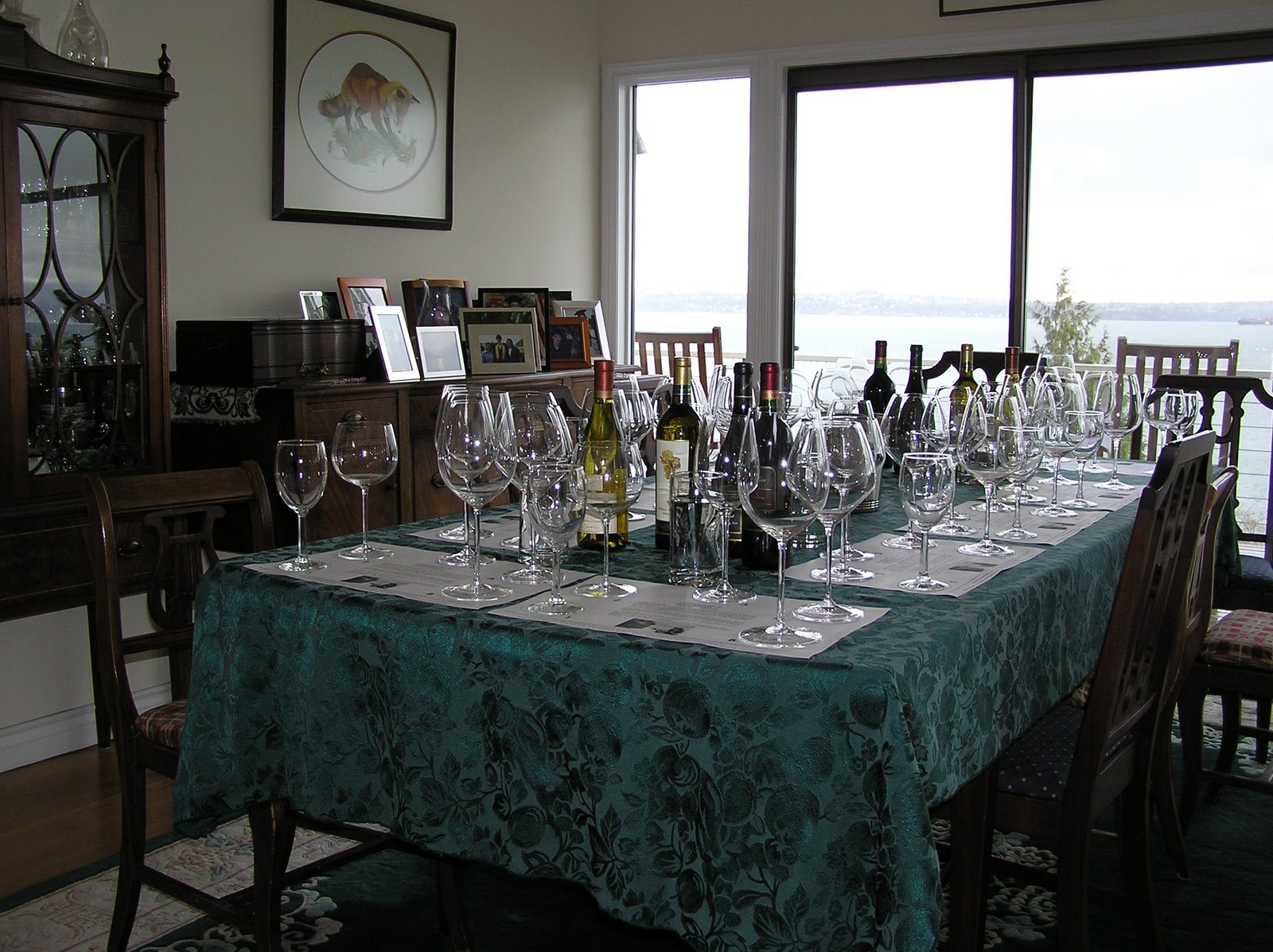
When we have friends over to the house to do a wine and glass tasting we usually try the wines in three types of Riedel Glasses – Vinum Extreme, the Sommeier Series, and the O series. These three series represent a range of prices and illustrate large differences in smell and tastes with the wines. My favorite is the Sommelier series. The photo on the left shows our dining room table set for a tasting with eight people with four of our favorite northwest wines.

Posted in Wine | Tagged , , | 9 Comments

Grounding Myself at Benzinger

Every once and a while I have to take an afternoon and ground myself in biodynamic wine making at the Benziger Family Ranch Winery outside of Glen Ellen in Sonoma Valley California. Two weeks ago, Barney Barnett, Geoff Bock and I travelled from San Jose, CA up to the ranch to have Barney introduce Geoff to biodynamic wine grape growing and taste the Tribute series of biodynamic wines.

Benziger’s Mike Benziger and Alan York were the cover subjects of a great series of articles on biodynamic wines in the Wine Spectator Magazine.

In the above picture, Barney is explaining to Geoff the finer points of how the vines are pruned to get quality rather than quantity for better tasting wine. The Benzigers have a great tour of the vineyards to show all of the aspects of biodynamics and farming for flavors.


The new addition on this visit was a gaggle of sheep to aid with natural care taking of the vineyard. As Mike Benziger explained to us later in the day: “One of the worst things that can happen in the vineyard is to compact the soil around the vines. That is exactly what happens if you have to use a tractor to mow the grass. With these sheep and the Scottish cows that we also have in the vineyard three great things happen. The animals keep the grass “mowed”. The animals with their running around and their movement in the vineyard are automatically “tilling” the soil. And finally they all “poop” on a regular basis which provides needed fertilizer to the vines. What a wonderfully natural system.”

Over the course of the next couple of hours we moved from the top of the vineyard, down to the crush pad and the barrel cellars cut back into the hillside, and then followed the flow of water to the holding ponds. The holding ponds are designed to recycle all of the water that hits the Benziger ranch back on to the vines. For that water that does leave the ranch it is cleaner than when it fell from the sky as rain.


As we walked back up to the tasting room, the Scottish cows came strolling by. From a biodynamic viewpoint, these cows have the cleanest and most fertile “poop” of any cow due to the length of their intestines.

By the time we hit the tasting room we were ready to sample the results of this commitment to the highest state of biodynamic certification. Unfortunately, all of the Tribute Bordeau blend had been sold. So we had to settle for the rest of what was being poured. We were fortunate to taste some of Joacquin’s Inferno which is some Zinfandel planted at the very top of the vineyard. While only 70 cases were produced, I was able to snag six bottles. The real treat for me this day was the Obsidian Point Cabernet Sauvignon. Rarely have I tasted a Cabernet Sauvignon that was not a blend with other varietals. This part of the vineyard is on the lower part of the bowl and closest to the Jack London State Park. These vines have a high concentration of obsidian in the soils. I couldn’t resist giving myself a New Year’s treat of six bottles.

If you are ever in the Sonoma Valley, I would heartily recommend spending an afternoon really understanding biodynamic wine making the Benziger way. This way of creating wines shows off what the French call terroir. The Benzigers are committed to producing wines that reflect the best of the terroir rather than trying to imitate what the popular wine reviewers rate homogeneous wines that could be grown anywhere.

Posted in Wine | Tagged , , , | 2 Comments

The Life Changing Amazon Kindle

The Amazon Kindle has changed my life. No longer will I break my back carrying several books on my business trips to occupy airport, airplane and hotel time. I can carry one small device in a beautiful black leather cover that is the same size as my Moleskine notebooks.

Information on the Amazon Kindle

Some context – when it comes to software I’m an extremely early adopter. When it comes to hardware devices, I usually wait till V2 or V3 before jumping in (I still haven’t bought a tablet PC). I’ve wanted an eBook reader ever since I saw Xerox Parc’s 300 dpi displays. However, the RocketBook and the Sony eBook didn’t dislodge my credit card. So with great trepidation I bought the Kindle sight unseen and hoped that it would live up to the early hype. And that I could get beyond the early negativity.

My Amazon Kindle arrived in early December and this is the first usage report.

The out of box experience was surprisingly easy. I pulled the Kindle out, turned it on, it was already charged and immediately I was connected through the wireless to the Kindle book store.
I decided that I wanted to purchase a mixture of my mind occupying mystery novels and business books. So I ordered two novels that I’d been waiting to buy until the Kindle arrived and then two business books – one I’d already purchased (Super Crunchers) and one that I had just heard about yesterday (Innovate or Perish).

By the time I had ordered the books and gotten back to the home page, all of the books were downloaded by the wireless connection and were ready for viewing. Way too cool – no longer do I need to connect to my desktop computer with whatever funky USB connector is required.

The viewer is fairly comfortable to hold in multiple positions. But one of the really cool parts is just plain old fashioned – the leather cover that goes around the Kindle. It looks almost exactly like my little black Moleskine notebook.

Both the positive and negative reviews that are showing up on the Kindle are pretty much spot on.

Positives:

  • The screen is very readable and the adjustable font sizes provide a wide range of viewing options. I am comfortable with the smallest font and that helps get more on a page. I’m surprised at how legible the eInk technology is.
  • Having the two NEXT PAGE buttons makes it easy to advance no matter how you are holding the device
  • The linkage to the Amazon KINDLE store is just fabulous. It is just way to easy to order a book. No more hanging out in the airport bookstores. And for the most part, everything is the same cost as a paperback – $9.99.
  • The device weighs and feel much like a paper book without the strain of having to hold the physical book open and is way more easy to hold than a hardback.
  • It’s easy to navigate and the scroll button is very usable. Much easier than my blackberry.
  • The SEARCH function is very powerful and it has gotten me right to the places I expected in the business book that I’d already read.
  • I really like the download sample files so that I can get a sense of whether I want to buy the book now.
  • It was very easy to download word and PDF files (though as advertized the PDF didn’t come through really well on the formatting.)
  • It is easy to hook up to my computer and I immediately downloaded Queen’s Classic hits to listen to while reading my junk novels. The sound is suprisingly good. The UI for the music leaves a ton to be desired but is still in the EXPERIMENTAL category.
  • The highlighting function is very easy to use.
  • The annotation function is very easy to use and search.
  • All in all the reader will hold an enormous part of my future library.
  • Given that the longest book I’ve ordered so far only takes up 1 MB, the basic memory can hold a ton of books. However, the MP3s take up a lot of space so I have ordered a 1GB SD card.

Negatives:

  • As all the detractors have noted, the most irritating part of the eINk technology is the “flash” that happens as you go between one page and the next. It appears that you have to set the page to all black before being able to write on it again. I’m almost to the point where it doesn’t bother me, but it is still irritating.
  • Because of the above, the speed between pages is slower than I would like. In response, I caught myself jumping the gun and hitting the Next Page before I had quite finished with the page.
  • Typing on the device into search boxes etc IS PAINFUL. I have no idea why it takes seconds simply to echo what is being typed on the keyboard. Probably some artifact of the eINK technology, but it is really painful having to wait for the display to catch up to what I’d typed.
  • The experimental web browser is pretty pitiful. Really hard to do something as simple as go to Google and do a search.
  • The back button is pretty powerful moving between the books or papers that you are reading. I still have not figured out how to reverse the effects of the back button if I hit it instead of using the Next Page button.

Preliminary Usage Conclusions:

  • In spite of all the negatives, I now can’t imagine living my life without a Kindle or equivalent. To have my most heavily used website (Amazon Books) always on and available to me for immediate gratification (no waiting for 2 day prime shipping or my next visit to the airport bookstore).
  • I have two big lifestyle tests for the device – will it be comfortable to read in bed and can I read for hours on a plane trip to the East Coast.
  • I was able to read a James Patterson novel for over 90 minutes in bed with no discomfort (actually a lot less than with hard back books).
  • I don’t think that the device will be a replacement for my laptop for word and PDF documents.
  • I will have to work really hard not to engage in a flurry of buying electronic versions of books – my addiction.
  • All of a sudden my lack of bookshelf space in our house looks tractable if I can shift most of my buying to the Kindle – more room for Cayuse wine. 🙂

After a month of usage of the Amazon Kindle I’m still discovering positives and negatives. On the postive side:

  • The economics work great. I didn’t do an economic analysis before ordering the Kindle but have now accumulated usage data. Because I can buy first run novels for paperback prices, I will pay for my Kindle in less than two months by the $15 I am saving on each book.
  • The instant gratification works great. On my recent business trip I walked into the Airport Borders bookstore and did my usual browsing to see what was new. There were a couple of new novels that were published since my last business trip. I pulled out my Kindle, connected to the Kindle store, and quickly downloaded the two new novels. This test showed me that new novels are making it into the Kindle store at the same time that the books are hitting the physical bookstores.
  • I own several books that are just too big and bulky to carry around in my backback for my daily commute by ferry or when I’m travelling by airplane. I want to read them, but don’t want to carry them. One of the recent books is Einstein: His Life and Universe by Walter Isaacson. I realized that I could order the Kindle version and save my back.

The BIG negative:

  • I am reading my Kindle as I board the Alaska Airlines flight to San Jose and as I sit down and continue to flip pages, the stewardess makes the dreaded announcement – “Turn off all electronic devices.” I completely forgot that on an airplane there would be 30 minutes on taxi and takeoff and the same amount of time landing where I can’t read my Kindle. That is way too long for me to be without reading material. So for the moment I am not completely free of the paper book to make it through this dreaded hour. But now I am really motivated to have the Amazon Kindle declared a book for the purposes of airplane takeoff and landing and not an electronic device.

All in all the Amazon Kindle is a life changing device. I can’t imagine living without it. However, I will also eagerly await the next version.

Review of the Amazon Kindle

Amazon Kindle and Recommended Kindle Books

Posted in Amazon Kindle, ebook | Leave a comment

Synthesis versus Analysis

When I do consulting work for a client, sooner or later I’m asked “what is this process you are using?” Often, this is a polite way of saying that they would rather have a nicely laid out, step by step process with clear deliverables at each step. When this happens, I stop and ask the client if they can describe to me the difference between analysis and synthesis.

The most common response is that the two words mean the same thing.

I then describe the difference between the two in the same way that my mentor, Russ Ackoff, first described the difference to me.

Analysis has three steps:

  1. You identify the system under study and then disaggregate the system into its component parts.
  2. Then, you understand each of the component parts.
  3. Lastly, you reaggregate the component parts into the system.

Russ always noted a couple of things at this point. First, by using a process of analysis you can understand the what and the how, but not the why. Second, in business there is always the temptation to optimize the parts and not the whole. Ackoff notes that if you use a process of analysis on ten of the best cars, and then select the best components from the collection, you won’t even be able to reaggregate the best parts into a complete car.

To understand “why” questions, you need to use a process of synthesis. Synthesis is the opposite process to analysis:

  1. Identify the system under study and then identify all the systems that the identified system is a part of.
  2. Understand the greater system of systems.
  3. Disaggregate the greater system back into the component systems.

Synthesis is about making sense of the whole.

At this point, the client realizes that what we’ve been doing is focusing on the why rather than the how by looking at our containing systems. The client also realizes that a linear process of analysis doesn’t work for “why” questions and processes of synthesis. I add to the discussion by sharing that in my experience I’ve found that most knowledge workers are very competent at analysis, but lack the experience and training to do synthesis. I view my value add as providing a range of experiences in understanding how to do synthesis.

A more complete description of synthesis versus analysis can be found at Google Books.

A complete list of Russ Ackoff’s books in print.

Russ Ackoff’s content is best absorbed through video.

Posted in Idealized Design, Knowledge Management, Russ Ackoff, WUKID | Tagged , | 2 Comments