Lifelet: CanyonLands National Park

On this day of national shame no matter what your political persuasion as the government shuts down, I salute the National Parks which have given our family so much joy. The “google search image” celebrates our National Parks:

123rd-anniversary-of-yosemite-national-park-6124274398003200-hp

“Google is celebrating Yosemite’s 123rd anniversary – on everyone else’s behalf.

“Yosemite and all the US’s national parks, monuments, and zoos were closed at midnight last night, after Congress failed to pass a new budget.

“The government shutdown comes at an ironic moment for Yosemite: today is the park’s birthday, and it won’t be open for its own party.”

Today’s celebration Lifelet is of CanyonLands National Park in Utah, part of the Utah Rocks National Parks. As part of our sunshine get away from Seattle weather, we toured CanyonLands NP and Dead Horse State Park. The day before we were at Arches and climbed out of the river valley onto several plateaus filled with arches and hoodoos.

CanyonLands is at the top of the plateau and you look outward and down at wondrous mazes of canyons. All I could think of the whole time we were driving the park roads was of Robert Redford and Paul Newman hiding from the feds in their film Butch Cassidy and the Sundance Kid.

[For the lower resolution video click here.]

In some of the photos you can see the narrow dirt roads leading down to the canyon floor. My heart was too weak to take a drive (dive) downward.

For a humorous look at the wonderful world of innovation and new ventures, checkout Fl!p and the gang at Fl!p Comics.

Posted in Lifelet, Lifelogging, National Parks, Nature | Leave a comment

B2B2C

Over the last six months, I started a research project in conjunction with a B2B accelerator, 9Mile Labs, to understand what factors lead to entrepreneurial success.  A key part of the research method was to use video ethnography to capture a record of the many kinds of interactions of companies within the accelerator.

Spending several hundred hours behind a video camera was beyond boring. Evaluating those hundreds of hours of video is cruel and unusual punishment. Yet, through observing without intervening, my pattern recognition brain had to find something to do.

Most of my professional life is spent in business to business product development and new venture generation. Through forty years of experience, most of my understanding of this space is deeply tacit. Through watching nine new ventures struggle with the development of B2B companies, I saw something that I’d completely missed in how I think about B2B business.

B2B businesses are no longer B2B, they are really B2B2C. Ok, Skip, enough with the acronym city. What are you talking about?

With one exception, all of the accelerator companies were building a product to be used by consumers or end users. Their relationship with the businesses who were their customers was as a distribution channel.

Let’s step back and look at some definitions:

B2BBusiness-to-Business

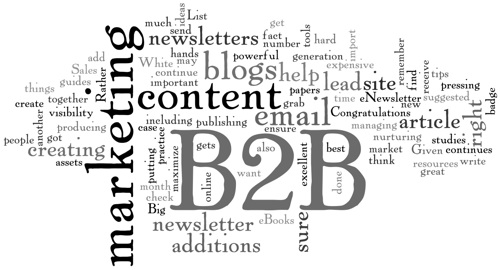
b2b-blog-word-cloud-image1

Business-to-business (B2B) describes commerce transactions between businesses, such as between a manufacturer and a wholesaler, or between a wholesaler and a retailer. Contrasting terms are business-to-consumer (B2C) and business-to-government (B2G). B2B branding is a term used in marketing.

B2B is also used in the context of communication and collaboration. Many businesses are now using social media to connect with their consumers (B2C); however, they are now using similar tools within the business so employees can connect with one another. When communication is taking place amongst employees, this can be referred to as “B2B” communication.

The terms B2B and B2C are short forms for Business-to-Business (B2B) and Business-to-Consumer (B2C). Both describe the nature and selling process of goods and services. While B2B products and services are sold from one company to another, B2C products are sold from a company to the end user.

While almost any B2C product or service could also be a B2B product, very few B2B products or services will be used by consumers. For example, toilet paper, a typical B2C product, can be seen as a B2B product if it is bought in larger quantities by a hotel for their restrooms and guestrooms. However, few people will buy an excavator for their private use.

Most B2B products are purchased by companies to be used in their own manufacturing, producing goods and services to be sold on. The value added product can then be either sold to yet another company; or to the consumer.

B2C – Business to Consumer

Business-to-customer marketing refers to the tactics and best practices used to promote products and services among consumers.

B2C marketing differs from B2B marketing in a number of key ways, one being that it often depends on campaigns’ abilities to invoke emotional responses, rather than solely demonstrating value.

Like most forms of marketing, technology has greatly expanded the number of channels B2C marketers must use in their campaigns. However, it has also provided companies with the ability to use different techniques across multiple channels based on which demographics are most likely to access them.

The most popular or effective channels for a business will differ according to its unique demographic, but the web is becoming universal in consumers’ shopping research. According to a report from Pew, 33 percent of adults aged 18 to 39 turn to the internet first when looking for information on local businesses, while 26 percent of older adults rely primarily on the web for researching nearby companies.

Additionally, the web is the starting point for research in a number of B2C businesses, such as restaurants and bars, by adults of all age groups.

The folks at Keyora do a quick overview of the differences between B2B and B2C:

“When looking at the difference between B2B and B2C e-commerce, often times people assume the most obvious difference – B2B is businesses selling to other businesses online, and B2C is businesses selling to consumers online. Sure, that’s true. But that’s not all.

Let’s look at a few other differences.

Purpose 

The purpose of B2C e-commerce is not only to sell products and services online, but also to drive traffic, increase and strengthen brand awareness, and educate customers on catalogues and promotions. Generally, there is equal focus on customer retention and bringing in new ones.

In B2B e-commerce, the purpose is to increase and strengthen existing business relationships overtime, and cut costs of searching and dealing with new vendors. B2B e-commerce involves lower traffic, but higher AOV.

Purchase Power

In B2C e-commerce, the purchase process is much less complex. The buyer is usually also the decision maker. Purchase power is often influenced by brand loyalty, consumer recommendations and reviews, and consumer preference and taste.

The purchase process in B2B goes much beyond a single buyer and one decision maker. Purchase processes in this type of commerce generally involves a number of highly knowledgeable buyers that consult numerous executive decision makers.  Orders are made based on the needs of the company such as raw materials for a manufacturer.

Infrastructure

B2C e-commerce systems generally have a simplified structure that communicates a paralleled brand message and product catalogues across the same group of customers.

In B2B e-commerce, this requires a more advanced system in which products and prices are customized to different groups of customers. A high degree of personalization creates streamlined process flows, eliminating browsing for the needed product catalogue for order.

Payments     

B2C transactions are done at the point of sale on the B2B web store via credit or debit cards, or even customer gift cards.

In B2B transactions, payment processes are set up on account-basis. Consumers place their orders electronically on the web store, and receive the invoice for the purchase to process the payment.

B2B2C – Business to Business to Consumer

“Business to Business to Consumer (B2B2C) is an emerging e-commerce model that combines Business to Business (B2B) and Business to Consumer (B2C) for a complete product or service transaction. B2B2C is a collaboration process that, in theory, creates mutually beneficial service and product delivery channels.”

So that’s the definitional background. But a funny thing happened on the way to observing the product pitches. All of their product presentations looked like a B2C company product pitch. What was going on?

Slowly, it dawned on me that most of the B2B businesses were really B2C companies and they were just selling to a “business” as a distribution method. B2B2C was a better description of what these companies were really doing.
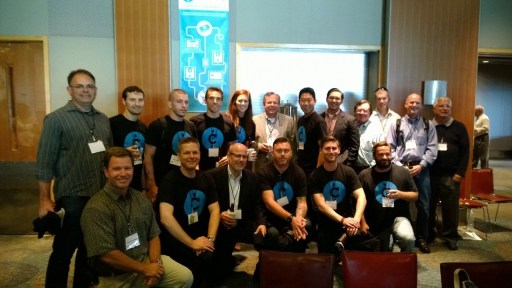
Comr.se team at 9Mile Labs Demo Day

Comr.se extended team at 9Mile Labs Demo Day

If we take Comr.se as an example, they figured out how to do an eCommerce transaction directly in Facebook or Twitter without providing a pointer back to a brand’s eCommerce site. All of their product development work is aimed at how to interact with a consumer directly in these social media channels. Their interaction with a business is for the business to “distribute” the Comr.se software through the brand’s social media customer relationships. By relieving the brands of any additional website or eCommerce development, Comr.se hosts these transaction so they are also getting direct access to the customer information.

The businesses (brands) that Comr.se works with (like Dita Eyewear) are excited about this approach as it removes one more transactional friction from the customer (reduce the number of clicks to order something) as well as potentially provide them with some increased margin. Comr.se follows the key business strategy recommended by Mack Hanan of creating “growth partners.”

“How can you grow your business?

“You cannot.

“You can only grow someone else’s business.  His business growth will be the source of your growth.  By growing, he will force growth back upon you because he will want you to grow him again.

“The businesses you can grow have a name.  They are called your major customers.  Their growth must be the objective of your business.  The capabilities you require to grow them must be your asset base.

Growth requires a partner. A growth partner is a special kind of customer.  He is a customer whose costs you can significantly reduce or whose profitable sales volume you can significantly increase.  In one or both of these ways, you can improve his profits.  This is the basis for his growth.  It is also the basis for his contribution to your own growth.  As the two of you grow each other, you will become mutually indispensable.

“If you cannot grow a customer, you cannot partner him.  You can continue to do business with him, buying and selling, but the maximized profits of growth will elude both of you.  If all your customers are buyers instead of growers, you will be a slow-growth or no-growth business.  None of your customers will be growing you because you will not be growing them.”

By using this B2B2C strategy, Comr.se is an excellent example of what Forrester termed “transactive content – software that blends transactions with interactivity and content over the net.”

Transactive Content

If you are a B2B company, what would your products and services look like if you thought in terms of B2B2C, growth partnering and social media “transactive context”?

For a humorous look at the wonderful world of innovation and new ventures, checkout Fl!p and the gang at Fl!p Comics.

Posted in Design, Entrepreneuring, Flipped Perspective, Human Centered Design | 5 Comments

Lifelet: Mighty USS Missouri

One of the joys of having a home that overlooks the Puget Sound is the wide range of shipping traffic that flows through the sound. Since we are on the path for ships going to and from the Bremerton Naval Ship Yard, it is always a treat to see these large beasts of the sea pass by our view.

One of the most poignant moments was watching the USS Missouri make its final voyage from Bremerton, WA to Pearl Harbor, Hawaii.

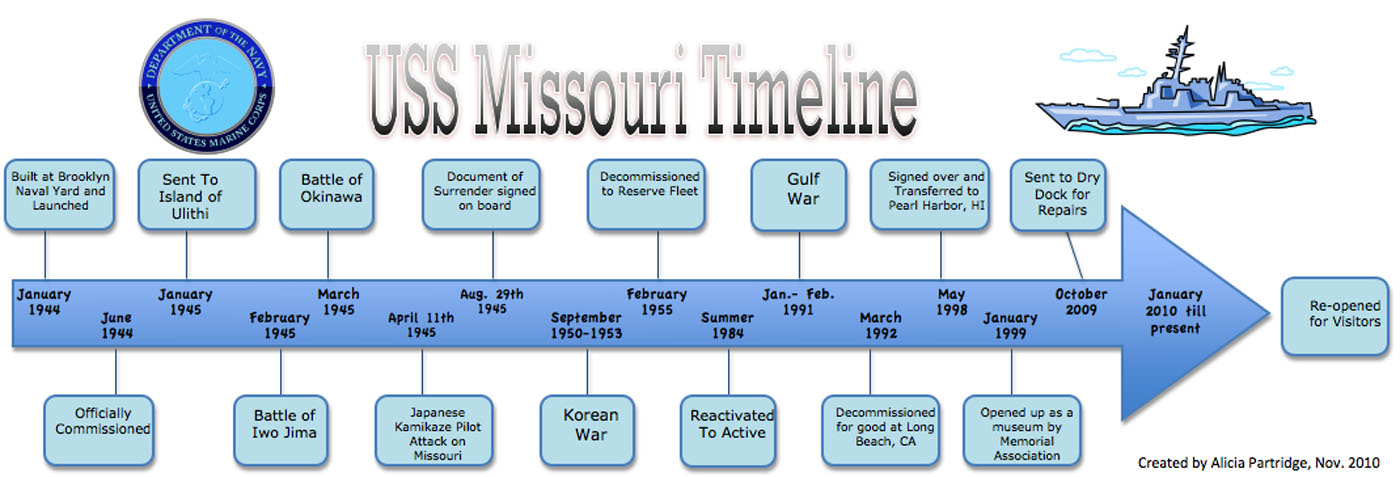
The USS Missouri had a long history with the US Navy as the timeline below shows:

Uss-Missouri-Timeline

This website carries a brief history of the USS Missouri:

“The ship was built during World War II and is one of the Iowa-class battleships that were designed for speed and firepower. The Missouri was the last battleship ever built. The ship was part of the force of firepower in the battles of Iwo Jima and Okinawa. During the war’s final month, the “Mighty Mo” served as Adm. William “Bull” Halsey’s flagship for the Pacific Third Fleet.

The Mighty Mo is massive:

  • 887 feet in length: 209 feet from keel to mast
  • It weighs 58,000 tons on a full load.
  • It is 5 feet longer and 18 feet wider than the RMS Titanic.
  • The ship could travel at 33 knots.
  • It possessed 13.5 inch thick steel armor plating that protected the hull.
  • It is also known for its 16-inch guns and twenty 5-inch anti-aircraft guns.

The last voyage of the USS Missouri was a reminder of all the valiant sailors that served aboard this massive battleship. We give you our eternal thanks.

For a humorous look at the wonderful world of innovation and new ventures, checkout Fl!p and the gang at Fl!p Comics.

Posted in Uncategorized | Leave a comment

Lifelet: Kolob Canyons of Zion National Park

On our drive north from Zion National Park we spotted Kolob Canyons of Zion National Park. Having a few hours of daylight left, we turned into the park and started a steep climb out of the flat lands. As we reached the upper part of the  park we were amazed at the red rock formations – and nobody was around. We had the park almost to ourselves.

What was most impressive is that when we got to the east end of the canyon rim road we could see for 80 miles over the vast plateau that drains into Zion National Park. You can almost see the millions of years of geologic time speeding by.

For a humorous look at the wonderful world of innovation and new ventures, checkout Fl!p and the gang at Fl!p Comics.
Posted in Lifelet, Lifelogging, National Parks | Leave a comment

Lifelet: Patterns Surround Me

My good friend and colleague David Socha introduced me to his habit of taking “patterns” photos.

wet-autumnal-leaves-on-sidewalk-1024Imitation is the sincerest form of flattery. On my good days, I am on the hunt for interesting patterns. Here are a few of my favorite observations.

David Robinson has taught me to be a SEER and look for the patterns that connect.

What patterns do you see today? Did you take out your smart phone camera to begin your collection of patterns? Flip your perspective and see the world differently today.

For a humorous look at the wonderful world of innovation and new ventures, checkout Fl!p and the gang at Fl!p Comics.

Posted in Lifelet, Lifelogging, National Parks, Nature, organizing, Patterns | Leave a comment

Both/And or Either/Or?

“If you only have a hammer, you tend to see every problem as a nail.” Abraham Maslow

As good left brained analytics trained by Western “education systems,” many of us technical folks believe that there is one right answer to every question or every decision that is in front of us. We tend to argue endlessly about which is the right feature to implement or which way to implement a given feature or which tool to use. We’d rather argue than try and do an experiment to find evidence as to what is the right path.

Recently, a great deal of attention is paid to A/B testing to quickly gather evidence as to which way to implement a new feature. What gets missed in A/B testing is that you actually implement both options rather than argue about which option to implement.

I first captured this thought in Walter’s Laws:

7. If you are agonizing over picking the optimum choice from a list, implement all of them (move from either/or to BOTH/AND).  Time after time I see software engineers spend days to weeks trying to figure out by themselves (without involving real users) what is the best choice.  By implementing all of the possible ways (usually takes far less time building than trying to decide), choice is preserved until you do get the product in front of real users.

I was reminded of the need for this “law” when working with an early stage start-up that is evaluating technologies to incorporate into their product. I brought up the importance of backward chaining (from the AI world) in doing their customer research versus the forward chaining thinking that most developers start with in the “If you build it, they will come” mode.

They were about to pivot and were asking me what I thought of their new product direction versus their old product direction. I loved the new product direction because it nicely fits the “backward chaining” model. That is, there is a clear goal or decision that the users of the product would have and thus you could do the user research to figure out what steps are necessary to reach the goal.

Their first product had no clear goal or decision to aim at. It was a “forward chaining” kind of product that leads to a development process of continuing to develop new features in hopes that somebody would find some subset of the features useful for some as yet unidentified activity.

As we discussed the concepts, I realized that I was going into the Either/Or mode of thinking and not the Both/And. I shared that “of course, good developers realize that no problem is either completely a backward chaining or a forward chaining type of problem, so a good solution usually involves both approaches.”  This kind of approach is often associated with the AI technique of a “blackboard system” where you have multiple types of processes working against the same knowledge base and updating the “blackboard” as they complete the iterating with their world view. From Wikipedia, a metaphor for a blackboard system is:

blackboard system

“A group of specialists are seated in a room with a large blackboard. They work as a team to brainstorm a solution to a problem, using the blackboard as the workplace for cooperatively developing the solution. The session begins when the problem specifications are written onto the blackboard. The specialists all watch the blackboard, looking for an opportunity to apply their expertise to the developing solution. When someone writes something on the blackboard that allows another specialist to apply their expertise, the second specialist records their contribution on the blackboard, hopefully enabling other specialists to then apply their expertise. This process of adding contributions to the blackboard continues until the problem has been solved.”

Over the years, this combination of backward and forward chaining shows up in interesting places beyond the AI world. While in a working session with several long time DuPont manufacturing managers, one of the managers responsible for building DuPont plants in remote sections of the world shared his process for planning the logistics of plant construction.

“When I started in this business, I would begin my planning in Wilmington, DE, with all the things I needed to get from here to some remote place in China or India. What I quickly found myself doing is contingency planning and before long I was trying to ship everything we had in Wilmington to the remote location.

“After several very expensive and over-budget construction projects, I realized that a much better way was to stand in the remote location and then figure out what I needed to pull from Wilmington, DE. This backward chaining process cut 50% off the logistics costs. I no longer had to do any contingency planning and the path to get everything to the site was a whole lot clearer.

“I later realized this was a different form of the ‘Begin with the End in Mind‘ habit of Stephen Covey. In this case, the end is the physical location.”

As we explored his experiences further, he allowed as how he was really using both backward chaining and forward chaining. The flipped perspective was to realize that I needed to ADD backward chaining to my previous unsuccessful use of forward chaining. Both/And thinking emerges again in the context of remote plant construction.

Calm from Fl!p shares his insights on flipping your perspective:

perhaps a different mindset is required

This backward chaining also shows up in Russ Ackoff‘s development of his Idealized Design methodology. Russ and his clients were frustrated with the lack of results from trying to plan for the future by only looking at the past. Russ described other planning methods as being a variant of either standing in the present and looking backward at what an organization did in the past or standing in the present and trying to predict the future. His Idealized Design method recommended standing in the future and looking backward at the present through the lens of what you want your world to be like in the future. Backward chaining by any other name.

However, in order to prepare for an idealized design session you need to understand where the organization has come from – Both/And at work.

From today’s social media stream and an article from GeekwireThree book recommendations for executives from Amazon CEO Jeff Bezos,” I was reminded of another example of the perspective shift of Both/And thinking and backward chaining from Eli Goldratt. Goldratt was an Israeli physicist who got involved with transforming manufacturing with his Theory of Constraints. There are two key lessons I carry with me always from Goldratt – the Theory of Constraints and his use of the Socratic Method of story telling. Both lessons reinforce the Both/And concepts.

Goldratt’s book, The Goal, was one of the three books that Bezos employs for his book club discussions. The Goal is a novel that tells the story of a manufacturing manager who learns the Theory of Constraints from the Socratic guru Jonas to save his factory from being shut down. Goldratt had tried for years to get his concepts across to manufacturing managers through hours of lectures that he captured in his first book, The Race. None of his “students” got the concepts or acted upon them. So in desperation he linked up with a novelist (in the loosest sense of the term) Jeff Cox to write the story. The Goal sold millions of copies very quickly and Goldratt was in high demand to help companies implement the Theory of Constraints.

The Goal provided the context and the motivation for manufacturing managers to then really dig into the Theory of Constraints through The Race and through Goldratt’s classes. Neither of the books could work without the other to generate action and great results. Both forms of “knowledge” are required.

The Theory of Constraints is a Both/And and backwards chaining example as well. Most of us when confronted with a complex workflow that needs improvement believe that in order to improve overall performance you need to optimize every single step. Drawing on his work in physics with analysis versus statistical methods, Goldratt realized that optimizing every single step doesn’t optimize the whole system. Rather, there are only two to three “constraining” steps in any given complex workflow. To improve overall performance you only need to focus on optimizing these bottleneck or constraining steps.

Goldratt realized that through backward chaining at the right level (the whole system versus individual workflow steps) you could achieve high performance results with significantly less effort. You still need to optimize, but only for a couple of steps.

So the next time you are sitting in what could turn out to be an interminable argument around an either/or discussion, change it to a Both/And that will allow you to more quickly both implement a solution and gather the evidence. As I found in the past, it generally takes less time and you end up with a better architecture and design if you implement both approaches rather than just a single approach.

Both/And thinking and backward chaining – where could you be using these techniques today?

For a humorous look at the wonderful world of innovation and new ventures, checkout Fl!p and the gang at Fl!p Comics.

Posted in Content with Context, Entrepreneuring, Flipped Perspective, Patterns | 1 Comment

Lifelet: Angels Landing and Walter’s Wiggles

We’d heard so much about Angels Landing from our daughter Elizabeth and her dissertation research professor, Paul Dassonville. We decided to spend a second day at Zion National Park in order to ascend what looked to be a comfortable hiking trail to the top of Angels Landing. And how could we possible resist a portion of the trail known as Walter’s Wiggles.

Yet, the medium effort hike changed dramatically when we got to a flat area near the top. From a nice wide path, there emerged a chain “to help ease the fears of intrepid hikers.” Not for me.

Joe Braun captured my stopping point so colorfully. The humbling part is that as I was holding on for dear life several 7 year olds scampered around me wearing just flip flops oblivious to the two thousand foot drop off.

joebraun_angels chain link

After a slow lunch, we let gravity pull us downward.

For a humorous look at the wonderful world of innovation and new ventures, checkout Fl!p and the gang at Fl!p Comics.

Posted in Lifelet, Lifelogging, National Parks, Nature | Leave a comment

Lifelet: Seafair, Blue Angels and Hydros

Seafair is a wonderful tradition in Seattle to spend several weeks honoring the Navy for their service and entertaining us with the unlimited hydroplane races. For four days (two days of practice), we get to enjoy the Blue Angels zooming over Lake Washington and buzzing the sky scrapers in Seattle.

Standing on the I-90 bridge over Lake Washington you get to experience the thunder of the jet engines in the Blue Angels and in the unlimited hydroplanes.

For a humorous look at the wonderful world of innovation and new ventures, checkout Fl!p and the gang at Fl!p Comics.
Posted in Lifelet, Lifelogging, Sports | Leave a comment

Lifelet: Zion National Park

For those who only spend time in Seattle in the summer months, it is hard to imagine how dreary the winter and spring months can be with constant gray and drizzle. The wet cold goes all the way to the bone. The winter and spring of 2010 was one of the worst years for Seattle weather.

So I twisted the arm of my bride, Jamie, and asked her if she’d like to come with me on a drive east to some sun and hopefully dry heat.

“How long will we be gone for?” she asked.

“When I get good and tanned and tired of the sun (like that will ever happen)” I replied.

So we packed our trusty Ford Escape and headed east.

“Do you have any idea where we are headed?” she asked two days into the trip.

“Looking at the map last night, I kinda thought we’d head to Zion National Park” I reckoned.

So that’s where we headed. How nice it was to occasionally have to use the car’s air conditioning. What a concept.

Little did we know the world of wonder we would enter. We were so taken by the sights and natural history that we knew we’d found the theme for our trip – how many national parks could we visit in the next 12 days?

For a humorous look at the wonderful world of innovation and new ventures, checkout Fl!p and the gang at Fl!p Comics.

Posted in Lifelet, Lifelogging, National Parks, Nature | Leave a comment

Lifelet: Labyrinth Growing

Patrick Reuter of Dominio IV wines has a long held dream of one day planting a vineyard in the shape of a labyrinth. Not just to produce a fine wine from the field blend, but a place to come walk and meditate among the vines. He so loves the labyrinth shape he made it the logo for Dominio IV wines.

dominio iv label

Two years ago, Patrick invited several friends of the winery to come spend a day at their Three Sleeps Vineyard to plant his labyrinth.

A month ago, we had the opportunity to stop by the vineyard and see how much growth has occurred in the two years since planting. Liz and Glenn Bartholomew as usual were gracious hosts to let us walk the vineyard and share a glass of wine on their patio.

We now anxiously await the continued growth of the vineyard and the creation of the first Dominio IV Labyrinth wine.

For a humorous look at the wonderful world of innovation and new ventures, checkout Fl!p and the gang at Fl!p Comics.

Posted in Lifelet, Lifelogging, Wine | Leave a comment