On our recent trip to Italy, we wanted to experience the fine wines of Piedmont and Tuscany. We were introduced to the Burzi winery and their wine at our OMG Dinner at Osteria Arborina in La Morra, Piedmont, Italy.
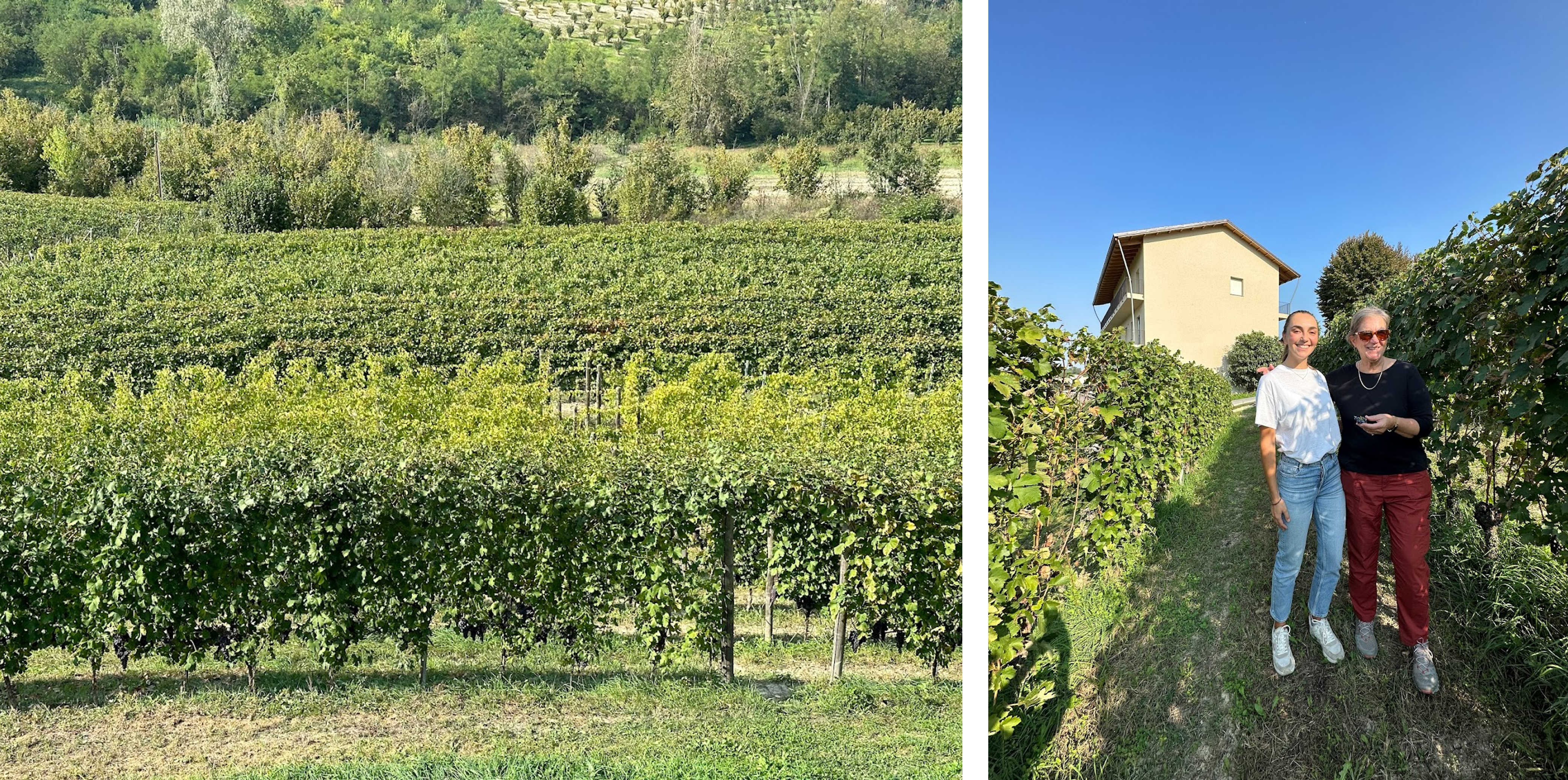
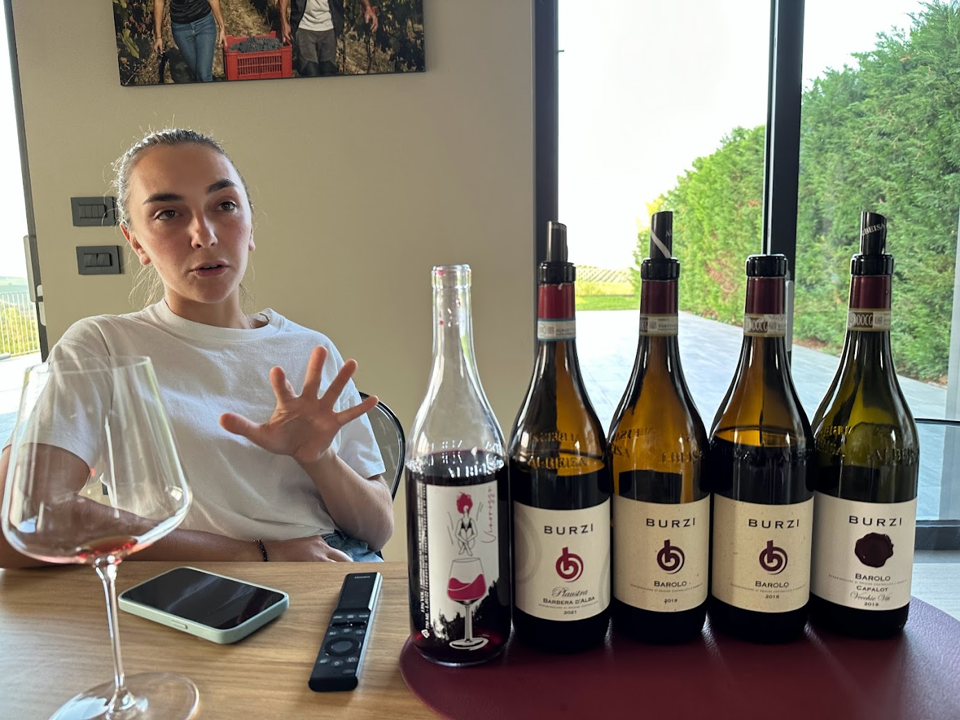
We made an appointment to tour the Burzi vineyards and winery with Caterina Burzi, the co-owner. She was most gracious and spent three hours with us touring her grandfather’s vineyards, showing us their winery, and sharing the Burzi wines.
Over many decades, I had the pleasure of tasting many wonderful wines from around the world. But the minute I walked out of a restaurant, I couldn’t remember the brand or even the varietal of the wine. Maybe I could remember whether the wine was red or white. Twenty years ago my memory of wines changed once I started visiting the vineyards and wineries where the wines came from. Once I’ve set foot in a vineyard I can remember almost everything about the terroir and the wines.
Having enjoyed the Burzi wine at dinner, I knew I had to go visit the vineyards.
In the US, it is rare to get an owner to give you a tour. It is even rarer to find an owner that knows how to prune a grape vine to grow a fine wine. With Caterina, we found an owner who worked all year in both the vineyards and the winery. Her knowledge of her craft was a special treat.
As she gave us the walking tour she shared that her grandfather planted these grapes in the late 1940s. Her grandfather wanted to grow the grapes to sell to someone else to make the wine. After her grandfather died, her brother Alberto took over the business and decided to make wines as well as growing the fine wine grapes. While the vineyards were 70 years old, Alberto and Caterina have only been making wines for ten years.
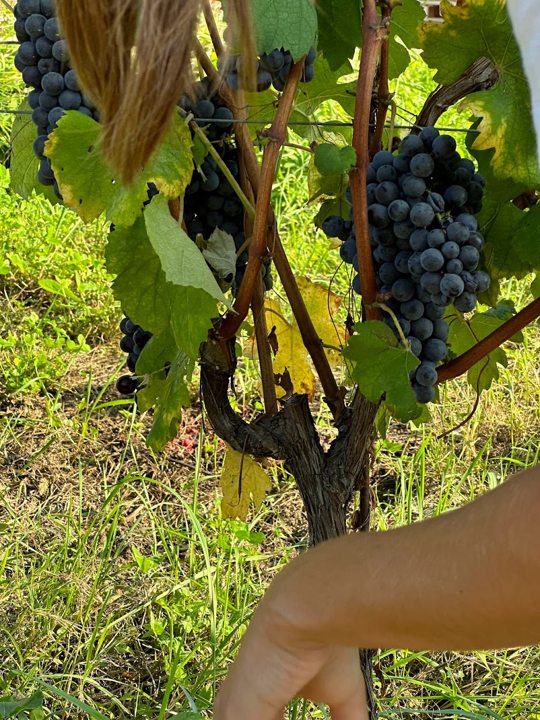
As we walked the vineyard hillside, I asked Caterina if she pruned the grapes as well. She said of course, and reached down to show me one of the vines.
I asked her how she would prune this vine for the next year’s harvest. I got a master class in pruning Nebbiolo grape vines.
Pruning Nebbiolo grape vines at Burzi Winery
Of course the real experience of a vineyard, shows up in the bottle after the multi-year process of turning sunlight into grapes and then into wine.
We enthusiastically bought a case of the Burzi wine. Each time we open a bottle, we remember the afternoon spent with Caterina and our continuing education of fine wines.
I want to write an article about [insert topic] that includes stats and cite your sources. And use storytelling in the introductory paragraph. The article should be tailored to [insert your ideal customer].The article should focus on [what you want to talk about] instead of [what you don’t want to talk about].Please mention [insert your company or product name] in the article and how we can help [insert your ideal customer] with [insert the problem your product or service solves].
But please don’t mention [insert your company or product name] more than twice. And wrap up the article with a conclusion and end the last sentence in the article with a question.
So I tried Patel’s ideas out with this prompt:
I want to write an article about seeing and experiencing a European cathedral that includes statistics and cite your sources. And use storytelling in the introductory paragraph. The article should be tailored to United States tourists visiting Europe in a slow mode rather than in guided tours. The article should focus on how to see and experience the design, architecture, and craft that went into creating the cathedral. It should not talk about the religious belief aspects of a cathedral. Please mention specific cathedrals in different countries and how the article can educate the tourist on how to see and to read a cathedrals design and spaces. Wrap up the article with a conclusion and end the last sentence with a question.
Unveiling European Cathedrals: A Deliberate Journey of Architectural Wonder
Introduction:
As the sun sets over the cobbled streets of Europe, a unique opportunity arises for the curious traveler – a chance to witness the grandeur of centuries-old cathedrals without the constraints of guided tours. Picture this: You stand before the colossal entrance of Notre-Dame Cathedral in Paris, feeling the weight of history press against your skin. Your journey has just begun, and as the intricacies of architectural design unfold, you find yourself immersed in a silent dialogue with the masterpieces of European craftsmanship.
Unlocking the Secrets: A Slow-paced Exploration
For the United States tourist venturing into Europe, there’s a profound joy in experiencing cathedrals at your own pace. Take the Cologne Cathedral in Germany, for instance. Start by observing the stunning Gothic architecture from a distance, gradually making your way through the intricate façade. Allow the details to speak to you – the delicate tracery, the carefully carved gargoyles, and the towering spires. Each element tells a story of the skill and dedication invested by the artisans who shaped this monumental edifice.
Venture south to Barcelona’s Sagrada Família, where Antoni Gaudí’s modernist touch brings forth a different kind of enchantment. Notice the organic forms and innovative use of materials as you explore the interiors. Embrace the slow exploration, studying the nuances of Gaudí’s genius that transcend religious boundaries.
Educating the Tourist Eye: A Visual Symphony
To truly appreciate the design and craft of European cathedrals, immerse yourself in the details. Wander through the stunning St. Stephen’s Cathedral in Vienna, marveling at the intricately tiled roof and the vibrant colors that tell tales of Austrian history. Learn to read the symbolism within the stained glass windows, deciphering the narratives etched in glass at Chartres Cathedral in France.
Intrigue awaits at St. Basil’s Cathedral in Moscow, a departure from traditional Western styles. Allow the vibrant colors and diverse patterns to captivate your senses, unraveling the rich tapestry of Russian history and culture embedded within the walls.
Conclusion:
As you traverse Europe’s cathedrals, absorbing the artistry, innovation, and history embedded in their stones, you realize that these architectural marvels transcend religious affiliations. A slow-paced exploration allows for a deeper connection with the craftsmanship that spans centuries. So, fellow traveler, as you embark on this journey through Europe’s cathedrals, ponder this: How does the design of these timeless structures shape our understanding of history and culture, transcending the boundaries of religious belief?
Pretty cool.
I then decided I needed a photo to somewhat illustrate the article. I asked Night Cafe to “design a cathedral with elements of the Milan Cathedral and the Sagrada Familia:”
The AI image wasn’t nearly as interesting as the text, but it was generated a lot quicker than I could ever use Photoshop.
In my Threads feed, I am delighting in the wide range of photographers and artists I am learning from.
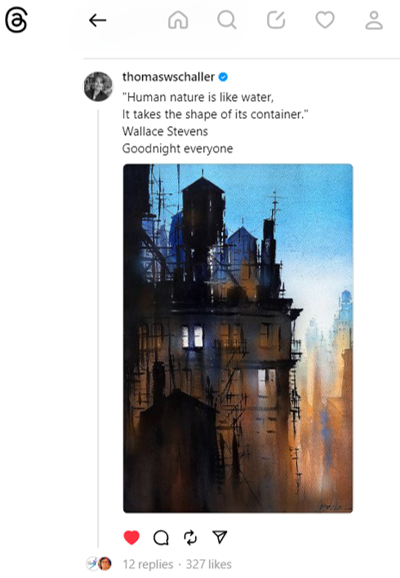
I am particularly enjoying the watercolors of Thomas Wells Schaller. I quickly purchased his book Architect of Light. As I read about his works he shared his process:
“The hierarchy of ‘building blocks’ I use most often in the design of my paintings is comprised of four considerations. In order they are: Story, Composition, Value, and Color. Yes, there are exceptions, but more often than not, if each element on this list does its job, I will have a much better chance of a successful work.” p. 30
This quote led me to wondering if that is the way he creates his work, is that the same way I should see or should read his work. Of course, I had to look for a book about “seeing” a painting. I decided on Great Paintings Explained to get me started.
As I continued to read both books, I generalized the question to things I am interested in – how do you see a fine wine vineyard or a great wine? How do you see or read a cathedral? How do you see or read a country like Portugal or Italy or a sub-region like the Algarve or Tuscany?
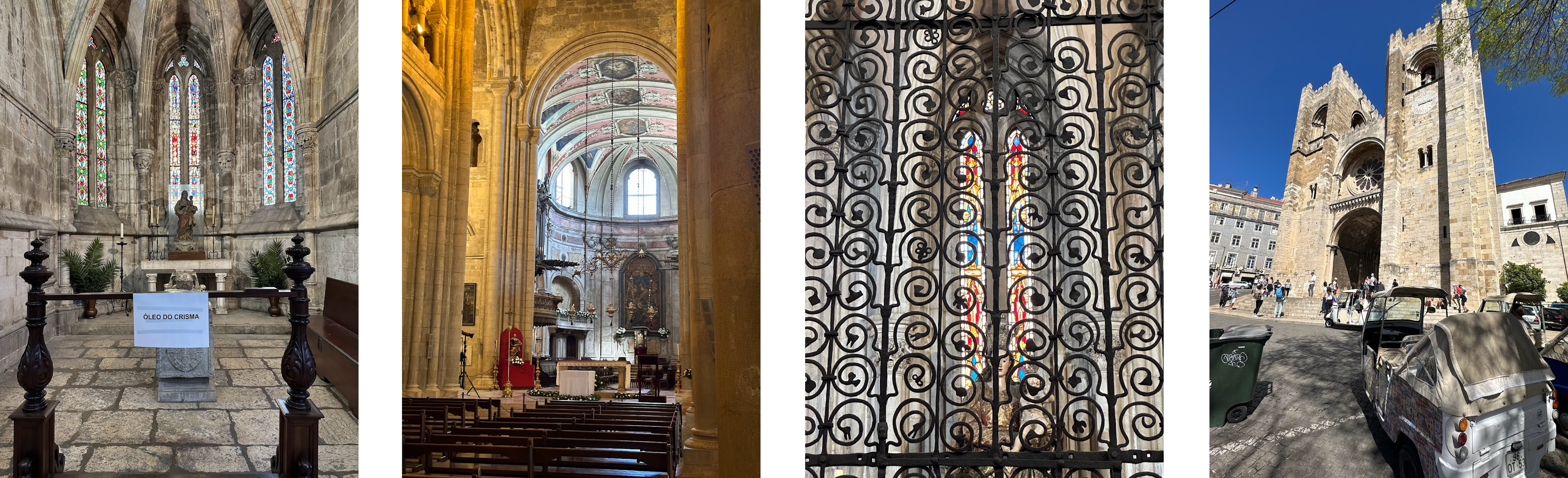
On our recent trips to Portugal, Spain, and Italy we visited many cathedrals.
Lisbon Cathedral
Is it the outside of the church or the denomination of the religion? Is it the altar? Is it where the congregation sits and the daily/weekly mass that occurs? Or is it the many naves that surround the main church? Or is it my fascination of the play of light through the stained glass windows?
Sagrada Familia Barcelona
How do you read an unfinished cathedral like the Sagrada Familia?
I look forward to learning the visual language of cathedrals and continuing my education of how to see/read a cathedral.
I had my first “Oh My God” meal in Annunziata Italy, outside Barolo.
We’d been introduced to OMG meals through Stanley Tucci’s “Searching for Italy” series on CNN. In every episode, at some point Tucci would go “Oh my god” fawning over the dish he was just served.
To prepare for our month long trip to Italy in October 2023, we watched episodes from Season 1 and Season 2 of the regions in Italy we expected to visit.
Milan
Tuscany
Bologna
Piedmont
Umbria
Puglia
When we arrived for our stay in Barolo at the Red Wine Bed and Breakfast, we asked if they had any recommendations for restaurants. At the top of their list was Osteria Arborina. They suggested since it was warm weather that we eat upstairs on the terrace, and that we make reservations.
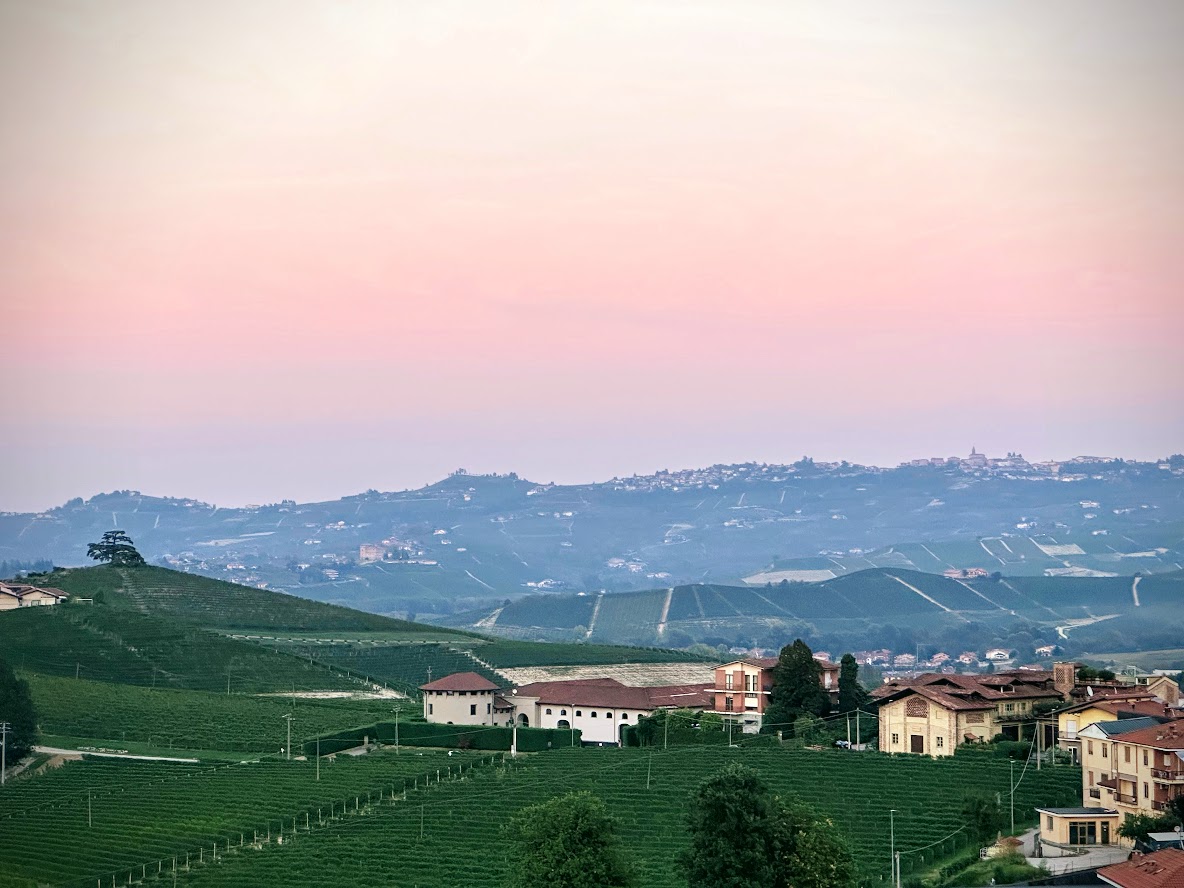
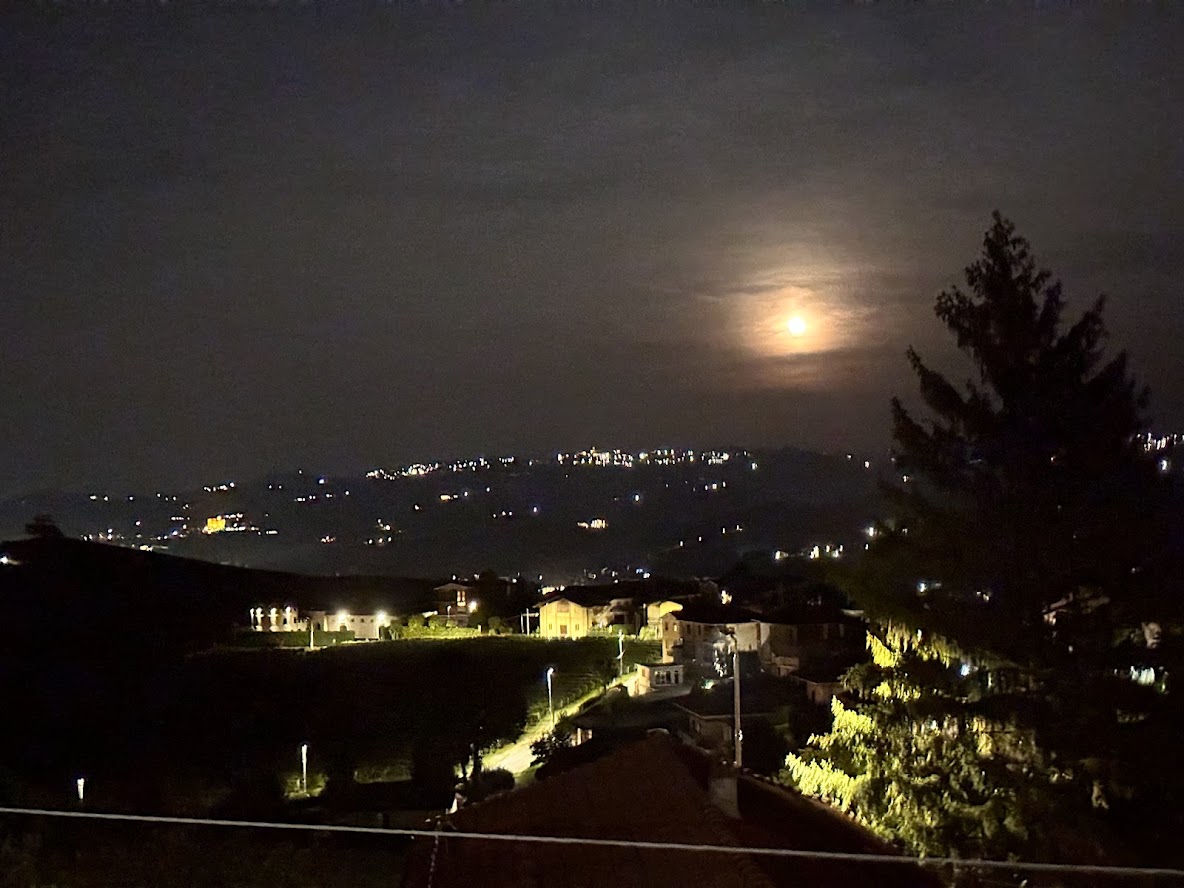
We arrived at the appointed time just as dusk was shifting into night. Our table on the terrace overlooked the Barolo valley with vineyards in every direction as far as the eye could see.
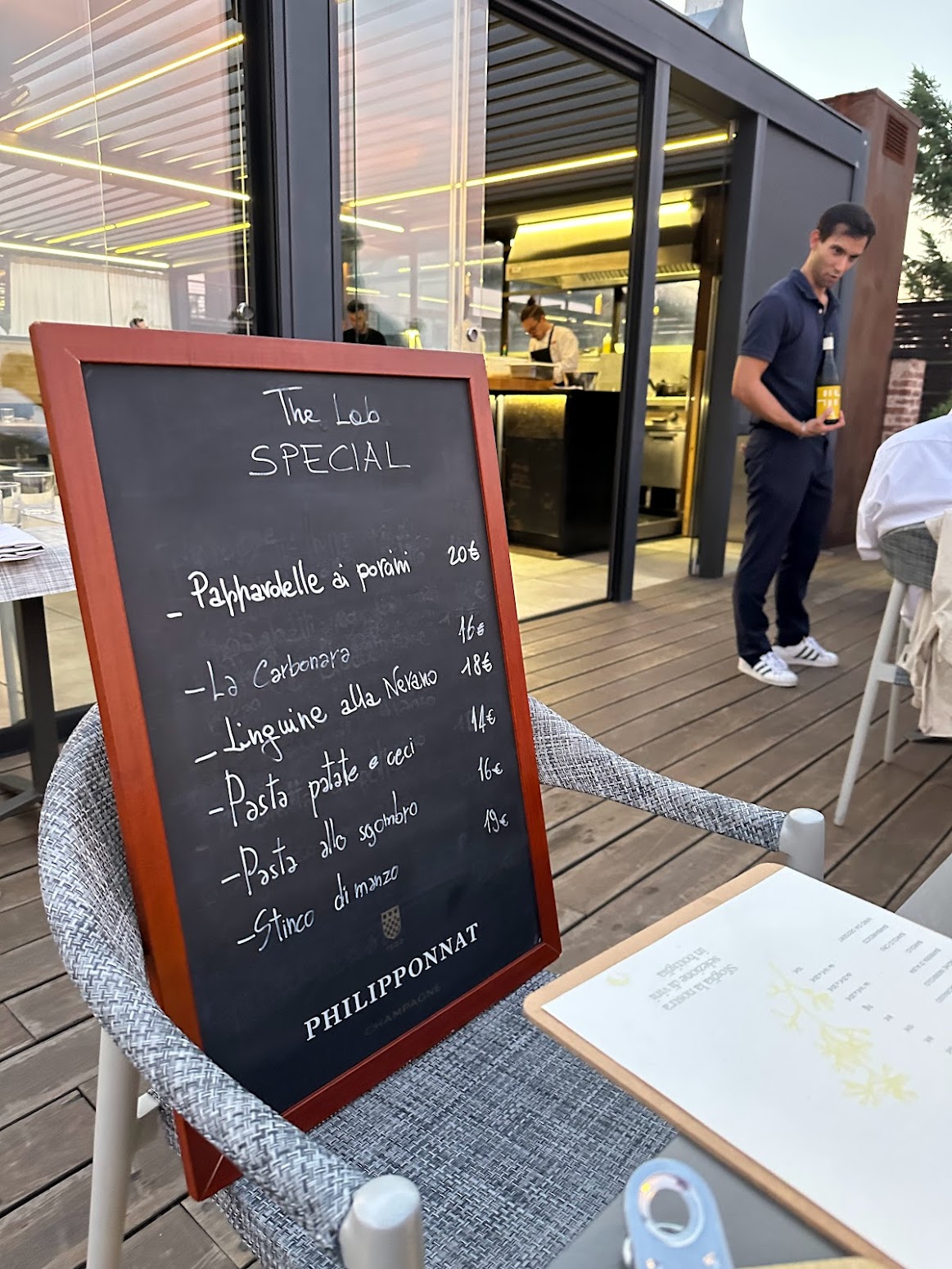
Our wait person and wine steward, Juan, left us with the specials board. We had to Google a few words but the menu looked good.
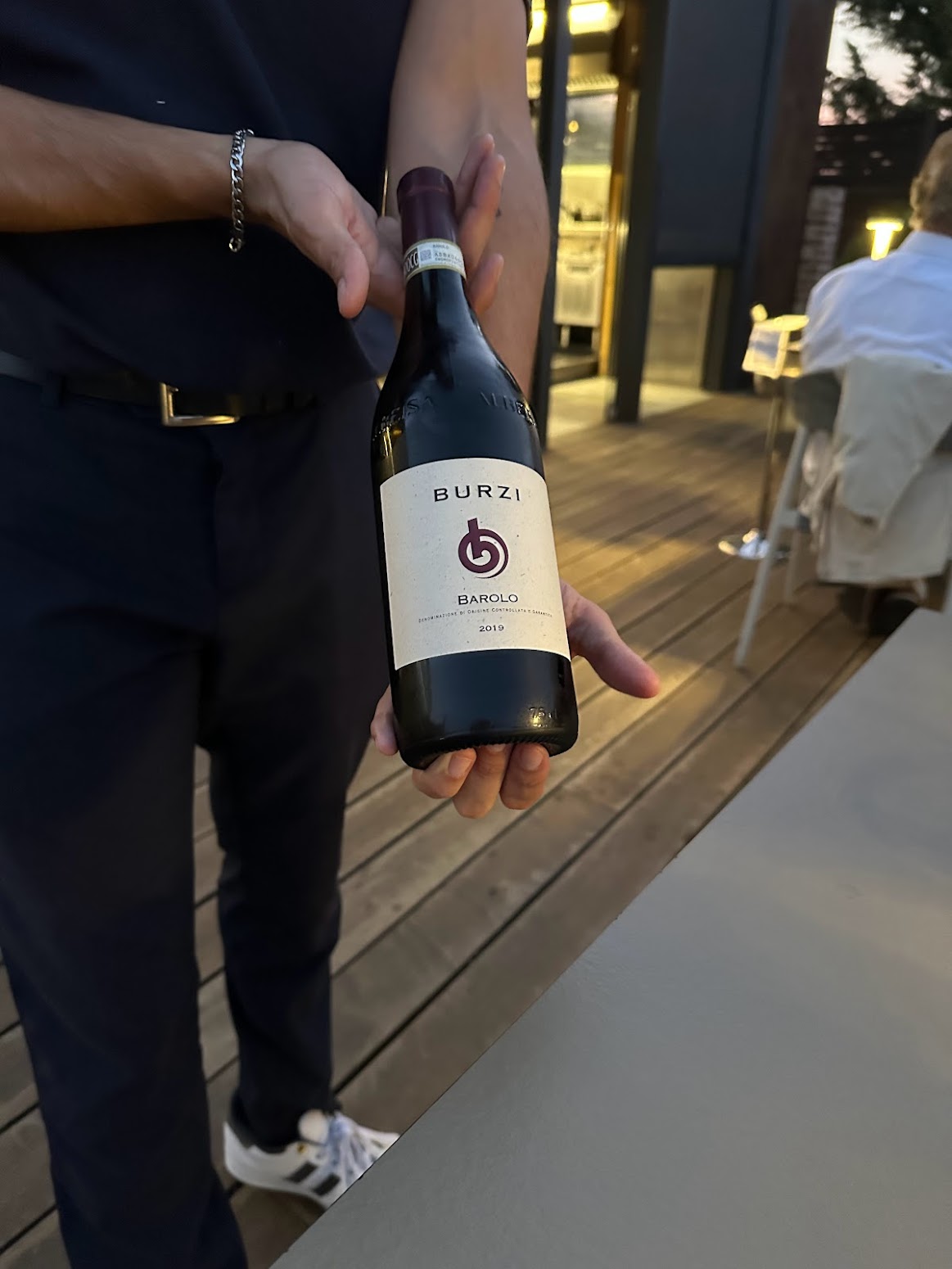
Juan, gave us a wine list, but I didn’t recognize any of the brands and only one of the wine hill towns that we recently visited – Serralunga d’Alba. I shared that was the only wine I recognized, but did he have any recommendations. He laughed and said “I can’t let you order the Serralunga d’Alba. The terroir there is much more rocky than here in La Morra. In La Morra, we believe in soft wines. I would recommend the Burzi wine. They are a very young winery with the grandson and granddaughter of the founder making wines now. The grandfather planted the vineyards 70 years ago, but the children didn’t start making wines until 10 years ago. I know you will enjoy their wine with what you have ordered.
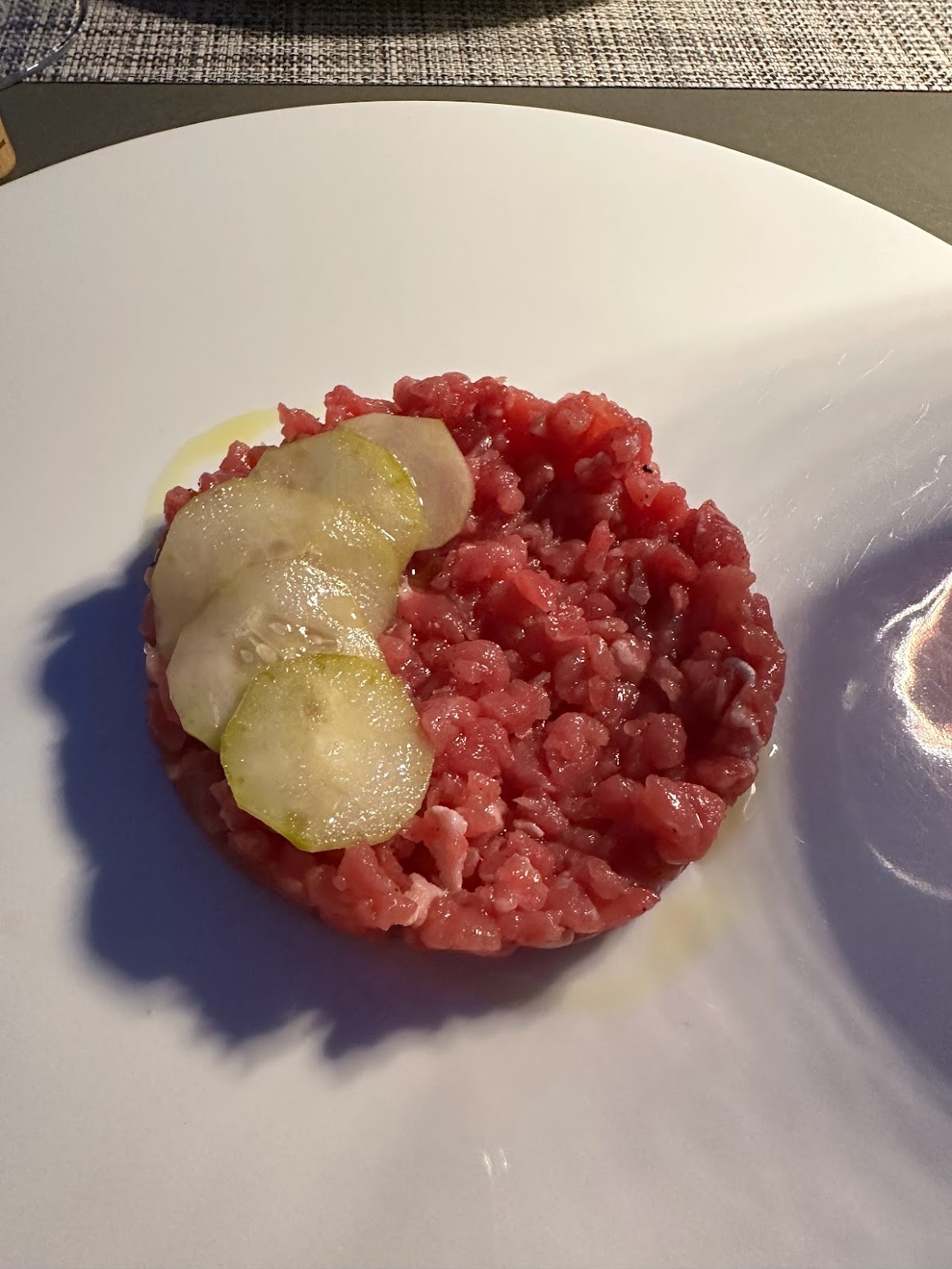
I couldn’t resist the steak tartare on the menu. It was exquisite.
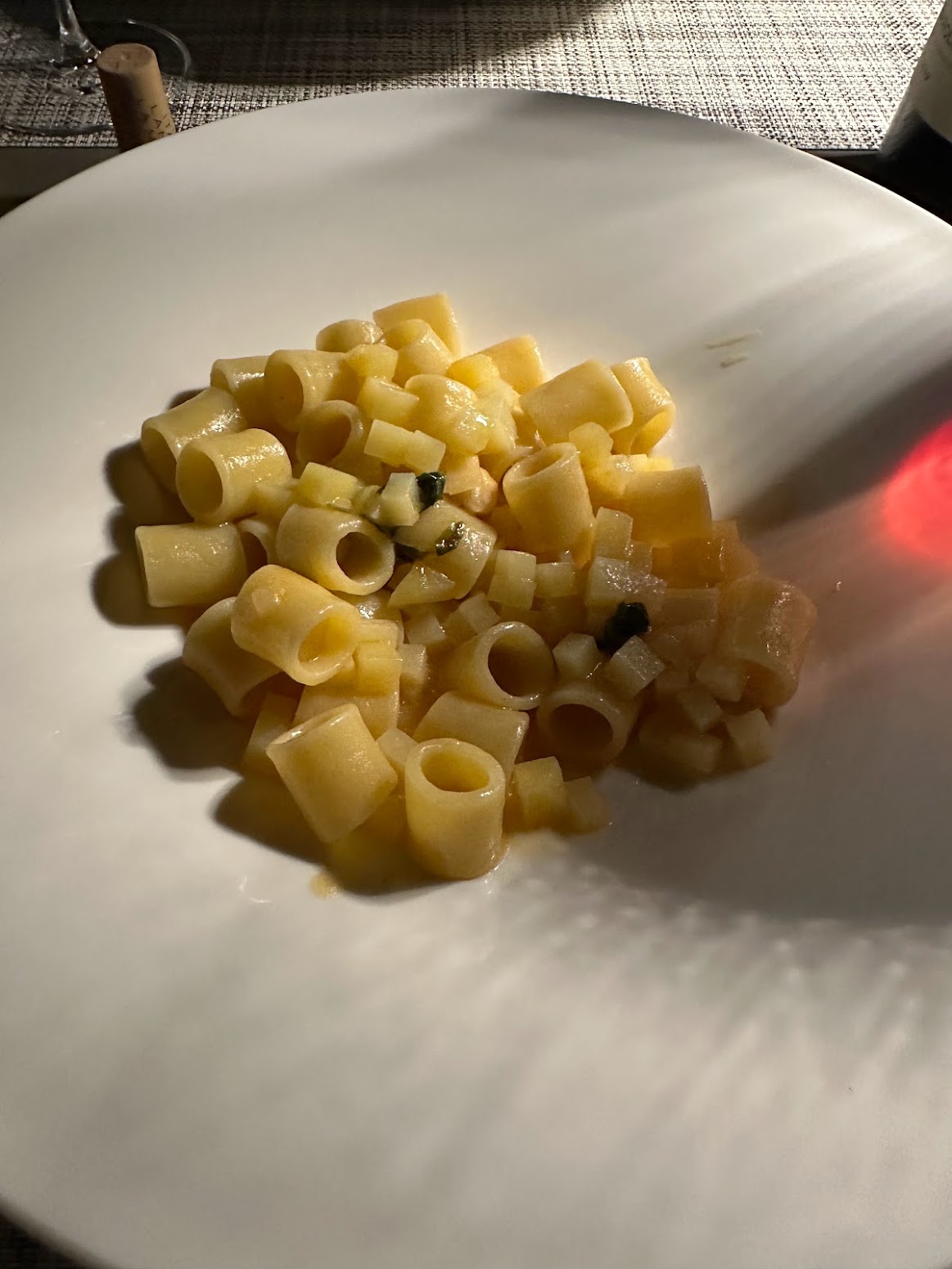
My main course was the “pasta potatoe a cesci”. The entry translated to small pasta with tiny cubes of potato with a few requisite green things. It only took one bite for me to involuntarily exclaim “oh my God!” The sauce was a simple butter and cheese sauce (likely parmigiana). The pasta was so simple and yet so amazing.
Or maybe it was the magic of a Piedmont warm fall evening with my wife of 52 years and an amazing wine.
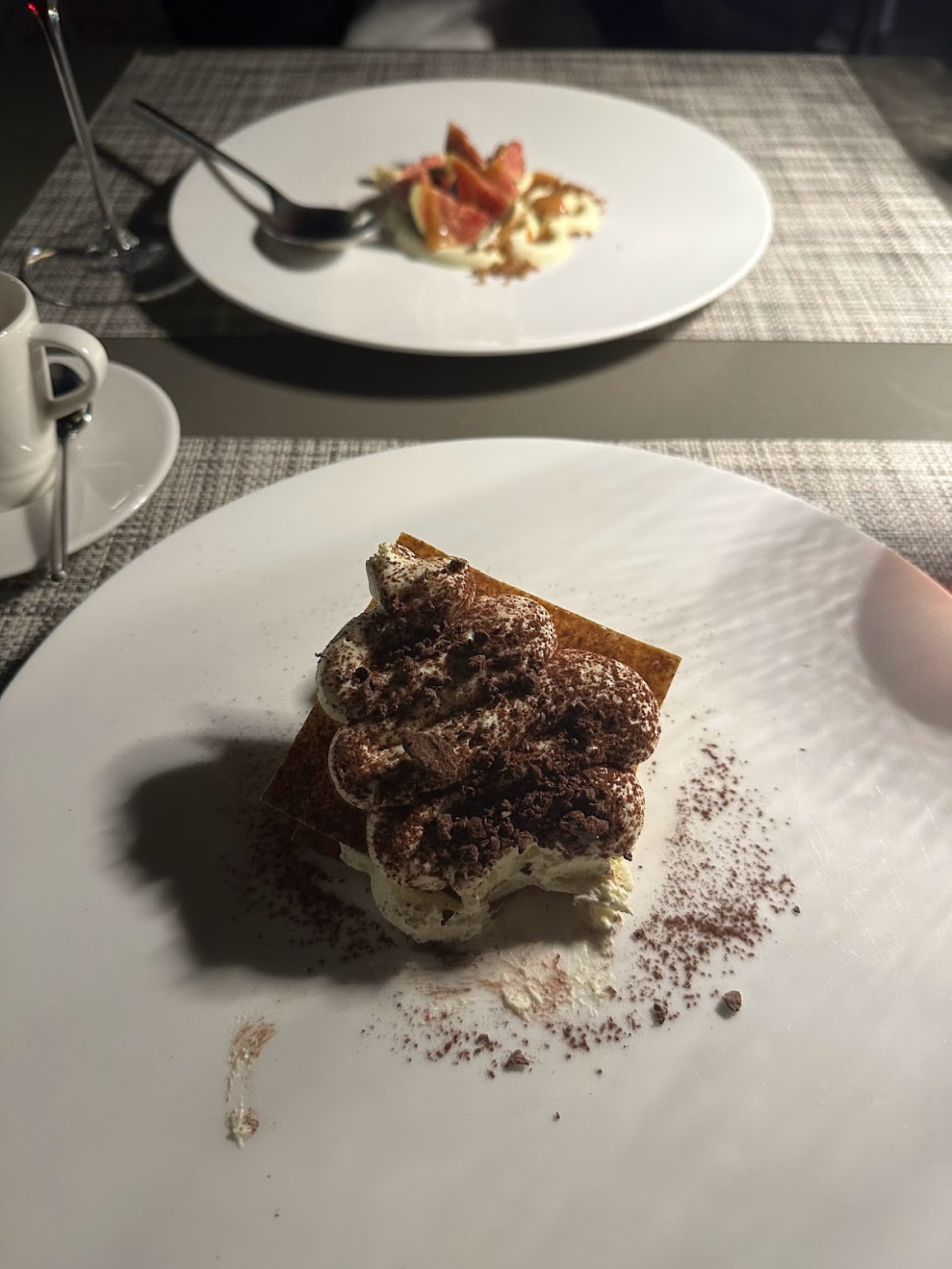
Since the entrees were so good I had to order a chocolaty cheese thing. Of course, it came with an espresso to drink. I was clearly not worried about sleeping on this evening.
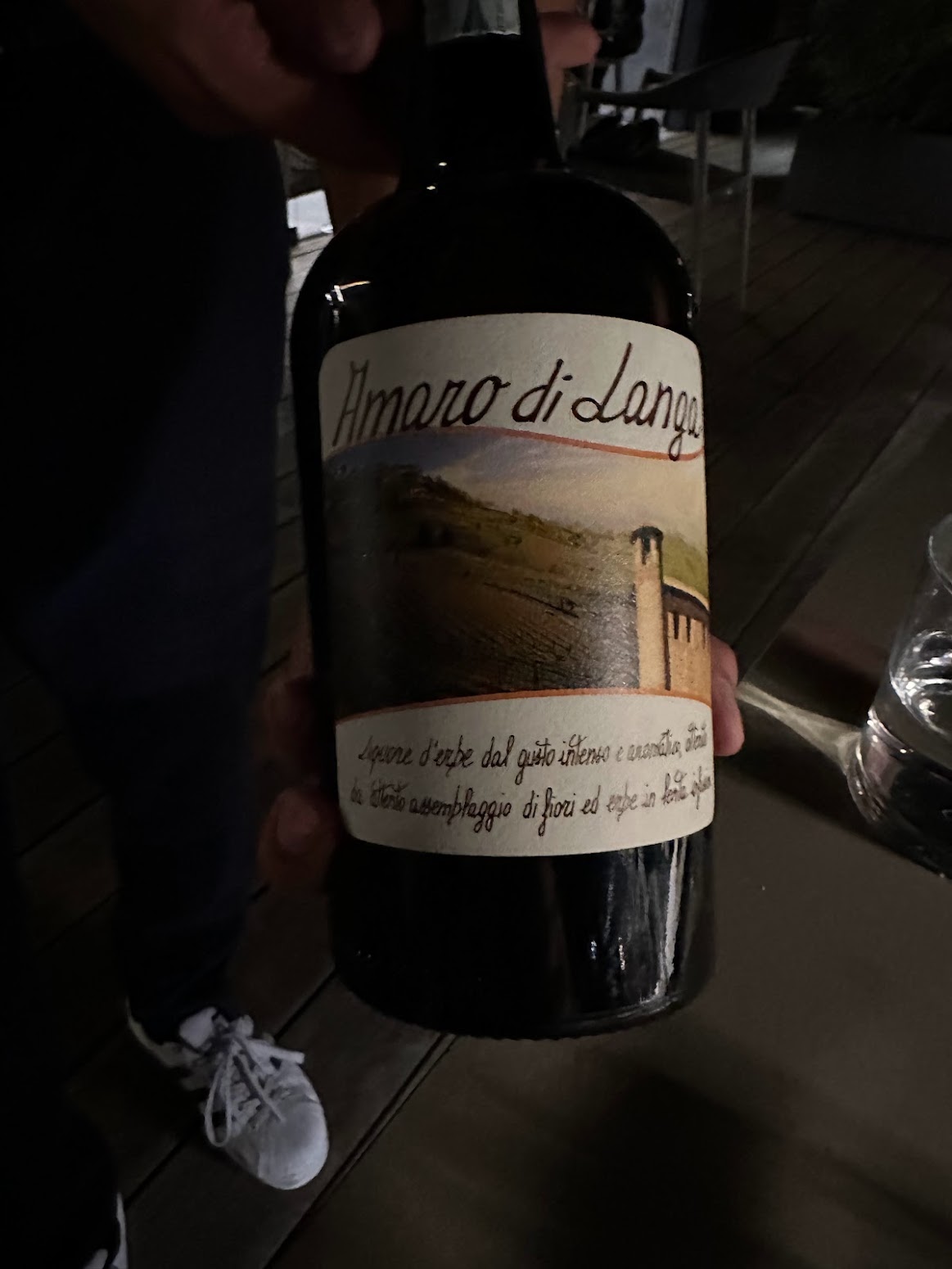
In Milan, prior to arriving in the Barolo area, we’d discovered the digestif Amaro. So I asked if they had an amoro. “Of course,” Juan responded. “Would you like one of our local Amaros?”
Sure. The local herbal bitter sweet liqueur was as excellent as the rest of the meal.
It had not taken long on this visit, but we were really enjoying the slow food movement Italian style. As we drank our espresso and Amaro, we simply enjoyed the moon lit vineyards.
We had already scheduled a cooking class in a few days time with Chef Fabio. We decided we would take as many cooking classes in the different regions we were visiting as we could work in. I vowed to learn enough to recreate this wonderful pasta with potato dish.
After learning to make pasta from scratch and how to do simple Italian butter and cheese sauces, I am experimenting my way to recreating my OMG meal. After two tries, I am getting close. Hopefully, the third time will be the charm. We shipped home a case of Burzi wine so that when I am able to recreate the pasta and potato dish we will have the appropriate Barolo wine.
I was enthralled with his watercolor paintings from all over the world.
And he has a book of his prints. Search. Click. Amazon. Click. Ordered and shipped.
I ordered the book immediately because of the tag line: “Architect of light.” This phrase captures what I see in the world and try to capture with a camera.
I was expecting lots of watercolor paintings. Even better there is text to provide some context.
“The hierarchy of ‘building blocks’ I use most often in the design of my paintings is comprised of four considerations. In order they are: Story, Composition, Value and Color.” p. 30
In the next few pages, Schaller explains each. In all my study of art, these building blocks and their descriptions are the most succinct and understandable I have encountered.
Yet, this quote stopped me in my tracks:
“Try not to paint the scenes and objects in front of you. Try to paint the light that illuminates and gives them life.” – p.52
“Paint the light that illuminates.” In my blog post “Why I/We Travel” that is what I try to do with my camera. I never come close, but I keep trying.
Capture the light that illuminates.
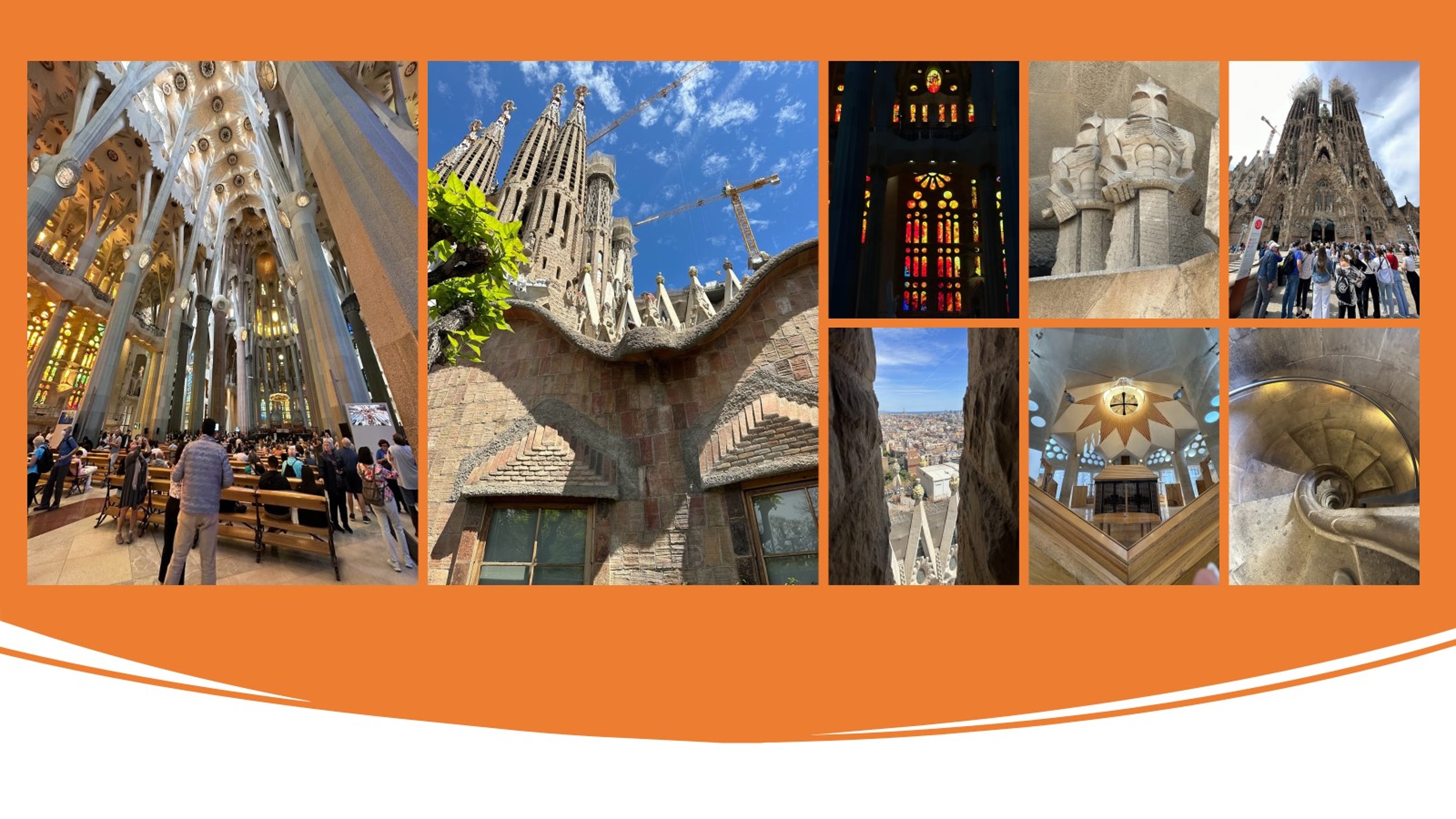
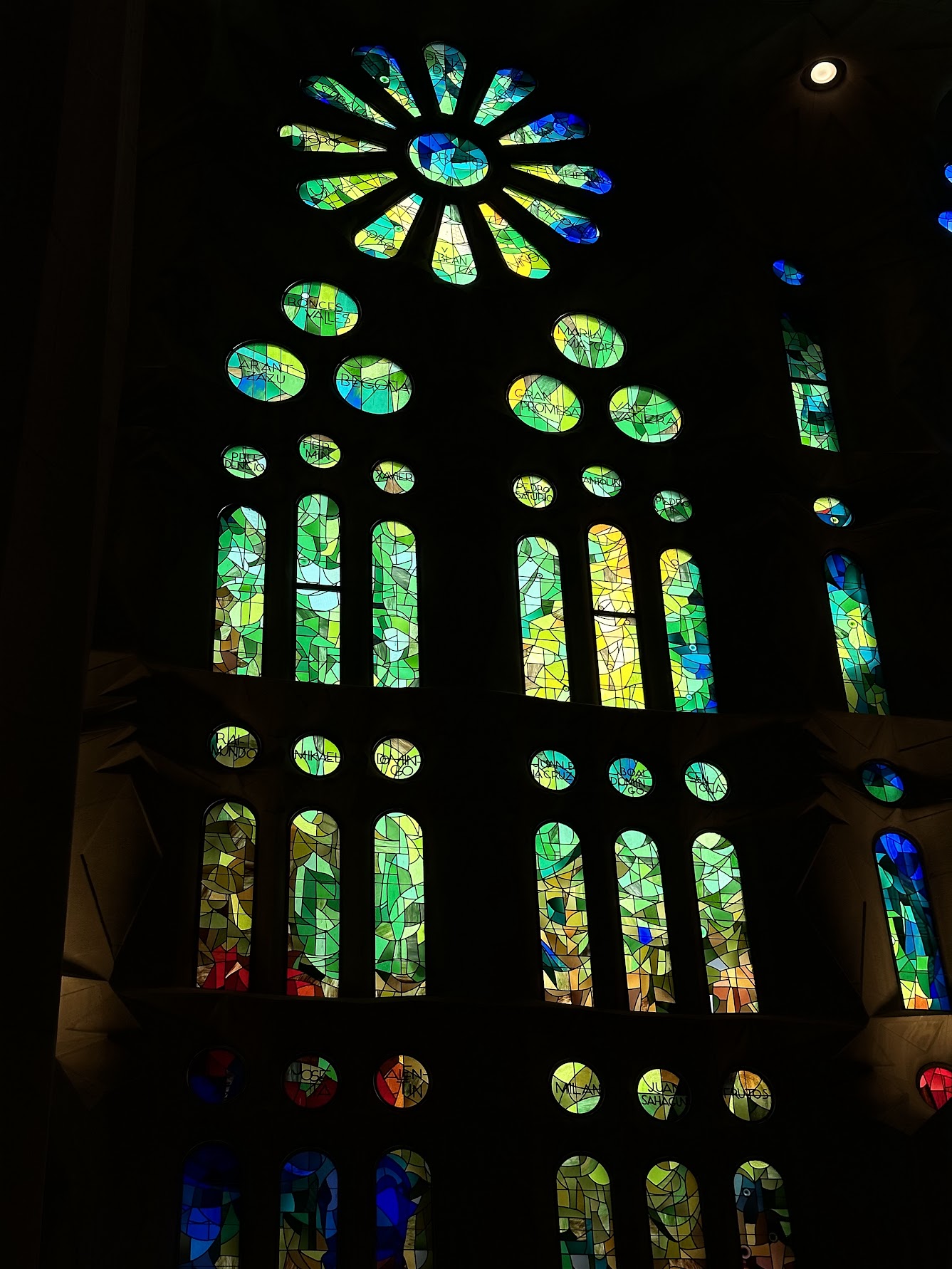
Capturing the light is what I so desperately wanted to do at the Sagrada Familia. The stained glass windows filtered the dancing light in magical ways:
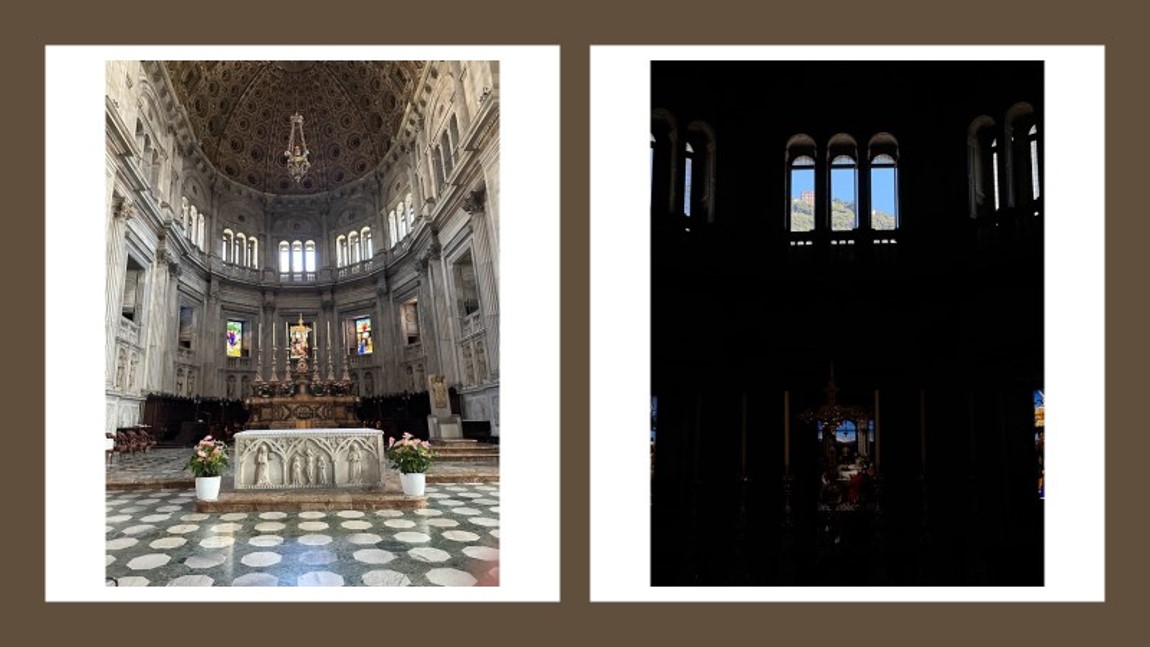
In the Lake Como cathedral, I had to change my focus to see either the beauty of the cathedral, or the brilliant hillside of Brunate.
Which is the light that illuminates? Which story should I tell? What are the values I should focus on?
When I travel I am drawn to the light of the day.
Thank you Thomas W. Schaller, Architect of Light, for providing words and examples of the stories I try to express with my words and my photographs.
“If I could say it in words, there would be no reason to paint.” – Edward Hopper
Covid Deaths in U.S.: 1,137,057 Get Vaccinated!Stop the War in Ukraine!
My wife and I recently spent five weeks travelling through Portugal and Spain. One of our lifelong marriage goals is to travel extensively when we finally retired. Because of a devastating auto collision and the Covid Pandemic our plans were put on hold for five years. In April, our first major international trip as retired folk finally arrived.
My natural inclination is to write a journal of all that I/we experienced during our five weeks in two wonderful Iberian countries. We had hundreds of photos and a short log of all the things we did so that we could remember the journey and the high points.
I was enthralled with the two different points of view. One was a reporting of the events in a larger context. The short story then focused on just 30 hours of the event and more deeply explored the emotional impact. One was a reporting and one was an engaging story. George then asked me which was I trying to produce when I wrote up my Outward Bound experience and who was the audience and what impact did I want to have on that audience. He was encouraging. Yet, alas the challenges of the urgent overwhelmed the importance of finding my voice and transforming the journal into a more impactful story. This pattern repeats many times in my life because I never take the time to find the essence of the journey.
Years after the Metes insight, I embarked on a Japan Study Mission to study the process of Just in Time Manufacturing. As part of creating a trip summary presentation I shared an excerpt from Edward T. Hall’s The Silent Language:
“Culture hides much more than it reveals, and strangely enough what it hides, it hides most effectively from its own participants. Years of study have convinced me that the real job is not to understand foreign culture but to understand our own. I am also convinced that all that one ever gets from studying foreign culture is a token understanding.”
“The ultimate reason for such study is to learn more about how one’s own system works. The best reason for exposing oneself to foreign ways is to generate a sense of vitality and awareness – an interest in life which can come only when one lives through the shock of contrast and difference.”
I reflected for weeks on what I learned during our five weeks in Portugal and Spain. I used my morning writing time to explore different parts of the trip. But I kept falling into the trap of just creating a journal of the experiences.
We’d used Rick Steves books as a guide and a starting point for figuring out what places we wanted to visit. So I searched Rick’s writing and videos to see if he had any words of wisdom. I found his answer in a video transcript from “Why We Travel:”
“After four decades of travel — and with lots more to come — I’ve been reading my old journals. These go back to the 1970s. I’ve been reflecting on why I love to travel. Travel is leaving home, leaving the familiar behind — why do we do this? Well, to experience new things; to simply have fun, and be amazed. To learn — to become students of the world. And for some, like pilgrims, to search for meaning.”
I reflected on my travels both professionally and touristy, internationally and domestically. I wanted to get at my why. I realized that I am drawn to the interplay of color and light.
I awaken to this interplay when I am in a European cathedral or church that has stained glass windows and the sun is shining through. It is so easy in Europe to find these places and marvel at the skills of the craftspeople who created these works of art. Once touched by the intertwingling of long dead master craftsman with the fixed stained glass window transmitting the shifting shafts of light, I start to see the dance of light around me. Whether in the flowers of a park near by, the shadows of swans swimming in a pond, the multitude of clothing colors and styles swarming through a European train station, the art work in a museum or the glow of friends and colleagues sharing a pint in an English Pub.
Each day we sought out cathedrals and museums or churches in smaller villages to be awed by the centuries ago crafts people who wondrously played with color, light and form.
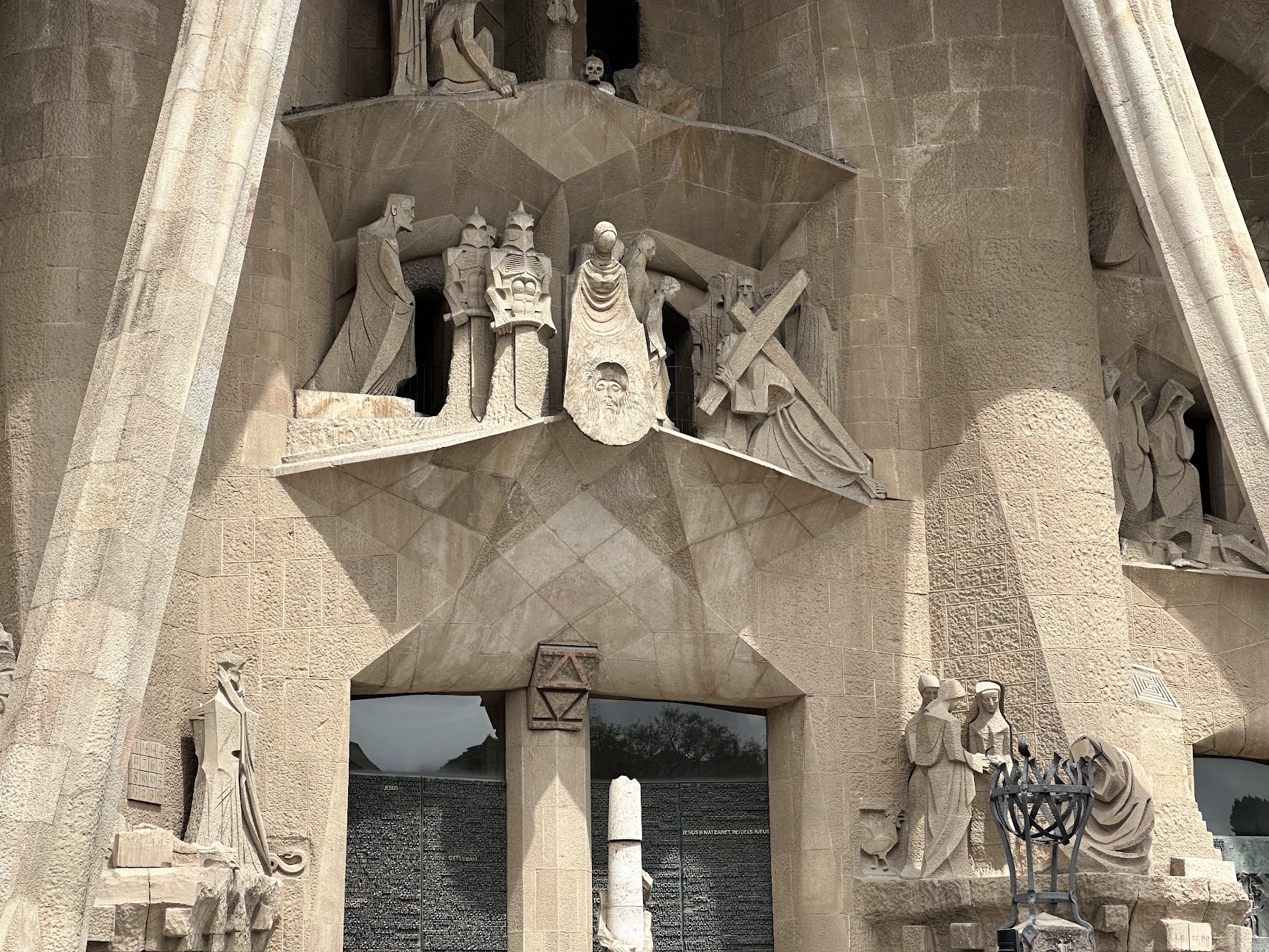
With several weeks of being enthralled with the constant interplay of color, light, and craft, I was still unprepared for the majesty of Gaudi‘s Sagrada Familia. I was ready to be amazed by the sculptures and forms of the cathedral. But I completely missed the majesty of the stained glass windows hidden within.
The east side of the cathedral catches the morning sun so the colors are greens and soft yellows and blues.
The west side of the cathedral catches the afternoon sun so the colors are vibrant reds, oranges and yellows.
Gaudi either by design or because he was forbidden to tell stories in stained glass, created designs tat were only forms. The windows are like abstract art created in pieces of glass and hung from the walls.
The outside sculptures were so plentiful that it was hard to focus. Yet, each sculpture was worthy of a special place in any museum. At the Sagrada Familia they are everywhere.
The more astute might see the inspiration for Lucas Films star wars troopers.
Form and color and light even in the seemingly bland tower steps inspire.
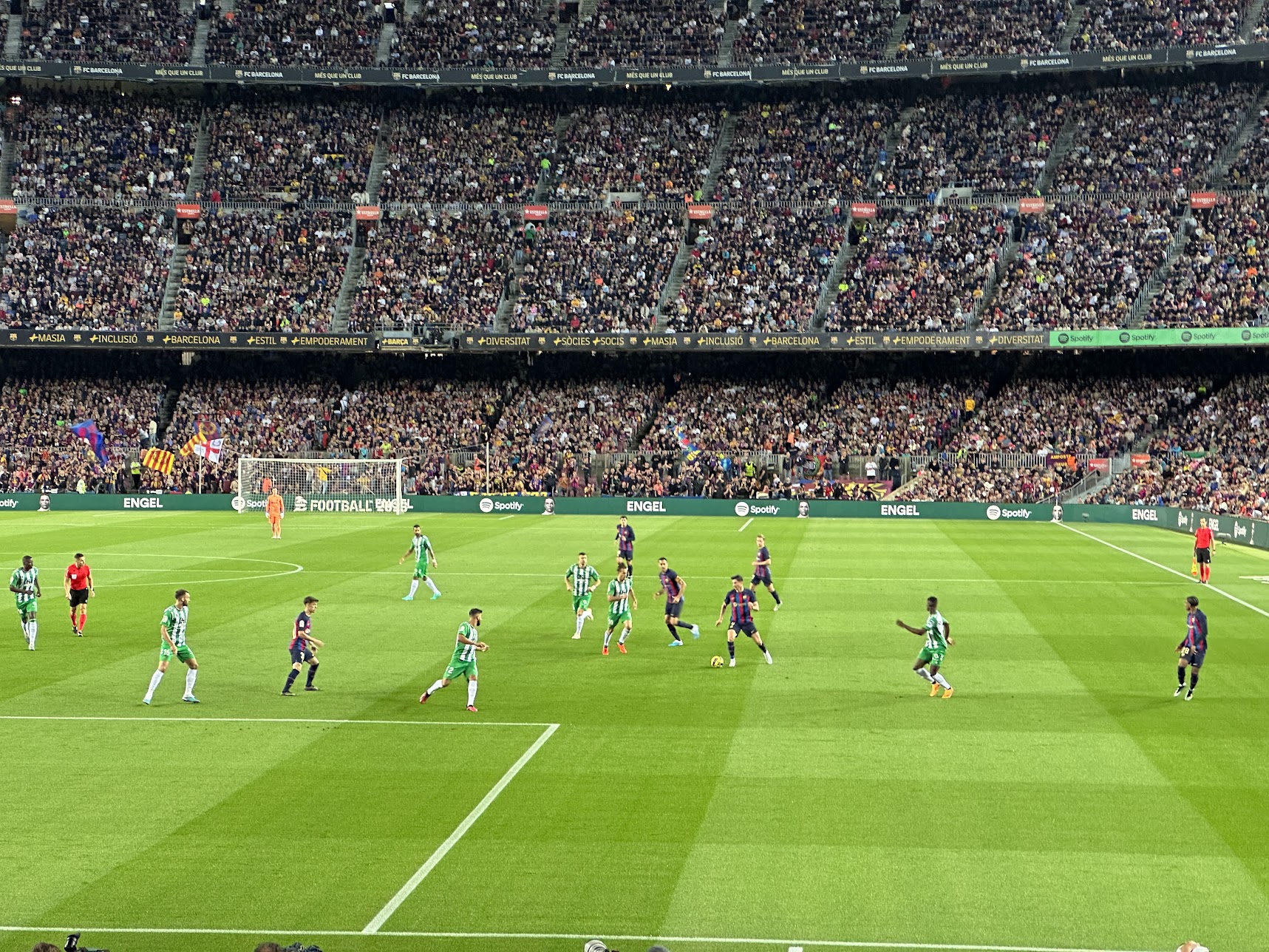
Near the end of our trip I realized that I did not have an expansive enough definition of cathedral. I forgot about the magnificence of our cathedrals of sports and the interaction of movement with color, light and form. We were able to watch FC Barcelona with 100,000 of our closest friends on an immaculate green pitch.
I never realized how vibrant green a European futbol pitch is. I never understood that it is treated like the most treasured green on the US Masters golf course. One hundred “greens keepers” came out during any intermission to lovingly replace any divots created during the run of play.
I don’t know how to tell a story of color, light, form and movement yet.
However, I know why I travel now. I want to be inspired by how other cultures create their masterpieces of living color.
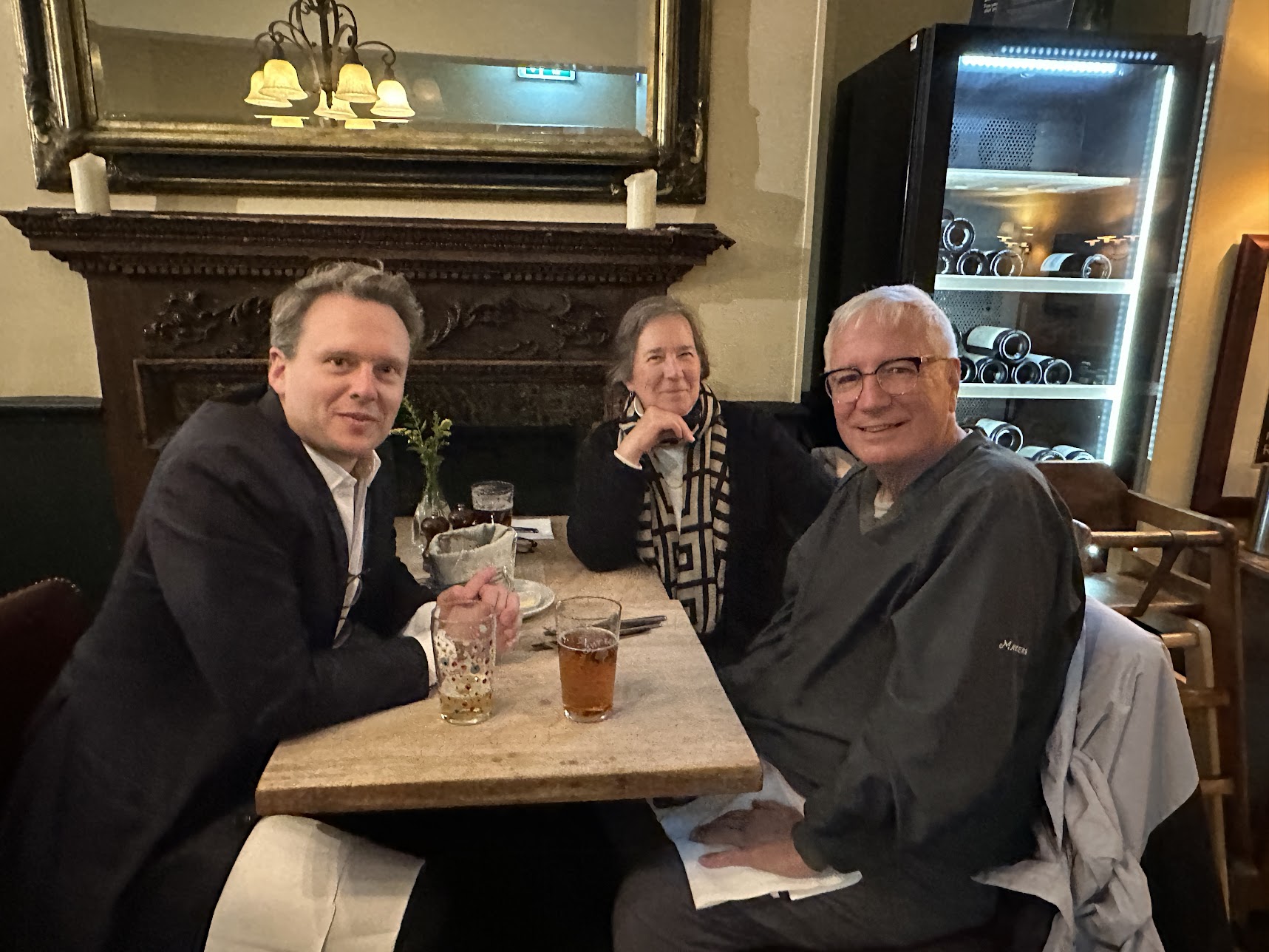
But I also travel to meet friends, family, colleagues and strangers who are not yet friends and share the proverbial pint.
Covid Deaths in U.S.: 1,123,466 Get Vaccinated!Stop the War in Ukraine!
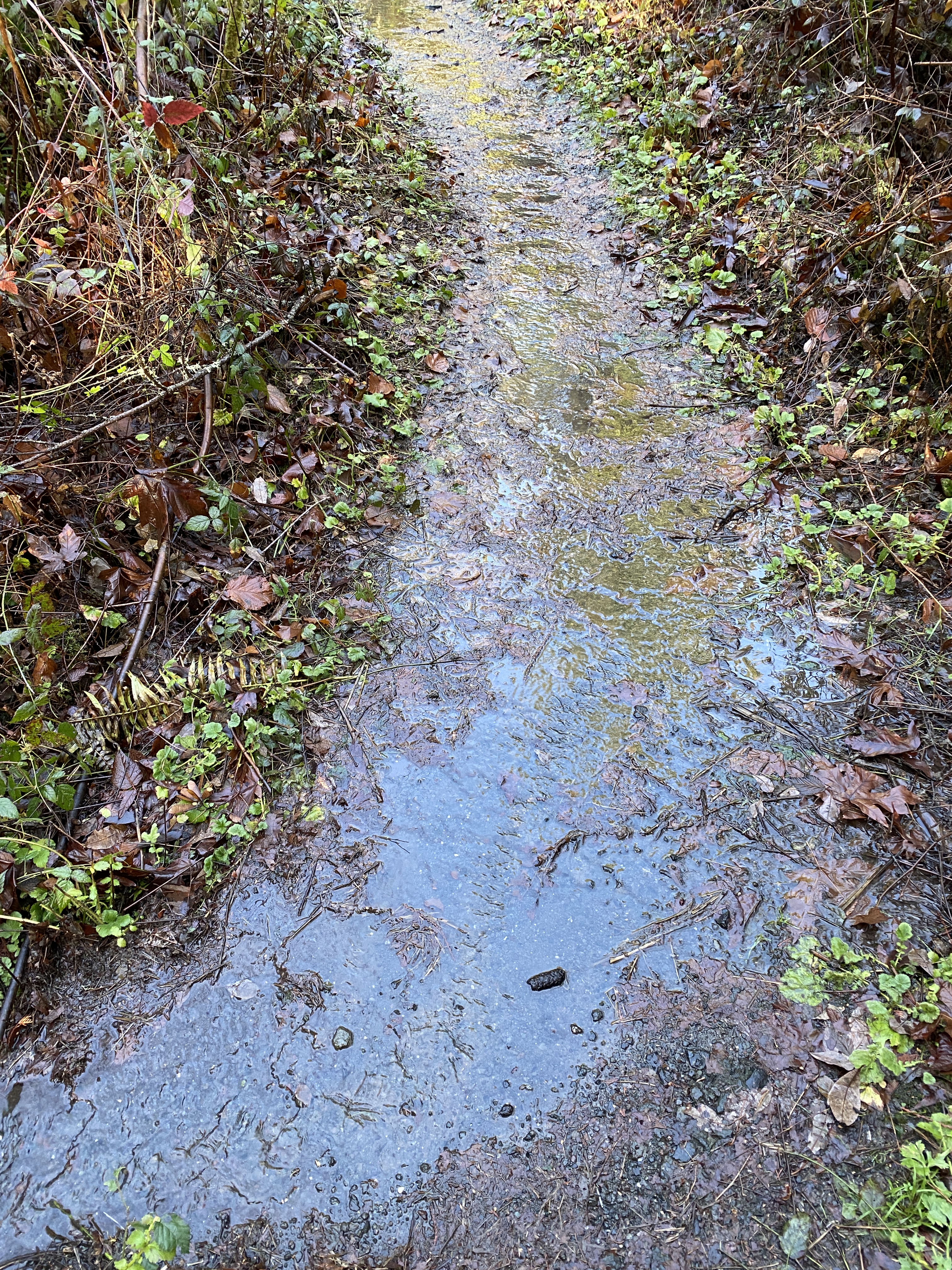
We finally had a sun break during on of our many winter rivers of rain. I put on my boots as there will be lots of puddles and little temporary streams. I get my ski poles to do my Nordic walking.
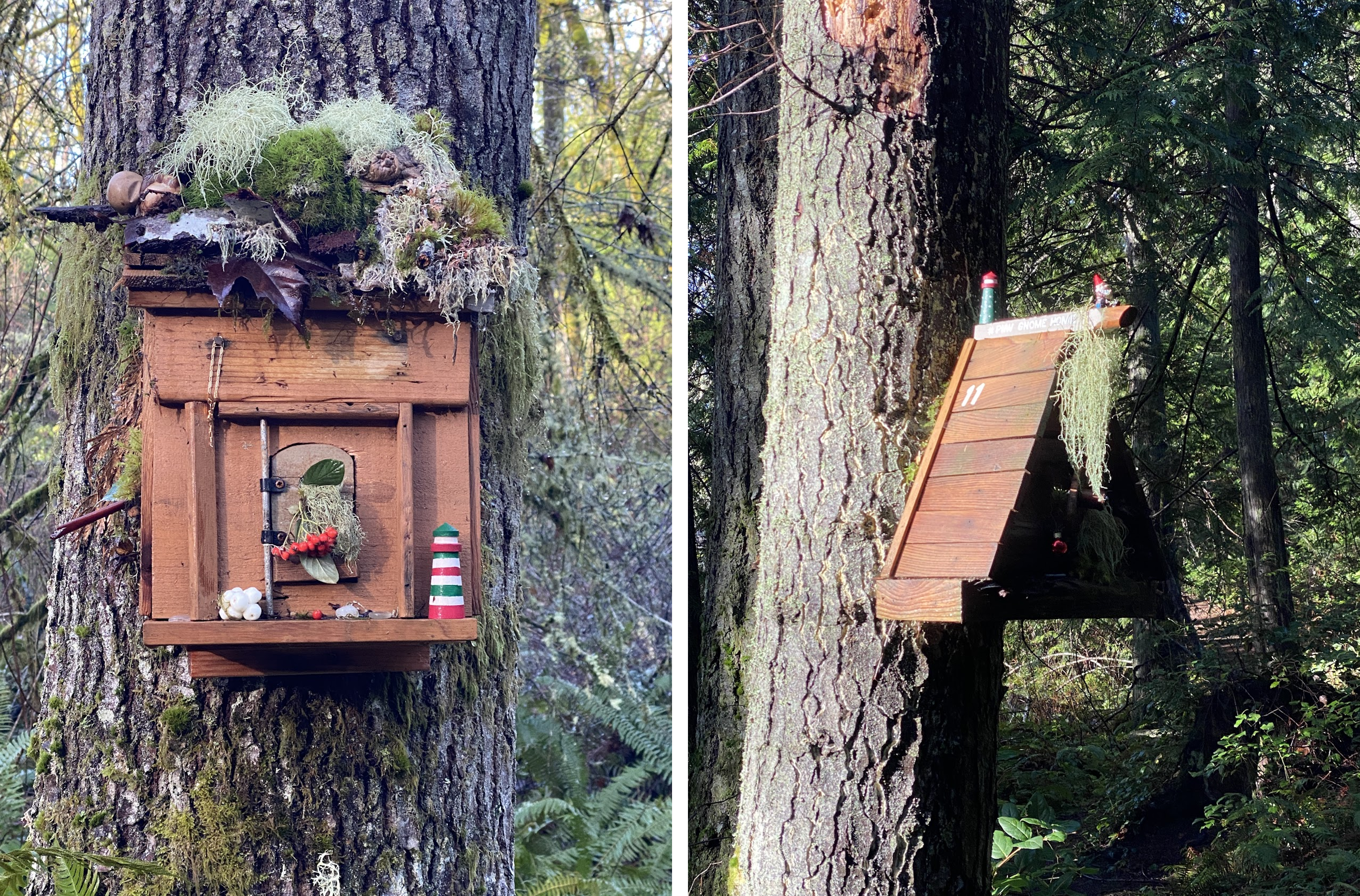
I look forward to seeing how the gnome homes have survived the snow and rain of the last month.
I stop to check out the ever changing adorning of the homes. I am delighted to see the sun shining on home #11.
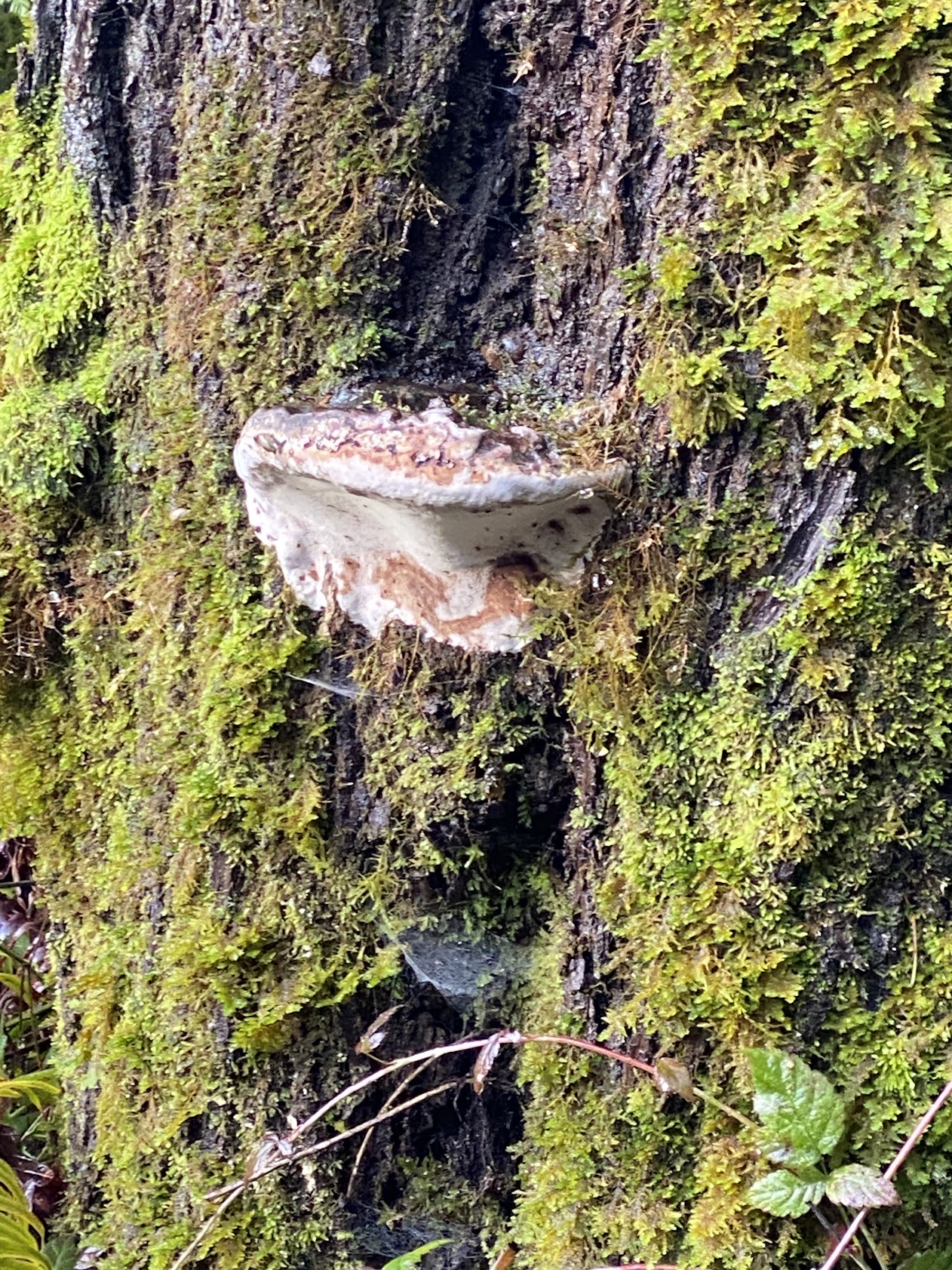
I also spot a new fungus growing on a tree that I missed over the past couple of months.
With spirit refreshed after my jaunt in the woods, I head back home.
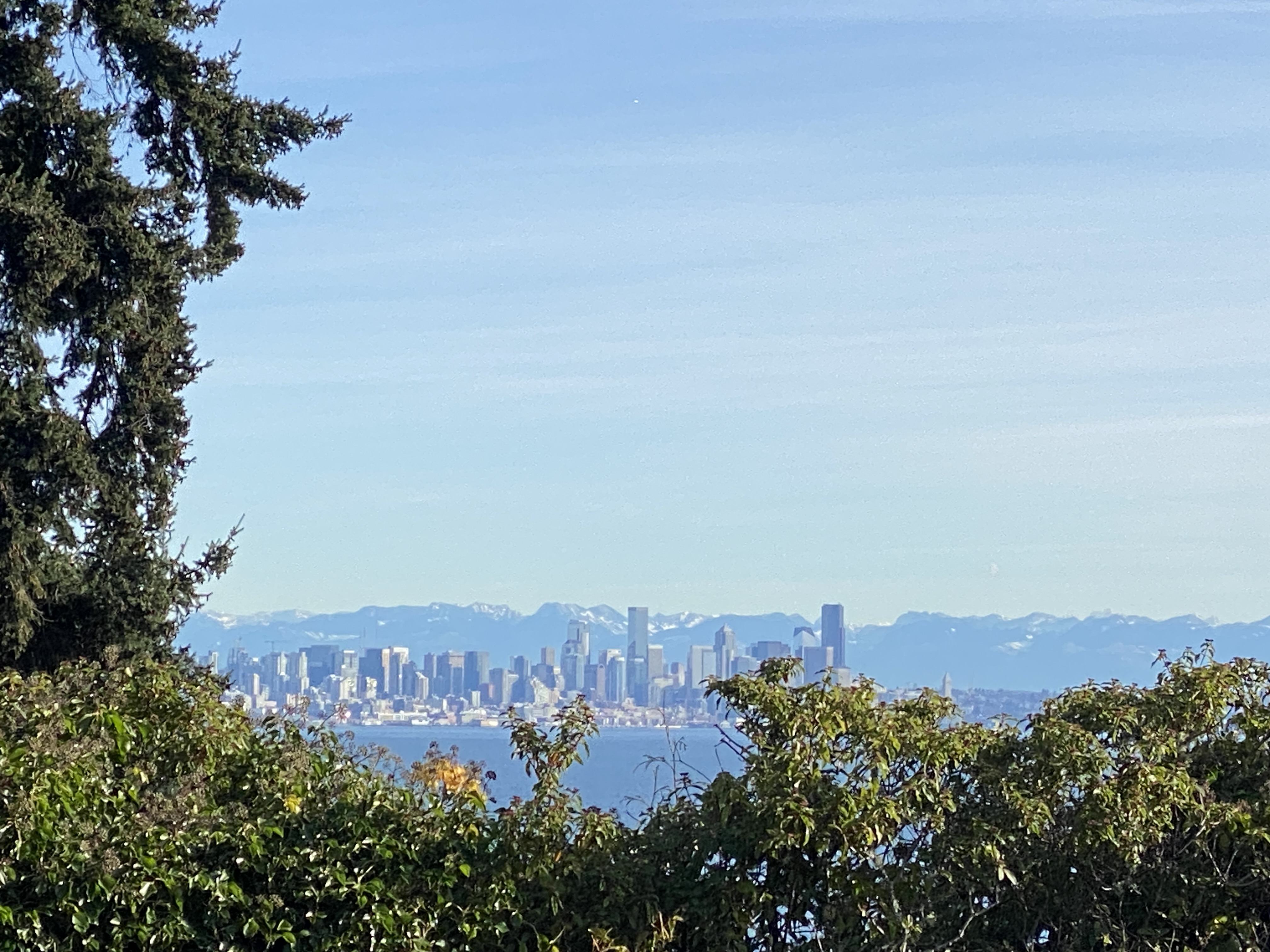
One of the joys of where we live is turning a corner and noticing a new view of the Puget Sound. It might be just a change in light or a view I had not paid attention to before. It is clear enough today that I spot a framed view of Seattle and the snow covered Cascades.
What a joy it is to have a little blue sky and sunshine in the winter time. It is a special joy to see neighbors out and about enjoying the all too brief winter sunshine.
Covid Deaths in U.S.: 1,115,913 Get Vaccinated!Stop the War in Ukraine!
The weather gods graced us with a dusting of snow.
Even though I walk this path several times a week, it is completely different in the snow and ice. I notice patterns otherwise missed on my familiar path.
One of the gnome homes is decorated for the holidays. Thank you anonymous adorners.
Covid Deaths in U.S.: 1,109,983 Get Vaccinated!Stop the War in Ukraine!
I am a visual recall person.
I have a very difficult time remembering anything that I only hear.
To compensate, all my life I have taken extensive notes. I write as fast as I can to capture what is being said so that I can SEE what is being said. By seeing what is said I have a chance of remembering the discussion.
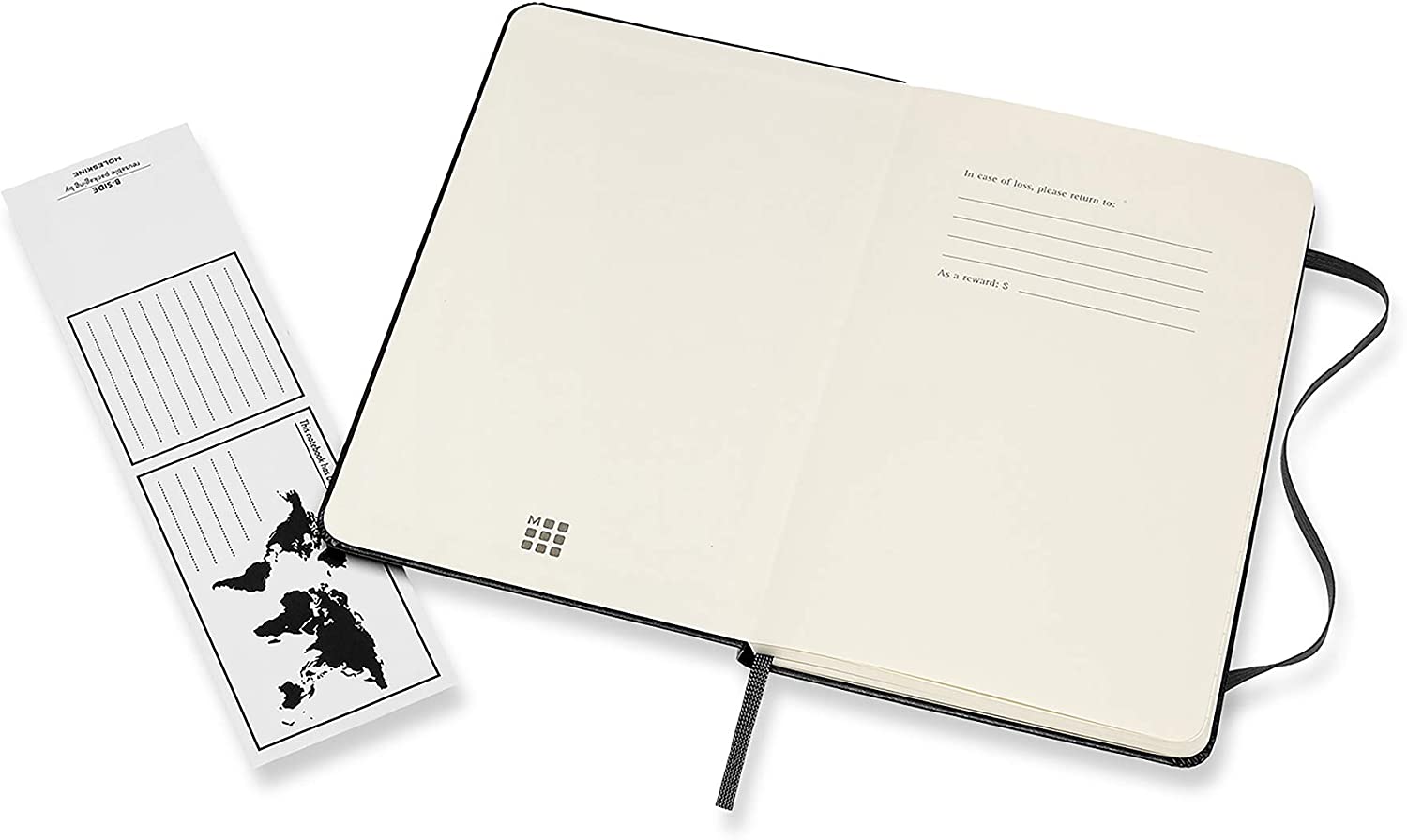
I have decades of portable moleskine notebooks for these notes and sketches.
Taking Notes is about capturing what was being said to me.
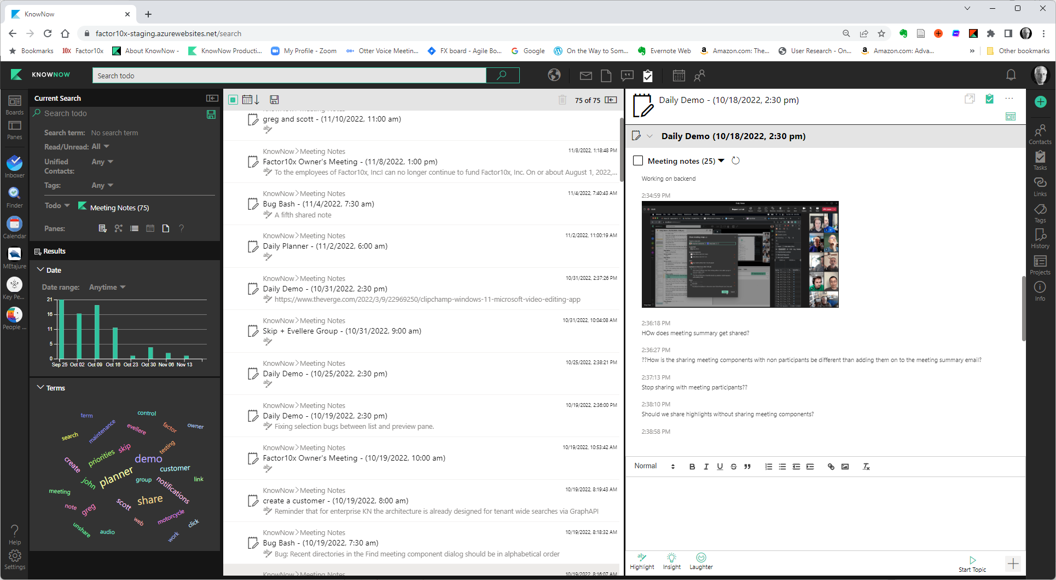
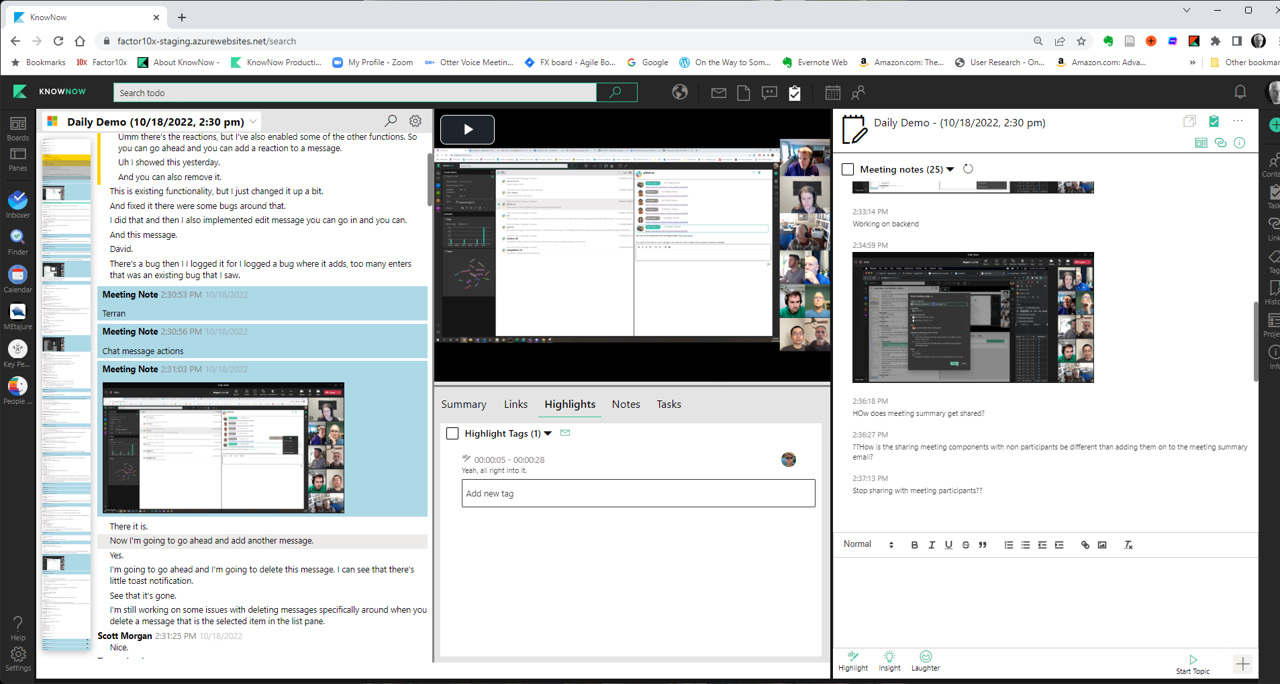
In developing KnowNow, I insisted on having a time stamped notes capability for our meeting notes features. I wanted to be able to directly link my notes through the time stamp to the video and automated transcript.
Greg Buckles is another note taker. He noticed that with the shift to time stamped meeting notes that are accompanied by a video with a transcript that he had transformed to MAKING Notes. Instead of just taking notes so that he could remember, the automated transcript could capture the full conversation. He could now listen and MAKE notes on what knowledge relationships were being triggered during the meeting. If an important idea was discussed that he wanted exact quotes for, he could hit the highlight button, and thirty seconds of the video and the transcript would be highlighted automatically.
As Greg described his transformation from TAKING notes to MAKING notes, I realized I made the same transformation.
When we added the Meeting Summarization capability, it was now easy to capture the MAKING notes and highlights and still have them in context of the full transcript for the exact discussion.
As I looked at my use of Goodnotes in conjunction with my Kindle Highlights, I realized I was doing the same thing. The ability to copy exactly the text from a Kindle book into Goodnotes was the same as the transcript. Then using the Apple Pen I could MAKE notes on what I am reading. I wasn’t just taking notes which were a summary of the book text, but I was making notes about relationships to what I was reading.
Covid Deaths in U.S.: 1,109,851 Get Vaccinated!Stop the War in Ukraine!
It is time. I have to cull 4,000 of the 5,000 business, technical and non-faction books that occupy our home.
I have not read a paper book in over six years. Yet, I keep thousands of books to surround myself with millions of words and images.
All of my reading occurs on the Kindle app on my iPad. I now have >5,000 Kindle books. One of the benefits of my Kindle books is that all 5,000 of them are on my iPad. They do not occupy a large percentage of the floor space of our house.
In the post “What is a book?” I provided several images of some of the many places we have our books tucked away.
Skip’s Library of Books
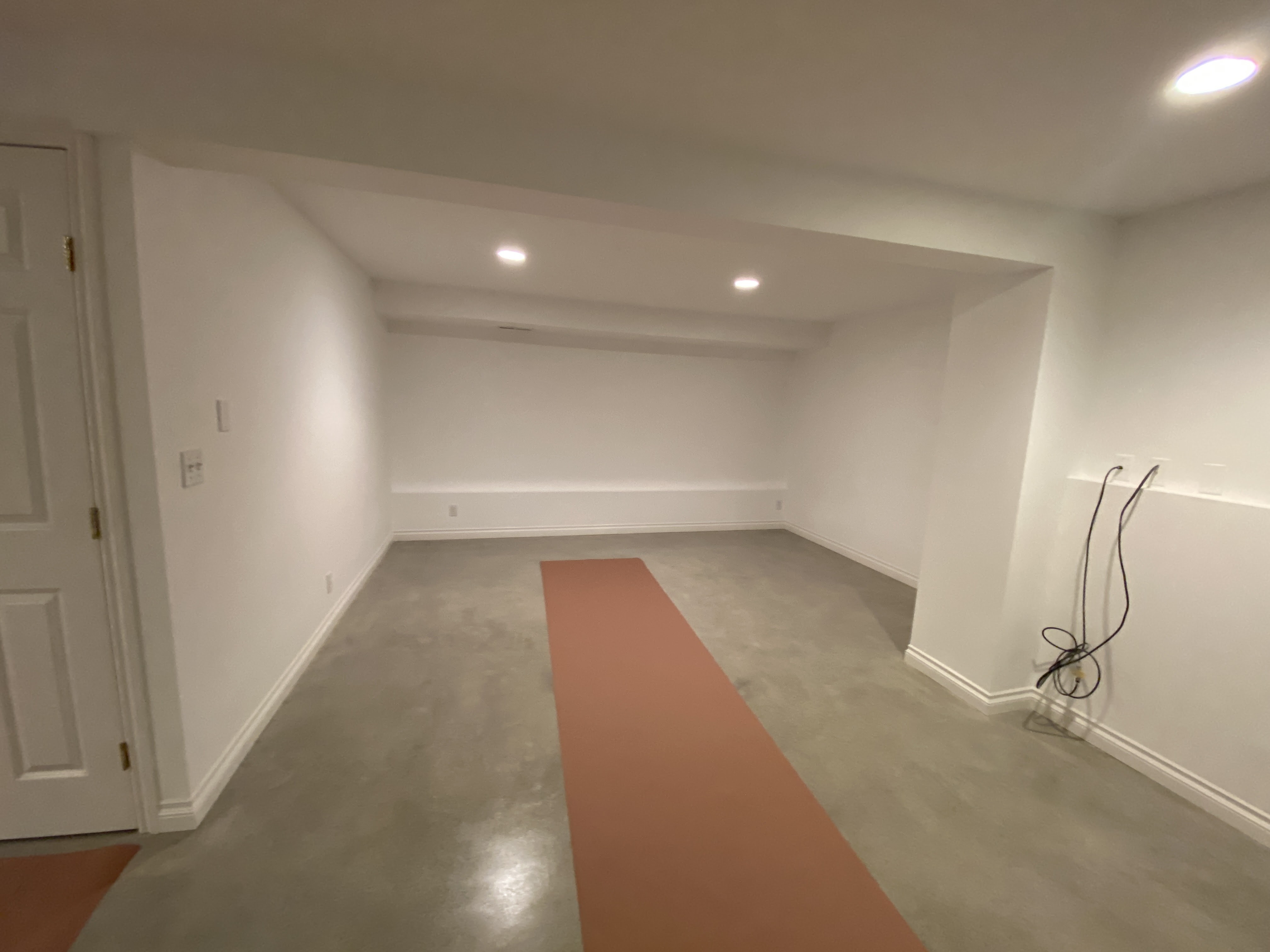
Six months ago the universe sent us a message to clean up our mess when our ground floor flooded due to a burst water heater. We are almost through with our reconstruction.
The upper left image of book shelves space now looks like:
By cleaning our book mess up now, we are saving our children from having to do it in the next few years.
Before bringing all the books back into the house from the ground floor, I start my culling by going through the upstairs book shelves.
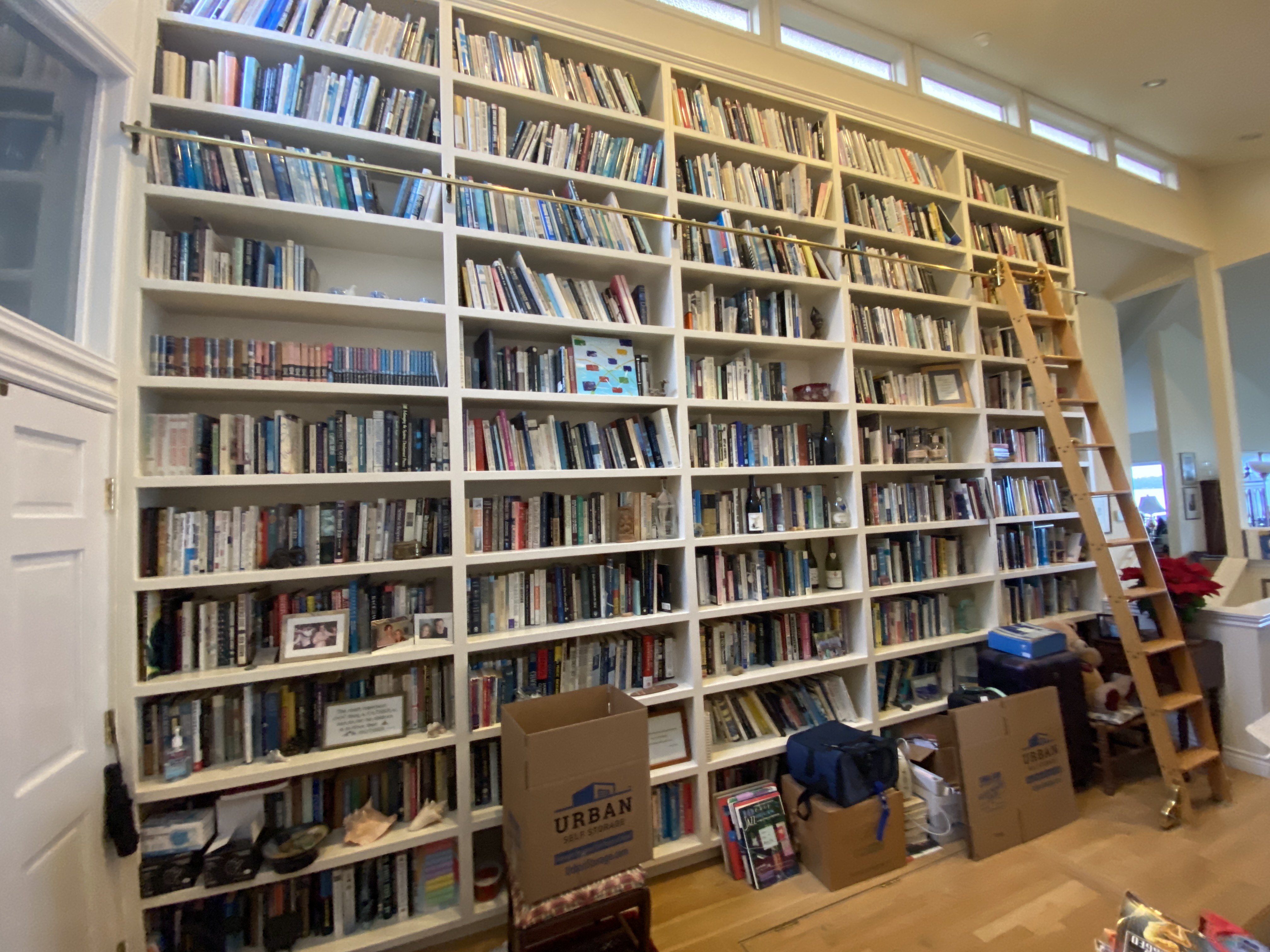
Before the culling
Somehow I have to cull 80% of these books to make room for the keeper books from the 3,000 books that are now in storage.
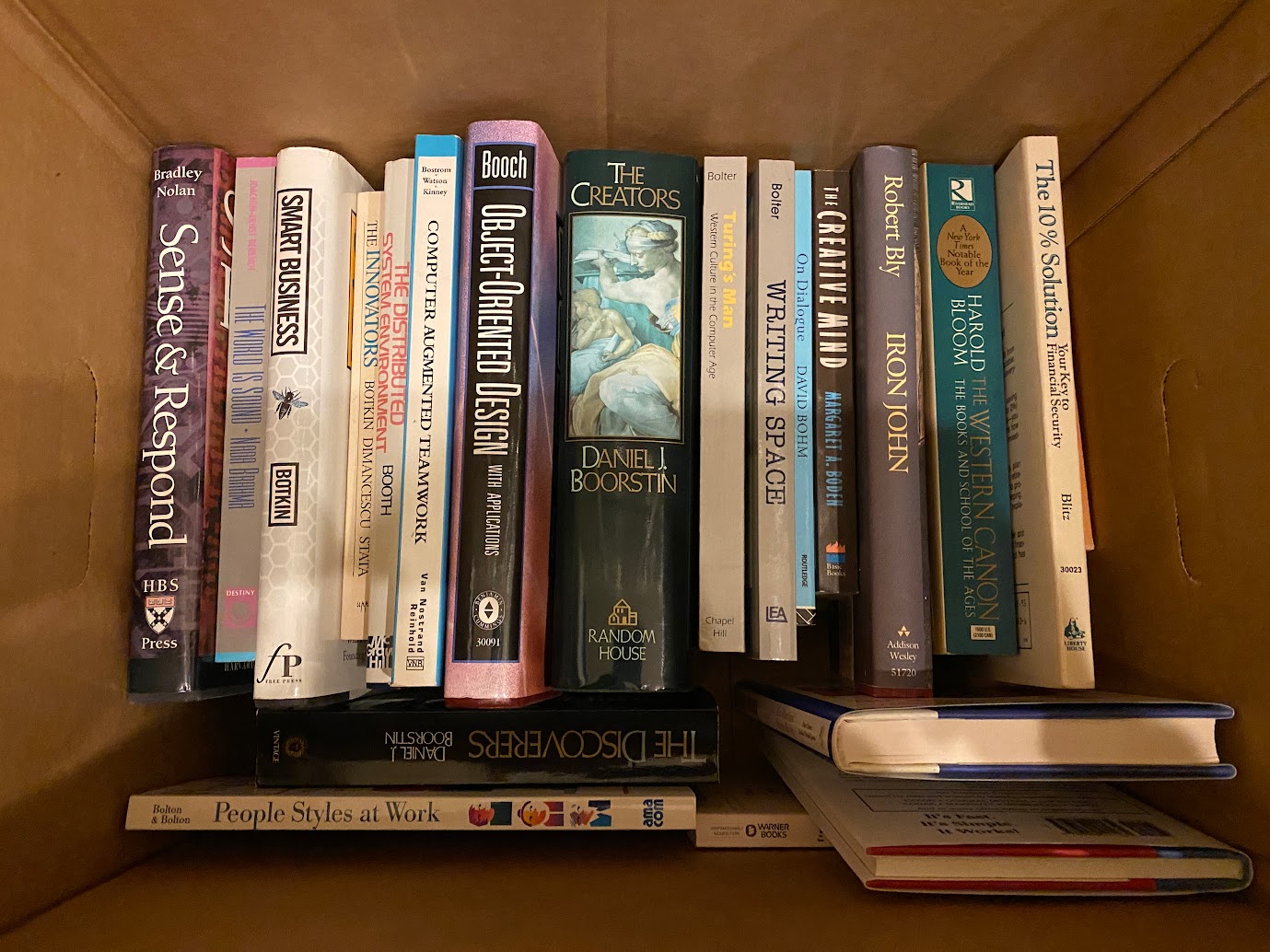
My first box of culls:
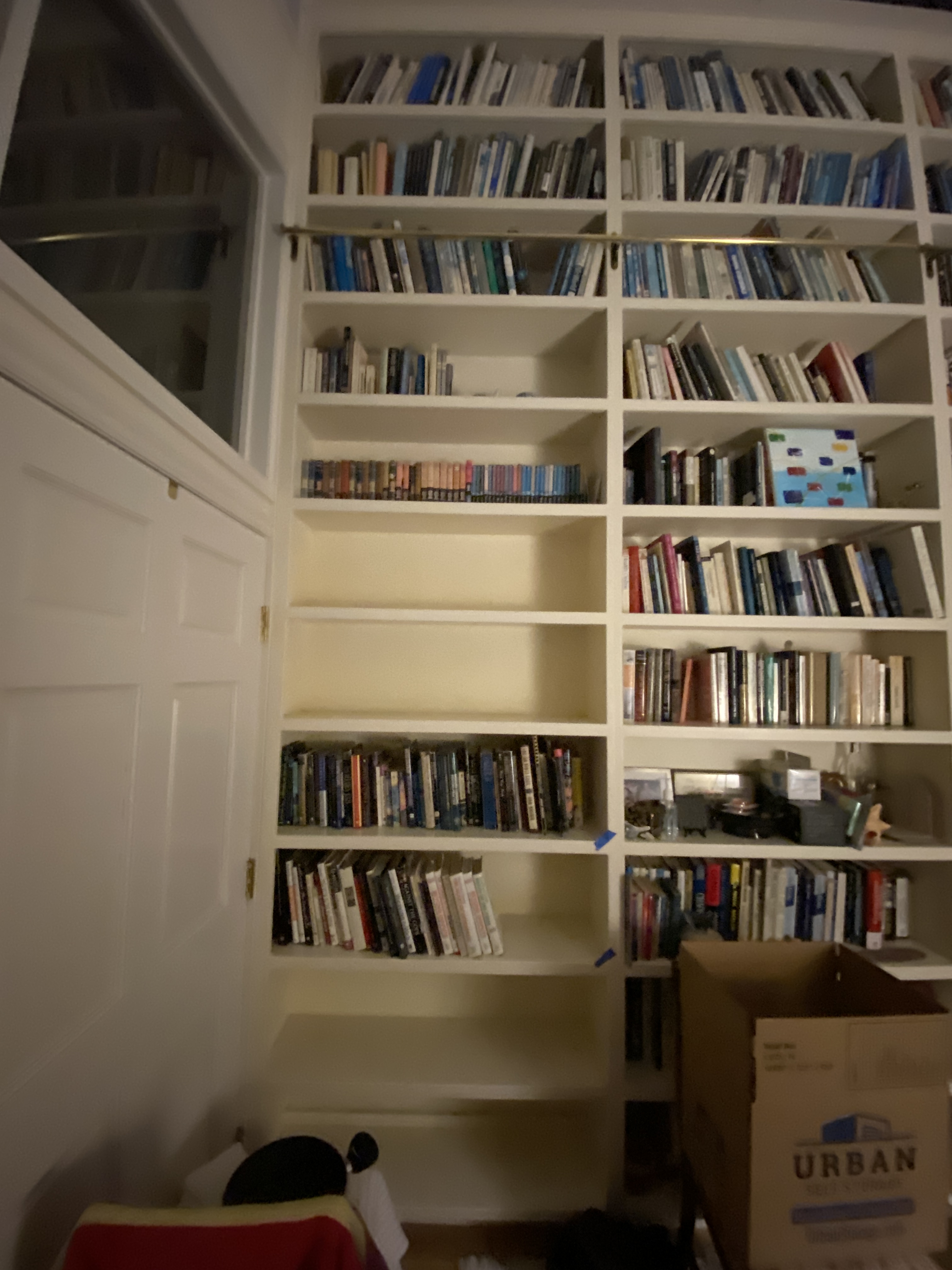
After culling to five boxes of books and keep a couple of 20% of the books, the first column of our bookshelf looks like:
Pull the books out. Check for any stray receipts or papers in the books and toss the stray papers away. Decide on whether to cull the book or keep it. If a cull, put the book in a cull box. Once a shelf is cleared then clean the dust from all the construction of the last six months. Move to the next shelf of books.
Decisions. Decisions. Decisions.
I am sure I have done harder things in my lifetime, but it is hard to part with 80% of my companions through ferry rides and hundreds of thousands of airline miles.
The hardest part of this work is not being able to find anyone to take my lifetime of books. I hate that these books will most likely end up in a landfill.













 On the Way to Somewhere Else