On Civility

I have been known to flip someone the proverbial bird. Rarely is this action anything other than jesting with good friends when they’ve said something outrageous. Times they are a changing.

I was sitting in the Washington State Ferry terminal waiting area at Coleman Dock reading USA Today on my iPhone, when I heard a commotion at the ticketing desk. I looked up and saw a man in his early 20s speaking loudly to the ticket seller.  I didn’t think much of it and went back to reading sports articles on my iPhone.

Suddenly, my personal space was violated with the young man demanding to use my iPhone. I looked up at him and said politely “No.” He started swearing at me and demanded my iPhone again. I gave him my best silent evil eye maintaining unblinking contact. Soon he gave up and went scurrying off.

A few minutes later my peace was interrupted by the same young man yelling angrily at the nearby ticket taker in obvious frustration.  His ferry to Bremerton had departed while he was off doing whatever he was doing.

He turned and made a beeline to me and started yelling at me and calling me an asshole. He proceeded to blame me for missing his ferry.  I continued to stare at him with my best evil eye not wanting to get into any kind of a discussion with this rude person. Abruptly, he flipped me a bird with each of his two middle fingers and stalked off.

I had plenty of time to reflect about this incident as I rode the ferry to my home on Bainbridge Island.  Several years ago when we had flip “dumb” phones, I would probably have lent the phone to the young man.  Today, the iPhone has most of my life and is more precious to me and more valuable than what I have in my wallet.  I couldn’t imagine stomping up to somebody and demanding their wallet.  Why would somebody think I would even begin to lend them my smart phone.

Normally, I would have muttered about this for a while and shared the story with a few friends and moved on, but this one stuck in my craw.

The event followed a miserable sequence of classes I taught in the UW Foster School MBA program where several of the 20 year old masters and mistresses of the universe very aggressively told me I was an idiot and a terrible teacher.  Not one on one, but in the midst of our evening classes.

I don’t mind being challenged in class.  It is what makes teaching graduate school such an enjoyable intellectual experience. It was the attacking uncivil manner in which the behavior occurred.  The experience was completely out of place and uncalled for.  Very uncivil.

While I would like to think that these were isolated events or a sign of the generation gap between the baby boomer generation and the millenials, I am beginning to think it might be a pattern.

Where has civility gone with this coming generation and where is the extraordinary respect we should have for each other.

What can each of us do today to make the world a more civil place?

Give civility a chance.

civility

Practice random kindness.

Posted in Citizen, Lifelogging | 3 Comments

Lifelogging

Fifteen years ago, I read MyLifeBits by Gordon Bell and thought it was a cool idea. However, the hardware and software and mobile devices that we take for granted today didn’t exist at the time.  The concept was filed away in my feeble memory as a good idea that I should check back on sometime.

Over the years I acquired Gordon’t two book length tomes on the subject, Total Recall and Your Life, Uploaded: The Digital Way to Better Memory, Health and ProductivityHowever, I never got around to reading them until this last week.

alice and john

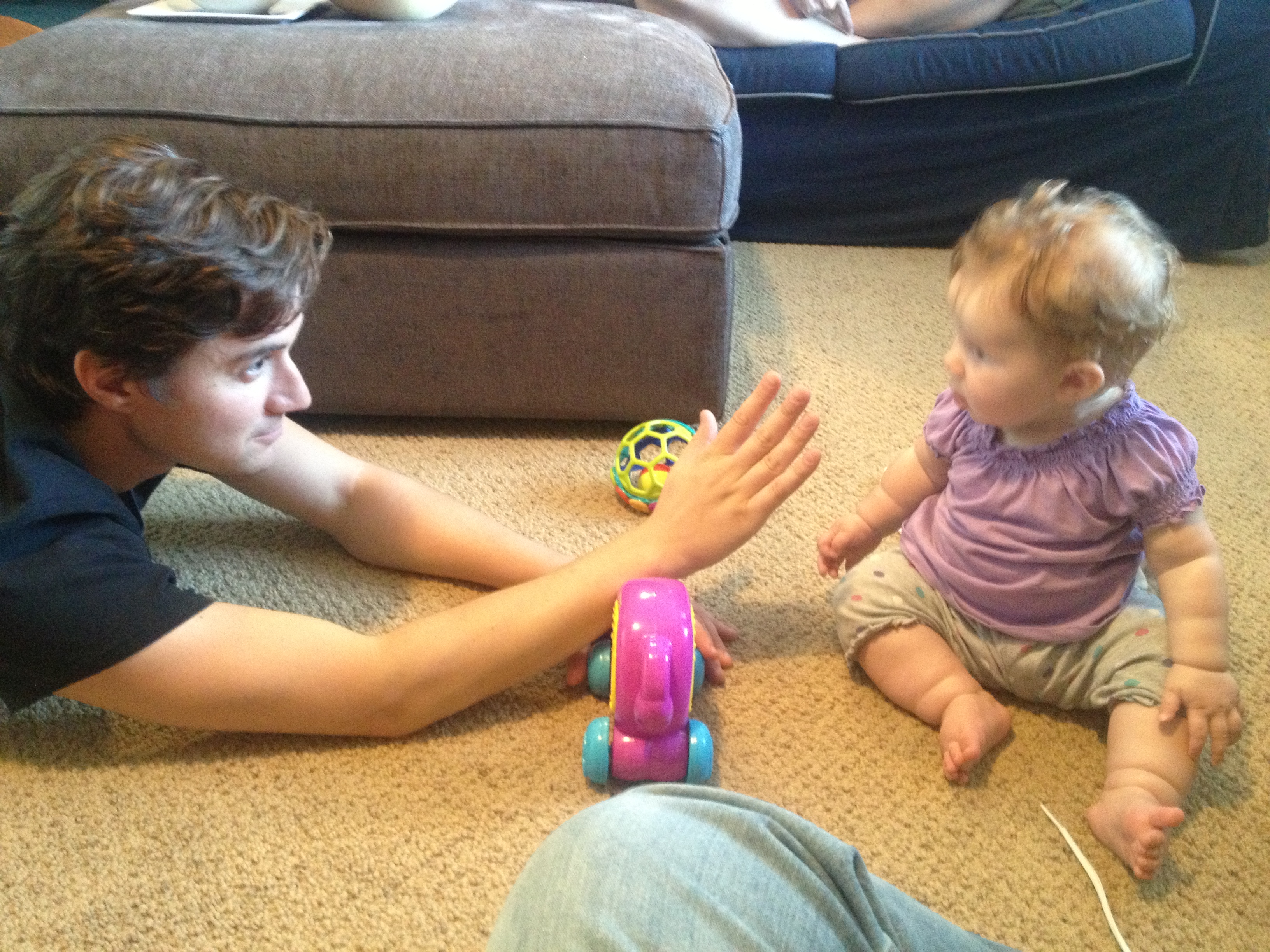
Alice and her uncle entertaining each other.

What changed? I became a first time grandfather this year for a wonderful cherub, Alice, and found out that I will shortly be a grandfather for the second time in a year.

After the wonder and awe of Alice’s early infancy, I started thinking about what kind of interactions we were likely to have in the future.  Then, it hit me that as old as I am, I am not likely to be around when Baby Alice grows into adulthood.

How can I have conversations with Alice when I won’t be around? How do I make available the information, knowledge and wisdom that is in my 8 Terabytes of digital stuff on my desktop and 6,000 books in my paper book and eBook library?  How do I make meaning out of the inert digital detritus of a lifetime?

Fortunately, I remembered that Gordon Bell had a lot to say about the topic so I pulled his two books out and inhaled them. I was delighted with all the pointers to hardware and software in Your Life, UploadedI started looking everything up and began ordering hardware (Withings Pulse) and software (MyCyberTwin, Animoto, Saga, Rove). My favorite was the MyCyberTwin Teddy that Talks which alas is not available yet.

So I turned on the Rove app and just went about my daily business.  Imagine my surprise when this infographic showed up with where I’d been, when I’d been there, and it automatically pulled all the photos up that I had taken with the standard iOS camera (not within the Rove app itself).

 rove

The real eye opener came from Animoto. I downloaded it, selected a theme, selected some photos from my camera roll, selected some music, hit the create button, waited for a minute, and out came this finished video:

Within minutes, I created several Alice vignettes and sent them out to the family. Our daughter immediately responded “Well if you were trying to make me cry, congratulations, you succeeded :)”

The exciting part is that lifelogging has moved from simply collecting digital detritus to creating lifelets (small moments of joy in our daily experiences).

The hook is now set for lifelogging. I can’t wait to make meaning out of all my inert digital assets.

Posted in Lifelogging | 1 Comment

Code Mocking? How about business plan mocking?

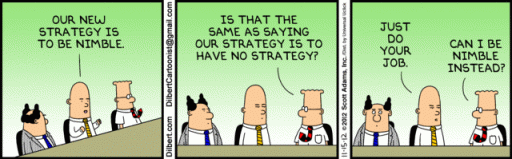
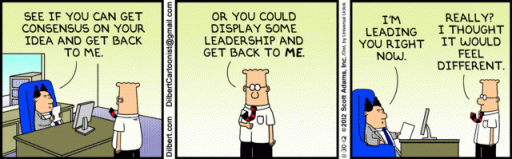
After 40 years of participating in software code reviews, I couldn’t stop laughing when I encountered a recent Scott Adams‘ Dilbert cartoon:

code mocking

Many is the code review meeting that I wished I could stand up and start mocking the fruits of a software engineer’s labor.  Forgetting that some times the code could strike back.

After wading through 100 applications for an upcoming new venture investors’ conference, I wanted to send an email invite to my colleagues to set up a parallel meeting for business plan mocking. We should set up an award for the clueless that sends them to a workshop on Running Lean or at a minimum remedial hockey stick revenue plan generation.  Maybe a dose of business plan BS would help as well:

bs generatorMay the mocking be with you?

Posted in Dilbert, Humor, Software Development | Leave a comment

What if what we know is wrong?

Many years ago I came across a diagram of the four boxes of knowing:
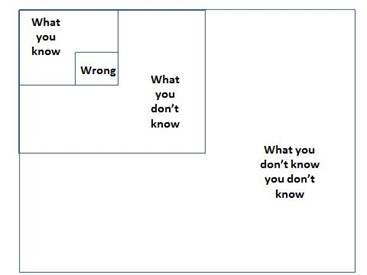
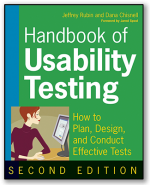
Four boxesI was reminded of the box about “what you know that is wrong” while listening to Dana Chisnell’s talk on “Rethinking User Research and Usability Testing for the Social Web” at the ConveyUX conference sponsored by BlinkUX. Dana is the author of Handbook of Usability Testing: How to Plan, Design, and Conduct Effective Tests which is a required textbook for UW HCDE 517 on usability testing.

dana on shelly

Dana started her talk with a story about Shelly.  In Dana’s 20+ years of doing usability research, she’d only had two subjects cry during the testing. As Shelly broke into tears while testing a simplified financial planning tool, Dana was at a loss for what to say.  Finally, she asked “what is going on and how may I help?”

Shelly replied “Whenever I do anything with financial planning, I always do it with my father.”

Dana suggested “Well, let’s give him a call.”

While Shelly thought that might be a good idea, she knew her dad wasn’t available for calls at work that day.

As Dana continued with the research study, she paid more attention to what many of the book_cline-e1348436442686subjects had to share – that they always did financial planning in conjunction with someone else. It suddenly dawned on Dana that in our always connected world that almost every task that we do has some component of checking with a friend or colleague or expert. Yet, the field of usability testing has a single person sitting in front of a single computer. In that moment, Dana started rethinking the field of user experience research.
The observation that captured Dana was “people don’t live in the world doing one task with one device out of context.”

Dana then went on to describe five characteristics of users today:

    • The nature of being online is social
    • Scale is a game changer
    • Tasks aren’t what you think (activities – goals that emerge and change)
    • Satisfaction is correlated with task completion
    • Users continuously design your UI in real time

In thinking about UX social research design, Dana now asks questions like:

  • Where are you with planning?
  • Who do you ask when you don’t know?

The answers to the above would have told us:

  • Who is part of planning and deciding
  • Who is trusted
  • Why these people are important
  • Why they are trusted
  • How planning happens

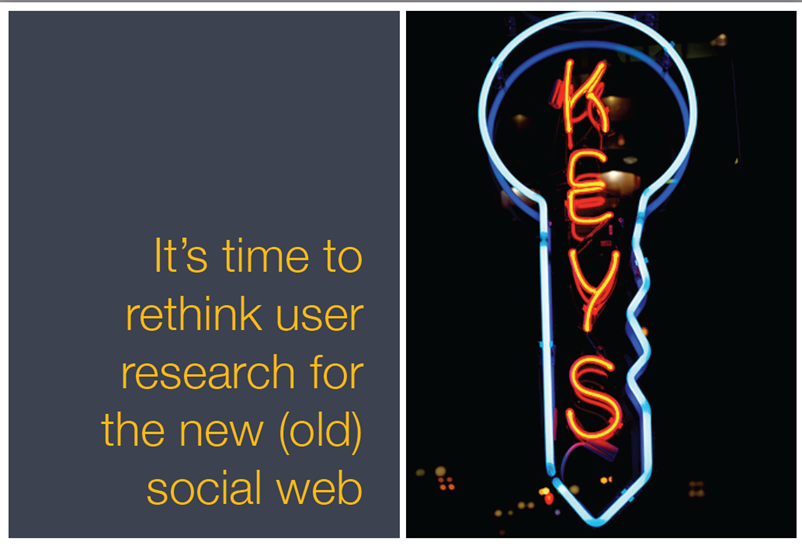
In summary, the “rethinking user research” provided these insights on the challenges with the current UX paradigm:

  • We’re not getting the answers we need
  • Experimenting is limited because we’re pressured to go to market
  • We’re looking for things we know about, using old fashioned tools
  • We’re missing things we don’t know about

time to rethingAs Dana finished up, I looked around the room and noticed that several of the HCDE students in attendance were in shock. As we gathered at the back of the room, they looked at me and said “Now what do we do?  We are using her textbook for our usability class and now the AUTHOR has just told us her work is crap. How can we learn anything if the MASTERS keep changing their mind?”

And isn’t this the crux of what it means to achieve mastery – the Malcolm Gladwell 10,000 hours rule (Outliers: The Story of Success) – the ability to keep learning and revising one’s theory in practice.

As I rode home on the ferry that evening, I was delighted to have another example of a MASTER who realizes that what she knew was wrong and then evolved her theory in practice.  Chris Alexander went through this major upheaval in his work several times.  The most recent led to the revision of the work chronicled in Timeless Way of Building to a complete reworking of his theories in The Nature of Order.

I picked up Stephen Grabow’s Christopher Alexander: The Search for a New Paradigm in Architecture to re-read Alexander’s “Ah Hah” moment and see if there were any parallels with the transform in user research that Dana Chisnell discovered.

Here are a few excerpts from Grabow starting on page 170:

“There was one fact above everything else that I was aware of, and that was that the buildings were still a bit more funky than I would have liked.  That is, there are just a few little things that we built down there that truly have that sort of limpid beauty of things that have been around for ages and that, actually, are just dead right.  That’s rare; and it occurred in only a few places.  Generally, speaking, the project is very delightful – different of course from what is generally being built, not just in the way of low cost housing – but it doesn’t quite come to the place where I believe it must.

“This is very important because here we have the question of the quality without a name again.  That is always my reference point, and I ask myself, when all is said and done, after a lot of us have spent a year building these buildings, to what extent has this timeless quality actually manifested itself?

“Part of the reason for the whole of the work of phase two was that I noticed that when other architects were using the pattern language they were still making the same old architecture and saying that it had the pattern language in it.  And that of course led to the whole analysis of phase two – all of those fundamental and sweeping economic, political, and procedural changes that are needed to make this happen correctly.  But what I am saying now is that, given all of that work (or at least insofar as it came together in the Mexican situation) and even with us doing it (so there is no excuse that someone who doesn’t understand it is doing it), it only works partially.  Although the pattern language worked beautifully – in the sense that the families designed very nice houses with lovely spaces and which are completely out of the rubric of modern architecture, so there is no problem on that level anymore – this very magical quality is only faintly showing through here and there.  So of course I began to think about this more and more.

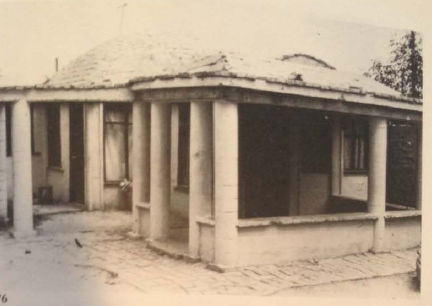
alexander contruction in mexico

Alexander Mexican low income housing experiment

“There is something which in one instance tells you to be simple and which in another tells you to be more complicated.  It’s the same thing which is telling you those two things.  And I became aware of this over and over again in that building project – that there were things like this going on and that I had a reasonably clear intuition about it but that it was very difficult to make explicit and absolutely beyond my capacity to explain to anyone. In spite of all my efforts at trying to explain it over the past ten or fifteen years, I just could not explain this matter – although I knew what I was feeling about it and knew that it had nothing to do with me personally. . .

“I gradually began to realize that I was not taking the problem seriously enough and that I had a very casual attitude to construction.  I thought if one followed a set of operations which were defined by the patterns – actually they were more specific than patterns because they refer to particular versions of patterns – then that was enough. But what I realized was that the craft element was crucial.

“I began to be aware that the actual craft of building in itself was so gigantic and fascinating  in its own way, as the whole of the pattern language. . . These observations – that the actual decision making process in the resolution of the details of construction had not been made explicit, and that the process itself required a level of mastery not accounted for by the previous work – would lead Alexander into the last and perhaps most fascinating series of experiments of the second phase of his research: the precise identification of the geometrical properties of the unity of space.  It would also bring into focus his little-known research in cognitive psychology at Harvard under Bruner and bring him full circle back ot the original questions he posed as a student at Cambridge twenty-five years earlier.  In the meantime, however, his experiments in construction would prove to be the decisive ingredient in forcing a confrontation with the existing paradigm.

Kuhn points out that the differences between paradigms constitute more than a disagreement about the behavior of the world.  They are directed not only out towards the nature of reality but also back upon the field that produced them.  And since paradigms are the source of the methods, problem definitions, and standards of solution accepted by the field’s practitioners at any given moment, the reception of a new paradigm will often necessitate a redefinition of the corresponding field.

“For Alexander, the attempt to discover new processes by which buildings are made now places him in a radically different posture vis-a-vis the current paradigm [see paradigm shift from The Structure of Scientific Revolutions].  For the first time since Notes on the Synthesis of Form his work can no longer be mistaken as paradigm extension or modification, but rather, as a completely different conception of building.  It entails the realization, for example, that to produce the particular geometry called for, the building itself needs to be in a constant state of creation. [NOTE: Stewart Brand captured this concept in loving detail in  How Buildings Learn: What Happens After They’re Built.]

“It involves a dynamic process where you need to be constantly modifying the design while you are building it because it is only while the building is going up that you appreciate exactly how to make certain details.  It includes the idea of working without drawings, by and large, and it includes the idea that a set of construction processes are specified rather than drawings and that these processes take off where the pattern language stops.  In other words, you use the pattern language up to a certain point, you lay out the building, and then you initiate a set of processes, you carry these processes out, and when you finish carrying them out you have a building.  Its a completely dynamic conception of the translation of a design into an actuality as opposed to having a set of working drawings which are complete and finished and describe a building which somebody then figures out how to construct.  This is a completely different idea.  It is more like sculpture in the sense that it is constantly reacting to the last operation they just performed and deciding if it is correct.

“As a consequence of this conception, fundamental changes in the methods and practice of building are necessary. The way contractors work and the way architects relate to contractors needs to be altered.  An amalgamation of contracting and designing needs to occur in which the architect is also a builder.  And because the building is to be constantly built and rebuilt during its lifetime, the relationship between the architect-builder and the environment needs to be on a relatively permanent as opposed to temporary basis – resembling the traditional family physician’s relationship to his patients.”

With these deep realizations, Alexander had to step back from his Pattern Language work and completely redefine his theories.  He then spent 27 years of research and writing to arrive at the four volume Nature of Order series.  From the Nature of Order website an overview of this work and Alexander’s transformation:

“Alexander has advanced a new theory of architecture, matter, and organization, that has attracted thousands of readers and practical followers throughout the world. His grasp of the fundamental truths of traditional ways of building, and his understanding of what gives life and beauty and true functionality to towns and buildings, is put forth in a context that sheds light on the character of order in all phenomena. Taken even further, hundreds of examples are given to show how the theory has been put to use in his many projects around the world.

“The four books of The Nature of Order redefine architecture for the 21st century as a field, as a profession, as practice and as social philosophy. Each of the books deals with one facet of the discipline. This worldview provides architecture with a new underpinning, describing procedures of planning, design, and building, as well as attitudes to style, to the shapes of buildings, and to the forms of urbanization and construction. Here is an entirely new way of thinking about the world. As one writer has expressed it, “The books provide the language for the construction and transition to a new kind of society, rooted in the nature of human beings.”

“The four books, each one an essay on the topic of living structure, are connected and interdependent. Each sheds light on one facet of living structure: first, the definition; second, the process of generating living structure; third, the practical vision of an architecture guided by the concept of living structure; and fourth, the cosmological underpinnings and implications brought into being by the idea of living structure.

“The books offer a view of a human-centered universe, a view of order, in which the soul, or human feeling and the soul, play a central role. Here, experiments are not only conceivable in the abstract Cartesian mode, but a new class of experiments relying on human feeling as a form of measurement, show us definitively the foundation of all architecture as something which resides in human beings. Whether this “something,” which is demonstrated and discussed throughout the four books, is to be regarded as a new entity underlying matter, or what used to be called the “soul,” is left for the reader to decide.

“Taken as a whole the four books create a sweeping new conception of the nature of things which is both objective and structural (hence part of science) – and also personal (in that it shows how and why things have the power to touch the human heart). A step has been taken, through which these two domains – the domain of geometrical structure and the feeling it creates – kept separate during four centuries of scientific thought, have finally been united

“The four volumes can be read separately, independently, and in any order. However, it is together as a whole that they have their greatest impact. For each book explores comprehensively different aspects of the coherence of our universe, and brings us at last to being at one with it.

“These concepts reach far beyond the field of architecture. Scholars and practitioners in many fields are finding the relevance of these ideas to their own areas of study and practice – physics, biology, philosophy, cosmology, anthropology, computer science, and religious studies, to name a few.”

Some twenty years later, Frank Gehry had to transform himself from an architect to a builder and then operator of the buildings that he designed as he was unable to get his designs built.  From “Is Designing Software Different from Designing Other Things?“, we catch a glimpse of how Gehry had to change his theories of design:

“In a more complex example, Frank Gehry in a video, at a Technology, Education and Design (TED) Conference put on by Richard Saul Wurman, described his challenges in creating the kind of public building designs such as the Guggenheim Museum in Bilbao, Spain, the Experience Music Project in Seattle, and the Disney Concert Hall in Los Angeles. When he first started exploring complex curved shapes for the exterior of buildings he was startled to discover that when he put his designs out to construction bid, the contractors quoted him five times the normal fees. He realized that no one knew how to build his creations. So he had to form a company to first adapt Computer Aided Design (CAD) tools to design the complex metal shapes, and then develop the software that would connect his CAD tools with CNC equipment to cut and mill the complex metal shapes. The end result was that he was able to build his distinctive creations for the same cost as traditional construction methods. During his presentation he reflected on whether he was now a building architect or a software designer.

EMP Museum Gehry

Gehry Experience Music Project in Seattle

“These changes are causing the field of architecture to look more like the field of software design. Lindsey details the extent to which computer systems and particularly the Dassault CATIA CAD system have entered Gehry’s practice of architecture. The computer is used for simulations of the digital and physical models, direct detailing, computer aided manufacturing, coordination of the electrical, mechanical and plumbing systems, and as a framework for the operation of the building after construction. Gehry describes how his evolving process is changing the craft of building design and construction:

“This technology provides a way for me to get closer to the craft. In the past, there were many layers between my rough sketch and the final building, and the feeling of the design could get lost before it reached the craftsman. It feels like I’ve been speaking a foreign language, and now, all of a sudden, the craftsman understands me. In this case, the computer is not dehumanizing; it’s an interpreter.”

The significance of the changes that Gehry has made in his fluent design process shows up in the organizational interventions that the software is bringing to the building industry as described in Digital Gehry:

“Ultimately, allowing for all communications to involve only digital information, the model could signal a significant reduction in drawing sets, shop drawings, and specifications. This is already reflected in the office’s current practices where the CATIA model generally takes precedence (legal as well as in practice) over the construction document set. This is a significant change in standard practice where specifications take precedence over drawings and specified dimensions are subject to site verification. . . . . Glymph states that `both time and money can be eliminated from the construction process by shifting the design responsibility forward’. Along with this responsibility comes increased liability. When the architect supplies a model that is shared, and becomes the single source of information, the distributed liability of current architectural practice is changed.”

“Building on the experience of Gehry, we see that this combined hard and soft design can shift forward into the area of operating a building as well. One software system can act as a shared repository and information refinery for the design, build, distribute, intervene and, now, the operate phase knowledge base.”

On a much smaller scale, Chris Anderson captures these same ideas in his Makers: The New Industrial RevolutionChris describes the challenges his grandfather faced after inventing an automated lawn sprinkling system but he did not have the ability to do the capital formation to bring his invention to market.  Chris replicated his grandfather’s journey in a matter of months with “maker” technology and was able to not only prototype the automated system but manufacture, market and distribute his creation in a matter of months for very little investment.

At about the same time that Alexander and Gehry were transforming their theories, Eli Goldratt went through the gut wrenching reformulation of his Theory of Constraints (TOC).  Most of the experiences that led to TOC were generated by starting with the manufacturing plant.  It wasn’t until consulting with a Brazilian retail department store that he realized that he had most of the TOC backwards. His revised theory can be found in his Socratic Method story form in the book Isn’t It Obvious? 

Goldratt gives some insight into his transformational experience in his book The Choice:

What Choice Do We Have?

“My name is Efrat. I’m accustomed to reading my father’s writing out loud to him. He claims that my comments, and more so my body language, help him to spot when his arguments are unclear.

Once I asked him, “Why me?”

“Because, unlike so many other people, you don’t fool yourself that you know everything about organizations, let alone about human behavior.”

I like his answer. I worked hard to get a PhD in organizational psychology. I invested many years to learn how much we don’t know. No wonder the title of this report, which I am about to read aloud to him, is of particular interest to me. It’s called “Freedom of Choice.”

“Father, what is the choice you made that impacted your life the most?” I ask.

Decisively he answers, “I wanted to live a full life. The most important decision that led directly to it was my decision to constantly devote time to understanding, really understanding, each one of my areas of interest: family, friends and work.”

Knowing that when Father says “really understand,” he means spending endless hours in the attempt to decipher the causalities that govern a situation, I sigh, “That’s not easy.”

“Who is talking about easy? Do you want an easy life?” he asks.

Being the daughter of my father I have heard this question more than once. “I know, I know. If you want an easy life just grab a hammer, a big one, and hit yourself on the head, hard. You’ll have a very easy life. They’ll even bring the food to your bed.”

I definitely want to live a meaningful life—a full life—and so does everyone I know.

I’m also aware that even though people want to live a full life, most people don’t achieve it.

“Why is it so difficult for people to admit that they don’t want an easy life?” he asks.

“Because they do want an easier life, and living a meaningful life is so difficult to reach.”

He gestures impatiently with his hand. “There are ways to make it more attainable. It only requires one to think. To think clearly. To think like a true scientist.”

“In other words,” I say cynically, “you just have to be born a genius.”

He immediately responds, “No, you don’t. I was not born with any exceptional brainpower, and I have my IQ results from my youth to confirm it. I am a bodybuilder. Practice, practice, practice. Efrat, when will you realize that you, like every other person, have enough intuition and brainpower to think like a true scientist?”

I don’t buy it. But there is something else in Father’s decisiveness that bothers me even more. “Father, in what way does thinking like a true scientist enable a person to live a full life?”

He grins, and true to his Socratic approach, rather than answering, he asks, “Maybe you can deduce the answer from the report we intended to start reading fifteen minutes ago?”

I start to read.

The report is about what has been taking up almost all his time over the past few weeks. It all started with a coincidence—two retail chains expressed interest in implementing his theory. Within two weeks it had grown into a major opportunity involving five of the largest retail chains in Brazil. Then, exactly when he was starting to steer his group into this new and incredibly promising segment, it crumbled into nothing.

When I finish reading, he asks, “Well?”

“What a disappointment it must be for you,” I say.

“Why are you talking about disappointment?” he asks in a surprised voice.

I firmly say, “Everybody feels a sense of disappointment when an initiative doesn’t work. The more important the initiative, the bigger the disappointment. Even when a person makes the right choice, even when a person is optimistic and chooses to look on the bright side, even when the person is made out of iron, he or she will be disappointed. The fact that you repress these feelings doesn’t mean that they don’t exist.”

He smiles. “A typical argument from a psychologist. Now that you claim that I just repress my feelings of disappointment, how can I be taken seriously when I say that I don’t feel any?”

I dismiss his remark; I know that I’m right.

“Let’s view it from a different angle,” he suggests. “Let’s suppose that you are a scientist and you are trying to build an instrument that is based on a new approach. Of course, being experienced, you will first do an experiment; you will build a prototype. What would you expect from the prototype?”

I choose my words carefully. “Only a fool expects a prototype to work perfectly the first time. What one expects is to find out what does work according to expectations, and what doesn’t.”

“Well put,” he encourages me. “Now, suppose that the prototype verifies a few new things that do work, and reveals one thing that doesn’t work. Since one thing was not working, the prototype, as an instrument, did not work well or didn’t work at all. Do you suppose, my dear daughter, that you, the scientist who built the prototype, would feel disappointed?”

I see where he is leading. It’s interesting. “Just a little bit,” I say.

“And once you figure out how to fix the things that were not working? How would you feel then?”

“I would feel energized,” I admit.

For my father, every situation is an opportunity to learn, every new initiative is an exploration. I glance over the document I have just read. It’s evident that he was constructing and experimenting as he moved along. The analogy of a prototype is appropriate.

“What’s the difference between the scientist who designs a prototype of an instrument and any other person who just uses the instruments?” he asks.

That’s an easy question. Confidently I answer, “Most people don’t know much about the inner workings of an instrument; for them the instrument is just a box. So if it doesn’t work, they will feel disappointment. If they need it to work, then they won’t just be disappointed, they will be frustrated.”

He nods in agreement.

“As for the scientist,” I continue, “he knows how and why the instrument works; he is familiar with the components of the instrument; he understands the cause-and-effect relationships that make it work. Therefore, even if the prototype, as an instrument, didn’t work, as long as it provided new knowledge of which cause-and-effects are valid and which are not, the satisfaction of making progress compensates for the disappointment.”

Father leans forward and says, “When a proto-type—a new initiative—doesn’t work, we face two alternatives: one is to bitch about reality and the other is to harvest the gift it just gave us, the knowledge of what has to be corrected. That is the reason I titled the report Freedom of Choice.”

Before I have time to digest what he said, he continues, “But enough talking about instruments and prototypes. Let’s talk about reality—the reality you just read about. Do you still think that I was disappointed?”

After a short silence he repeats his question. “Efrat, do you still think that I was disappointed?”

Finally I answer, “You were probably fine, but I’m sure that the people around you were deeply disappointed.”

“You’re right,” he admits.

“And I bet it wasn’t easy for you to help them overcome their disappointment. I have no doubt that it drained their energy and that you had to work hard to revive their enthusiasm and determination. ‘Freedom of choice’ you call it. Well, for you it might be easy, but for most people it is quite difficult to make the productive choice.”

After a while he asks, “Why?”

“Why is it difficult for everybody or why is it easy for you?”

“Why is it different for me?”

Hesitantly I answer, “You’re always the scientist. You are constantly figuring out how the world is ticking, trying to verbalize the cause-and-effect connections—on any subject, in any situation.” I continue more confidently, “For you, everything is like a prototype. No wonder situations that trigger disappointment and frustration for others are, for you, a source of energy.”

This is a new realization for me. It is evident that the approach of a scientist gives a substantial advantage. But what is that approach?

On the one hand, one has to be humble to assume that one doesn’t know. Actually, to avoid feeling disappointed, one has to expect that things will, most probably, not work the first time.

On the other hand, one must be arrogant—have the confidence that one is capable of figuring out how to make things work.

Put these two requirements together and you have a nice oxymoron: humble arrogance.

Looking at Father I say, “This is the first time that I’ve become aware of how helpful the scientist’s approach can be in maintaining the stamina needed to go after new initiatives.”

“It is also helpful in generating the initiatives to start with,” he comments.

“Probably,” I say.

Father doesn’t like such a noncommittal response.

“Do you agree with what Seneca said two thousand years ago, that ‘good luck is preparation meets opportunity’?” he asks.

I slowly say, ‘And knowing the causes and effects that govern a situation is the best preparation.”

Father continues to guide me. “What happens if someone is not prepared—if he is blind to the stream of opportunities that reality is presenting to him?”

It’s not too difficult to predict the outcome. “If someone isn’t prepared, then he won’t see most of the opportunities. Such a person will be waiting for good luck to provide everything on a silver platter.” Taking it further, I continue, “And if a person doesn’t have enough opportunities, he will feel that life didn’t give him a fair chance, that he is constrained by circumstances, that he is powerless.”

How many of my friends have I just described?

Isn’t this line of thought too simplistic? I have to think more about it.

“Bad luck happens when reality meets lack of preparation,” he concludes. “Approaching reality like a scientist, if done well, also provides the needed preparation.”

Then he adds, “If someone is not prepared, what freedom of choice does he have?”

Now I start to realize that it isn’t just the freedom to choose the bright side. Freedom of choice is also connected to the ability to recognize situations that can be turned into real opportunities.

Father interrupts my thoughts with a big sigh, “Unfortunately, in spite of all my efforts, too often I find myself unprepared.”

Goldratt, Eliyahu M.; Goldratt-Ashlag, Efrat (2012-02-08). The Choice, Revised Edition (Kindle Locations 114-214). The North River Press Publishing Corporation. Kindle Edition.

The challenge with leading a Reflective Practitioner life is taking the time to revisit and revise one’s own theory of our professional discipline(s). In a recent blog post on “Seeing Organizations” I shared my major transformational moment when I realized that I am always taking into account organizational design and organizational interventions when I design software products. It is with great joy that I am also learning how to teach organizational seeing.

Where are you in developing AND/OR revising your theory of your profession?

What do we think we know that might be wrong? Or at the very least incomplete?

Posted in Content with Context, Design, Human Centered Design, Innovation, Knowledge Management, Learning, Software Development, Teaching, User Experience | 2 Comments

Seeing Organizations – How do you teach?

Several years ago, David Socha and I wrote an article “Is Designing Software Different From Designing Other Things?” In the article I shared my Chris Alexander “Ah Hah” moment about designing better software products:

“Successful software design processes include an additional stage of design activities: organizational design and intervention (Intervene). While any good designer must span knowledge domains such as the problem domain and the solution domain (see The Design Way), the nature of software design causes the designer to span more knowledge domains than other designers. A good designer in any field will understand the design brief from the purchaser and then do research on the users’ needs. Yet, most interesting software is used in an organizational context. One could argue that the modern corporation is only as good as the software that it employs. Much software is, after all, automating things that people could, or did, do before without software, or extending what they could, or did, do before. So using the software will require people to change what they have been doing. Thus, for the software to be effective and usable at its introduction, the software designer needs to understand the basics of organizational development and realize that software development is an organizational intervention.

Floyd identifies this key attribute in Social Thinking – Software Practice:

“Enterprise information systems codify structural aspects of organizations. They come with problems of integration and (organizational) standardization on a large scale. Usually it is not a question of developing new systems but of adapting existing systems, so design pertains to how to introduce the system in the organization at hand. Technical challenges lie in using components for tailoring systems to specific needs. The relevant social context is organizational development. Software practitioners are engaged in organizational intervention, being perceived as agents of change. They also have the role of mediators between organizations and vendors.”

“While Floyd only made the organizational intervention argument for the scale of enterprise information systems, we assert that most software design is an organizational intervention. However, most software developers do not take organizational design into consideration explicitly. . . .

“Over the course of my career, I (Skip) alternated between line management jobs in software engineering and working as an organizational consultant helping large and small organizations develop visions, missions, strategies and innovative product designs. In the process of consulting and graduate school teaching, I tried to pass on what I’ve learned about designing successful software products and systems. While my customers and students generated better designs, they did not generate innovative designs like I’ve accomplished over my career. I knew there was something missing from my framework of design, but I couldn’t pinpoint it.

“Then I had a Chris Alexander (see Timeless Way of Building and The Nature of Order) moment while reading Floyd’s article. Alexander realized that the reason his students weren’t producing great designs is that he left two important aspects out of his Pattern Language – color and asymmetry. Similarly, I left out of my teaching the foundations of organizational development, change and design. Yet at least half of the work of every successful product design that I’ve done has included innovative organizational design and interventions.”

I now saw the problem but I had no idea how to take this insight and teach it to employees, graduate students, or seminar participants.  Organizations whether large or small are reluctant to have “students” start messing about with organizational interventions.  The process of becoming an organizational design consultant requires several years of apprenticeship and does not lend itself to the classroom.

For the last eight years I’ve brainstormed the challenge with colleagues, read scores of books, tried experiments in my classes and learned a lot.  However, I wasn’t any closer to a solution then when I had the initial “Ah Hah.”

A confluence of opportunities and synchronicity presented themselves at the beginning of 2013.  The focal point was putting together a syllabus for the UW HCDE graduate class on “Designing a Human Centered Venture.”  Just coming up with a name to get through the course approval process generated a  new set of thoughts beyond just teaching another “entrepreneurship” course.  Something about adding design and “human centered” to “venture” changed my thought process about the curriculum.

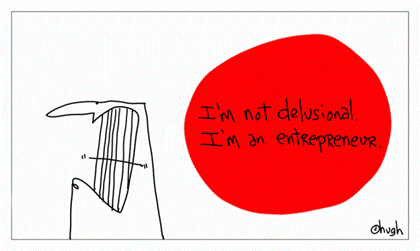
not delusional

I began taking the course title seriously and thinking through not just how human centered design for creating a product might work, but how a human centered venture might look, feel and sound. As part of my effectual course designing, David Robinson and I were creating the business plan and content for our new Flipped Startup Venture.  We decided our first product would be a book about developing the entrepreneurial mindset through the nine recognitions of an entrepreneur.

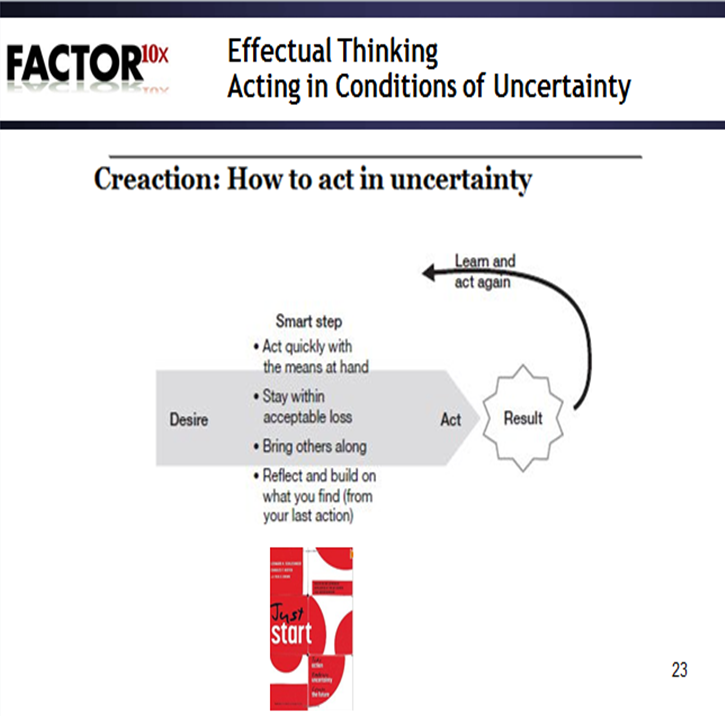
just start effectual

Acting in Conditions of Uncertainty from Just Start

My initial design for the course was going to be similar to the successful UW TMBA Entrepreneurial Capstone I’d taught last spring.  Yet, as David Robinson and I continued to evolve the nine recognitions, I began to wonder if the better focus might be on developing the entrepreneurial mind rather than driving to a business plan or a product plan.

Meanwhile, I started talking with Carolyn Duncan of Portland Ten and John Sechrest of the Seattle Angel Conference about licensing their materials as part of our Flipped Startup endeavor.  Both Carolyn and John strongly advocate getting a new venture focused on generating revenue as soon as possible.  I wondered if I might be able to set a goal of having the student teams generate real customer revenue in the 10 week winter quarter.  Or maybe they could get a successful Kickstarter project launched which might generate pseudo revenue.

As I mulled over these conceptual threads, I decided it was time for me to learn directly makers andersonabout the “maker” movement.  My good friend, Kelly Franznick, is constantly amazing me with what he is able to get his student teams to do with Arduino based projects and a recent project he did for a client to log environmental factors for a home electronics product. So I ordered several Arduino kits (including a wonderful Arno kit) and started building a home security system.  I could not believe how simple it was to get started even though I had not programmed a computer in over 30 years.  Kelly was right.  Any persistent professional can put together a prototype using the “Find. Copy. Paste. Tweak.” process.

As the first class rapidly approached, I still didn’t know what design I would use for the class and what the class project would be.  So in good effectual class designer and Cathy Davidson mode, I decided to let the class sort out what they wanted to work on for their class project.

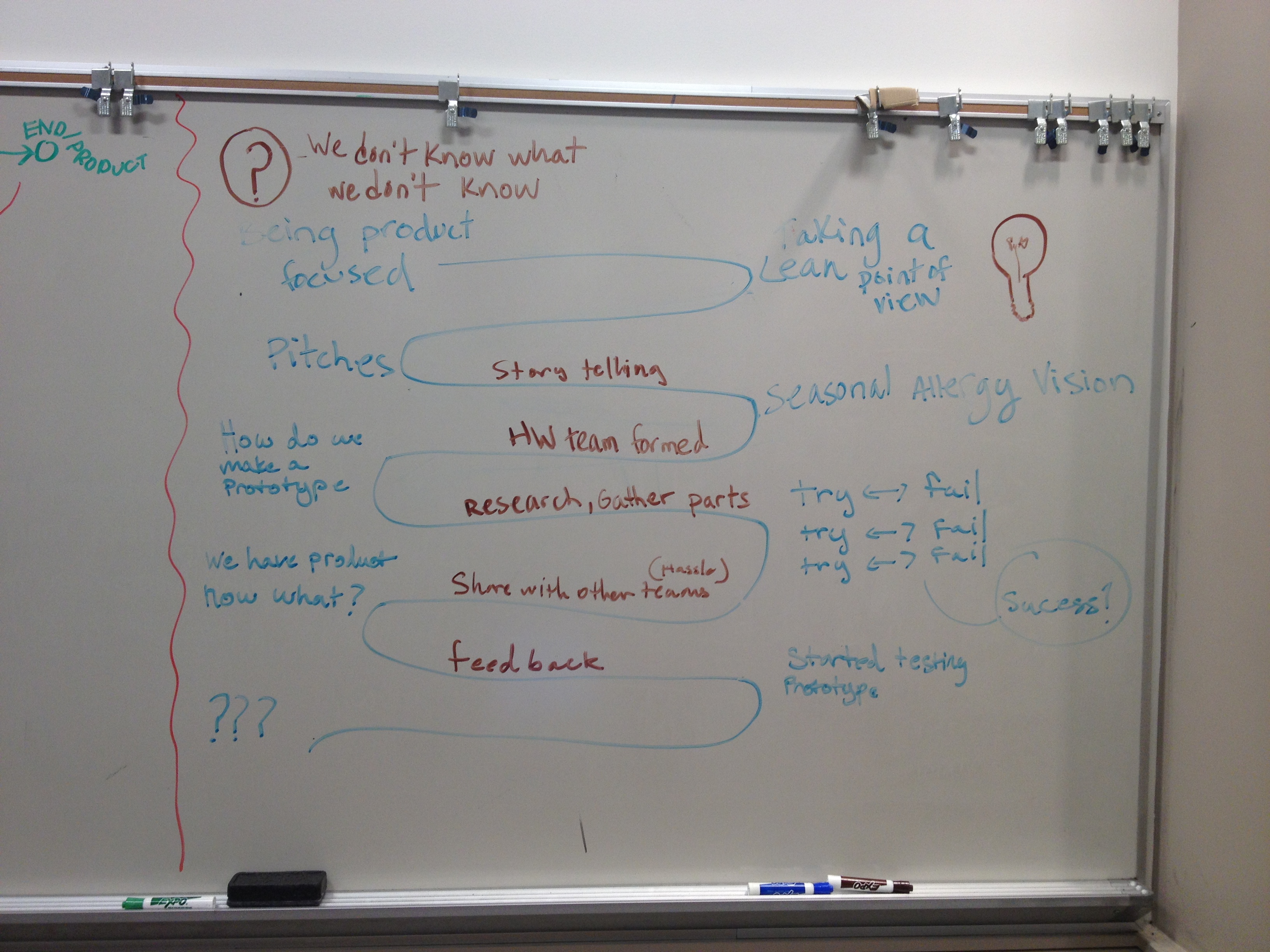
I provided the class with a list of representative projects including a human centered environmental research tool in a box.  Prior to selecting their projects, I had each student pitch an idea that they’d really like to work on during the class.  The proposal that drew the most interest was to create an Arduino based “air quality monitor.”  However, some of the teams were interested in figuring out how to use Kickstarter.  As I saw the groups coalesce around what they were interested in, with just a little bit of manipulation we formed four groups:

  • A hardware team to design, build and figure out how to manufacturer the air quality monitor
  • A software team to build the monitor software and then connect the data to the internet along with a smart phone app
  • A crowd funding team to generate interest and raise money through Kickstarter
  • An inbound marketing team to generate demand for the product

As we left, I thought that the teams would act as a single company to produce the air quality monitor. However, as I reflected about it some more, I realized that enduring lessons would be learned if each team acted as it’s own independent business.  That way, each team would have to have both a business vision and a product vision for its product or service.  Each team would have to be independent AND interdependent – just as a real startup has to learn the hard way.

To better explain the class project I sent the following memo:

A little product innovation humor

steve jobs on the iPad

Here is how I would describe the essence of each team (and some example tasks):

  • Hardware Team
    • Building the hardware (Arduino based) and sensors for determining air quality for those afflicted with seasonal allergies.
      • The hardware should have the capability of both displaying the state on the device AND communicating to the Internet (through email, twitter et al) the current state and historical state of the device readings
    • Designing/Building a working prototype
    • Designing/Building a final form that can be manufactured
      • Pay attention to the form factor, UX and enclosure for a consumer
    • Figuring out the supply chain and costs to manufacture the device in quantities above 100
  • Software Team
    • Building the software to operate the microprocessor based system, communicate the results to the Internet, and provide an appropriate set of analytics (graphs) to illustrate the state of the air quality over time.
      • Extra credit:  Do crowd sharing of air quality to a national network of aggregated air quality data.
    • Design/build the software for the prototype
    • Design/build the software for the manufactured item
    • Figure out the development costs to create, maintain, and support the device and its customers.
  • Crowd Sourced Demand Generation Team
    • Survey the range of crowd sourcing options (Kickstarter, Indiegogo…)
    • Identify which kinds of products and “funders” and contract terms (for both producing company and funders) are most successful on each type of crowd funding source.  Include social venture crowd sourcing as the kickstarter project has a not for profit possibility.
    • Put together the offer levels and thresholds and a “media” production task list and schedule
    • Plan the range of offers to generate to “find” the audience for what we are building.  For example, put together a plan for the air quality sensor, the UX in a box, and home security system … to see which product generates the most interest.
    • There are a wealth of articles about crowd funding and Kickstarter.  Here are a few to get started with:
  • Traditional Demand Generation Team
    • Produce the Demand Generation plan filtered through the Slywotzky Demand six pillars of innovation.
    • What is the product name, brand, brand promise, brand experience for what we are developing?
    • What is the company name and logo?
    • What do we need in the way of materials and media – website, social media presence (twitter, facebook, linkedIn…) to market the product?

Each team should be both independent and interdependent.  Each team should think of themselves as their own standalone business.  Each team should think of themselves as being a part of an interdependent set of partners in this endeavor (the other teams in the class).  Each team is therefore both a producer of a product (a product or service) as well as a partner to the other three teams (and in some cases a customer or supplier of one of the other teams).  Each team has their own set of expertise and focus.  The ecosystem of four businesses will produce as much of the Geoffrey Moore whole product as possible through augmenting the capabilities of the other teams.

One way to describe the independent businesses would be:

  • Hardware Team:  Produces micro-sensing Internet connected products
  • Software Team:  Produces the full suite of software for the Internet of Things
  • Crowd Sourced Demand Generation Team:  Provides the templates and consulting for finding a customer audience through crowd funding sites
  • Traditional Demand Generation Team: Generates customer demand through traditional marketing media and social media

Some examples of interdependencies in our small partnering ecosystem are:

  • Hardware:  Dependent on the software team to make the hardware work
  • Software: Dependent on the hardware team to define the environment that the software executes in
  • Crowd Source: Dependent on the hardware and software teams to produce a working product.
  • Traditional: Dependent on the hardware and software teams to produce a working product.

More specifically you should be doing the following within your team:

  • As a team:
    • Share your contact information
    • Share your respective demographic teamology information (MBTI, Social Styles, Ambiguity …)
    • Determine what team roles are needed for the quarter and allocate those roles
      • Is each person going to be in the same role all quarter or will you switch roles at different deliverable points?
    • What infrastructure does your team need to collaborate and to communicate with the other teams?
    • Start your team journal
  • Between teams:
    • Since we have interdependencies between the teams, how will you communicate and coordinate your needs and deliverables and monitor the progress of your partners?
    • What do you need and when do you need it from the other teams?
    • How will you manage “friction” between the teams?  What “contracts” do you need in place to execute your functions?
  • Develop a business vision for your team (your team will present this in class next week).  Ideally, each member of the team will present a piece of the business vision (plan on doing this orally like we did last week).  The business vision should include the types of things we talked about in class last week:
    • The aspiration you have for your business (see One Page Business Plan examples)
    • The aspirations you have for your customers and employees (talent)
    • The offer and promise (mission) that you will make to your customers
    • A picture of your ideal customer and their latent unmet needs and how you support their human values (is benefit oriented not just features)
    • Some numbers about the size of the market and the relative value your talent will provide
    • What is your ideal Whole Product (in the Geoff Moore sense)?
    • What is your starting product or service?
    • What is your product road map?
  • Develop a starting task list for what you need to accomplish this quarter to create your teams’s product and create demand for your product (find your customers).  This list will change throughout the quarter, but put the stakes in the ground as to what you think you need to do.
    • Keep in mind the human centered design process to think through what user research, prototyping, value creation, and user experience activities you need to do.
    • Think in “value chain” terms – what tools and parts and services do you need in addition to the other “partner” teams in the class.
    • As part of this list, figure out what you need to purchase in order to accomplish your goals during the quarter.  We/I will figure out how to get your needs funded.  Remember to be lean and effectual.

Effectual Prescriptive Process

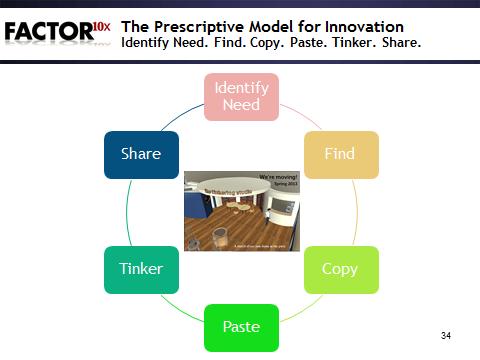
 A lot of researchers and consultants have processes that they recommend to clients that end up being a descriptive process but rarely crosses over to a prescriptive process.  A prescriptive process is one that gives the recipient a better idea of what to do, rather than just giving them a diagnostic of where they are.  As I look across a wide range of creative activities there seems to be one universal prescriptive process that nicely fits the effectual entrepreneur.  At its heart I describe it as “Identify. Find. Copy. Paste. Tinker. Share.”

find and tinker

An early version of the description of this process can be found in my blog post.  Make sure you also ready Kelly Franznick’s blog post on the topic.

Instead of creating everything from scratch, the effectual entrepreneur figures out what they can appropriate from others (legally).  The Open Source world is a great place to start and is what is allowing the Arduino microprocessor world to proliferate so readily.

Example Business Vision – DuPont

This concise vision statement was facilitated by Charlie Krone, a long time consultant to DuPont’s Executive team.  Several years ago I participated in a year long, once a month seminar that Charlie led to explore the ideas behind this vision statement and his overall framework for building healthy companies.  I was struck by the intense, brief quality of thought that echoed six months of the seminar work we did exploring the deep structures and principles behind this vision.

“Our principles are sacred.  We will respect nature and living things, work safely, be gracious to one another and our partners, and each day we will leave for home with consciences clear and spirits soaring.” 

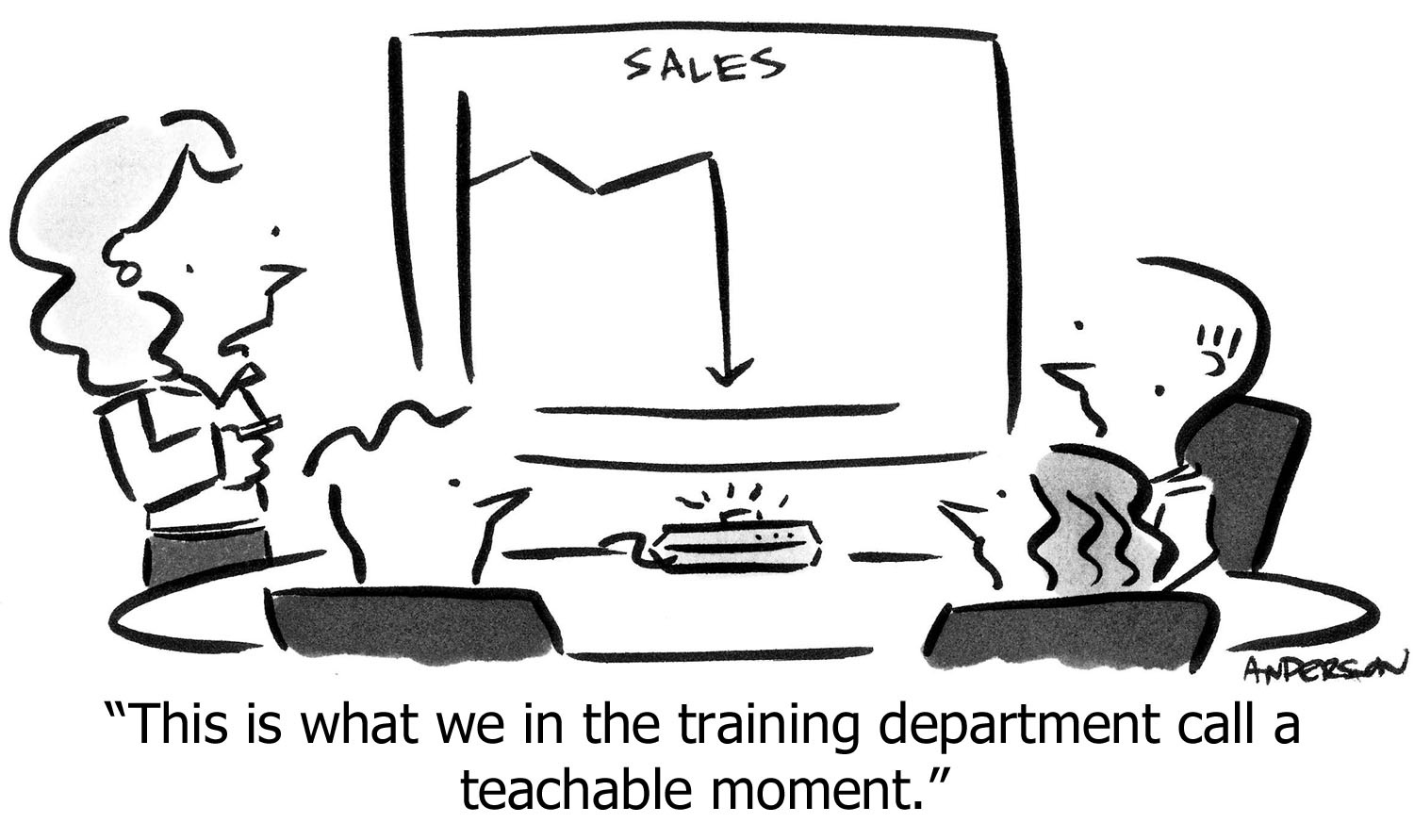
The assignment for the next class was for each team to produce a business vision.  In a delightful entrepreneuring teachable moment, all but one of the teams presented a product vision, not a business vision.  It was a heart warming delight to see the “Ah hah” moments occur around the room as the learners saw the difference between creating a business versus creating a product.

As the next couple of classes unfolded, we added a fifth team to coordinate the inter-dependencies   The minute we put this last team in place then all of the elements for SEEing an organization were in place – both the independence of a business and the interdependence of a value chain.

The challenge for me was whether to stay hands off and allow the learning to occur through the context of the class or to start intervening to drive to a product and generate customer revenue. In one of the hardest teaching decisions I’ve ever made, I elected to stay hands off. I so wanted to drive the class to revenue during the ten weeks to see if it was possible. Yet, I knew if I did, the really important lessons of starting a new venture wouldn’t be learned.

The learning lessons from the class design continue to unfold through the students’ reflections and through individual learner teachable moments.

While the class is far from a finished “product”, it is clear that it is possible to teach entrepreneurial organizational seeing in a “classroom” environment.  Along with improving the class, I look forward to the challenge of scaling it.

Posted in Content with Context, Design, Human Centered Design, Innovation, Knowledge Management, Learning, organizing, Teaching, University, User Experience, Working in teams | 2 Comments

Entrepreneurial Teachable Moments

The Professor and the VC

I attended the UW HCDE Corporate Affiliate Program (CAP) on Tuesday morning and sat next to one of my colleagues who also started a “maker” company last year.  As the corporate affiliates were introduced, we were both surprised to see that there was a representative from Andreesen Horowitz, the famed Silicon Valley Venture Capitalists.  He shared that they joined the CAP because they were on the lookout for design and UX talent for their portfolio companies.

After the introductions, I turned to the professor and suggested that there was only one company here that she should pay attention to – the VC in the room.  She agreed and started over to introduce herself.  I went “wait a minute.  Are you going to introduce yourself as a professor or from your startup venture?”

She said “the startup venture of course.”

I suggested she stop and think about it a minute.

She looked at me and smiled “I will learn a lot more and create a deeper strategic relationship if I introduce myself as a professor, because he is here to recruit students and I can help him with that.  Then, maybe he can help me with funding my company.  Good thinking.  Thanks.”

The Marketing Maven

At the end of a long day, I got a brief email message from a marketing colleagure not very politely lambasting Eric Ries’ The Lean Startup.

“Worst appropriation of Deming and Shewhart that I have ever read.

“Two mentions of Deming and they come late. None of Shewhart.

“And it is the worst sort of self aggrandizing craptastic writing. ‘And then I… and later I..’

“Are there no editors left?”

As luck would have it as I was texting to him while wandering through the ferry terminal, I looked up and he was sitting at one of the tables.  So we continued this conversation on the ferry.  I shared some variant of the following with him:

My condolences for having to suffer through the Lean Startup.  It and Steve Blank‘s books are the worst written of the bunch.  Yet, there are some very good ideas, concepts and action plans that others have managed to extract and do a much better job synthesizing and making the ideas more readable.

My current favorite is Ash Maurya’s Running Lean The book does a masterful job of synthesizing the best of Ries’ lean stuff, Blank’s Customer Development stuff, and Osterwalder’s Business Model Generation and Business Model Canvas.  Ash’s slight revisions to the Business Model Canvas make all the difference in the world in his Lean Canvas.  Product Development is on the left of the Lean Canvas and Customer Development is on the right and they even sequence which steps you should go through to fill out the canvas.  You can play with one for free which I would recommend for your company.

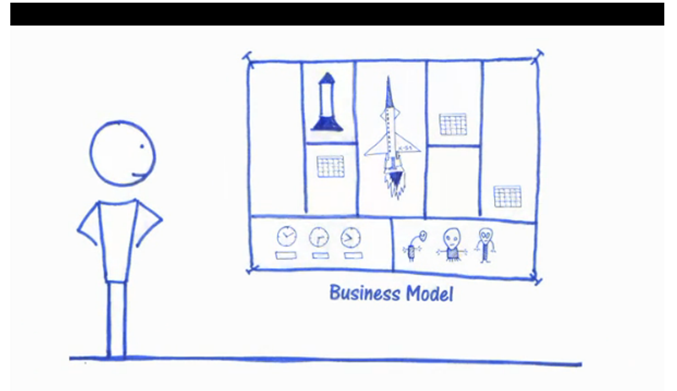
This teaser video gives you a quick synopsis of the book. 

purpose of a startup is business model

Note the image of what a startup is about – “the true product of a startup is a scalable business model.”

Spark59 is their company.  UserCycle is the next thing of theirs I want to explore once I have our FlippedStartup Web presence up and going.  It appears to me to be an interesting variant on the Experian Hitwise stuff that you embed right in your website. It doesn’t give you the Hitwise “where did you come from” and “where did you go,” but it appears to be far more actionable.

As we got up to exit the ferry on Bainbridge Island, my colleague shared that when he got home he was going to log onto Amazon and write a scathing review about Ries’ book.  I laughed heartily and suggested that he probably didn’t want to do that.

He asked “Why?”

I responded “Is your new venture going to be raising more money any time soon from investors?”

He allowed as how they probably were.

“All of the VCs love Ries and his ‘craptastic’ writing.  One of their eager beaver researchers will come across your slander of their current God and religion and you will find yourself on the defensive.  As much as it would feel good to write a really nasty review, it is probably not a good idea.”

He paused and then said “That is probably the best piece of advice you’ve given me in a long time.”

Effectual Entrepreneuring Student

A student in my “Designing a Human Centered Venture” class this quarter asked if we could grab a coffee or glass of wine to provide him with some feedback on the class and the “air quality monitor” his team designed and built.

air quality monitor

We agreed to meet at RN74 so we could continue his wine education.  With a nice glass of a French Gamay Noir ingested, he was finally brave enough to ask me directly – so how am I doing in this class and how is our team doing?  I chuckled and shared:

“Here’s what it means to be an entrepreneur.  Nobody is ever going to pat you on the butt and tell you what a nice job you did or are doing.  All they are going to share with you is the large number of things that you are screwing up.  One of the reasons that I sent you the quote from Clayton Christensen is so that I could be clear that I’m not going to answer questions like these.  Entrepreneuring is all about intrinsic re-enforcement.  You have to do things for your own rewards, not somebody else’s.”

What he really wanted to know was did he have the right stuff to start a company and was the air quality monitor idea a good one.  Since I had consumed enough wine to disavow all responsibility for my comments, I decided to share a difficult teachable moment.

“So let’s reflect a little more on what took place this quarter.  Linda Wagner asked a really interesting question during her lecture – who is the product owner for this product? The whole class looked around at each other and realized that there was no one.  Why weren’t you the product owner?”

He looked downcast and then looked at me and shared “Well, nobody put me in that leadership position?”

I looked sternly at him “Leadership is never given.  It is always taken.  Let me repeat very clearly.  Leadership is never given.  It is always taken.”

As I took another sip of our 2010 Gamay Noir, I asked “So what did you do all quarter?”

The effectual entrepreneuring student answered “I focused on designing and building the product.  I was the only one that could have done that as I was the only one with the technical expertise.”

I then asked “Do you remember the lesson of the business vision presentations on the second night of class?”

He proudly shared “Absolutely.  My presentation for our team was the only one that was a real business vision.  Each of the other teams gave a product vision.”

“Exactly right,” I said.  “And each student very clearly got from that experience that there is a big difference between being product focused and being business focused.  And that the intent of this class was to focus on the business.  So what did you do for the rest of the class after that evening?”

I could see the light bulb starting to go on.  He realized “For the rest of the quarter, I got down in the weeds of designing and prototyping the product.  I let others sort of worry about the business side of things, but they didn’t get very far.”

Given that we had gotten through this tough stuff, I decided to be really direct “I was really excited when you came up with the idea for an air quality monitor and had dug up the data on the large size of the market.  That was one of several reasons why I organized the class the way that I did with four teams who would each work on a key part of the business.  You were the most obvious candidate to take the leadership role.  I set up the context, but I didn’t want to be directive so that y’all could learn some key lessons about leadership and inter-dependencies   You had a gift of 15 highly professional resources that would have gladly followed your direction.  We could easily have had an actual kickstarter campaign up, gotten the product funded and generated lots of revenue traction within the 10 weeks of the class if you took on the role to organize and direct ALL of the resources to start a business, not just design a product.”

“I blew it big time, didn’t I?” lamented the student.

“Yup.  From a business view you did.  However, from a learning perspective, you now have a visceral understanding of the difference between a business design and a product design that could have taken you millions of dollars and years of time to figure out.  You got the lesson very inexpensively and in only eight weeks of part time student work.  Now you can really become an effectual entrepreneur.”

And then I couldn’t resist “Now what are you going to do with what you’ve just learned?”

We spent a wonderful hour continuing to enjoy the wine and collaborating on what the next steps should be for the air quality monitor BUSINESS.

Teaching an Old Dog New Tricks

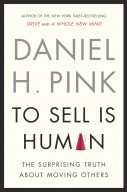
to sell is humanOver our winter break trip to Florida, I had quality airplane time to absorb Dan Pink’s new book To Sell is HumanI was delighted to get to the chapter on “pitching.”  At the very start of the chapter he shared the story of how the elevator pitch came about.  I’d never known the origin of this concept (as much as I want to, I won’t spoil the story for you).  Read Chapter 7 when you get a chance.  Near the end of the chapter, Pink shares research that comes from Hollywood about the factors that lead to the successful pitching of movie ideas by writers to executives:

Lessons from Tinseltown

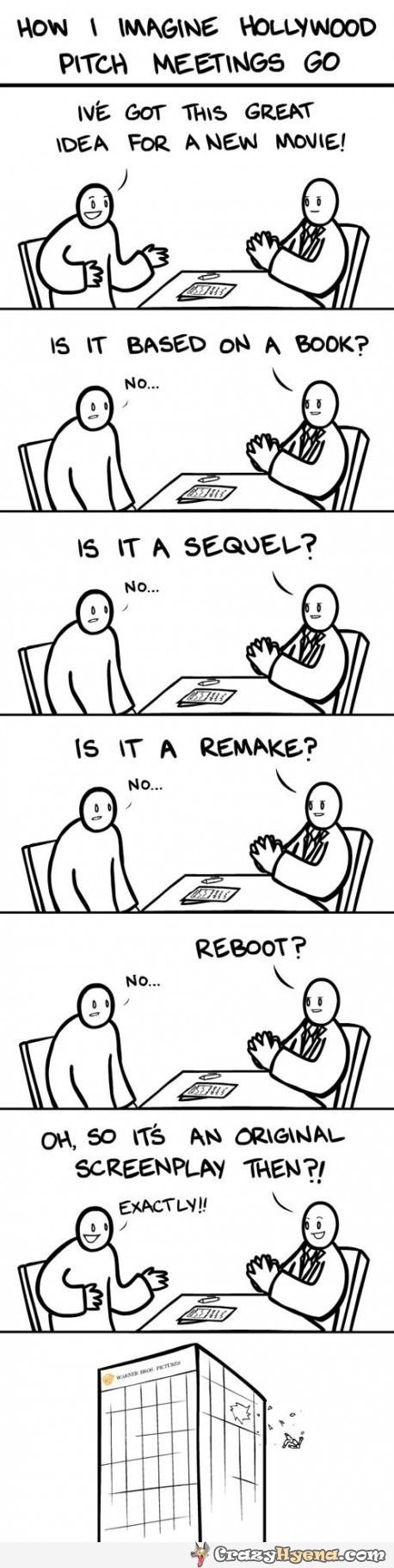
“At the epicenter of the entertainment business is the pitch. Television and movie executives take meetings with writers and other creative types, who pitch them ideas for the next blockbuster film or hit TV series. Motion pictures themselves offer a glimpse of these sessions. “It’s Out of Africa meets Pretty Woman,” promises an eager writer in the Hollywood satire The Player. “It’s like The Gods Must Be Crazy except the Coke bottle is an actress!” But what really goes on behind those studio walls is often a mystery, which is why two business school professors decided to helicopter behind the lines for a closer look.

Kimberly Elsbach of the University of California, Davis, and Roderick Kramer of Stanford University spent five years in the thick of the Hollywood pitch process. They sat in on dozens of pitch meetings, analyzed transcripts of pitching sessions, and interviewed screenwriters, agents, and producers. The award-winning study they wrote for the Academy of Management Journal offers excellent guidance even for those of us on the living room side of the streaming video.

Their central finding was that the success of a pitch depends as much on the catcher as on the pitcher. In particular, Elsbach and Kramer discovered that beneath this elaborate ritual were two processes. In the first, the catcher (i.e., the executive) used a variety of physical and behavioral cues to quickly assess the pitcher’s (i.e., the writer’s) creativity. The catchers took passion, wit, and quirkiness as positive cues— and slickness, trying too hard, and offering lots of different ideas as negative ones. If the catcher categorized the pitcher as “uncreative” in the first few minutes, the meeting was essentially over even if it had not actually ended.

But for pitchers, landing in the creative category wasn’t enough, because a second process was at work. In the most successful pitches, the pitcher didn’t push her idea on the catcher until she extracted a yes. Instead, she invited in her counterpart as a collaborator. The more the executives— often derided by their supposedly more artistic counterparts as “suits”— were able to contribute, the better the idea often became, and the more likely it was to be green-lighted. The most valuable sessions were those in which the catcher “becomes so fully engaged by a pitcher that the process resembles a mutual collaboration,” the researchers found.  “Once the catcher feels like a creative collaborator, the odds of rejection diminish,” Elsbach says. Some of the study’s subjects had their own way of describing these dynamics. One Oscar-winning producer told the professors, “At a certain point the writer needs to pull back as the creator of the story. And let [the executive] project what he needs onto your idea that makes the story whole for him.” However, “in an unsuccessful pitch,” another producer explained, “the person just doesn’t yield or doesn’t listen well.”

The lesson here is critical: The purpose of a pitch isn’t necessarily to move others immediately to adopt your idea. The purpose is to offer something so compelling that it begins a conversation, brings the other person in as a participant, and eventually arrives at an outcome that appeals to both of you. In a world where buyers have ample information and an array of choices, the pitch is often the first word, but it’s rarely the last.”

Pink, Daniel H. (2012-12-31). To Sell Is Human: The Surprising Truth About Moving Others (pp. 157-158). Riverhead Hardcover. Kindle Edition. (and see the articles “Assessing Creativity in Hollywood Pitch Meetings” and “How to Pitch a Brilliant Idea“).

I was way excited to come across this insight and started reflecting on the major investor pitches and large project customer pitches I’ve done over the last 40 years. This pattern resonated with my memories.  Almost every time we’d been successful we’d followed this pattern.  And most of the times we failed, we didn’t switch to the collaboration mode.  I couldn’t believe that I’d missed this factor of pitch success.

To verify that the pattern worked, I decided to test it out the next day with a pitch I needed to make to a Seattle new venture accelerator.  One of my colleagues in her feedback on the research proposal noticed that I never mentioned what the benefits to the new venture accelerator would be if they accepted our research proposal.  I’d been about to brain storm the benefits and resubmit the proposal.  Instead, I sent a note to our inside supporter that I would like to focus our meeting the next day on collaborating about the benefits that would accrue to the accelerator from this research.  I got an immediate response back that was short and sweet “You read our minds.”

So I went in the next day and instead of over analyzing the proposal, the accelerator partners and I went to the white board and started laying out the benefits.  Before we knew it, 30 minutes had flown by.  We upped the odds of getting the research proposal accepted and we had a much better proposal – together.

What are the lessons we see every day?

As I do the customer development research for Flipped Startup, I am acutely aware of the teachable moments that exist every day for entrepreneurs.  If only we had an “always on” camera that could capture the important moments for later review.

When you get a chance, I’d love to hear your most recent or most memorable entrepreneurial teachable moment.

Posted in Curation, Human Centered Design, Innovation, Knowledge Management, Learning, Relationship Capital | 1 Comment

ConveyUX – Highlights from the cheap seats

conveyux-logoLast week I managed to squeeze time into my crazy schedule to attend the ConveyUX conference in Seattle sponsored by BlinkUX. I was delighted to see the international turnout and many familiar faces from the UW HCDE program. While I am not a card carrying UX professional, understanding the leading edge of UX is important for teaching the overall human centered design process and for mentoring entrepreneurs. As I am interested in putting on a conference in the near future about flipped startups, I also wanted to see what it took to put on a first time conference.

Before the conference started I asked Kelly Franznick who I should talk to from BlinkUX to debrief on the conference preparation and organizing.  Kelly shared that Joe Welinske did all the heavy lifting to make the conference happen. Joe did an excellent job in recruiting a wide range of terrific speakers – both for the engaging presentation styles and the wealth of content that they shared.  Thank you Joe.

jared and Joe

Jared Spool and Joe Welinske on Day 2

The highlight of the first day was a presentation from Elisabeth Robson on the learning theory that goes into her Head First series of book on learning technical concepts. As I listened to her presentation, I browsed through her LinkedIn profile and was fascinated to see that while at Yale she worked on Mirror Worlds with David Gelernter. With her interesting “teaching” approach in the book through storytelling, her background with Mirror Worlds, and finding out she lived on Bainbridge Island, the magic number 3 coincidences happened.  OK, the universe is telling me I need to meet with Elisabeth sometime on Bainbridge.

elisabeth robson

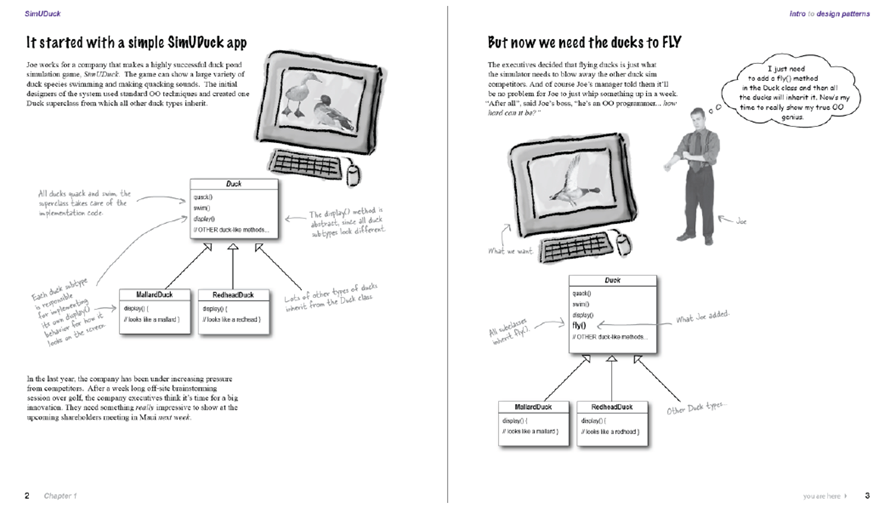
Pages from Intro to Design Patterns

Elisabeth agreed and also virtually introduced me to her writing partner, Eric Freeman.  As Eric and I exchanged emails, I found out that he’d developed one of my favorite abandoned pieces of software, Lifestreams, that grew out of the Mirror Worlds research. Even more exciting, Eric shared that he is continuing to work on Lifestreams. Who knew that by listening to a talk on “Creating Instructional Content that is Brain-Friendly,” I would end up with two new potential “strategic network” connections.

Next up was a session with Erika Hall of Mule Design Studio. A late afternoon presentation needs somebody with high energy, quirky humor, and good content.  Erika exceeded expectations in all of those characteristics.  The essence of her several presentations was “Creating Effective Interface Language.”  She had me at her description of their blog “UnsuckIt” (NOTE: Be careful to use the URL pointer here and don’t search for unsuckit.com.   You will end up someplace you are not likely to want to be as I so rudely found out.)

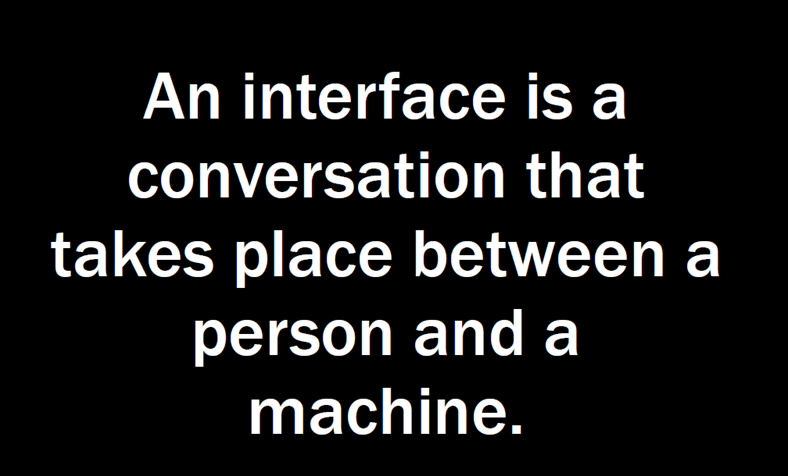
In rapid fire fashion, Erika went through her central thesis of interface as conversation with both positive and negative examples of starting and stopping conversations.

hall on interface

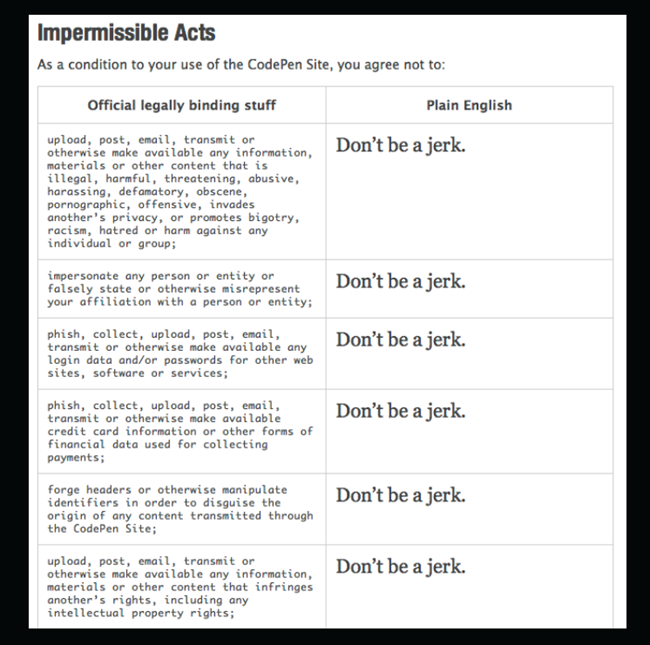
 One of my favorite examples is a legalistic “conversation” put in plain English (I have no idea how this web content developer got this through her legal department):

dont be a jerk

Yet, the image that stays with me is Erika’s opening slide:

hall bring george back to life

From Erika Hall talk on interface as conversation

The main attraction for me at the conference was Vijay Kumar from the Institute of Design.  Vijay released his book 101 Design Methods: A Structured Approach for Driving Innovation in Your Organization last fall and this conference was part of his book tour. Both Kelly Franznick and I have eagerly awaited this book as we’ve experienced it being authored and developed over the last ten years. Several of the HCDE students came up after the session and shared that they were beginning to understand where we’d sourced our teaching materials from.

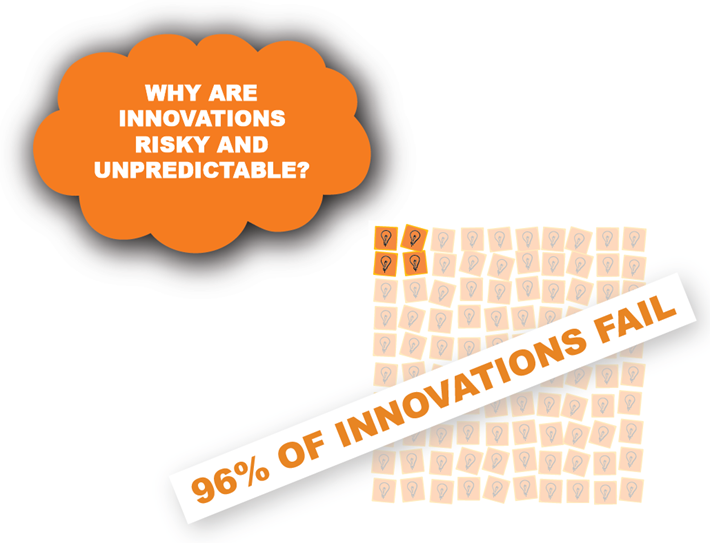
vijay innovation failure

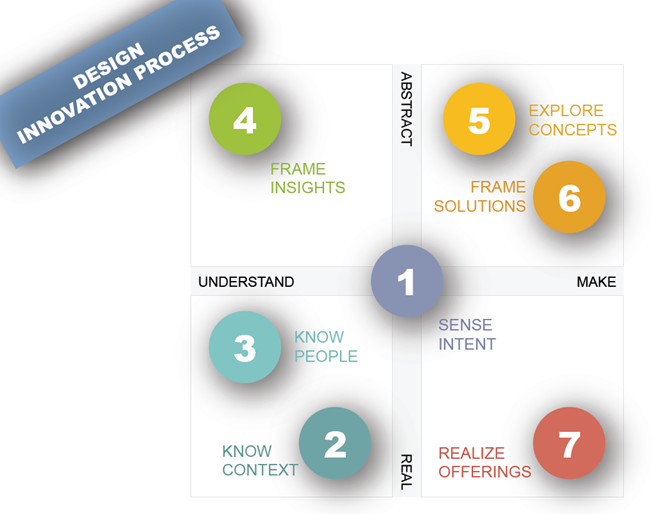
Vijay started out by reminding us all of our failure rate at innovating.  Through a visual journey covering his six principles of – integrate, delight, reframe, broaden, foster, and practice – we arrived at the Design Innovation process framework.

vijay innovation process

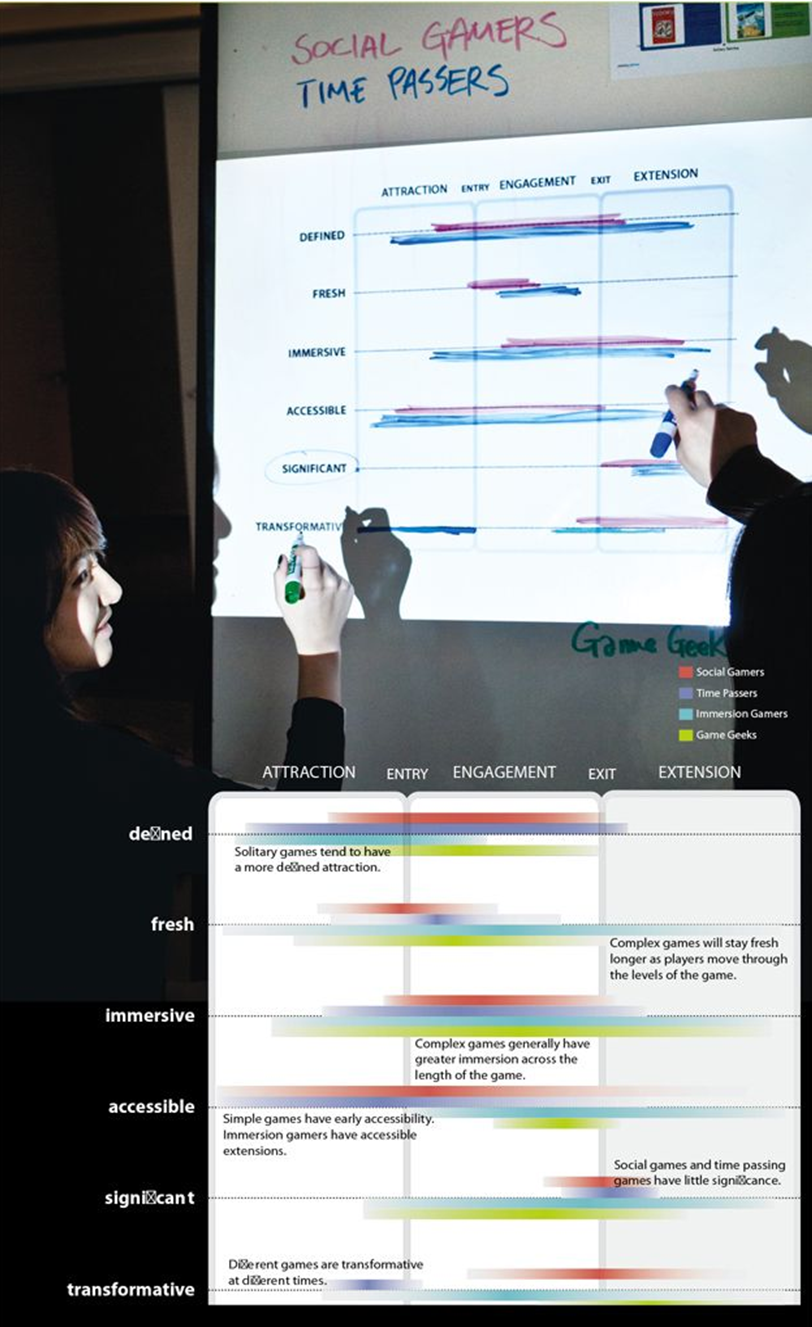
To reinforce the higher order context from the formal presentation, Vijay then ran a group workshop exercise to conceive of a reframed conference experience for the ConveyUX conference in the year 2033. As Vijay set up the exercise with his “Compelling Experience Map” method, I remembered Larry Keeley‘s presentation at TED many moons ago where I was first introduced to this method.

Vijay shared that an experience has three stages (attraction, engagement, and extension) along with six attributes (defined, fresh, immersive, accessible, significant, and transformative).  The method has you look at a given experience today and then brainstorm innovative ways to enhance the experience.  From his book, here is an example with events for social gamers:

experience mapping

This exercise was a terrific reminder for what I should be doing with each class that I teach, with the upcoming Flipped Startup conference we are planning, and with the MOOCs and transmedia books we are creating.

Wednesday dawned rainy and wet and it was a struggle to wind my way to the conference. Even the Seattle horse police were drowned in the downpours.

rainy day police and horse

In a separate post on “What if what we know is wrong?“, I captured the insightful presentation from Dana Chisnell on “Rethinking User Research.”

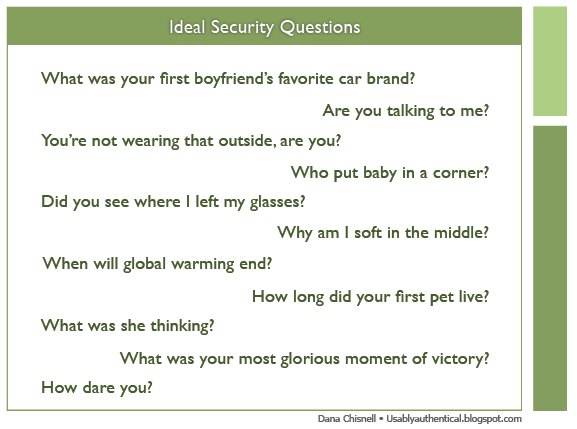
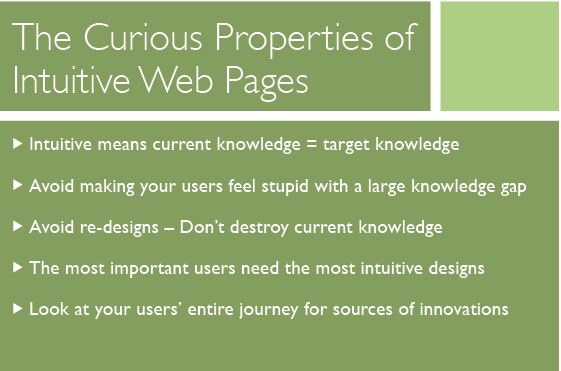
Next up was Jared Spool of User Interface Engineering to talk about “The Curious Properties of Intuitive Web Pages.”  Jared woke me up at the start when he pounced on the many problems with security questions that web sites try to impose.  He suggested that there was a long list of equally irrelevant (irreverent) security questions that could be asked:

ideal security questions spool

Perhaps my favorite example (and now a regular stop on my laugh tour of the web) was a new travel reservation website Hipmunk.com.  The genius of their information design is showing you the flights start and arrival times graphically laid out from best to worst with the AGONY filter. How many times have I wondered whether there was a committee somewhere that meets once a month to figure out how to add more AGONY to flying. Now the hipmunk folks have captured it:

hipmunk agony

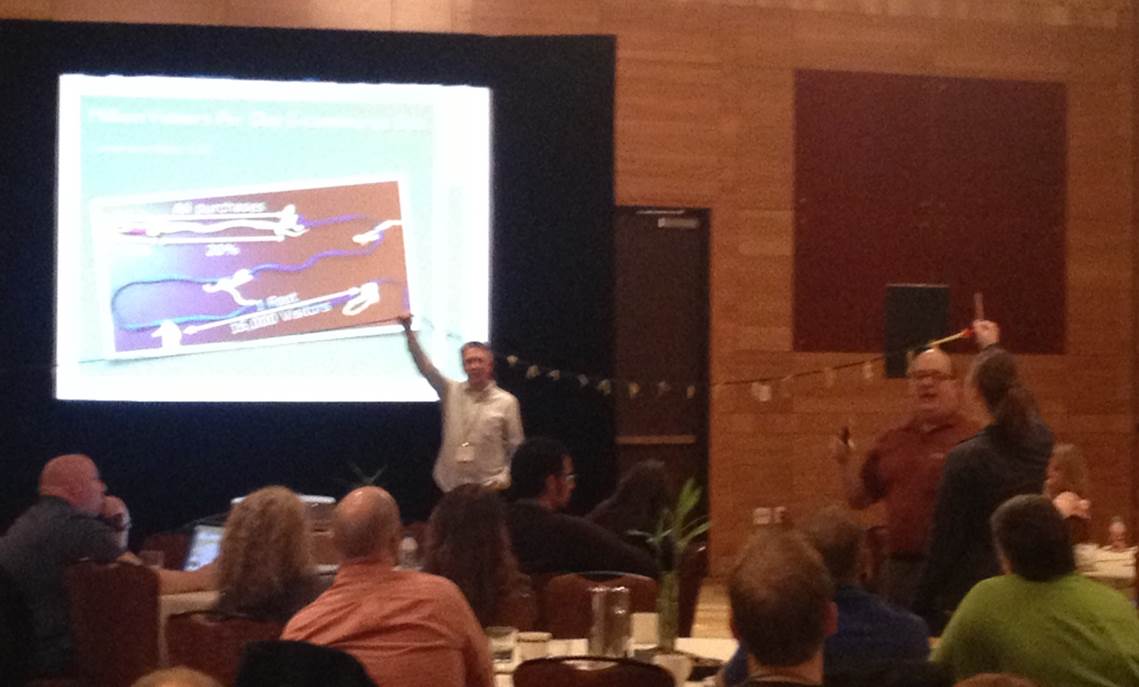
From a visual, auditory and kinesthetic standpoint, my favorite moment of Jared’s talk was the illustration of what a 1.6% conversion rate means with a website that has a million visitors per day.  His slide illustrated the concept:

spool conversion ratesAs Jared displayed the slide, he walked into the audience where he showed that with this sixty one foot long string, it was only the last foot that represented the visitors who actually transacted something. What a wonderful way to take a statistic that seems to be pretty good for a conversion rate, but then dramatically shows how many people didn’t buy.

spool conversion rate demo

Jared then shared that the CEO of this web property has his office about 61 feet from the elevator. So the CEO strung up a similar device so that every morning and every evening he has to walk the full length of a representation of how many people didn’t buy that day. Jared summarized his talk and in many ways summarized the essence of the ConveyUX conference:

curious properties

As I left the conference and wandered on to my next meeting, I realized what a good job the conference did in living up to its brand – ConveyUX. In three lively, engaging and instructive days, I’d gotten a good overview of the current state of the UX knowledge space.  A brand promise and brand experience doesn’t get any better than that.

Thanks to Joe Welinske and all the BlinkUXers who made this conference happen.

Posted in Content with Context, Curation, Design, Human Centered Design, Innovation, Intellectual Capital, Knowledge Management, Learning, Relationship Capital, Software Development, User Experience | Leave a comment

Reflecting on Effectual Entrepreneuring Pedagogy

I have the privilege of teaching a great group of Human Centered Design and Engineering graduate students at the University of Washington in the course “Designing a Human Centered Venture.”

Last week in our eighth class of the quarter I asked these design professionals to reflect on their effectual journey through the class to date.  What follows is my collection of notes from their diagrams and reflections on the journey.

I really enjoyed the thoughtfulness and insights of your reflections on the pilgrimage we’ve pursued this quarter in learning about the mindset of an entrepreneur and the designing of a human centered venture.  Your imagery and reflections reminded me of the start of the course when I shared David Whyte’s book of poetry Pilgrim:

“In his seventh volume of poetry, David Whyte looks at the great questions of human life through the eyes of the pilgrim: someone passing through relatively quickly, someone dependent on friendship, hospitality and help from friends and strangers alike, someone for whom the nature of the destination changes step by step as it approaches, and someone who is subject to the vagaries of wind and weather along the way.”

David Whyte's Camino

I was reminded of the connection between “Camino” and the effectual path when I encountered Ann Patchett’s What Now? in my favorite weekly blog “Brain Pickings.

“Echoing Steve Jobs, who in his own fantastic commencement address famously cautioned that “you can’t connect the dots looking forward; you can only connect them looking backwards,” Patchett urges these new graduates to be sure to return at some point – this, she argues, would let them reflect on the series of small choices which, as William James put it a century ago, “[spin] our own fates, good or evil, and never to be undone.” Patchett writes:

“Coming back is the thing that enables you to see how all the dots in your life are connected, how one decision leads you to another, how one twist of fate, good or bad, brings you to a door that later takes you to another door, which aided by several detours – long hallways and unforeseen stairwells – eventually puts you in the place you are now. Every choice lays down a trail of bread crumbs, so that when you look behind you there appears to be a very clear path that points straight to the place where you now stand. But when you look ahead there isn’t a bread crumb in sight – there are just a few shrubs, a bunch of trees, a handful of skittish woodland creatures. You glance from left to right and find no indication of which way you’re supposed to go. And so you stand there, sniffing at the wind, looking for directional clues in the growth patterns of moss, and you think, What now?”

Other excerpts from What Now?:

“Nothing at all is very much out of fashion these days, as are stillness, silence, and studied consideration. Studied consideration is hard to come by with those little iPod buds stuffed in your ears and the cell phone competing with the Internet. Perhaps we avoid the quiet because we’re afraid that the answer to What now? will turn out to be I don’t know.

“It took me a long time of pulling racks of scorching hot glasses out of the dishwasher, the clouds of steam smoothing everything around me into a perfect field of gray, to understand that writing a novel and living a life are very much the same thing. The secret is finding the balance between going out to get what you want and being open to the thing that actually winds up coming your way.

“There’s a time in our lives when we all crave the answers. It seems terrifying not to know what’s coming next. But there is another time, a better time, when we see our lives as a series of choices, and What now? represents our excitement and our future, the very vitality of life. It’s up to you to choose a life that will keep expanding. It takes discipline to remain curious; it takes work to be open to the world—but oh my friends, what noble and glorious work it is.”

Your diagrams and the presentations were very helpful to me as a way to get a sense of the learning that is occurring.

The following are the images from each group and my recollections of what you presented.

The Task

The Task

The Sharing of the Journey, the Learnings and the Hassles

 Designing a Venture Class

Inbound Marketing Team Diagram

inbound marketing team

Reflections from the team:

At the bottom left of the diagram you can see how we saw ourselves at the beginning of the quarter.  The world of entrepreneurs was relatively small and we were far apart from it.  As a group, none of us had any relationship with the world of entrepreneuring.  As we moved through the quarter, the world of entrpreneurs became a larger space and we now see ourselves as being a part of that space as well.

The key learnings that we got from the quarter are:

The hassles that we had this quarter were:

  • Ambiguity
  • Inter team communication
  • Experimenting
  • What is our vision?

We were really surprised by the vision hassle.  We thought we would do it once and be done.  However, we had to keep coming back to what is our vision and revising it throughout the quarter.

By the way, do you think our tolerance for ambiguity has changed this quarter?

Skip:  I don’t know yet, but that is one of the research questions I have is whether it is possible to change the Tolerance for Ambiguity.  We will retake the survey at the end of the quarter.

Software Team Diagram

software team

Reflections from the team:

What is in green is what we’ve learned this quarter.  What is in red is the kinds of hassles we struggled with this quarter.  In the middle is the essence of what we’ve learned this quarter.  The Build and Learn loop in the middle illustrates this cycle of having to build in order to learn something and in that build/learn process it is not always clear what is chaos and what is order.

We really liked the Chaos and Order loop that David Robinson introduced us to and how easy it is to focus on the order and lose sight of how we need to keep coming back to the Chaos.

At some level, the green and red text boxes on the left and right sides of the diagram represent the duality between chaos and order.  So for example the “pressure to build the best thing possible” is balanced with the chaos of accepting that a “good enough” prototype early as a minimum viable product will help us learn more from the customers.

Carrying through the chaos/order loop is our representing those things in the middle as shapes that are partly ordered and partly chaotic.

The Crowd Sourcing Team Diagram

crowd sourcing team

Reflections from the team:

When we started the quarter, we thought that we would be following a straight line from the beginning of how to create a human centered venture to arriving at the end of the quarter with a product.  Instead, we’ve been on this spiraling unknowable journey of becoming an effectual entrepreneur.  We had the hardest time getting what it means (really understanding) to be an effectual entrepreneur and to think effectually.  It wasn’t until about week 5 that most of us finally realized in our heads and in our actions what it means to act effectually.

We really loved David’s description of storytelling as “when a yearning meets an obstacle.”  Understanding that from the beginning the effectual entrepreneur is all about story telling was a very important learning.  Through the many pitches (pitch pitch pitch pitch pitch) to attract funding and resources, to attract customers, and to attract talent, the effectual entrepreneur builds their venture.

We struggled with understanding the difference between a product vision and a business vision.

It took us a while to realize that being effectual means always prototyping and going through the trial and error process with the least cost possible.  Just like in designing, a business is also always about prototyping.

And we really liked the class about fine wine growing and “glass tasting” and having another view about what it means to “not know.”

And for our team, one of the hardest things we’ve had to overcome is the very premise of Kickstarter and the crowd sourcing sites which is how to offer a service for a product that isn’t there yet?  It is so counter-intuitive.

The Hardware Team Diagram

hardware team

Reflections from the team:

Because the other groups horded the colored markers, our color scheme isn’t as symbolic and elaborate as we would like.

What really captured us during this quarter is the challenge of finding out that “we don’t know what we don’t know.”  So for us being effectual was figuring out how to generate insights as rapidly as we could.

To help us learn faster, we realized that we had to go through the “Try <=> Fail” loop faster.  We really didn’t understand that the path to success was to fail as fast as we could – to fail forward.

Like the other teams, we realized that we needed to be story telling – with our own team and with our interactions with the other teams since they were dependent on us to come up with a WHOLE product.  Sharing with other teams was a real hassle when we were struggling (and trying to fail fast).  We didn’t want to take time to share those things that weren’t working.

As we get to the end of the quarter, we feel pretty good about how we are working as a hardware team.  However, we don’t feel as good about how we are working with the other teams.  The inter-team coordination is more difficult than we realized.  [NOTE:  This sentiment was shared by the other teams as well.]

How Will You Measure Your Life?

As we finish the quarter and as several of you are close to finishing up your Masters Degree program in HCDE, I am reminded of Clayton Christensen’s book How Will You Measure Your Life?  I came across this book at the end of teaching the entrepreneurship class at UW Bothell last spring and immediately sent copies to my three children.

Christensen is the Harvard Business School professor and godfather of the revised theories of innovation which he so articulately captured in The Innovator’s Dilemma.  A couple of years ago Christensen was treated for cancer and during the treatment suffered an ischemic stroke.  During that time he wrote How Will You Measure Your life?,  based on his end of class lecture he gives to his MBA students:

“When people ask what I think they should do, I rarely answer their question directly. Instead, I run the question aloud through one of my models. I’ll describe how the process in the model worked its way through an industry quite different from their own. And then, more often than not, they’ll say, “OK, I get it.” And they’ll answer their own question more insightfully than I could have.

“My class at HBS is structured to help my students understand what good management theory is and how it is built. To that backbone I attach different models or theories that help students think about the various dimensions of a general manager’s job in stimulating innovation and growth. In each session we look at one company through the lenses of those theories—using them to explain how the company got into its situation and to examine what managerial actions will yield the needed results.

“On the last day of class, I ask my students to turn those theoretical lenses on themselves, to find cogent answers to three questions: First, how can I be sure that I’ll be happy in my career? Second, how can I be sure that my relationships with my spouse and my family become an enduring source of happiness? Third, how can I be sure I’ll stay out of jail? Though the last question sounds lighthearted, it’s not. Two of the 32 people in my Rhodes Scholar class spent time in jail. Jeff Skilling of Enron fame was a classmate of mine at HBS. These were good guys—but something in their lives sent them off in the wrong direction.”

When you get a few moments between quarters, I would urge you to read the HBR article that led to Christensen’s book and think about the implications of how you will apply what you are learning with human centered design and effectual thinking to the rest of your career and life.

Thanks again for a great set of reflections and insights.

Posted in Content with Context, Design, Human Centered Design, Teaching, University, User Experience, Working in teams | 5 Comments

Too Funny for Words – NFL Highlights

I cannot remember ever laughing out loud and falling out of my chair while watching an NFL “professional” football game.  However the recent game between the New York Jets and the New England Patriots had us laughing even through our post turkey somnolence.

Thanks to the Huffington Post for their capture of the play under the title “Why Mark Sanchez is the worst Quarterback ever” or as we immediately joked “the game ball goes to Brandon Moore’s ass.”  [Because of NFL copyright content blocking you may need to go to Twitpic to view it.]

GIF: Courtesy of the Jets, this is the worst football play of... on Twitpic

The play starts with Sanchez turning and finding that his running back has gone the wrong way:

QB Mark Sanchez with no one to hand off to

QB Mark Sanchez with no one to hand off to

Trying to recover from the missed handoff, Sanchez runs towards the line of scrimmage only to run into Brandon Moore’s ass:

Sanchez running into Brandon Moore

Sanchez running into Brandon Moore

The ball squirts out from Sanchez and lands at the feet of a Patriots cornerback for a “free” run to the end zone.

Touchdown Patriots

Touchdown Patriots

What a great way to end the Thanksgiving marathon of “pro” football.  And to all a good night.

Posted in Humor | 1 Comment

Some Days You Just Need a little Dilbert

As I near the end of another quarter teaching a wonderful group of Human Centered Design and Engineering (HCDE) graduate students while juggling consulting clients, I need to ground myself in the eternal wisdom of Dilbert.  Here are a few from the last week that helped me make it through the gray, cloudy, rainy, soggy Northwest early winter.

All you need to know about business strategy - be nimble

All you need to know about business strategy – be nimble

What I hear from most CEOs when it turns to earnings season

What I hear from most CEOs when it turns to earnings season

And we wonder why projects are late

And we wonder why projects are late

Managing or Leading - the eternal paradox of business

Managing or leading – the eternal business paradox

To inject a little humor into consulting engagements when the leadership team seems to have difficulty making a decision, I share the following story of the metaphor we developed for the Digital Equipment Corporation decision process:

It’s like an important baseball game, say the game at the end of the season between the New York Yankees and the Boston Red Sox to determine which one of the teams is going to the World Series. The score is tied 4-4 in the bottom of the ninth in Fenway Park and there are 35,000 screaming fans in the old ballpark. The Red Sox are at bat; the bases are loaded; there are two outs; and the count is 3 and 2 on the batter. The pitcher pitches and the batter strikes a sharp single to left field. The left fielder charges the ball quickly and makes a rocket throw to home. The ball and the base runner arrive at home plate simultaneously in a cloud of dust. The crowd is screaming and going nuts.

As the cloud of dust settles the umpire leans over and asks the catcher if the runner was safe or out. The catcher says he was out, of course. The umpire then asks the same question of the base runner, who asserts that he was safe, of course. The umpire then directs the catcher and the base runner to go over to the dugout and figure out between themselves whether the runner was safe or out. When they have arrived at their decision they should come back to home plate and announce their decision to the crowd AND get the crowd’s buyin!

Posted in Dilbert, Humor | Leave a comment