Emails to a Young Entrepreneur: Bringing Opportunity

Day 127 of Self Quarantine             Covid 19 Deaths in U.S.:  141,000

Bringing Opportunity
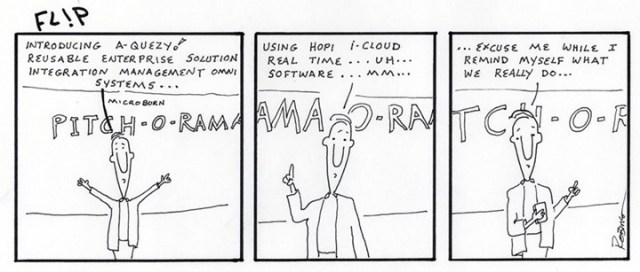
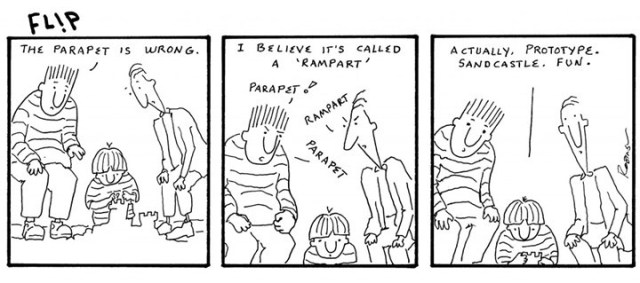
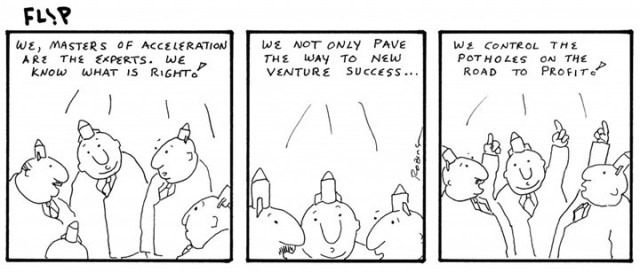
Flip Comic created by David Robinson

Embrace change as the bringer of opportunity. You should not fear change. You should fear lack of change, for change is the bringer of opportunity and it is through exploiting opportunity that you grow and develop as a person.”

Life Coaching Insights.


Three Sleeps Vineyard, Moser, Oregon August 2, 2013

Dear Mikhail,

I really enjoyed the many stories of your asking for help in your last Email. I appreciate hearing the many insights and wisdom you received as you opened yourself to asking others for help. I especially enjoyed your reaching out to help others so that you could experience both sides of the helping relationship.

I really enjoyed the many stories of your asking for help in your last Email. I appreciate hearing the many insights and wisdom you received as you opened yourself to asking others for help. I especially enjoyed your reaching out to help others so that you could experience both sides of the helping relationship.

One of my biggest struggles as an effectual entrepreneur is remembering that I am a bringer of opportunity when I talk with customers, investors, and talent I am recruiting. It is so easy for me to fall into the trap of asking for a handout. Or worse, I feel like a used car salesman.

Most of us when we enter a selling situation treat it as the buyer doing us a favor by buying what we have to offer. It puts the seller immediately into the one down position. The interaction changes when you realize that you are doing the buyer a favor by bringing them an opportunity. The nature of who has the power changes dramatically just by this flipped perspective.

As an effectual entrepreneur, understanding the opportunities that the buyer is interested in that intersects with the opportunity that I am uniquely qualified to bring the buyer is my goal. My father called this warm armpit selling. That is, he couldn’t bring his customers an opportunity unless they were able to “roll up their sleeves” and sweat together over the customer’s challenge. He needed to get to know his customer’s business.  He could only do that by working together with the buyers in the same physical space, preferably in their factories.

Dan Pink in his book To Sell is Human shares some research on this dance of opportunity bringing:

“At the epicenter of the entertainment business is the pitch. Television and movie executives take meetings with writers and other creative types, who pitch them ideas for the next blockbuster film or hit TV series. Motion pictures themselves offer a glimpse of these sessions. “It’s Out of Africa meets Pretty Woman,” promises an eager writer in the Hollywood satire The Player. “It’s like The Gods Must Be Crazy except the Coke bottle is an actress!” But what really goes on behind those studio walls is often a mystery, which is why two business school professors decided to helicopter behind the lines for a closer look.

Kimberly Elsbach of the University of California, Davis, and Roderick Kramer of Stanford University spent five years in the thick of the Hollywood pitch process. They sat in on dozens of pitch meetings, analyzed transcripts of pitching sessions, and interviewed screenwriters, agents, and producers. The award-winning study they wrote for the Academy of Management Journal offers excellent guidance even for those of us on the living room side of the streaming video.

Their central finding was that the success of a pitch depends as much on the catcher as on the pitcher. In particular, Elsbach and Kramer discovered that beneath this elaborate ritual were two processes. In the first, the catcher (i.e., the executive) used a variety of physical and behavioral cues to quickly assess the pitcher’s (i.e., the writer’s) creativity. The catchers took passion, wit, and quirkiness as positive cues— and slickness, trying too hard, and offering lots of different ideas as negative ones. If the catcher categorized the pitcher as “uncreative” in the first few minutes, the meeting was essentially over even if it had not actually ended.

But for pitchers, landing in the creative category wasn’t enough, because a second process was at work. In the most successful pitches, the pitcher didn’t push her idea on the catcher until she extracted a yes. Instead, she invited in her counterpart as a collaborator. The more the executives— often derided by their supposedly more artistic counterparts as “suits”— were able to contribute, the better the idea often became, and the more likely it was to be green-lighted. The most valuable sessions were those in which the catcher “becomes so fully engaged by a pitcher that the process resembles a mutual collaboration,” the researchers found. “Once the catcher feels like a creative collaborator, the odds of rejection diminish,” Elsbach says. Some of the study’s subjects had their own way of describing these dynamics. One Oscar-winning producer told the professors, “At a certain point the writer needs to pull back as the creator of the story. And let [the executive] project what he needs onto your idea that makes the story whole for him.” However, “in an unsuccessful pitch,” another producer explained, “the person just doesn’t yield or doesn’t listen well.”

“The lesson here is critical: The purpose of a pitch isn’t necessarily to move others immediately to adopt your idea. The purpose is to offer something so compelling that it begins a conversation, brings the other person in as a participant, and eventually arrives at an outcome that appeals to both of you. In a world where buyers have ample information and an array of choices, the pitch is often the first word, but it’s rarely the last.”

Pink, Daniel H.  To Sell Is Human: The Surprising Truth About Moving Others (pp. 157-158). Riverhead Hardcover. Kindle Edition.

The art form of warm armpit selling is being passionate about the opportunity you are bringing and then collaborating with the “catcher” to create a joint opportunity.

Watching a friend with her delightful “terrible two” daughter reminded me of a different form of this collaboration that my wife became expert at in raising our three children. The “terrible twos” were not a fun time for me at the Walter house. My answer to every request was “No.” My friend changed the frame for the “terrible twos” stage by offering a meaningful choice rather than dictating a way forward. Instead of “put on your coat” she would ask “Which would you rather wear – the red coat or the blue sweater?” Who knew it could be that easy.  Just flip your perspective to inviting the child to participate in the decision process.

I first understood this bringing of opportunity mindset in 1980 while we were selling the idea of an office automation system to RJ Reynolds Tobacco (RJR). They were looking for a way to replace their aging paper tape Telex systems that were cumbersome to use and expensive to operate.  As RJR was expanding the number of office and manufacturing sites, the speed with which they could move information was increasingly important.  We did a half day analysis and realized that our preliminary design would nicely match their needs since this was primarily an electronic mail application.  Then the client gave us a rude awakening.   They liked our ideas but IBM had agreed to give them a systems analyst and a corporate telecommunications consultant for a month to analyze their needs.  We knew we could not match that offer but got the customer to agree to give us a chance to bid on the results of the IBM system analysis.

A month later we got called back in and given a copy of the IBM analysis.  My spirits soared.  All the IBM folks had done was draw a few illustrations and copy some brochures.  I knew that we could do better in a few short hours.  We recently installed one of our new word processors so we could turn out nice looking proposals in short order.  I asked if we could come back the next afternoon with the analysis and proposal that we had been working on for the last month (a small white lie, but the work that we would do that evening would look like several months work compared to the IBM analysis).  The client agreed and we hurried back from Winston-Salem to Charlotte, NC.  I phoned ahead to my colleague, John Churin, to clean up the architecture diagrams that we created.

Drawing on our previous design work we created a twenty page analysis with several diagrams and a three page consulting contract to design their system for real, for a mere $50,000.  We took the proposal back the next afternoon and the customer was most impressed.  They never expected DEC to upstage IBM, and to do a free analysis in the process.  The customer agreed to our proposal and the next day sent us the approved purchase order.  This was a first for our region, getting a paid project just to do a specification.  We were off and running.

While John and I were the primary consultants on the project, having real customer dollars allowed us to bring our opportunity to the rest of our organization by tapping into expertise around the country that we didn’t have.  Under the guise of project reviews we received great guidance and critiques of the completeness of our designs.  We went back with a 100 page specification and a twenty page proposal for the next phase of the project.  The customer was impressed, but then gave us the bad news that RJR was reorganizing and that this project was cancelled.  While disappointed, we now had a very complete specification that we’d been paid for.  We had received real customer dollars without requiring DEC to invest. Now we could bring this opportunity to other large enterprises.

Bringing opportunities to customers or investors is a bit like the bespoke tailor story that Larry Keeley shared with you in your Institute of Design Introduction to Design Planning.  In the Himalyas when a family decides it needs clothing, they hire a bespoke tailor who lives with them for a month. The tailor watches the activities of the family and then custom crafts clothing to “fit” the needs of each family member. The story nicely fits what a human centered designer should do.

The bespoke tailor metaphor also fits what you as a “bringer of opportunity” need to do – understand the needs of your customer and then work with them to tailor the opportunity to fit their needs.

Much as a good parent comes to understand the unique capabilities of each child and adjusts their environment, books, toys, and experiences to pursue their opportunities, you need to bring the right opportunity at the right time for your customers, investors and talent.

As you mentioned several times in your previous letters, a lot of the advice you are getting comes in the form of “tell more stories.” I heard that advice for so many years and mostly ignored it because I knew I wasn’t an English major in college nor had I ever focused on generating narratives. Finally somebody pointed me to Steve Denning’s notion of a springboard story.

Steve explains that

“. . . a springboard story enables a leap in understanding by the audience so as to grasp how an organization or community or complex system may change.

“A springboard story has an impact not so much through transferring large amounts of information but through catalyzing understanding. It enables listeners to visualize from a story in one context what is involved in a large-scale transformation in an analogous context.”

Steve gives an example of how he experienced the power of a springboard story:

“The origin of my interest in organizational storytelling was simple: nothing else worked. As a manager in the World Bank in 1996, I had been trying to communicate the idea of knowledge management and to get people to understand and to implement it. At that time in that organization, knowledge management was a strange and generally incomprehensible idea. I used the traditional methods of communicating with no success. I gave people reasons why the idea was important but they didn’t listen. I showed them charts and they just looked dazed. In my desperation, I was willing to try anything and eventually I stumbled on the power of a story, such as the following:

In June 1995, a health worker in a tiny town in Zambia logged on to the website for the Center for Disease Control in Atlanta Georgia and got the answer to a question on how to treat malaria. 

“This was June 1995, not June 2001. This was not the capital of Zambia but a tiny place six hundred kilometers away. This was not a rich country: this was Zambia, one of the poorest countries in the world. But the most important part of this picture for us in the World Bank is this: the World Bank isn’t in the picture. The World Bank doesn’t have its know-how accessible to all the millions of people who made decisions about poverty. But just imagine if it had. Think what an organization it could become.

“In 1996 in the World Bank, this story had helped galvanize staff and managers to imagine a different kind of future for the organization and to set about implementing it. Once knowledge management became an official corporate strategy later that year, I continued to use similar stories to reinforce and continue the change. The efforts were successful: by 2000, the World Bank was bench marked as a world leader in knowledge management.”

Buried in the springboard story discussion above is the springboard question – what would the World Bank organization be if we had our know how accessible to millions? I call this the springboard bringer of opportunity question.

Following our near success with RJ Reynolds, we brought our office automation opportunity to DuPont. The DuPont sales rep and I went to lunch with Ray Cairns, CIO for the Textile Division, and we talked about the history of our efforts and the capabilities of our ideas.  He was an active questioner and probed far and wide about where we’d been and where we expected to go.  He knew that we were developing this capability in conjunction with our customers and then would move it into DEC’s central engineering.

Our unique offer to Ray was they would have an unlimited use license for the first version of the software within DuPont.  Then, if they liked the tools, they would have to buy licenses for the next version of the product.  This offer allowed them to amortize the cost of the project over quite a few hardware systems which made the costs appealing to their financial analysts.  We appeared to be giving up quite a bit of future software revenue, but we were betting that we would have a new version of the product well before they were ready to deploy the software across a lot of systems.  This offer was win-win for both corporations.

I relaxed and felt quite good that the decision maker would decide in our favor.  Little did I know what I was in for in the formal meeting with Ray and his twelve direct reports.  We had professional 35mm slides to present our story and product ideas.  At the end of the 30 minute overview presentation, Ray asked several warm up questions and then hit me with the question that rocked my world: “how has this product helped impact Digital’s bottom line, either positively or negatively?”  He knew from our lunch conversation that the product didn’t even exist, so that it couldn’t have much of an impact.  I knew he wasn’t a stupid man. What was going on here?

In a flash of desperate panic brilliance, it came to me that he wasn’t really asking about DEC; he was using me as a convenient foil to get critical education across to his management team.  I mumbled a few things about our unique approach to developing application software in conjunction with a customer.  Then, I turned the question around (the springboard bringer of opportunity question) to the DuPont management team and asked them how they thought this product might affect DEC’s bottom line?  It is much easier to speculate about the cause and effect in someone else’s organization when you are at a level of optimal ignorance than to do speculation about your own organization.

What ensued was a great one hour conversation with Ray’s technology executives about the implications of such a product and technology on a large, complex organizational system like a Fortune 50 company.

After the meeting, we were awarded the order and we now had the funding to take the ideas of our specification and our demonstration into a full blown product.  The learning for me in this meeting was quite revealing.  Our way of approaching the selling of our ideas to individual contributors and middle managers was the more traditional features and benefits – what Simon Sinek refers to as the “What” and “How.”  Ray made clear that at a certain level of management, the rules change and the offer must move from features and benefits to higher order implications.  In this case, we had to show what effect our product would have on both the revenue side of DuPont and the expense side of DuPont.  In order to answer that kind of question you have to move from the product under study to the system under study.  In particular you have to look at the interactions of an entity with its environment.

We were really rolling now. I’d evolved from presenting lots of facts and features to understanding how to bring opportunity through the springboard story and the springboard bringer of opportunity question.

Yet, I still didn’t understand how to systemically bring about opportunity in a large meaningful way. David Stone, DEC’s European Software Services VP, showed me the real power of combining an exciting opportunity pitch with a large group collaboration to generate business results.

I was asked to speak at the DEC European Software Services Meeting in Majorca, Spain, in 1980 to describe what we were doing in the U.S. with Office Automation.  I gave an overview of the product and the kinds of customer solutions we were generating AND the revenue we were creating.  This got the European managers attention as they were going through a revenue shortfall at the time.   The immediate set of questions I got was about translating the product into each European language.  It was an “oh, of course” type of question for me, but was unheard of in products of the early 1980s where the user interfaces were hardwired into the software code.  I shared that it should be no problem.  If you want to change the interfaces, just change the forms using the standard VMS tools.  All of the messages that we present on the screen are forms so it was easy for a systems analyst to just go ahead and change them.  And we’ve adhered to all the VMS coding conventions so all the National Replacement character sets should work.

It was like I ignited a bomb.  Everyone came out of their seats and started throwing a hundred questions at me.  Seizing the moment, David Stone called a half hour break so that the attendees could get their questions answered informally and allow the country groups to caucus on what my presentation and the ALL-IN-1 product might mean for their business.  He then called the group back to order and gave them a challenge.  Based on what they heard, did they think they could make up any part of the $100 million revenue bookings shortfall Europe was projected to have for the year?

He first asked each country manager group to gather together and develop a straw plan for using the ALL-IN-1 product to address the revenue shortfall.  In the process, the groups were to identify any issues, questions or concerns that they had and they could pose those to me in their group presentations.  Each group went off and spent ninety minutes discussing the opportunity.  Then each of the ten country groups made their reports and identified their issues.  As each group reported, I went through my large library of 35 mm slides to find the slides that addressed each issue or question.  I got David to stall for a few minutes after the last group so I could arrange the slides in some semblance of presentation order.

I then stood up and gave a “custom” presentation addressing all of their issues.  The European country managers were really excited.  Until that moment I had not realized the power of a “custom” presentation to go along with our easily customizable product.  The group correctly sensed that this product was quite real and could be readily adapted for each country’s unique business needs.  In the past, Europe had to take a one size fits all set of products that were English language and US culture centric.  Long delays would occur to get even minimal localization done for each country.  Now they’d found a product that could be introduced simultaneously throughout Europe in each natural language at the same time as the US introduction.

David asked the country groups to take this new information and come back with a “committed” forecast of how much of the revenue shortfall they could make up with this product.  The groups quickly formed and in 15 minutes came back with their commitments.  The commitments totaled $120 million.  David scaled the numbers back to total $100 million to mitigate the exuberance factor.  I was blown away and now fearful for my life.  I wondered what would happen if they all woke up and decided they’d been railroaded into a commitment in the bliss of the moment.  I figured they’d shoot the messenger – me.

The group then started to work on the marketing program to make their commitments happen.  Using the natural creative competitiveness of the countries, David broke them into their country units to develop logos for the $100 million in 100 days campaign.  Then he organized cross-functional and multi-country groups to develop:

    • the twenty page newsletter that would go out to all sales and software personnel in Europe,
    • the training program for sales and software personnel,
    • the localization teams to translate ALL-IN-1 into each country’s natural language,
    • other applications that could be combined with ALL-IN-1 in each geography.

By the end of the four day meeting, the Europeans now had a major new product that was their own, a marketing program that they could roll out, and a new found respect by their sales peers.  I was asked to stay over another week to train the software consultants who would be doing the translations.  I asked that each country supply a software consultant to come work with our development team for a month at a time to make the US developers aware of multi-cultural needs.  Within the month, the European teams had ALL-IN-1 translated into 10 different languages and cultures.  Within the 100 days they’d exceeded their goals and in fact did $120 million of additional business.

In David Stone, I saw and appreciated a master at management leadership and motivation.  For the next year I spent as much time in Europe as I could to learn about changing the behavior of a large organization.  I asked David how he knew that my presentation would set off so much useful energy.  He laughed and said that he had no idea that it would.  “What I do is schedule an agenda that has as much informational diversity as possible running the gamut from product information, service information, corporate strategy, engineering strategy, organizational behavior change stuff, and management education.  I never know which of these topics will cause an energy hit with these 150 managers, but I’m confident that one of them will.  When energy resonates between the audience and the speaker then I go into action.  You are good at creating energy with a powerful product vision. I know how to move energy into actionable business results.  Business action is what I’m really good at.”

The bringer of opportunity contrasts with the solver of problems approach to selling. The solver of problems approach is summarized in the Blame Frame for addressing customer problems:

    • What is the problem?
    • How did it get this way?
    • Who caused it?
    • What are you going to do about it?

As you hear those questions, does your personal energy expand or contract?  For most of us, our energy contracts.

The bringer of opportunity works hard to focus on Outcome Frame questions to increase our own energy and our “buyers” energy:

    • What are we trying to create?
    • How will we know we created it?
    • What resources do we have to get started now?
    • What other opportunities does this lead to?

How can you think outside of traditional approaches to bring your opportunity to all of the customers, investors and audience members you are touching?

Yours in entrepreneuring,

Skip Walter

Posted in Content with Context, Emails to a Young Entrepreneur, Entrepreneuring, Flipped Perspective, Learning | Leave a comment

Emails to a Young Entrepreneur: Applying Asking for Help

Day 126 of Self Quarantine             Covid 19 Deaths in U.S.:  138,000

Applying Asking for Help

The theme for the next seven days of flipping perspective is to catch yourself both asking for help and giving help. Seek out opportunities to ask for help ahead of reaching any form of small or large crisis. Be genuine about asking others either inside or outside your new venture about how you might help them with one of their current issues.

For the next seven days, the flipping perspective activity is:

  • Identify an opportunity to either ask for help or give it – alternate between the two
  • Capture an image of the helping environment
  • Free write on both the specifics of the helping situation (either receiving or giving) and make sure to capture what you saw, heard and felt.


The Cosmos of the New Venture

Asking for help is one of the most courageous acts that any human can perform. The act of asking for help places you in a position of vulnerability. In a new venture where there are so few “knowns” and little place for experts and there is a premium on effectual thinking, the entrepreneur needs a well-developed capability for asking. The entrepreneur needs to instill this value in all the members of the new venture. Along with Flipping Perspective, Asking for help draws the community in to help the new venture succeed.

Less obvious is that the currency for asking for help is to be generous in giving help. The non-obvious role of Asking is that it develops community.

Asking for help is about OVERCOMING fear.


You can find a PDF of the full Preface, Forward, and Chapters 1 – 6 here.

You can find the introduction to the Cosmos of the New Venture here.

Posted in Content with Context, Emails to a Young Entrepreneur, Entrepreneuring, Flipped Perspective, Learning | Leave a comment

From my Chair: the evolution of a summer Seattle morning

Day 125 of Self Quarantine             Covid 19 Deaths in U.S.:  138,000

Most days I have the early morning to myself.

This morning I awake at 5am to the pinks and oranges of a July morning.

I grab my camera, a cup of coffee, and my iPad with Kindle reader to enjoy the early morning sunrise.

Over the next 45 minutes I enjoy the morning light show as the sun slowly rises over the Cascades, Seattle, and Mt. Rainier.

For 30 minutes, I rock and read and forget to look up.

Suddenly, I see the fog “masking up” Seattle.

Within another 15 minutes I am surrounded by the coolness of an enveloping fog creeping up the hill from the Puget Sound.  Then, the sun starts warming the fog and the moisture slowly recedes and becomes a marine layer of clouds.

In just a few more minutes, the mask over Seattle lifts.

My book reading is finished.  My coffee is finished.

It is time to start writing.

Glad to have you back dearly needed sunshine.

Posted in From My Chair | Leave a comment

Emails to a Young Entrepreneur: Asking for Help

Day 125 of Self Quarantine             Covid 19 Deaths in U.S.:  138,000

Asking for Help

Flip Comic created by David Robinson

  1. Restlessness: You realize that you need to change your life, either because it’s boring or because it’s painful.
  2. The search: The decision to change. The search begins through books, courses, meetings.
  3. Disappointment: Looking for the right path. You become aware of your teachers’ problems and faults. However many strands of philosophy or religion you follow, however many secret societies you join, there are always the same underlying problems: vanity and a desire for power.
  4. The teacher: The most dangerous moment. Teachers are merely people with experience. Each path is different and individual, but, at this point, it risks being sullied and becoming a collective path.
  5. The signs: You leave your teacher when the path reveals itself – through signs. Through those signs, God is teaching you what you need to know.

Coelho, Paulo, The Book of Manuals (Kindle Locations 369-370). Sant Jordi Asociados.

Bainbridge Island, Washington USA July 30, 2013

Dear Mikhail,

Thanks so much for your kind letter. While I am unable to answer your questions on which of your new product designs is better, I am able to see a new energy and thoughtfulness in your designs that weren’t there when we started our journey.

With your gift of studying with the design masters at the Institute of Design, you already have a good sense of what it takes to give and receive help. Sometimes that help was hard to take, yet you thrived in that environment. As a continuation of that process, you asked Patrick for help and he pointed you in my direction.

A year ago I attended a David Whyte “Poetry in the Woods” workshop. One of the exercises was to break into groups of four and share reflections on “the art of asking a beautiful question.” I quickly shared that my mentor, Russ Ackoff, was the master of asking great questions and how much I strive to ask better and better questions. My exercise partner stopped me cold with “David asked us to reflect on beautiful questions, not great questions.” I was stunned at how I had mis-heard such an important exercise. Then, I really was stumped when I couldn’t quickly come up with a beautiful question.

“Human beings cannot quite believe the depth, drama and even the disappearances involved in even the average human life. Each one of us grows almost against our will into a steadily unfolding story where the horizon gets broader and more mysterious, the understanding of loss and mortality more keen, the sense of time more fleeting and the understanding of our own mistakes and omissions more apparent. In the midst of this deepening we have to make a life that makes sense: there is no other life than the one that involves this constant beckoning, this invitation to the fiercer aspects of existence.”

“Through the insights of poetry, this weekend we will look at the fruitful discipline of first finding, then asking, ever keener and more beautiful questions; questions that do not produce easy answers but which help us to re-imagine ourselves, our world and our part in it, and most especially, questions which work to reshape our identities, helping us to become larger, more generous, more courageous; equal to the increasingly fierce invitations extended to us as we grow and mature.”

SOLACE: The Art of Asking the Beautiful Question – David Whyte

What are the beautiful questions that you are asking of yourself, your team members, your customers, and your mentors?

This exercise seems so easy and is such an enchanting one – what is your beautiful question? Yet, I struggle with what is the difference between a great question and a beautiful question. After a year of channeling my favorite mentors and asking dozens of my colleagues I still haven’t found a good example of a beautiful question. David Whyte is his wonderful way stays quiet about actual examples.  Recently, I came across A More Beautiful Question which has a complete architecture of beautiful questions.

There is something in the gestalt of the student teacher relationship that makes it easier to receive and give help. Yet, we seem to forget that lesson when we move into the professional world of masquerading experts. Most of my life is spent giving help to others and “paying it forward.” Yet, I still find it difficult to ask for help.

One of the more painful situations where I was unprepared and had to ask others for help occurred on an Outward Bound (OB) trip to the wild rivers and mountains of Maine.  These notes are from my journal “Experiential Learning – Management Development the Outward Bound Way.”

The campfire is started and it’s time for the evening ritual of experience sharing. I don’t even remember what the question was. I just don’t feel up to participating. I listen though. I’m observing. There is something missing. People seem strained a bit, the real selves aren’t coming through. I withdraw even farther. I don’t volunteer. Susan won’t let me get away with it. She looks over and says “Would you please share your valuable insights with us or are you too good for us?”

I spout something back. It’s acceptable and I pass. But I really want to stand up and shout “what’s happening here?” Where is the real human that I know lies within each of you? Why are we just going through the motions? But I don’t. Not enough time to get comfortable that I can let the confronting me out in this setting. So I hunker down behind Fortress Self.

As we finish the group sharing, Bob W. who is Susan’s boss and will be accompanying us on our hike up Mt. Katahdin tomorrow gives us a preview of what we are in for. He briefly describes some of the perils of climbing above tree line and what equipment and clothing we will need for the hike tomorrow. Now he tells me.  All the stuff he recommends that I brought but didn’t think I would need for the hike are now thirty miles away in Dennis’s car. This list gives me something to worry about. What if a storm strikes and I don’t have all my wool clothes to withstand it? I will be a burden to the group. A whole bunch of thoughts are creeping in that haven’t been part of the OB experience.

I’m beginning to understand. WHAT IF I BECOME A BURDEN TO THE GROUP? I’m starting to touch on something. It’s getting to the heart of me. What if I actually needed the group? I don’t like where these thoughts are going. I’ve always been on the other side. The group has needed me all my life. As father, as a manager at work, others have been dependent on me. I’ve been the foundation. Now it might be switched. I might be a burden. I don’t like it. Shut these thoughts down quickly. I jump up and head to bed. Better to think about them in more of a fetal position hunkered down in the sleeping bag.

Dan, Beth, and I are in the same tent tonight. Dan wants to talk, but I want to be left alone with my thoughts. Some feelings I haven’t much explored before. I think I’m getting a glimpse of how Jamie must feel now. She keeps talking about being a burden and so dependent on me. She expressed concern that she can’t just go out and get the kind of job that will allow her to keep the same standard of living. I haven’t been at all sensitive to those concerns. Here I am in a situation that is real easy to get out of, with a team that will be disbanded in two days, and the potential for being a burden preys on me.

What’s triggered all this? Something simple really. I’ve left my wool hat behind in the car. If a storm should catch us on the mountaintop, then it will be one of the most important pieces of equipment since most of our body heat is lost through our head. I don’t have mine. I’m either going to have to make the trip without one and hope there is no storm, or admit my lack of planning and ask someone who is not making the ascent if I can borrow their hat. I don’t like either of these choices.

Sleep comes slowly. I am all wound up. I toss and turn all night. The unconscious is real active this night.

I’m awake long before the o’dark thirty wakeup call.

I’m real quiet this morning. I’m still trying to find every excuse that I can or alternative that I can for a wool cap. Nothing is in my bag that can come even remotely close. Well, what are my options? The only person who is not going to be hiking today is Susan. Everyone else will need their wool caps. Damn. She is the last person that I want to ask right now. I start rationalizing that not all of us would be stuck up on top of the mountain, so the odds are really with me. As usual I procrastinate and delay the decision as long as possible.

Well we were off. I had to make the decision now. Swallowing my pride I asked Susan if I could borrow her wool cap. I lamely explained how I’d left my stuff back at the car because the weather was so nice. She was very reluctant as the cap was very special. It was given to her by one of her sons, Nicholas, and obviously she had quite an attachment to it. It helped remind her of him when she was away from home on the OB trips.  Now I really felt crappy. I was about to walk off, and then she said “Sure. Take it, but please take care of it.”

I quickly tucked the cap away in my jacket pocket out of harm’s way, and started up the mountain. I had made the right decision and wouldn’t be a burden, but boy it hurt. I can’t imagine how it must feel to think of yourself as a burden to someone else day in and day out. It’s so subtle and acts over such a long period of time, that you don’t notice how draining it is. But worse, those of us who are apparently shouldering the burden are so incredibly insensitive. Which one of us in the end is more burdened?

While Susan has accompanied us up the trail this far, it is now time for her to go back down. She has a trick knee which does not hold up well when hiking. She is clearly disappointed and a little teary eyed. I wonder why and then realize that she’s had to face a much more serious version of what I was doing this morning. She doesn’t want to become a burden either. Her knee could give out at any time and then we would all struggle for the rest of the day trying to get her down off of the mountain. As a result she had to ask her boss, Bob W, to take part of his weekend to help her with her responsibility. She will now have to sit and wait while her charges are scattered all over Baxter State Park.

I can see my attitude towards Susan changing, but not enough to say anything right now.

Dana Dyksterhuis describes her hard work in remembering to ask for help:

“In the process of starting a venture, there is a lot.  It’s brutal. So you give up your life. There are a lot of sleepless nights.  I used to sleep like a baby, but not anymore. You are building something from the ground up and it’s not easy.

“When I spoke with the Women 2.0 group in Seattle, they had five pieces of advice for entrepreneurs and one of them was “Keep Going”.  Especially in our case you want to give up, you get nervous. If I hadn’t met Paul that night, I wouldn’t be standing here and Fanzo wouldn’t exist. If I hadn’t given that 15 second pitch and made a jerk out of myself, I wouldn’t be here.  Just do it.  Just totally go for it no matter how nervous and scared you are.

“The second one was ‘Ask for help.’ I got this from a software development bootcamp that the McCarthys put on at UW Bothell. One of their core protocols is ‘Ask for Help’ – the act that catalyzes connection and shared vision.’ What they taught us was that no matter what you are stuck on – ask for help. It sounds so easy, but it is incredibly difficult. We all think that we can do it. We can do everything. We got this. No problem.

“If you ask for help, you can get results faster.

“A specific example of asking for help occurred early on.  Sometimes it is even personal. Paul is like a brother to me, even though we just met. Another one of my pieces of advice at Women 2.0 was “get raw.” It involves making yourself completely vulnerable.

“We had a situation and my gut was like ‘this is all wrong.’ I didn’t want to overreact. I wanted to absorb it and not react period. I wanted to find out more. I reached out to Paul a couple of hours after the situation occurred. I need to ask for your help. I need a gut check. What are your thoughts?

“He was like ‘I feel the same.’ That could have been a situation that got really ugly or I never would have confronted. It would have just festered and gotten really ugly. I went to him right away. I need your help, Paul. It was something with Fanzo. It could have been devastating. We could have just let it slide.

“Other times it is just things like I am not an analytical person, I’m a creative. I can do buzz and I can do a little math. I can put basic charts together, but there are so many times in Powerpoint slide decks that we have to do for investors that I’m just stuck. I can’t do it. So I ask “Can you help me?” Boom, they help. Oh that was easy. Why didn’t I ask for this an hour ago?

“Asking for help can go from the very basic stuff to deeply personal stuff.”

The complete list of advice at the Women 2.0 event was:

    • Keep going
    • Ask for help
    • Trust your gut
    • Get raw
    • Tell your story
    • Forget the haters

Dana expanded on what she shared in my entrepreneuring class:

“Tell your story and be truthful. I love how one of my mentors, Micah Baldwin, has been writing about how you don’t have to talk about how awesome things are and how you’re “Killin’ it!” if that’s not how you’re feeling. In fact, we can relate more to each other when we get vulnerable and more times than not, get the help we need as a result. Yes, it can be incredibly scary but the most beautiful stories are those that touch you because people got raw. Vulnerability translates into stronger, closer relationships. Try it.”

The Myth of Helping

In the Kauffman study on the “Making of a Successful Entrepreneur” most of the factors they studied were assessed by entrepreneurs as being extremely or very important. However, one factor stood out as being not important at all. The figure below shows the responses to how entrepreneurs rated advice from their investors.

My immediate response was surprise. Then I started laughing as I remembered my own reaction to advice from all of our investors and the consulting experts that were forced upon me by our investors. I would always act courteously and listen politely to their advice – and then I would ignore them completely. I wanted the investors’ money but didn’t value the advice.  Neither the investors nor the experts KNEW MY BUSINESS. And I was not about to spend my most precious resource – time – educating them at my expense about my business.

The major observation of my 9MileLabs video ethnography research along with observations at Microsoft and Citrix accelerators is that little communication is occurring – between mentors and entrepreneurs – in either direction.

“Communication is the results that you get, not the words that you speak.” – John Grinder

Before teaching a graduate school class at UW, or mentoring an entrepreneur, or giving a workshop, I take a few minutes to repeat the above advice as a simple mantra. It is a reminder to focus on those I am interacting with and not on what I want to say.

“People need what they need, not what I happen to be best at.” – Author Unknown

Almost every teaching or mentoring interaction starts with me wanting to give my best, forgetting that may not be what the “student” needs. On my best days, I chuckle and back off and remember to do a little human centered design – deeply listening and observing.

Early in the video ethnography study with the nine companies in the 9Mile Labs accelerator Cohort I, this key issue of mentor/entrepreneur communication (or lack thereof) emerged as a research focus. Yet, there was something about this theme that was important and elusive.

From an unexpected place, The Chronicle of Higher Education, came an important insight in a blog post “Mentoring is a Fantasy”:

“Towards the end of grad school, I learned a key lesson about academia. I was discussing a draft of a dissertation chapter with my second reader. Although not my adviser, her work was critical for the arguments that I was building about psychological trauma and technology. Toward the end of the conversation, she said something to the effect of, “You know, this chapter could really use more Heidegger.” Inside, my heart sunk a bit. “Great,” I thought, “more to read. And from an author whose work I don’t really know.” But I dutifully wrote, “More Heidegger,” in the margin of a page, and after the meeting, I checked out a copy of The Question Concerning Technology.

“I read Heidegger and tried to understand how his views on technology fit into his and my larger projects. It wasn’t especially easy going. And perhaps in the third day of thinking about Heidegger, I had an epiphany that was perhaps closer to dasein than technology. As I came to see it, her comments were not so much about the dissertation that I was writing so much as they were about what the dissertation would be if she were writing it. Her comments were built on her wide knowledge of continental philosophy and the fact that she really could have deployed Heidegger effectively in the argument. But it wasn’t reflective of the reality of what I was going to be able to produce at this point in my career. I dropped Heidegger from all but a half sentence in my introduction, and my reader never brought it up again.

“The key lesson that I learned in this interaction is that mentoring is a fantasy, understood in the psychoanalytic sense. When mentors interact with us, their advice frequently comes from a place that reflects what they would do in our situations more than what we can do, given our own specific reality. My adviser had a fantasy version of my dissertation in her head that I simply couldn’t produce. (Her version might very well have been the better version, but that didn’t have much to do with what I was going to write.)

“Importantly, this moment helped me realize not just my mentors’ unrealistic expectations of me but also to see that I often had fantastical expectations of my advisers. The frustration that I felt when I turned in a draft of my first chapter and didn’t have comments within two weeks had everything to do with how I thought the relationship would and should work. Recognizing my expectations as the fantasies they in fact were allowed me to let go of some of what had been hardest for me in the process of writing my dissertation.”

With this insight, we started seeing how little impact the many forms of mentoring were having on the progress of the nine start-up companies. 9Mile Labs had an innovative plan for incorporating mentors into their B2B accelerator:

“We’ve picked the best entrepreneurial, technical, and business minds from the Pacific Northwest and beyond to mentor and coach the 9Mile startups in the program. These mentors aren’t just brilliant, they’re also driven to help propel our startups to the next level.”

The 9Mile Labs partners went further by having several matching processes to link the right mentors with the appropriate start-ups. They even provided financial compensation for the matched mentors. However, the hidden assumption was that the mentors knew how to work with the entrepreneurs and vice versa.

The mentors made recommendations based on how they would do the work, but the entrepreneurs neither knew how to receive the information or what help to ask for in a timely fashion. The entrepreneurs were doing the same thing that I did in my serial entrepreneurial past – do you have some money to invest in my company then I will appear to pay attention to you? If you don’t have money to invest in my company, I will mostly be polite and then completely ignore any advice.

Brant Cooper, author of The Lean Entrepreneur, echoes these observations in “Mentoring Start-ups is Hard: Five Ways to be a Better Mentor.” His five keys to successful mentoring are:

  1. Teach, Don’t Tell
  2. Focus Your Advice
  3. Challenge Assumptions
  4. Beware of Being a Domain Expert
  5. Teach Entrepreneurs how to be Good Mentees

David Robinson, in his book The Seer simplifies the most important part of being a good mentor – provide experience first and make meaning second:

“Effectual entrepreneurs operate from a different mindset than most people; they see through different eyes. This book is intended to shift your mindset so you might see through entrepreneurial eyes. Shifting a mindset is a process, not an intellectual exercise. A dynamic process requires an engagement with the day-to-day experiences of life and, therefore, requires two universal and necessary tools:

 1. Reflective Practice. Processes of self-knowledge are tricky because you are both the subject of the study and the studier. You are attempting to raise your conscious awareness of patterns of thinking and acting. You are sitting on the mountain so you can’t see it. A reflective practice is necessary to see the mountain upon which you sit. In The Artist’s Way this practice was called morning pages. In some processes it is called journaling. In others it goes by the name of reflective writing or free writing. Whatever you wish to call it or however you want to do it, it is an essential tool in opening your eyes to existing patterns and entrenched beliefs. Reflective writing is the best way for you to talk to yourself, to get beyond the moat of what you think you know and discover the deeper story structure driving your actions.

 2. Pattern Breaking. In order to release your grip on what you think you know, to shake up your comfort and control, you need to break habits and patterns and break them intentionally. And, it is better if you have fun doing it. This is the equivalent of the artist’s date. Sometimes this is called stirring the pot, breaking habits, or giving your self a gift. Regardless of the name it is necessary to challenge your assumptions if you want to open your mind and your eyes to new ways of seeing. Breaking patterns will help surface essential bits to write about in your reflective practice. It’s a feedback loop.

“The form of your reflective practice and pattern breaking is less important than the consistency of doing it. Give yourself time to reflect every day so that you may uncover your daily patterns of thinking and seeing. Use the tools, devices, and practices introduced in the book to consciously break your patterns. See what happens. Write about it.”

Experience first; make meaning second.

Yet, there is a foundational issue with mentoring – what is the evidence of credibility of the mentor such that the entrepreneur is interested in listening in the first place. Further, the evidence must be directly and immediately relevant to the entrepreneur. I didn’t understand this until spending time with Paul D’Antilio (formerly COO of GroupTie) when he became CEO of Future Point Systems. He invited me in to share my thoughts on the visual analytics marketplace and what he should do as a CEO.

After fidgeting for an hour while I pontificated on the market and what he should do (violating my mantras above), Paul blurted out “Why should I listen to you? What have you done that makes you an expert? How do I know that Attenex was really successful?”

I was stunned. I thought I’d just been brilliant and enormously helpful and came face to face with Paul “hearing” nothing because of my lack of credibility. I was stuck because I knew that I couldn’t share that the announcement of Attenex being sold to FTI Consulting for $91M was still a month away.

We chatted for a while longer and then I left. I made a note to send Paul the Attenex acquisition announcement. When the deal closed, I sent Paul the press release and he called immediately and said “Now I’m ready to listen.”

Mentoring and being a mentee is indeed hard work. Yet, when the magic happens, there is nothing more rewarding for a mentor than seeing a mentee push forward. For a mentee, there is the gift of knowing that they have a trusted colleague they can turn to whenever needed.

“Communication is the results that you get, not the words that you speak.”

Ed Schein’s Helping: How to Offer, Give and Receive Help describes the challenge of giving and receiving help:

“The most common version of unhelpful help that I have experienced as both helper and client concerns the computer. When I call the help line I often don’t even understand the diagnostic questions that the helper asks me in order to determine what help I need. When my computer coach tells me the several steps I need to take to solve the problem, I don’t know how to interrupt to say, “Wait, I don’t understand the first step.”

“On the other hand, another computer coach I hired asked me what my personal goals were in learning to use the computer, elicited my desire to use it primarily for writing, and then showed me all the programs and tools that would make writing easier. That felt great. Yet when my wife asks me for help with the computer, I routinely fall into the same trap of telling her what I would do, which turns out to be more than she can handle, and we both end up frustrated.”

Schein provides the following principles for helping:

 1. Effective help occurs when both giver and receiver are ready.

 2. Effective help occurs when the helping relationship is perceived to be equitable.

 3. Effective help occurs when the helper is in the proper helping role.

 4. Everything you say or do is an intervention that determines the future of the relationship.

 5. Effective helping starts with pure inquiry.

 6. It is the client who owns the problem.

 7. You never have all the answers.

A Final Word

“What I have tried to do in this short book is to reframe many social processes as variations of “helping.” These include building trust, cooperation, collaboration, teamwork, leadership, and change management. In doing so, I have come to recognize that helping is at the heart of all social life, whether we are talking about ants, birds, or humans. It would seem then that if we can be more effective as helpers, it will improve life for all of us.”

While Schein’s principles are more difficult for the giver, in the end it is more gratifying. I have to remember that the goal is not getting the receiver to take my advice exactly, otherwise they would just be a robot. Rather, the goal is to help both giver and receiver think more deeply about the issues at hand. My way of reminding myself is to remember what epitaph I’d like to have on my tombstone – “He made me think!”

Mikhail, Patrick pointed you in my direction to offer some help. With each email I try my best to follow Schein’s framework. Your gift to me is sharing your journey to becoming an effectual entrepreneur.

Yours in entrepreneuring,

Skip Walter

Posted in Content with Context, Emails to a Young Entrepreneur, Entrepreneuring, Flipped Perspective, Learning | Leave a comment

From my Chair: There’s a bobcat in our yard!

Day 124 of Self Quarantine             Covid 19 Deaths in U.S.:  138,000

You know the septic system repair is going to be expensive when a bobcat lives in your yard for an entire day.

Bobcat in the Yard

The continuing saga of our sort of failing septic system continues.

We started with a plumber as we thought our downstairs toilet had a problem, and the line might need to be “snaked” out.

The plumber soon found that the line was fine but that our septic tank was full to the top.  Thus, we needed to call somebody to pump out the septic tank.

Bobcat likes to dig holes

The septic tank pumper outer showed up and pumped out the septic tank.  He shared that it looked like there was a problem with our drain field.  He said our septic tank was not going to stay empty for very long.

So we called the septic field inspection folks.

They shared that we had a distribution box problem and that would need to be replaced but that it wasn’t too big of a job.  He then put his cool video camera into the drain field.  Cool meaning that it had a blue tooth link so that my wife could record a video of our drain field on her iPhone.  I always wanted a subterranean view of our drain field.

Blowing out the drain field

After several holes and a couple of false starts confusing our septic drain field with our drain from our gutters and yard rain water drains, the wonderful septic team found our problem.

Never good when a bobcat has to spend a day in our yard.  Expensive critter.

Posted in From My Chair | Leave a comment

Emails to a Young Entrepreneur: Applying Designing for Humans

Day 124 of Self Quarantine             Covid 19 Deaths in U.S.:  138,000

Applying Designing for Humans

One of my favorite experiential seminars was learning Global Business Network’s Scenario Planning. After generating a scenario plan for a health care organization, the exercise was to envision the health care organization as if Disney designed it or McDonald’s or Nordstroms. Looking at our design through these different lenses helped us to see both the current health care organization and our designs in new ways.

The theme for this week’s flipping perspective exercise is to imagine your product or service as it would be designed by some of your most favorite and least favorite brands. Since most of us have some experience of Disney and an airline company, I urge entrepreneurs to think about their product design through the lens of those two organizations. You can do a little photo manipulation by having an image of your conceived product with the logo from the organization you are designing in context.

For seven days, your flipping perspective exercise is:

    • Identify a brand each day that is one of your most favorite or least favorite brands – alternate days
    • Create a combined image of your product and the logo of the brand you selected
    • Free write about how your product would perform if designed by your selected brand and write about the experience of humans interacting with your product.

The Cosmos of the New Venture

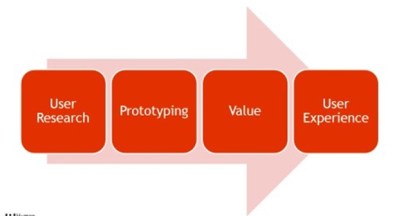
Designing is the second leg of the core triangle of work of the entrepreneur. In the cosmos sense, we mean designing in the largest sense of the word. Designing is the human centered design user research which generates insights and the iterating through the many prototypes to figure out the minimum viable product (not minimally viable product). After using human centered designing, then the agile or lean process works to build your product and get it into your customer partners’ hands.

Designing for humans is OBSERVING, PROTOTYPING and ITERATING.


You can find the introduction to the Cosmos of the New Venture here.

Posted in Content with Context, Emails to a Young Entrepreneur, Entrepreneuring, Flipped Perspective, Learning | Leave a comment

From my Chair: I do have an alcove!

Day 123 of Self Quarantine             Covid 19 Deaths in U.S.:  138,000

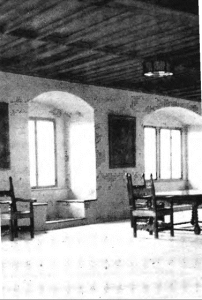
When I first read Timeless Way of Building, I fell in love with the pattern of Alcove.  I loved the many photos and designs of Alcove that Alexander spread throughout the book.  I had to buy A Pattern Language: Towns, Buildings, Construction to get more details of Alcove and to see the different contexts of patterns that Alcove fits into.

An Alcove pattern from Timeless Way of Building

“The pattern ALCOVE feels good to us, because we feel the wholeness of the system there.

“There is an intellectual formulation of the forces which alcoves resolve. For instance, they allow us to be private at the edge of a communal gathering, and, at the same time, remain in touch with whatever is communal there. But what clinches it, what makes us certain that this formulation has some substance to it, is the fact that alcoves make us feel good. The conflict is real, because the alcove makes us feel alive; and we know the pattern is complete, because we can feel no residual tension there.”

From Timeless Way of Building, p. 244

I vowed that one day I would have a house with an Alcove.

I had to laugh after writing a previous post about the Timeless Way of Building, that I had my glorious Alcove, I just never realized it.  I had a too narrow view of what the Alcove pattern was.

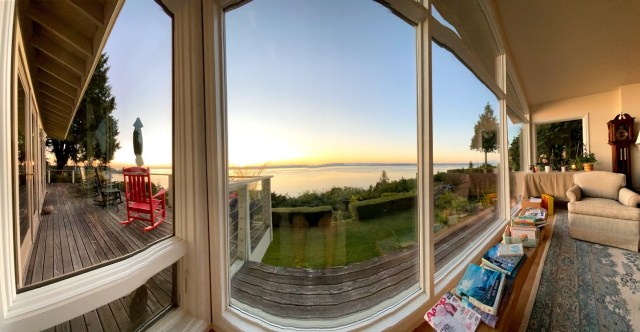
Our Alcove view of the Puget Sound

My chair sits in a wide Alcove that has a view of Puget Sound and Seattle and Mt. Rainier to the south.  Yet, I can still see family and friends when they can gather on our deck (pre-pandemic).

This Alcove is my retreat from the world while still being able to observe the world around me.

My Alcove makes me feel good.


Posted in From My Chair, User Experience, Wake Up! | Leave a comment

Emails to a Young Entrepreneur: Designing for Humans

Day 123 of Self Quarantine             Covid 19 Deaths in U.S.:  138,000

Designing for Humans

Flip Comic created by David Robinson

WIRED: What innovation do you think is changing the most lives in the developing world?

MELINDA GATES: Human-centered design. Meeting people where they are and really taking their needs and feedback into account. When you let people participate in the design process, you find that they often have ingenious ideas about what would really help them. And it’s not a onetime thing; it’s an iterative process.


Palo Alto, California USA, Stanford University Campus, July 23, 2013

Dear Mikhail,

I am enjoying the journey of discovery that you are on. It is obvious to me that you are developing your entrepreneurial mind. I appreciate your sending me such detailed spread sheets of your business model and the many ways that you are thinking through your new venture. As a mere observer of markets I am ill prepared to wade through your models and provide advice on which is the best one for your venture. Best is such a causal and expert mode way of thinking. Modelling of your business is just one of the ways of making sense of the world that you are trying to observe.

It is easy to get lost in spread sheets when one is modelling. When immersed in numbers it is easy to forget who we are designing for – humans. Today, I’d like to shine the light on human centered design while I sit here underneath Hoover Tower on the Stanford campus surrounded by the whispers of Silicon Valley technologists past and future.

I love this mantra that designers use to start their day:

We designers, who art in employment
Hallowed be thy Studio name
Thy clients will come
Thy briefs will be done
On time as it is on budget
Give us this day more glorious ideas
And forgive us our inferior ones
As we forgive those who practice bad typography
And lead us not into complaint
(over long hours and low pay)
But deliver us that Black Pencil
For thine is the Studio, the Mac, and Adobe
For ever and ever
Amen

As a product designer it is so easy to fall into the trap of designing for ourselves. We think that if we have a problem then the rest of the world does as well. The trap is to go talk about our ideas to our friends who humor us and say “what a great idea.” The challenge as an entrepreneur is to see what really matters to enough people to create a sustainable business. We have to go out and see and observe and experience the world of our potential customers.

Experience first; make meaning second.

Research studies on adult learning make clear that the best way to learn is to experience directly.  Instead of telling me how to pick up a baseball bat and strike a pitched ball, show me how to do it.  Then let me quickly try it myself.  Learning accelerates if there is an experienced coach operating from a rich framework of how very different individuals can master striking the ball.  The coach operating from a mental image of how that person’s physique and skills could best accomplish the task can then give pointers on how to best move from one’s current capabilities to the ideal.

David Kolb is one of the leading researchers on adult learning.  A summary of the Kolb model is:

“Much of our traditional learning experience has led us to believe that we learn best by listening to experts. It has been found, however, that learning that results in increased self-awareness, changed behavior, and the acquisition of new skills must actively engage the individual in the learning process. In particular, adults have been found to learn more effectively by doing or experiencing.

“Kolb described this learning process as a four-phase cycle in which the learner: (1) does something concrete or has a specific experience which provides a basis for (2) the learner’s observation and reflection on the experience and their own response to it. These observations are then (3) assimilated into a conceptual framework or related to other concepts in the learner’s past experience and knowledge from which implications for action can be derived; and (4) tested and applied in different situations.

“The adult learner assimilates useful information into their personal “experience bank” against which future learning events will be compared and to which new concepts will be related. Unless what is learned can be applied to actual work or life situations the learning will not be effective or long lasting.

“People responsible for designing learning events should keep these phases in mind as they develop ways to help the learner understand and be able to use the new knowledge and/or skill.”

Source: David A. Kolb. Experiential Learning. New York: Prentice-Hall, 1984.

Recent cognitive science research is showing that not only is experiencing a better way to learn, but also how that experience is gained.  My cognitive psychologist daughter, Elizabeth, makes this research concrete by illustrating how to learn to climb a rock wall:

Monkey see lets monkey do

“What’s the most important muscle for climbing?” my instructor asked for the fifth time. “Your brain,” we dutifully chanted in unison, still a bit skeptical. Yeah, yeah, your brain is important, but our instructor’s splayed limbs demonstrated that he certainly wasn’t hurting for other muscles. Meanwhile on the ground, my forearms were burning after one climb up the eight meter wall. (Though in my defense, it was the one with the crazy incline). Still only a beginner, I drool at the nutters on the Banff mountain climbing films and wonder at whether I’ll ever get up the nerve to tap in my own pro, or go on a multi-pitch climb.

“A springboard diver in my past life, I recently caught the climbing bug, and would much rather be trying to crimp my fingers around some miniscule hold than actually working on my dissertation. To alleviate my guilt, I decided to look for links between this thrilling sport and my journal article reading. During my grad student day-job, I study the human visual system. Unfortunately, I can’t tell you why sunsets are so breathtaking, or why you can be looking directly at your keys and still not see them. However, I can tell you a little bit about how it is that we translate a visual image into an action. More importantly, the scientific community at large is starting to understand how it is that just by viewing expert performances, we can subsequently improve our initial athletic attempts.

“Back in 1995, a couple of researchers noticed that the same brain areas active when a monkey reached for a grape were also active when the monkey saw another person reach for the grape. Hmmm, that’s interesting – what you do and what you see are linked at a fundamental neural level. Subsequent experiments found that individual cells in the front parts of the brain seemed to represent complex actions (e.g. reaching, grabbing) no matter whether it was the monkey that moved, or a nearby person who reached for the reward while the monkey simply watched. Furthermore, the cells had preferences for different actions – some brain cells were interested in reaching, some in tearing, while still others preferred bashing or poking. A couple of years ago, another group of researchers found that human brains are activated differently when watching someone else perform movements that they can also do (say, ballet dancers watching ballet performances), versus when watching people performing movement sequences at which they’re not expert (say, a rock climber watching a ballerina). Hmm, that’s interesting – so what you can do influences how you see.

“I’ve always maintained that I dove better during the years that I was “second-fiddle” on the team. Those years at practice I had the pleasure of watching my expert teammates nail dive after dizzying dive, while I struggled to keep up with the number of flips and twists. Lucky me though – as I had the visual reinforcement of their excellence, my brain learned to pattern my own movements from theirs, allowing me to improve by leaps and bounds (excuse the pun). In climbing, one of the most important things any beginner can do to improve her performance is to spend hours watching the pros (or really anyone a decimal-rating or two better). Someone actually studied this for his dissertation already and found that beginner climbers shown a video of an expert climbing a route did better on that route themselves than those shown a video of a novice climber. So, what you see influences what you can then do. At some level this is old news – of course you should watch experts – only a scientist would find something miraculous in any of this. However, the fact that we know that the exact same brain areas are engaged in observing as well as producing motions will allow us to better train athletes, mentally as well as physically.

“In many athletic programs (no matter the specific sport), video technology has taken over practice, allowing athletes to see their performances immediately after they’re executed. My former diving coach would TiVo each practice – allowing us to dive, watch what we just did, and then hop back up and try to improve on it. This helped for some aspects of the dive; for example, I never would believe that my feet came apart during twisters unless I saw it on tape! However, some of the recent research suggests that, while watching yourself is good and all, it’s watching folks better than you that will have the beneficial impact on your brain circuits.

“One last kicker – another set of studies investigating mental imagery found that simply imagining moving one’s finger increased muscle strength in that particular finger. Extrapolating from this suggests that just thinking about yourself ascending that route may actually help you develop the strength to do it. So all those athletic loons that you see staring up at the chalk marks on the wall, making small movements here and there as they decide on foot placement, are really teaching their brain what to expect on the way up. In short, much of the neuropsych research suggests that the best time to train your brain is while you’re resting your muscles. Stare at the wall. Really scrutinize your fellow climbers (well, the good ones, anyway). Of course, any decent athlete knows all of this at an instinctual level already. But hey – you’ve now got a great excuse to hang out and watch the experts for an extra hour as your muscles recuperate… Of course to see if you’ve learned anything, you’ve got to get out there and actually climb it.”

One of the first things I learned in my ten years of studying and teaching at the Institute of Design (ID) of the Illinois Institute of Technology, is that humans are very inarticulate at describing how they perform some complex behavior or what they might need in order to improve it.  It’s one of the many reasons why interviews or focus groups rarely lead to powerful insights that lead to successful product designs.  At ID, students are taught to observe, observe, observe.  They quickly learn that humans are extremely articulate in their actions and behaviors.  You just have to observer them.

A core technology in observing people is the use of video ethnography.  That’s a big social science phrase for simply video recording people in the context of their actual work so that you can study, deconstruct, and share the results with others.  This technique is a staple of athletic teams trying to improve the performance of beginners all the way to professionals.  Yet, it is little used in business where it proves to be even more valuable.

My introduction to the power of video ethnography was on my first visit to ID.  Over my forty years of building and managing software product development, I’ve searched for a way to design a product right the first time.  I’ve looked in hundreds of places for that magic elixir.  I’ve been frustrated with all the usability professionals who tell me my product sucks after I build it, but have nothing to say when I start to design the product.

In 1992 while visiting the Institute of Design, my views on designing were transformed by a five minute video from a student class project.  Sitting in a miserable concrete walled classroom on the 13th floor of a non-descript research building overlooking some of the worst slums of South Chicago, I could barely hear the nervous student introducing his project over the obnoxious noises of the exposed air conditioning system.  His research had something to do with improving the ability of the business traveler to work in a hotel room.  As someone who travels 150,000 air miles a year and spends >50 nights per year in hotel rooms, he had my attention.  I wasn’t sure he could meet my expectations or that he could shed any light on a frustrating environment.

The student created a relatively simple task for a male and female pair of business colleagues.  The pair had to create a business report in a hotel room, and then type the results into their laptop PC.  In the process they had to confer with other employees over the phone to get information for the report.  The student would videotape their activities in the hotel room for later analysis.

The first several minutes of the videotape showed the awkward dance of the professional colleagues trying to find a work surface that would accommodate their needs, while avoiding the cultural taboos associated with the only work surface available – the bed.  The pair searched in vain for something that would work and yet the bed remained the only place that is large enough, was convenient to the phone, the power outlets and the available light.  The pair tacitly acknowledges that the bed is the only viable place and they start to lay their papers and computers on the bed.  They then realize that there is no comfortable place to sit.  The single chair in the room is too high for the bed surface.  Yet, it hurts to kneel on the floor and it is awkward to sit on the bed without disturbing the papers and computers.  Throughout all of this trial and error, the male and female are trying not to invade each other’s personal space so that they don’t cross the line into intimacy.

After five minutes of trying to work, the pair throws their hands up and quits the exercise.  They cannot get work done in that environment.  I was amazed at how completely the five minute video transformed my experience as a business traveler from unnamed frustration with a hotel room as a work environment to being able to clearly articulate my frustrations.  And in that moment, a solution space opened up for tens of ways to transform the business traveler’s hotel working experience.  No interviews were needed.  No audio was even present on the videotape.  Just watching the interactions said it all.

The student showed some interviews with business travelers that provided no insights on either the problems or the solutions as a counterpoint to the power of user observation.  Even though we might be experienced business travelers, we are not usually conscious about what bothers us.

The video was generated by a Master’s student as part of his first seven week course on user observation.  Over the years one of my first tests of a method or process is how quickly can a student pick up a process or a technique?  I have seen many techniques where the inventor or teacher could reliably perform great work, but none of their students could master the technique.  Here was a process that was both powerful and could be mastered quickly. Not only did video ethnography help the researcher discover insights, but it also aids the communication of the problem and the insights to stakeholders.

Performing user research is relatively easy.  In its simplest form it is just finding an appropriate place to observe users and then make notes on a pad of paper.  In its most complex form, it is being able to have video cameras and recorders in place so that a team of researchers which typically include anthropologists and social scientists can extensively review the interactions captured for deep analysis with formal methods.

Examples of the professional use of these techniques come from McDonalds, Amoco, and Personal Health Connections.  About ten years ago, McDonalds was interested in understanding why Taco Bell locations were up to 50% more profitable per store than were similarly located McDonalds stores.  The Doblin Group was engaged to research this topic and was able to instrument several McDonalds locations and a few Taco Bell locations with several cameras.  After viewing hundreds of hours of videotapes and generating several insights and hypotheses as to what was going on, one of the anthropologists came up with a curious difference.  At Taco Bell, the store was laid out such that all of the servers spent most of their time either face on to the customers or sideways to the customers.  While at McDonalds, servers spent greater than 85% of their time with their back to the customer.  Doblin Group coined this observation “Backs and Butts”.  If you recall the last several times you visited a McDonalds, the backs and butts of the servers tend to be quite large and unattractive.

So with this insight and hypothesis, the Doblin Group set out to test this notion in a few remodeled McDonalds.  Almost overnight the revenues and profits increased in these locations to levels higher than what Taco Bell was seeing and considerably higher than stores laid out in a traditional McDonalds style.  The good news is that the researchers proved their case. The bad news was that McDonalds’ management was not ready to depart from their tradition of “this is the way we design our stores.”

Doblin Group was commissioned by Amoco to figure out ways to make their retail locations more profitable.  Gasoline is sold pretty much the same by all oil companies and the gross profit margins are pretty much the same.  Amoco asked if there was a way to dramatically improve profitability by observing the ways that users buy gas.  While Doblin did a systematic overview of the retail operations and came up with a system of innovations that is breathtaking in its scope and inventiveness, it was the interaction at the gas pump that captured my imagination.

Similar to the McDonald’s video ethnography studies, Doblin Group fitted a gas station with cameras from just about every angle.  One of the things they noted was the dance that users went through to figure out how much gas they were putting into the car.  Users were contorting themselves in all kinds of ways to keep their eye on the pump handle and the gas flowing into the car as well as try to eye how much money was cranking away on the pump display.  The Doblin folks called this the “gas pump watusi” after a dance step popular at the time.  The solution was pretty straightforward – move the gauges to the gas pump handle itself.  Similarly, the social scientists observed that after filling the car, most consumers made a trip to the rest room to wash off their hands.  So Doblin designers located wash stands at every gasoline island.

Based on a wide range of observations and insights, Amoco built four service stations to these specifications in Indianapolis, IN.  Immediately these stations generated several times the revenues and profits of similarly located Amoco and competitor service stations.  The bad news was that Amoco underwent a reorganization and subsequent sale and the innovations were never brought to life on a wide scale.

At Personal Health Connections (PHC), user observation was accomplished with several subjects who agreed to help us understand the processes of dieting and weight management.  A simple camera study and weekly interview process were carried out over three weeks.  The patterns of change fell into three very distinct categories:  planners, trackers, and storytellers.  Planners took a top down approach to losing weight.  They established a goal and developed activities that would help them lose weight and then monitored their results daily.  Trackers were just the opposite.  They took a bottom up approach which started with the monitoring of their daily weight and activities.  Based on tracking what they actually did, they slowly started to generate some goals that would fit their activity pattern.

The third category of users was the story teller.  They wanted their information presented to them in the form of stories and all of their goal setting and tracking was done in the form of telling stories.  Each activity had a cast of characters, action, a plot, and an ending.  We quickly realized that the design of the website had to accommodate all three user types and that one design probably wouldn’t work for all three.  If you look at many of the best web sites today you will see functionality that appeals to each of these types of users.  What we did at PHC was to have a quick diagnostic in our first interactions with a user to let us understand which type they were and then we accommodated their need with an appropriate user interface.

The hardest of these types to accommodate is the story teller.  It is relatively easy to present information to the user in the form of stories, but much more difficult to take what appears to be unstructured text and make sense of it.  The emerging world of natural language processing and sentiment analysis promises to make much better user experiences for the story teller.

With computer based products one of the challenges is not to confuse user observation with usability.  Both are important but they are different.  User observation is about situating a user’s actions in the context of their daily life and understanding the Whole Process that is required to meet their intent or goals.  The observations ground themselves in a structure of observation, contention (does the observation lead to a positive or negative consequence), and what user value or values are supported or not by the users actions.  Usability tends to be focused more narrowly on how the computer program functions match the users understanding and expectations.  The big ideas that will lead us to find 10X productivity improvements come from user observation.

As I reflect on my 45 years of product development, the pattern that continually repeats is the more successful products result from early user observation and research.  For many startups the need for their product arose out of the frustrations of the founders with existing ways of doing things or by observing some frustrated user segment trying to accomplish some task that they had the insight to do better, faster and cheaper.

Making meaning of the above stories we see four stages to designing for humans.


The first and most important is the user research which is primarily user observation. From the user observation, rapid prototypes are produced starting with low fidelity prototypes and then moving to higher fidelity prototypes. The third step in this process plays on the two meanings of value – monetizing the product and supporting human values. The last step is to improve the user experience of the product.


For pedagogical purposes I introduce the four steps as a directed sequential process. In practice it is more like orbiting a giant hairball of observations and insights until you achieve a “got to have” product and user experience.


Adrian Slywotzky in Demand: Creating What People Love Before They Know They Want It  describes this process as designing for the six pillars of demand.

The Slywotzky six steps to generating demand are:

  1. Fix the Hassle Map – map the hassles of the customer journey and figure out how to fix them
  2. Make it magnetic – create and capture the emotional space in your market
  3. Build a complete backstory – demand creators connect all the dots needed to fix the hassle map of the customer journey
  4. Find the triggers – the obstacles to demand are inertia, skepticism, habit and indifference. Find the triggers that move the fence sitters to customers
  5. Build a steep trajectory – how fast can the demand creator get better. Continue to improve technical features and improve emotional engagement
  6. De-average – one size does not fit all. Find cost efficient and effective ways to create product variations.

Slywotzky describes an example of the human centered design process through the Zip Car business evolution. The Zip car team did a great job of understanding the hassles involved with city driving:

The solution they came up with appealed to the city dwellers who had an occasional need for a car:

Through survey after survey, the Zipcar target demographic excitedly said they would use the service.  Yet, very few did. After burning through $10s of millions of investment money, the CEO was replaced.  The new CEO went back to basics to observe the hassles in using the Zipcar solution. While philosophically customers SAID they would buy the service, there was one hassle they wouldn’t get past that emerged from close observation – having to walk a long distance to find a car. The key insight is that a Zipcar had to be within a five minute walk of the consumer.

Once the Zipcars were available in high density in the city center their business took off. Zipcar is a great example of supporting human values and through observation eliminating all the hassles of the occasional use of a car in the city.

As an effectual entrepreneur and a product creator it is easy to lose sight of the basis of any business – designing for a human being. The good folks at IDEO capture the key aspects of the human centered design process:

Like a Rubik’s cube the human centered designer understands that a good design must be desirable, possible and viable. The IDEO toolkit is a great place to start understanding the best practices for human centered design.

Yours in entrepreneuring,

Skip Walter

Posted in Content with Context, Emails to a Young Entrepreneur, Entrepreneuring, Flipped Perspective, Learning | Leave a comment

Emails to a Young Entrepreneur: Applying Modelling the Business

Day 122 of Self Quarantine             Covid 19 Deaths in U.S.:  137,000

Applying Modelling the Business

Slywotzky in his many books provides a wealth of business and profit models to build upon for your new venture. This week the theme of your flipping perspectives is to imagine your business through the lens of seven different business models. Each day try out a different profit model for your product or service. What would your product or service look like if it were a professional service, or a content business, or a business supported by advertising?

The photos that you include with your free writing for this week can be drawn from products that are primarily based on the profit model you choose or your could sketch a landing page for a social media campaign featuring a teaser for the business model that you want to use.

For seven days, your flipping perspective steps are:

    • Identify a different business or profit model for your product
    • Take a picture of a product which has a similar business model or sketch a landing page for your product with the new business model
    • Free write about your product and the business model and your interactions with customers attracted to that business model

In the Art of Profitability, each lesson looks at a different profit (business) model for Steve’s company Delmore.  Ash Maurya in Scaling Lean, asserts that there are only three business models to explore:

    • Direct
    • Multisided
    • Marketplaces

Maurya asserts:

“When people bring up business models, they often use a whole bunch of terms such as software as a service (SaaS), enterprise, retail, e-commerce, ad-based, freemium, viral, social, not-for-profit, marketplace, et cetera.

“The reason we end up with dozens of business model descriptors is that we attempt to label the myriad ways that a business model creates, delivers, and captures value. For instance, the difference between SaaS, enterprise, and open-source business models is in how they deliver and capture value. Even within a SaaS business model, one could implement a freemium or trial-based pricing model. Trying to create a list of business model types gets complex pretty fast.

“Instead I’m going to take a different approach. We are going to categorize business model types by the number of actors (or customer segments) in the model. Using this approach, we’ll define just three basic business model archetypes: direct, multisided, and marketplaces. In the next few sections, I’ll show you how to start with these archetypes to describe any type of business.

Maurya, Ash. Scaling Lean (pp. 50-51). Penguin Publishing Group. Kindle Edition.

For your flipping perspective exercise this week, include each of these three models in your free writing.

The Cosmos of the New Venture

The Modelling of the business is the first entry in the Wisdom cycle. A model can be as simple as charging $500 per hour for professional services or a $1000 per lesson as Zhao proposed to Steve. It can even be as simple as WhatsApp’s model of $.99 per year for unlimited texting and an assurance that there will be no advertising. Or the model can be as complicated as Google’s multi-sided advertising based model which requires Nobel prize winning economists to formulate.

No matter how complex the model, the entrepreneur establishes how they want to relate to the customer, not just the setting of a price. Modelling requires the wisdom of conceiving, experimenting and selecting the model along with relating that to the brand promise and brand experience.


You can find a PDF of the full Preface, Forward, Chapter 1 and Chapter 2 here.

You can find the introduction to the Cosmos of the New Venture here.

Posted in Content with Context, Emails to a Young Entrepreneur, Entrepreneuring, Flipped Perspective, Learning | Leave a comment

Emails to a Young Entrepreneur: Modelling the Business

Day 121 of Self Quarantine             Covid 19 Deaths in U.S.:  136,000

Modelling the Business

Flip Comic created by David Robinson

“Essentially, all models are wrong, but some are useful.”

George E.P. Box


Dundee, Oregon, USA, Archery Summit Vineyards, July 15, 2013

Dear Mikhail,

I really enjoyed your stories of all that you are doing to find the key talent to raise your infant venture. You have a wonderful sense of humor and way with words. I appreciate your sending me the resumes and LinkedIn profiles of the potential co-founders you are interacting with. I am flattered that you think I might offer some insights as to which one might be best for you. One thing my observing and discovering journey has taught me is that I can know what is right for me, but I can’t possibly know what is right for someone else.

When I started my venturing journey forty years ago, as a capable technologist I was focused on the product.  All of my creative energies were spent transforming raw technologies into something that was useful for enterprise customers. I was in the “if I build it, customers will come” state of mind. Fortunately, I was surrounded by enough people in very large companies who spent all their mental energies on attracting and acquiring paying customers.

Prior to founding Attenex, there were no technical and business people to help me think through how to do build a new venture with our conceived visual analytics technology. I had to figure out whether there was a product to be built, whether there were any customers who might care, and could we make money selling it. We spent three months prototyping the technology and were delighted to see that we could get 2-3 times productivity increases. As I explored the technology, I realized we could easily boost the productivity to at least ten times.

We discovered a path forward with the prototype iterations in three months. Then I ran into a brick wall at the intersection of extreme productivity and the existing hourly billing business model of the legal industry. Every time we increased the productivity of the tool, we decreased the revenue and profits for our law firm customers.  Our unique selling proposition would be:  “Buy our product and you will make 1/10 the money you did before using our tool.”  Even I would laugh me out of the room.

I turned my energies to looking for a business model that would allow our customers to make money. I spent five months digging deeper into the many aspects of legal electronic discovery (eDiscovery), reading every business modelling book I could find, and talking to a wide range of attack finance professionals. With all of this research, I couldn’t find a viable business model.

Along the journey I came across Adrian Slywotzky’s many books on business models, profit models and value migration. My frustrating path of understanding profitability felt much like Steve in the following story from the introduction of The Art of Profitability:

“Steve: Where to begin? “I heard your name at a cocktail party. Someone introduced me to a man named Otto Kerner. I told him I had to learn about profitability. And Mr. Kerner told me that if I wanted to learn about profit, I ought to meet you.”

Zhao smiled. Kerner was Zhao’s closest friend. A senior partner at Storm and Fellows, he was the person responsible for connecting Zhao to the firm. At age eighty-five, he still came into the office every day, even if only to spend half the afternoon chatting with Zhao. “I’m old enough to be Zhao’s father,” he liked to say to people at the firm who wondered about Zhao, “But when we talk, Zhao is the teacher and I’m the pupil. That’s why we need him here at Storm and Fellows—he’s my personal continuing education program.”

“An introduction from Otto Kerner is like gold in my book,” Zhao remarked. “But tell me—why?”

Steve was puzzled. “Why what?”

“Why do you have to learn profitability?”

Steve paused. A half dozen reasons were running through his mind. Why, indeed? He was tempted to say a couple of things, but he checked himself, realizing they were platitudes: Because profit is the lifeblood of any organization . . . because the ultimate purpose of business is to create profits for shareholders . . . Somehow, he sensed, the clichés he’d repeated in the workplace and even in business classes he was now taking at night, wouldn’t work so well with David Zhao. He experienced an instant of panic, then consciously relaxed the tension that gripped him.

“It has to do with my job,” he finally responded. “I work in strategic planning at Delmore, Inc.” Steve glanced at Zhao, half-hoping for the raised-eyebrow look of respect he usually got when he mentioned the company name. But Zhao’s expression betrayed nothing. Steve went on, “It’s a big company with a great history, of course. And being in the planning department is a good opportunity for me. I get to look closely at all the various industries we’re in, which is almost like getting a business-school education on the job. But as you probably know,” he continued, “the company hasn’t been doing very well lately. Profits are flat, and the stock price has been stagnant for about eighteen months.”

“For two years, actually,” Zhao remarked.

“I guess you’re right,” Steve said. “You must follow the stock.”

“I find Delmore—interesting is the right word, I suppose,” said Zhao. “And you’re in strategic planning there. Tell me, Steve,” he asked, “what sort of strategy do you plan?”

Was that an amused glint in Zhao’s eye? “What I do is more like research—studying potential mergers, acquisitions, spin-offs—you know the sort of thing,” he responded, immediately feeling that his answer sounded lame. “But I want to contribute more,” he quickly added. “I want to learn how I can help the company get out of the doldrums. Does that make sense?”

“Why not?” Zhao answered. “But Delmore has been in business since 1904. It has revenues of $18 billion a year from forty different businesses. Surely the wise men and women who run the firm must know all about how to make profits? Or do you suppose they need Steve Gardner to teach them that?”

Steve reddened and sat for a moment in silence. He was thinking about some of the disturbing things he’d heard and seen around the offices at Delmore in the past six months. About the company-wide strategy conference, originally scheduled for April, that was first rescheduled twice, then postponed indefinitely, with no explanation as to why, causing rumors to swirl in the corridors . . . about the resignations that summer of three members of the executive committee, all within four weeks of one another. . . about the disparaging tone of recent comments by Wall Street analysts about Delmore, and the defensive tone of the company’s public responses. And just this past week, people were whispering that the long-expected layoffs in three divisions would be a lot bigger than anticipated. Life at Delmore was feeling very different than it had when Steve joined the company.

Steve took a deep breath. “I guess I’m not necessarily convinced that the wise men and women at Delmore do know what profitability is all about,” he finally admitted. He looked Zhao in the eye, wondering how Zhao would react.

Zhao merely turned his head slightly to stare more closely at Steve. A long moment passed. “Honesty,” Zhao commented.

“Excuse me?”

“Honesty. I don’t run into it very often.”

Another pause, as Zhao stared through the glass wall, seemingly focused on a helicopter whirring across the water from New Jersey, nearly at a level with his own forty-sixth-floor perch.

Finally, he turned to Steve.

“If you really want to learn about profitability, I’m willing to teach you,” he said. “But there are several conditions. First, we’ll meet most Saturday mornings between now and next May. Second, every lesson will last exactly one hour. And I’ll expect you to spend time between lessons reading and otherwise preparing. Is that acceptable?”

Steve bowed his head slightly. “Yes, it is.”

“Are you doing anything other than working at Delmore? Moonlighting, or taking classes somewhere?”

“I am taking a night class this fall at NYU—financial management. I thought I’d take one or two courses a semester to help me decide whether to go on for an MBA. That’s okay, right?” It had suddenly occurred to Steve that Zhao might consider him over-booked.

“It’s fine,” Zhao reassured him. “Your preparation time for me will be about four hours per week. I hope that works with your schedule?”

“I think so.”

“Good. There’s just one more thing. Did Otto tell you that I charge a fee?”

“No. How much is it?”

“A thousand dollars per lesson.”

Steve sucked in his breath. Then his shoulders dropped, collapsing in defeat. He looked away, suddenly feeling frustrated and angry. He was tempted to speak his mind—or to simply storm out of the office, slamming the door behind him.

But instead, he simply said, quietly, “I can’t afford that.”

Zhao laughed, cutting the tension in the room. “Of course you can’t,” he replied. “You’re a student. I’m not asking for the money now. You can pay the fee when you’re able to—if you ever are.”

Steve didn’t know whether to feel relieved, embarrassed, or guilty. He thought about the usual four-digit balance in his bank account. “I might not be able to pay you for five or six years. Maybe longer.”

“I know that,” Zhao answered, a playful grin now spreading across his face. “Luckily for you, I’ve decided you’re good for it.”

Steve’s mood turned to puzzlement and mild annoyance. Zhao, he vaguely felt, was being condescending, perhaps toying with him. What makes Zhao think I’ll ever pay him a penny? he thought. Maybe I’ll take all his lessons, absorb all his ideas, then walk away and never see him again. That’s probably what most people would do.

“Do we have a deal?” Zhao asked.

Steve paused. “Yes, it’s a deal,” he found himself saying. Zhao reached across the desk, and the two men shook hands. And suddenly Steve sensed that he would never simply walk away from Zhao . . . that one day he would pay Zhao his total fee . . . and that Zhao had known all this before Steve himself did.

Zhao smiled as if he understood. “Very well then,” he said. “Let’s get started.”

Slywotzky is my Zhao. As I looked at the many profit models, the answer became very clear. So clear that I wondered how we’d missed it for so long. All we had to do was move from a billable hour model to some form of fixed price billing. Fortunately, our lead customer, Preston Gates and Ellis, had fifteen years of billing information to a wide range of customers. As we evaluated the different variables, charging by the number of Gigabytes (GB) of electronic mail and digital documents that a customer gave us became the foundation of our value based pricing structure.

On average, the law firm was charging $30,000 per gigabyte (GB = 1000 megabytes) of digital documents processed to do a full lawyer review. The firm realized a profit of about 20%. The cost of the review with the Attenex Patterns software was on average $10,000 per GB. So the law firm could drop the price to $20,000 per GB giving the customer a nice incentive to move to the new technology. Even decreasing their prices, the law firm increased their profits from 20% to 50% per GB.

One of the ways you know that you have arrived at a good business model is when there are additional benefits for the customer. One of the challenges with a billable hour model is that the customer and the law firm don’t have any idea how much it is going to cost to review a matter. With the new fixed price model, as soon as the customer knew how much digital material they had, they knew how much it was going to cost them to review it. The customer could now budget for each matter which made their finance team much happier.

While the entrepreneurial pundits argue interminably about which is more important – team, market size, product, or go to market strategy, I learned that the hardest component of a new venture is discovering the business model. It doesn’t make sense to invest too much in building a product or doing a lot of customer discovery until you can come up with the simplest business model that will work.

If I didn’t believe this before I started my post-Attenex startup – Wine Transformations – I certainly believed it in the three years I pursued my passion for fine wine growing. As a wine geek, I was intrigued by biodynamics and the growing of fine wine. After the sale of Attenex, I decided to pursue my wine geek passion by finding a way to create a business in the wine industry.

As I walk the vineyards at Archery Summit Estate this morning after spending the night in the winery’s guest house, I marvel at the interaction of humans and wine grapes. The sun is on the rise and it is going to be a hot day. The grape clusters are looking good. You can tell it was a great spring for these older vines. Brian Doyle in The Grail: A Year Ambling and Shambling through an Oregon Vineyard in pursuit of the best pinot noir in the whole wide world captures this human and grape vine interaction:

“Grapevines are amazing life forms when you think about it, they plunge their fingers a hundred feet down into the rocky soil, they can live for hundreds of years, they fend off all sorts of insect attacks, and they have been working with human beings for so long, thousands and thousands of years, that you wonder sometimes who cultivates who, you know what I mean?  Are people manipulating and taking advantage of grape vines, or are grape vines deftly using human beings to take over the world?”

This trip through the vineyards is a “mourning” journey for me.  After three years of research, brainstorming, interviewing, and experimenting, I am unable to find a single business model that can work in the wine industry. As Jim Fetzer shared after fifty years in the wine industry, the only business model he could find that works is to buy some vineyard land, hold onto it for 50 years and sell it. Everything else he’s found in the industry is a way to lose money.

Since I don’t have 50 years of life left, that doesn’t sound like a good business model. I’ve learned a lot over these three years of trying to find a business model and I’ve tasted hundreds of wonderful wines (one side benefit of the fine wine industry). I found 128 ways not to make money in the wine industry. This morning when I realized that I can make more money in a year or two with even a poor idea for a software product then I can in 50 years in the wine industry, it is time for me to move on from my passion.

The good news is that I only had to invest a portion of my time and didn’t waste any time or energy on building a product.

Business model thinking early in the new venture is key. How can you sustainably make money in your new venture?

Ash Maurya in his video promo for his book Running Lean asserts the mantra of the lean entrepreneuring crowd:

“The true product of a startup is a working business model.”


Maurya goes on to share:

“We live in an age of unparalleled opportunity for innovation. We’re building more products than ever before, but most of them fail—not because we can’t complete what we set out to build, but because we waste time, money, and effort building the wrong product.”

My treasured mentor, Russ Ackoff shared a lifetime of wisdom in a short twelve minutes in 1994 in a video “If Russ Ackoff had Given a TED Talk…” Near the end of the talk he shares:

“Continuous improvement isn’t nearly as important as discontinuous improvement. Creativity is a discontinuity. A creative act breaks with the chain that has come before it. It’s not continuous. One never becomes a leader by continuously improving – that’s imitation of the leader.  You never overcome a leader by imitating them and improving slightly. You only become a leader by leapfrogging those ahead of you. That comes about through creativity.

“One final point about that. When we look at the models of quality and we frequently point to the Japanese and what they’ve done to the automobile.  There is no doubt they’ve improved the quality of the automobile. But it’s the wrong kind of quality. Peter Drucker made a very fundamental distinction between doing things right and doing the right thing.

“The Japanese are doing things right, but they are doing the wrong thing. Doing the wrong thing right is not nearly as good as doing the right thing wrong. The automobile is destroying urban life around the world. Just visit Mexico City or Santiago or any of those major cities where you find congestion and pollution so bad that children have to be kept home from school. They are not allowed to walk out of doors because the pollution is so intense.

“And then we talk about the quality of the automobiles they are driving. It’s the wrong concept of quality. Quality ought to contain the notion of value, not merely efficiency. That’s a difference between efficiency and effectiveness. Quality ought to be directed at effectiveness. The difference between efficiency and effectiveness is the difference between knowledge and wisdom. Unfortunately we don’t have enough wisdom to go around.

“Until managers take into account the systemic nature of their organizations, most of their efforts to improve their performance are doomed to failure.”

At a recent UX conference a former ID student, Tania Schlatter, author of Visual Usability: Principles and Practices for Designing Digital Applications, shared that twenty years ago she remembered me saying “don’t get stuck in your plans, put a stake in the ground and move forward.” While teaching an entrepreneuring for designers class at ID, I used that principle to move the student teams quickly through Maurya’s Lean Canvas.

Over the years, I’ve seen most student and professional teams stay stuck on the problem/solution and target customer segment. They will sit around a table and discuss (argue) for hours about the “right” answer with no evidence. A framework like the Lean Canvas is an iterative exercise which you need to quickly move through. In a classroom setting, I have students spend no more than five minutes on a single box of the canvas – put a stake in the ground and then move on. Several things happen by going through the whole canvas in an hour:

  1. You realize as you fill in the later boxes, that some of your earlier decisions no longer make any sense.
  2. You realize that you don’t have enough information to fill out many of the boxes.

With the first issue, you need to get all the way through the whole canvas and then spend a few minutes finding the logical disconnects. Then you rapidly iterate another pass at the canvas to resolve the logical disconnects. With the second issue, you design the experiments to go find out the information preferably by going into the field and observing and talking with real customers.

The Lean Canvas is meant as a scratch pad for what you are learning about the customer and how that changes the solution and even the nature of the problem you are trying to solve for. I recommend that entrepreneurs update their Lean Canvas at least once a day until they get to their Minimum Viable Product. Then they should update it at least once a week. It is a quick way to remind yourself to constantly experiment and then record what you’ve learned.

An entrepreneur understands that no “learning” is business model neutral. If you remember in your ID Master’s Thesis classes with Patrick Whitney, he had you express your yearlong thesis project in multiple media.  I wanted to know why he required so many different artifacts for the thesis projects – thesis document, fifteen minute presentation, large poster format, four page brochure and three minute video. Patrick explained that no medium (in the McLuhan sense) is content neutral. Each time you move content from one media form to another, you are gaining insights into the product (artifact) you are trying to represent and communicate. The primary purpose of having so many media forms is to provide another way for you to acquire insights into what you are designing. The regular process of iterating through the Lean Canvas provides the same kind of opportunity for insight generation.

In a similar way, Adrian Slywotzky suggests that looking for ways to make every part of your business digital generates a wealth of insights. In his book How Digital is Your Business, Slywotzky defines digital business as “one in which strategic options have been transformed – and significantly broadened – by the use of digital technologies. . . A digital business uses digital technologies to devise entirely new value propositions for customers and for the company’s own talent; to invent new methods of creating and capturing profits; and, ultimately, to pursue the true goal of strategic differentiation: uniqueness.

Digital Business Design leads to 10X productivity improvements.  Slywotzky states:

“A 10X productivity improvement is more than an incremental growth in efficiency.  It is a fundamental change in the way companies do business.  It liberates resources to serve customers, leverage talent, grow the business, and help toward achieving strategic leadership.

“Productivity is measured as a ratio of value created to resources used.

“Why are 10X productivity improvements possible when Digital Business Design is employed?  There are several reasons:

      1. Most of the time, in most of the economy, atoms are used when bits would bring better results.  Bits are cheaper.  When bits are used instead of atoms, a lot of big costs go away.
      2. Digital options make it possible to collect very valuable types of bits (such as information on what customers really want)before committing atoms.  The result is that atoms (e.g., inventory or unused factory capacity) are not wasted.  Huge costs vanish quickly when bits precede atoms.
      3. Digital innovators have developed an entire array of bit engines to collect, process, and distribute bits with extraordinary efficiency.  The goal is not just to focus on bits, but to have the tools to manipulate and distribute those bits in smart ways.  When a collection of powerful bit engines is exquisitely tuned to the needs of customer, value can be generated at an extraordinary rate.

“That’s why it is extraordinarily important to be constantly asking:  What bit engines have we put to work in our company?  How can they be improved?  What new bit engines will we need to address tomorrow’s business issues?”

Many of the most successful companies use a multi-sided business model. Google gives away their software and applications to the users and uses advertisers to pay for the free users.  Users get a free ride as long as they don’t mind seeing advertisements on every web page. This business model is dependent on having lots of users. As a general rule, early stage investors don’t like this model because you have to spend 2-4 times the marketing dollars than for a simpler model. However, if you can get the users to engage daily with your product, this model is very powerful.

You can find all kinds of spread sheets and applications for doing business modelling.  What I am talking about in this email is the kind of model you can do on a napkin. It is as simple and as hard as understanding the value of the task the customer is currently doing and how they can make more money (more revenue or reduced costs) by using your product or service. It means you have to understand your customer’s business model and how they make money from their customers.

Yours in entrepreneuring,

Skip Walter

Posted in Content with Context, Emails to a Young Entrepreneur, Entrepreneuring, Flipped Perspective, Learning | Leave a comment