Lifelet: Learning about fine wine at Archery Summit

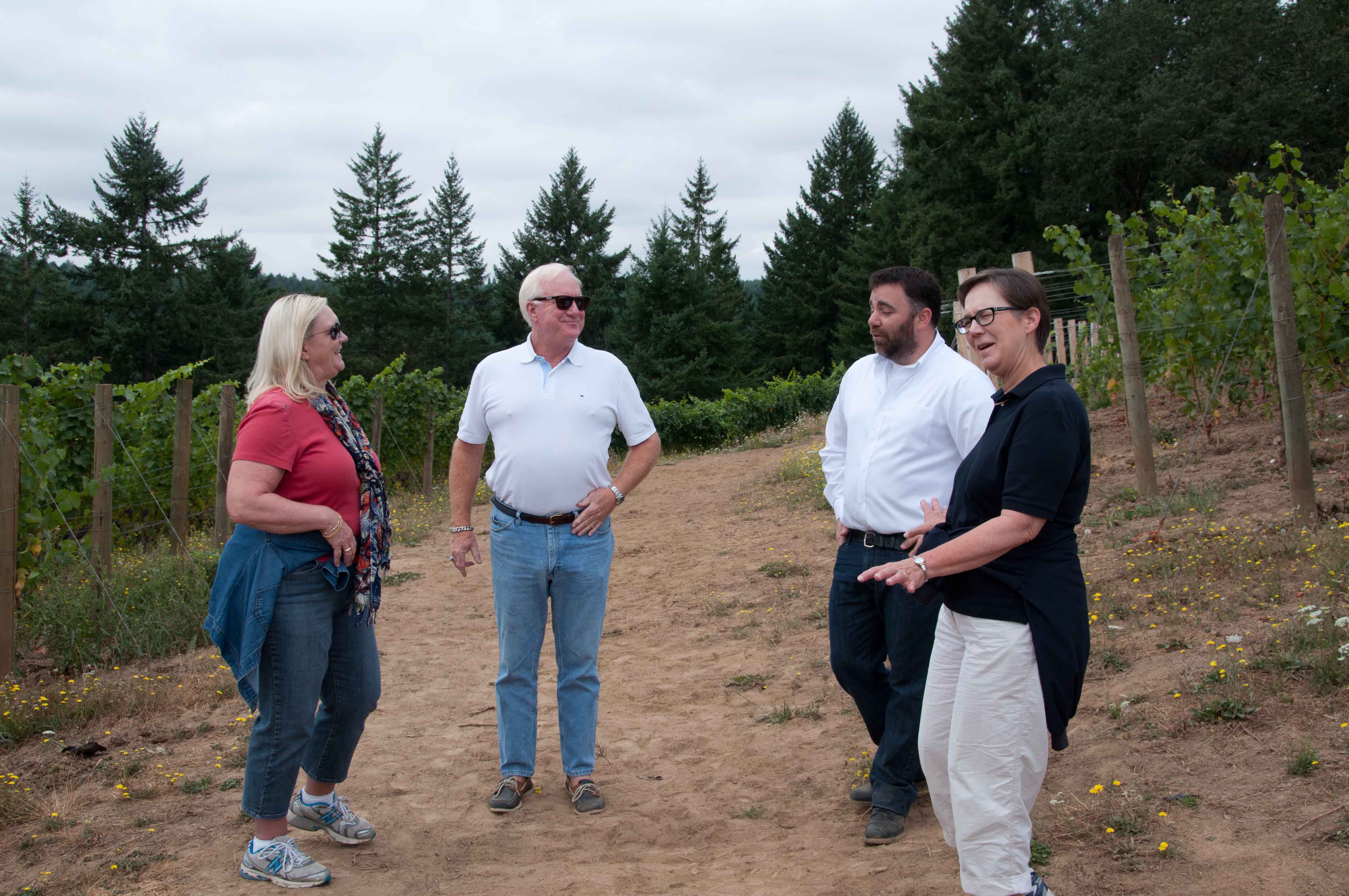
One of the joys of being a wine geek is the absolute pleasure of getting behind the scenes in a winery like Archery Summit.  Over the last 13 years I’ve had the pleasure of attending several seminars at Archery Summit learning about glass tasting and wine blending from Anna Matzinger.

Continuing my education in the vineyards with Leigh Bartholomew is always a delight.

Yet the best days are spent participating in the crush from sorting grapes to picking grapes surrounded by the delicious smells of the natural yeasts fermenting the Pinot Noir Grapes.

Catch a quick glimpse of the process of turning grapes into fine wine at Archery Summit in this Lifelet video.

For a humorous look at the wonderful world of innovation and new ventures, check out Fl!p and the gang at Fl!p Comics.

Posted in Lifelet, Lifelogging, Wine | 3 Comments

Lifelet: Alice and Family

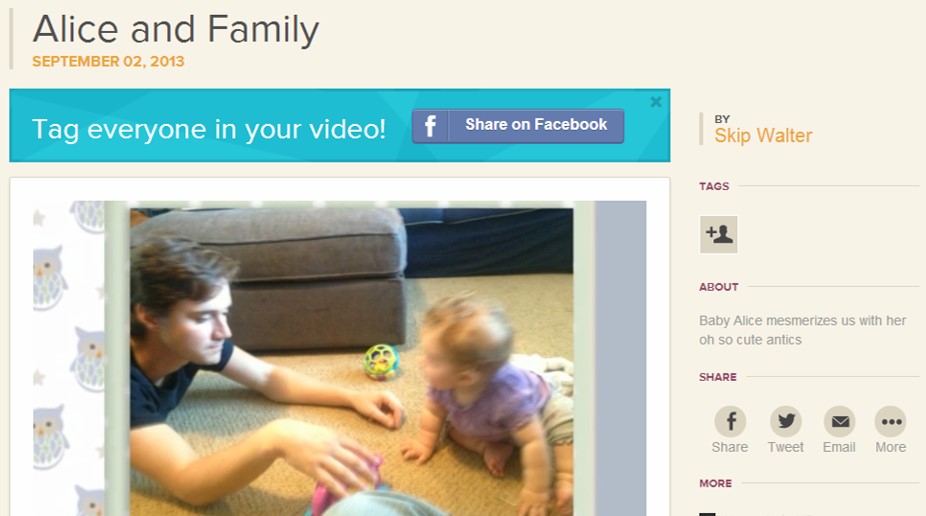
One of the joys of being a new grandfather is getting to play with baby Alice. Well, maybe a better phrase is videoing baby Alice. With all of us covering Alice’s every developmental step with an array of camera phones, Alice will be the most documented child ever. I wonder if she thinks all adults have a smartphone attachment in front of their faces.

For a look at an adorable eight month old entertainer, check out this lifelet video.

For a humorous look at the wonderful world of innovation and new ventures, check out Fl!p and the gang at Fl!p Comics.

Posted in Lifelet, Lifelogging | Leave a comment

Advice to a wannabe entrepreneur

More times than I can count (or even want to remember) some aspiring entrepreneur contacts me to ask for advice on how to start a business and bring their idea to market. The QBQ (question behind their question) is often “can you recommend a CEO who will turn my idea into a $100M company?”

What is so hard to get across to these idea rich (and execution poor) entrepreneurs is that anyone who is competent enough to raise money, hire talent, develop a product, discover customers, and scale a business already has plenty of good ideas to choose from. The experienced entrepreneurs know that it isn’t the idea that matters, it is the right combination of talent, business model and market.

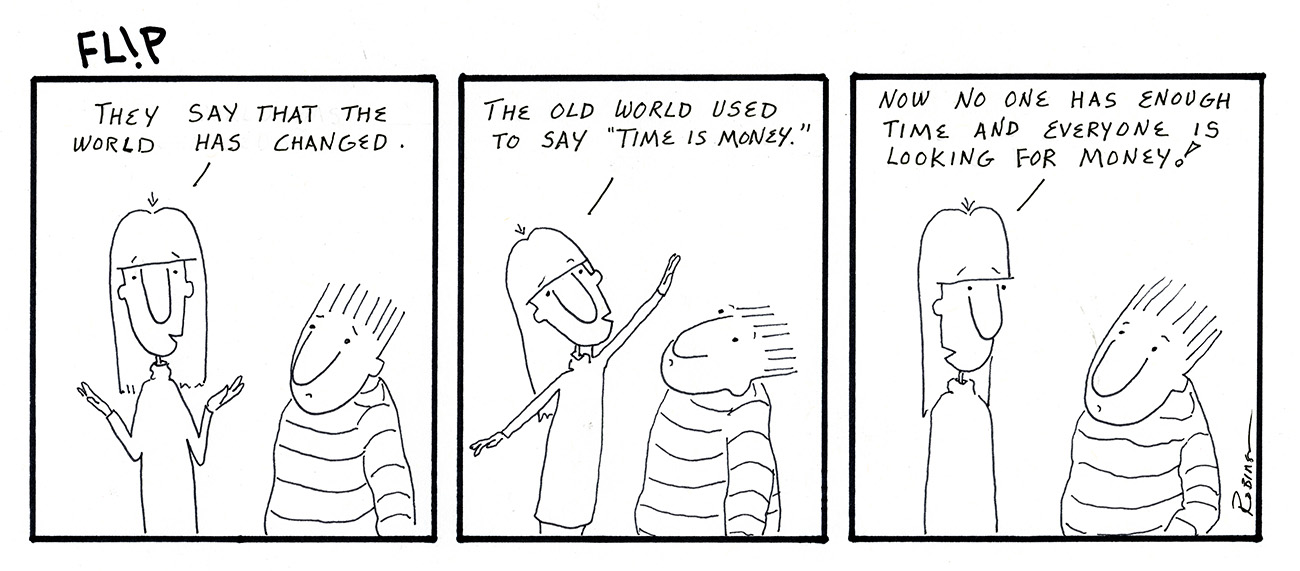
Until recently, I would spend several hours or days trying to help the novice give flesh to their idea. Of late, I send them the following and ask them to follow up with any questions they might have. For some unknown reason (like doing a new venture might actually require real work), they never follow up. As Fl!p might say:

No-one-has-enough-time-and-everyone-is-looking-for-money

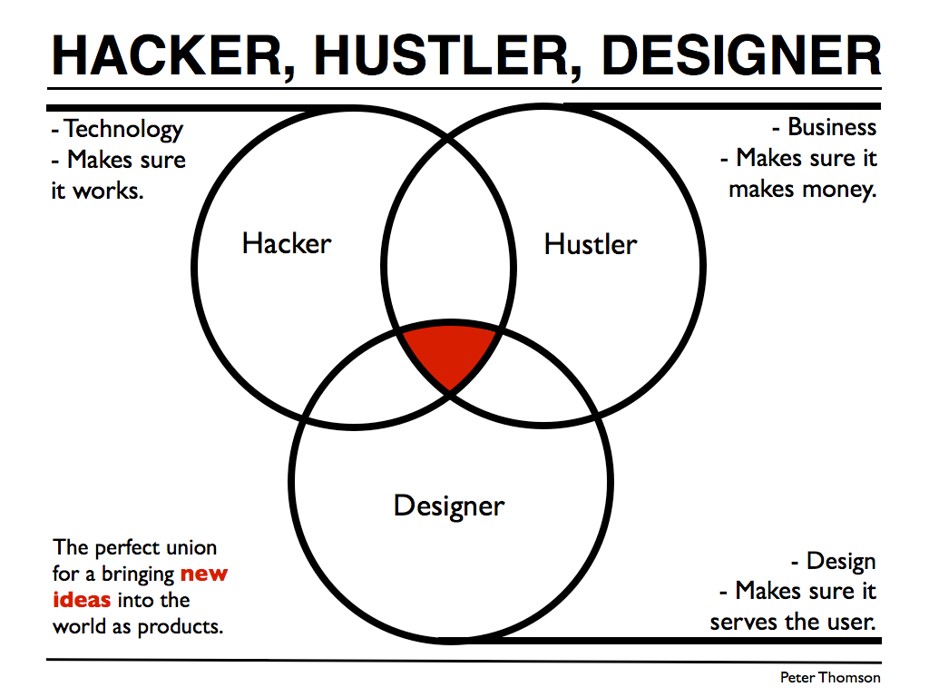
Hacker, Hustler, Designer, Visionary

The current shorthand for what makes for a minimally viable team (MVT) is a hacker, hustler, designer and visionary.  You can find a lot of articles through Google or Bing on this topic to get a better idea of what is going on.  In the grand scheme of things, the hacker and designers are relatively easy to acquire.  However, the hustler is the challenge and the one that you are looking for.

A good hustler must be able to sell stock, sell product, and sell the dream to potential talent to join the fledgling company.  Folks that can do all three are relatively rare and hard to find.  And good ones who have been there and done that are even harder to find.  The problem when you find them is that they will question why they need you and your team in order to raise money and develop the product.  You need this hustler to raise the money and to lead the development of the product and then do the business development to sell the product.

It would be a different proposition if you were going to do the fund raising and you just needed the hustler to lead the development and sell the product.

People who are good and have been there and done that are very conscious about giving away equity as they know that they will have to give a lot of equity to investors. So they are very careful about making sure that anyone they give significant equity to provides a large amount of value.  Ideas do not constitute value. You and your team are likely providing enormous value in your current job through your professional services (or other random efforts), but I don’t see much value on the software product and software product business development side (other than providing some feature requirements).

In doing my research with the 9Mile Labs “Cohort 1” startup companies and with several other companies that I am doing VC due diligence for, the least available resource is the Hustler. Of the nine companies at 9Mile Labs, there are only three hustlers in the group and they are deeply invested in their own ideas.

I know of several people who could do the hacker and designer roles, but the Hustler is the key role.  Unfortunately, I don’t have a group of people I could recommend in the hustler category – for you.

Project versus Prototype versus Product versus Business

One of the best insights I’ve come across on the nature of entrepreneurial work is in Michael Gerber’s Emyth Revisited.  While the text can seem trivial, the key insight is not – those struck with the entrepreneurial lightning bolt focus on doing individual contributor work, not on building the business.  The role of the entrepreneur is to see the business as the product, not just the product as the product.  While easy to say, 95% of the entrepreneurs I mentor and do research on do not understand by their actions what this means.

An idea sprouting from a consulting project and a crude prototype are a long way away from creating a Product, let alone a Business. The difference between $50k to a $100k to do the project or prototype versus the $1M to $10M to create a viable business is the difference between an idea person and an experienced entrepreneur.

The really good news is that today you can create a viable software business for ~$1M. That is down from $10M to $15M that it took us to fund Attenex to a cash flow positive state 10 years ago.  With the advances in contract manufacturing you can also do hardware products in the same range of investment as for software these days.  A terrific book on the synthesis of what we’ve all learned about online businesses and the similar ability to do this approach with hardware can be found in Makers: The New Industrial Revolution. 

I’ve written a lot about different aspects of this transition from project to product on my blog:

  • Mentoring Idea Stage Startups – an expanded set of references
  • Observing Users for Software Development – It is never ending.  One of the gifts you have is all of the observation that you can do with your current project.  However, the key word is OBSERVE.  Let the users be articulate through their actions.
  • The Other 90% of Software Development – this is the bottom of the iceberg. All of the things in here (and many more) are what software engineering is about (versus prototyping).
  • Advice to a Non-Technical CEO of a Software Startup – a really good hustler will not be all that technical.  They will be more of a people person.  However the success of the company is completely dependent on the ability to produce product.  In many ways you can use this blog post as a source of questions to help you attract and qualify someone to lead the company as a hustler.

Funding

You have some interesting challenges with what I understand you want to build – both a hardware “kiosk” and a software system.  While both are easy to prototype, you will probably need double the amount of funding.  Your kind of software business can be built for ~$1M to get to the first pass of cash flow positive.  You will most likely need the same for the hardware side.  Hardware versus software businesses have very different needs and so you will need double the people (there is not a lot of synergy between the hardware and software sides).

As a general rule I hate hardware businesses after spending way too many years on the hardware side.  The primary reason is that you have to predict demand (which nobody can do) so you always have supply chain problems and spend way too much on inventory (you either have too much or too little which requires high expediting fees) and distribution and channel partners. So the quicker you can get your business to be only a software business the better.  Support costs for hardware are high and are low for software.

VCs rarely get involved at funding levels in the sub $1M level.  It is almost always angel funding or friends and family that are needed to get started.  And it is getting tougher to raise money if you are not what the VCs call a franchise entrepreneur – someone with a proven track record of creating and selling a company.  You have to have the product built and be generating revenue and have a repeatable sales process before most angel investors or VCs will pay attention to you.  The usual suspects in Seattle are Alliance of Angels, Zino Society, and Keiretsu Forum.  These are the places to find the high net worth investors some of which could be interested in what you are doing.   You might also find potential Hustler candidates at these forums.

The Zino Zillionaire event is usually a good one to find a large audience of potential investors and potential hustlers.  9Mile Labs is having their demo day coming up soon along with other Seattle accelerators.  Attending these events will give you some idea about what a sampling of businesses has accomplished over the last six months in an accelerator environment.  Both Mentors and Investors will be present.

The Market

Almost every idea that I encounter today is some variant of collecting images and video. The current hot idea is to create the next Instagram and sell it to Facebook for an obscene amount of money.

Everybody and their brother is producing products for the collection and storage of video right now.  With the coming advent of Google Glass and other very interesting Augmented Reality tools, there will be an explosion of video collection products.  The challenge is how to AUTOMATE the making meaning and story telling from the raw stuff.  Gordon Bell at Microsoft has been doing some really interesting work on Uploading Your Life to the computer with his vision of Total Recall.  From Your Life Uploaded:

“Three streams of technology are coming together to make the world of Total Recall a reality. First, and perhaps most important, we are recording more and more of our lives digitally without even trying. Digital cameras, e-mail, cell phones, and personal digital assistants (PDAs) are the vanguard of technology that is generating an explosion of digital records of our daily lives. Digital sensing and recording will become ubiquitous. Second, this mountain of new personal digital records can now be stored more cheaply than can easily be imagined— for about two hundred dollars you can own enough memory to store everything you read, everything you hear, and ten pictures a day for your whole life. Third, technologies enabling you to search, analyze, and present all kinds of reports from such large mountains of data are being developed, with astonishing results. Google will by no means be the last extraordinarily successful company to be built on new search technologies. So, we live in a world with more digital memories, more space to store them, and better and better technology to recollect them. The world of Total Recall is inevitable for these three reasons.

“You become the librarian, archivist, cartographer, and curator of your life.”

Bell, Gordon; Gemmell, Jim (2010-10-26). Your Life, Uploaded: The Digital Way to Better Memory, Health, and Productivity (p. 5). Plume. Kindle Edition.

A tool that illustrates this transition from collection to quick production of some video is 9Slides.  I’m experimenting with doing video Q&A versus text.  In my small sample size everyone is unanimous that the video is better (even though this is not professionally produced).  Each of these snippets took 15 minutes to prepare and shoot.

I am also using Animoto to create Lifelets as a quick way of sharing stories through imagery. While it isn’t fully automated, it is very easy to select photos, choose a theme and music, and then share with others.

The company that can crack the categorizing and producing of video stories ON DEMAND and fully automated has a multi-billion $ market.  The collection and storage of the video is already at the commodity level from a software product standpoint.

For a humorous look at the wonderful world of innovation and new ventures, check out Fl!p and the gang at Fl!p Comics.

Posted in Design, Entrepreneuring, Flipped Perspective, Human Centered Design, Software Development, Value Capture | 1 Comment

Lifelet: Exploring Bryce Canyon National Park

The weather in Seattle had been miserable all winter and spring. I finally threw my hands up in mid-June and told my wife “we’ve got to get out of here and find some sunshine, preferably really hot.”

So we hopped in the car and headed east with no clear destination.  As we drove through eastern Oregon, we decided we would head to Zion National Park. I had flown over Zion in a Cessna 182 on a winter’s day forty years earlier, but had never set foot in what appeared to be a magical set of natural sculptures.

That simple decision led us to visit twelve National Parks in fourteen days as we toured Utah, California and Oregon.

This lifelet video shows just a few of the many rock formations we touched as we hiked through Bryce Canyon National Park. The only fitting music is Ferde Grofe‘s “On the Trail” from the Grand Canyon Suite. I first heard this music played by the Detroit Symphony Orchestra when I was in the fifth grade. The tune always reappears in my head when I hit the trail.

For a humorous look at the wonderful world of innovation and new ventures, check out Fl!p and the gang at Fl!p Comics.

Posted in Lifelet, National Parks, Nature, Travel | 1 Comment

Career Advice – NOT!

An email arrives out of the digital ether – “can you help me make a decision on whether I should leave BIGCO in order to join NEWCO?”

I’ve lost track of the number of colleagues, former graduate students, friends and family who are kind enough to ask me this question.

The challenge is to never answer the question, rather the response is to suggest a process for arriving at an answer.

So this gray rainy day at the end of a glorious Seattle summer, I share the following:

You need to go through both a head and a heart process.  With the head process you want to do an analytical or A/B comparison between the two opportunities.  Make a list of things that you can assess on a 1 to 5 scale and then rate the two opportunities. You are looking to see if they are marginally the same or quite far apart.

You might also create three columns that are time horizons for how you think each opportunity will play out. The first is immediately, the second is two to three years out, and the third is five years out.

As you look at this list reflect on your career objectives and/or your life intentions and then check to see that the list is complete and whether any of your ratings change.

Then reflect from the heart.  Here you want to do more meditation stuff.  Just let your mind be blank and pay attention to the thoughts and feelings that surface.

I’ve attached a document, “Should I Stay or Should I go?” that has several meditations.  I would first read through AND listen online to Martin Luther King’s I have a Dream speech.  Then I would go to page 11 and do the “Ideal Walk in the Woods” exercise.  You might also be interested in the four human centers exercises as well on page 13.

The opening up of the reflective windows starts with getting in touch with your dream. The eloquence of Martin Luther King works like magic each time someone engages with the material with an open heart.
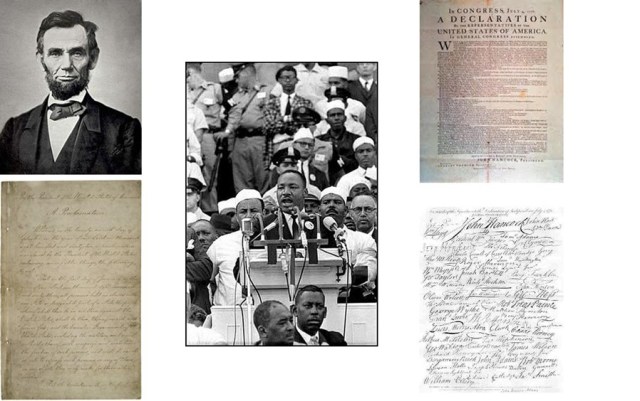
martin luther king

“I am happy to join with you today in what will go down in history as the greatest demonstration for freedom in the history of our nation.

Five score years ago, a great American, in whose symbolic shadow we stand today, signed the Emancipation Proclamation. This momentous decree came as a great beacon light of hope to millions of Negro slaves who had been seared in the flames of withering injustice. It came as a joyous daybreak to end the long night of their captivity.

But one hundred years later, the Negro still is not free. One hundred years later, the life of the Negro is still sadly crippled by the manacles of segregation and the chains of discrimination. One hundred years later, the Negro lives on a lonely island of poverty in the midst of a vast ocean of material prosperity. One hundred years later, the Negro is still languished in the corners of American society and finds himself an exile in his own land. And so we’ve come here today to dramatize a shameful condition.

In a sense we’ve come to our nation’s capital to cash a check. When the architects of our republic wrote the magnificent words of the Constitution and the Declaration of Independence, they were signing a promissory note to which every American was to fall heir. This note was a promise that all men, yes, black men as well as white men, would be guaranteed the “unalienable Rights” of “Life, Liberty and the pursuit of Happiness.” It is obvious today that America has defaulted on this promissory note, insofar as her citizens of color are concerned. Instead of honoring this sacred obligation, America has given the Negro people a bad check, a check which has come back marked “insufficient funds.”

But we refuse to believe that the bank of justice is bankrupt. We refuse to believe that there are insufficient funds in the great vaults of opportunity of this nation. And so, we’ve come to cash this check, a check that will give us upon demand the riches of freedom and the security of justice.

We have also come to this hallowed spot to remind America of the fierce urgency of Now. This is no time to engage in the luxury of cooling off or to take the tranquilizing drug of gradualism. Now is the time to make real the promises of democracy. Now is the time to rise from the dark and desolate valley of segregation to the sunlit path of racial justice. Now is the time to lift our nation from the quicksands of racial injustice to the solid rock of brotherhood. Now is the time to make justice a reality for all of God’s children.

It would be fatal for the nation to overlook the urgency of the moment. This sweltering summer of the Negro’s legitimate discontent will not pass until there is an invigorating autumn of freedom and equality. Nineteen sixty-three is not an end, but a beginning. And those who hope that the Negro needed to blow off steam and will now be content will have a rude awakening if the nation returns to business as usual. And there will be neither rest nor tranquility in America until the Negro is granted his citizenship rights. The whirlwinds of revolt will continue to shake the foundations of our nation until the bright day of justice emerges.

But there is something that I must say to my people, who stand on the warm threshold which leads into the palace of justice: In the process of gaining our rightful place, we must not be guilty of wrongful deeds. Let us not seek to satisfy our thirst for freedom by drinking from the cup of bitterness and hatred. We must forever conduct our struggle on the high plane of dignity and discipline. We must not allow our creative protest to degenerate into physical violence. Again and again, we must rise to the majestic heights of meeting physical force with soul force.

The marvelous new militancy which has engulfed the Negro community must not lead us to a distrust of all white people, for many of our white brothers, as evidenced by their presence here today, have come to realize that their destiny is tied up with our destiny. And they have come to realize that their freedom is inextricably bound to our freedom.

We cannot walk alone.

And as we walk, we must make the pledge that we shall always march ahead.

We cannot turn back.

There are those who are asking the devotees of civil rights, “When will you be satisfied?” We can never be satisfied as long as the Negro is the victim of the unspeakable horrors of police brutality. We can never be satisfied as long as our bodies, heavy with the fatigue of travel, cannot gain lodging in the motels of the highways and the hotels of the cities. We cannot be satisfied as long as the negro’s basic mobility is from a smaller ghetto to a larger one. We can never be satisfied as long as our children are stripped of their self-hood and robbed of their dignity by signs stating: “For Whites Only.” We cannot be satisfied as long as a Negro in Mississippi cannot vote and a Negro in New York believes he has nothing for which to vote. No, no, we are not satisfied, and we will not be satisfied until “justice rolls down like waters, and righteousness like a mighty stream.”¹

I am not unmindful that some of you have come here out of great trials and tribulations. Some of you have come fresh from narrow jail cells. And some of you have come from areas where your quest — quest for freedom left you battered by the storms of persecution and staggered by the winds of police brutality. You have been the veterans of creative suffering. Continue to work with the faith that unearned suffering is redemptive. Go back to Mississippi, go back to Alabama, go back to South Carolina, go back to Georgia, go back to Louisiana, go back to the slums and ghettos of our northern cities, knowing that somehow this situation can and will be changed.

Let us not wallow in the valley of despair, I say to you today, my friends.

And so even though we face the difficulties of today and tomorrow, I still have a dream. It is a dream deeply rooted in the American dream.

I have a dream that one day this nation will rise up and live out the true meaning of its creed: “We hold these truths to be self-evident, that all men are created equal.”

I have a dream that one day on the red hills of Georgia, the sons of former slaves and the sons of former slave owners will be able to sit down together at the table of brotherhood.

I have a dream that one day even the state of Mississippi, a state sweltering with the heat of injustice, sweltering with the heat of oppression, will be transformed into an oasis of freedom and justice.

I have a dream that my four little children will one day live in a nation where they will not be judged by the color of their skin but by the content of their character.

I have a dream today!

I have a dream that one day, down in Alabama, with its vicious racists, with its governor having his lips dripping with the words of “interposition” and “nullification” — one day right there in Alabama little black boys and black girls will be able to join hands with little white boys and white girls as sisters and brothers.

I have a dream today!

I have a dream that one day every valley shall be exalted, and every hill and mountain shall be made low, the rough places will be made plain, and the crooked places will be made straight; “and the glory of the Lord shall be revealed and all flesh shall see it together.”2

This is our hope, and this is the faith that I go back to the South with.

With this faith, we will be able to hew out of the mountain of despair a stone of hope. With this faith, we will be able to transform the jangling discords of our nation into a beautiful symphony of brotherhood. With this faith, we will be able to work together, to pray together, to struggle together, to go to jail together, to stand up for freedom together, knowing that we will be free one day.

And this will be the day — this will be the day when all of God’s children will be able to sing with new meaning:

My country ’tis of thee, sweet land of liberty, of thee I sing.

Land where my fathers died, land of the Pilgrim’s pride,

From every mountainside, let freedom ring!

And if America is to be a great nation, this must become true.

And so let freedom ring from the prodigious hilltops of New Hampshire.

Let freedom ring from the mighty mountains of New York.

Let freedom ring from the heightening Alleghenies of Pennsylvania.

Let freedom ring from the snow-capped Rockies of Colorado.

Let freedom ring from the curvaceous slopes of California.

But not only that:

Let freedom ring from Stone Mountain of Georgia.

Let freedom ring from Lookout Mountain of Tennessee.

Let freedom ring from every hill and molehill of Mississippi.

From every mountainside, let freedom ring.

And when this happens, when we allow freedom ring, when we let it ring from every village and every hamlet, from every state and every city, we will be able to speed up that day when all of God’s children, black men and white men, Jews and Gentiles, Protestants and Catholics, will be able to join hands and sing in the words of the old Negro spiritual:

                Free at last! Free at last!

                Thank God Almighty, we are free at last!

Finding Your Sword

While the meditations in the “Should I stay or should I go?” document will help you answer your question right now, you should also be thinking about what you are going to do with your talents.

For many years, I worked diligently to figure out “what to do with my sword (my talents).” Yet, I was never comfortable or fully committed to the paths forward that I came up with. Every so often I would go back and re-read The Pilgrimage to see if I could figure out what Coelho had decided to do with his sword.  Try as I might, I couldn’t find anything in the text that let me know what Coelho decided.

Then I realized that I didn’t even know what my sword was.  There wasn’t one core question in the book, but rather two:

  • What is my sword?
  • What do I do with my sword?

I decided to use a different process from personal reflection to get at these two questions – I would seek wisdom and guidance from those colleagues, family and friends who knew me best.  I sent out the following email:

Dear treasured colleague,

I recently re-read Paulo Coelho’s The Pilgrimage for the third time.  The book is about a journey that Paulo took in Spain to the shrine of San Tiago.

The Pilgrimage: A Contemporary Quest for Ancient Wisdom by Paulo Coelho

From the first reading, I have endeavored to come to the insights of Coelho that life is not about acquiring a sword, but about figuring out what to do with the sword.  I’ve spent a lot of time trying to answer the same question – what am I going to do with my sword?

Yet on this re-reading I had to laugh at myself as I realized I had not ever asked the question, what is my sword?  No wonder I couldn’t answer the second question.

As someone who I trust and value and who has known me for a long time, I would appreciate some help in your point of view on “what is my metaphorical sword?”  What do you think is my best skill?  What is my special gift in this world?  What is it that I’m really good at?

Thanks ahead of time for your insights.

Peace,

Skip

I was stunned by the seriousness and depth that my treasured colleagues returned.

From my oldest daughter Elizabeth came this prized response:

“Ok, so I have been thinking about this for a few days and here is what I have come up with…

(It is quite possible that my perspective has been shaped by your note about how “A vine is a machine for transforming terroir into stories” and by the “Digital Wizard” story and I am a shameless copycat.  But perhaps there is something useful in what follows nonetheless.)

“You have many talents. From my perspective, the keystone in all of these is that you identify (and create) stories and communicate them to relevant individuals far earlier in the unfolding “tale” than anyone else is able to.  And this lets you shape the story more than most others. I would wager that what allows you to do this is your ability to be open + curious to new people and ideas (ie: true enjoyment of “networking” in the deeper sense), and your tendency to be humble + interested enough with the people who matter that they want to teach you about new fields (ie: you don’t seem to pigeon-hole yourself into one domain).  And you “get” how business works, so you are able to write some of these stories in the marketplace.  You also have passion — you care about the underlying story — which gets you very excited at times, but also very upset when someone else comes in and starts editing with a giant black marker.

“To be totally low-brow: What you do best can be likened to reading a Clive Cussler book.  You know how these books start off with four seemingly unrelated chapters occurring many years apart?  Some of us need the connections spelled out in the later chapters, while other readers can predict the connections right away.  It seems to me that you are in the latter category, in terms of reading real life events.  You are able to grasp unrelated interactions and see the story weaving through many disparate events about 10 years (+/- 5 years) earlier than anyone else in related fields is able to.  You see the arc of the story line before most of us have even identified the main players.  And you appear to have a good memory for remembering key players in earlier chapters, to bring them back into the story when the time is right.

“You have said yourself a number of times that you have had to figure out how to “lead” people to see the story line in your head by “planting seeds” that will eventually sprout to get them to get themselves to a place that they can’t be dragged to.

“So, perhaps you are a farmer of ideas. (And after refraining from using a witty comment about “hammering swords into plowshares” I think my work here is done.  ;)

However, the response that helped the most came from a longtime product marketing colleague, Mason White:

“Your sword? I have had most of a flight to pare this down to a bumper sticker.

Your sword is sword-making.

How Skip makes swords:

Reading, listening, observing and discussing BROADLY and then reflecting to better frame the problems at hand, understand the relevant environment and synthesize a set of plausible potential solutions. Developing a set of definable concepts and vocabulary to improve communication about the problem, environment and solutions.

Wash, rinse, repeat to sort through the impacts of the candidate solutions. Present the choice space and a recommendation.

How many times do you suppose you have done this as a student, employee, teacher, consultant, executive, mentor and parent?”

As you combine your head (analytic) responses and your heart reflections, pay attention to how your energy is flowing as you shift your focus between the two choices.

Always remember what a gift it is that you actually have a choice.  You will not go wrong which ever path you choose.

Peace.

For a humorous look at the wonderful world of innovation and new ventures, check out Fl!p and the gang at Fl!p Comics.

Posted in Flipped Perspective, Learning, Paulo Coelho, Spiritual, Values | Leave a comment

Lifelets – Brief glimpses of daily life

Inspired by Gordon Bell‘s lifelogging suggestions in Your Life, Uploaded: The Digital Way to Better Memory, Health, and Productivity, I checked out the free app Animoto.

It is rare that an iPhone/iPad app both intrigues me AND goes into my daily use it routine. Animoto is the first app in a long time that does both. It is the perfect tool to energize the inert digital photos that clog up my iPhone, iPad and desktop hard drives.

Just three steps to a joyous creation:

  1. Select photos and videos
  2. Customize the style and music
  3. Share and enjoy

And all with just a few taps and swipes on the iPhone.

The joy of the smart phone is that my camera is always with me.  Unlike the fifty other digital cameras of all shapes and sizes that I’ve bought over the years, the smart phone is just a grasp away. The collecting of photos is easy. Yet, the making meaning with them other than a quick post to Facebook or Twitter or an email is much harder.

I cringe every time I think of the months of work it would take to cull through the thousands of photos and videos to organize, select, curate, tag and annotate in order to do something with them.

Then along comes Animoto. In little more time than it took me to take the photos, I can now create a beautiful and engaging little lifelet – a snapshot of daily living. Now I have something that I can quickly share that is more than just the glance I would share in an email. With the simple and quirky Animoto templates combined with a wide range of musical styles, I can bring a smile or some tears of joy to my friends and family.

All of a sudden the burden of resurrecting my inert digital detritus becomes the joy of spending ten minutes deciding on my lifelet theme of the day, selecting some photos that fit and then sharing it. I’ve got hundreds of ideas already.

Knowing that I can quickly produce a lifelet with Animoto, I find the way that I look at the world is changing as well. While walking to the Seattle Sounders game the other night and joining the flow of the “Rave Green” fans, I just had to capture the crowds for a future lifelet. I am seeing differently. Instead of just snapping a photo (or worse, not even taking my smartphone out), I look for lifelet photo opportunities. I am exercising my flipped perspective.

My colleague, David Robinson, suggested that we start doing larger themed lifelets. We are challenging ourselves to capture moments of generosity or courage or paying it forward. We are envisioning contests where we novices share our lifelet creations.

Here are a few of my lifelet creations:

As I created these lifelet vignettes, I was reminded of the video compositional technique of Paul Ryan which he shares in his Nature in New York City documentary. Paul describes his creation of his compositional technique on his website Earthscore:

“Because I wanted a notational system for video that was responsive to the totality of the environment, I was attracted by the comprehensiveness of the categories of firstness, secondness, and thirdness as developed by the American philosopher Charles Peirce (1839-1914). Following Kant, Peirce subscribed to the architectonic theory of philosophy (Apel: 1981). By architectonic, he meant the art of constructing systems, i.e., uniting manifold ways of knowing under one idea. The idea or concept of a formal whole determines a priori both the scope of the manifold content and the positions that the parts occupy relative to each other. This unity makes it possible to determine, from our knowledge of some parts, what other parts are missing, and to prevent arbitrary additions. Knowledge can grow organically, like the body of an animal.

“For Peirce, knowledge corresponds to three modes of being: firstness or positive quality, secondness or actual fact, and thirdness or laws that will govern facts in the future. Peirce held that these categories of being are phenomenologically evident to anyone who pays attention to what happens in the mind. Direct observation will produce these categories of knowledge.

“Firstness is positive quality. The taste of banana, warmth, redness, feeling gloomy: these are examples of firstness. Firstness is the realm of spontaneity, freshness, possibility, and freedom. Firstness is being “as is” without regard for any other.

“Secondness is a two-sided consciousness of effort and resistance engendered by being up against brute facts. The “facticity” or “thisness” of something, as it exists, here and now, without rhyme or reason constitutes secondness. To convey the pure actuality of secondness, Peirce often used the example of pushing against an unlocked door and meeting silent, unseen resistance.

“Thirdness mediates between secondness and firstness, between fact and possibility. Thirdness is the realm of habit, of laws that will govern facts in the future. With a knowledge of thirdness we can predict how certain future events will turn out. It is an ‘if…then’ sort of knowledge. Thirdness consists in the reality that future facts of secondness will conform to general laws.

“When we attempt to interpret a natural site with a video camera, we are confronted with ‘everything.’ We need to make selections. If those selections are arbitrary, the final tape can leave out significant aspects of the ecosystem. Significant omissions can make the interpretation of the site faulty. Peirce’s categories of firstness, secondness, and thirdness are, in effect, a theory of everything. Using these comprehensive categories, it is possible to make selections that are responsible to “everything” at the site. The way in which Peirce’s categories can be used to organize video perception of ecological sites is evident in my videotape titled Nature in New York City (Ryan: 1989a).”

On an off day from conferences and sales calls, I visited Paul in his New York City apartment to better understand his video techniques. Paul shared several examples with some of the most stunning coming from Junior High students that Paul taught the technique to.

Ryan in a paper on Relationships makes his abstract ideas concrete by reflecting on family relationships in the context of firstness, secondness, and thirdness:

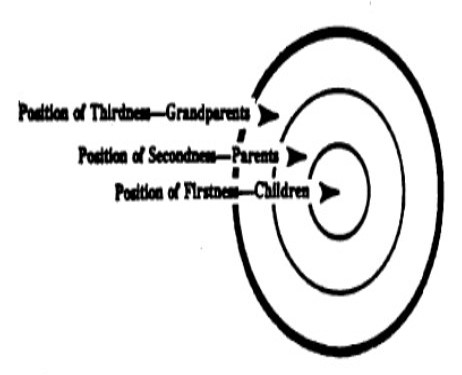
 “Look at the differences between children, parents and grandparents in a family system that works. Children can bear no children. The mythic story of a girl-child born pregnant is not an account of actuality. In their actual life, children are biologically free to pay attention only to their own sense of life; they do not have to hold in mind offspring that need care. We can say that children are in the position of firstness: that is, of freshness, of spontaneity, of being such as they are without regard for any other. Parents are in no such position. They must react to the needs of their children, resist some of their care-free ebullience, contain their activities. Parents are in a position of secondness.

Parent and children firstness

“Grandparents are in a position to contain the interaction between parents and children. Their understanding of both the position of firstness and the position of secondness from experience enables them to balance the interaction between parents and children, to keep it from getting caught up in confusion. There is a special bond between grandparents and grandchildren. The grandparents, freed of the burden of interaction with the world by the parents, can renew their sense of wonder and share the freshness of life with their grandchildren. The grandparents are in a position of thirdness.

grandparents thirdness

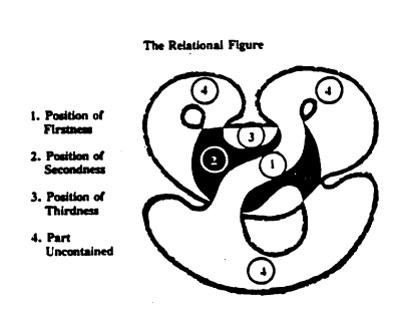
“The course of one’s natural life is a continuous passage from the child’s position of firstness through the parent’s position of thirdness. Hopefully, the grandparents position of thirdness is blessed by healthy contact with loving children. I want to map the essential differences in this life passage by changing our diagram from three circles to one continuous tube that penetrates itself.”

relational circuit

Ever since viewing Nature in New York City and understanding the compositional algorithm of the relational circuit, I’ve wanted to create a software tool that would do video compositions automatically. Animoto’s themes are so close to implementing this technique. All that is missing is observing the world through the lenses of firstness, secondness and thirdness and then tagging the images and videos with these categories.

I wonder if I can author an Animoto theme?

So as you wander the world today with your smartphone, what are the lifelets that are surrounding you? Download Animoto, take some photos, and create your lifelet today. And don’t forget to share it with friends, colleagues and family.

For a humorous look at the wonderful world of innovation and new ventures, check out Fl!p and the gang at Fl!p Comics.
Posted in Flipped Perspective, Lifelet, Lifelogging | 11 Comments

Lifelet: My Office Friends

One of the joys of having my home office overlooking the Puget Sound is the daily visits from families of deer.  Some years there are no little ones.  And some years we have twins. This year mom and her two wee ones wake me from my flat screen focus each day for a golden moment.

My Office Friends

My Office Friends

Enjoy a brief interlude with “My Office Friends” Lifelet video.

For a humorous look at the wonderful world of innovation and new ventures, check out Fl!p and the gang at Fl!p Comics.
Posted in Lifelet, Lifelogging | Leave a comment

Flipping my perspectives

When David Robinson and I launched Flipped Startup, we knew that a key theme of the content we create and the workshops we give is to provide lifelong learners with examples and experiences of the power of flipping their point of view. Somehow I forgot to share with David that this was not a new insight, but a topic I’ve collected examples of for years.

So we walked down my feeble memory lane (I really need Gordon Bell‘s Total Recall engine) and I shared some of the more important “flipped insights” I’d come across over the years.

The list of my invisible university contributors to flipped perspectives includes:

Perhaps the most memorable of the examples of a flipped perspective is how Betty Edwards teaches students of all levels how to do portrait drawing. From her website that supports Drawing on the Right Side of the Brain:

“Betty Edwards has used the terms L-Mode and R-Mode to designate two ways of knowing and seeing – the verbal, analytic mode and the visual, perceptual mode – no matter where they are located in the individual brain. You are probably aware of these different characteristics. L-mode is a step-by-step style of thinking, using words, numbers and other symbols. L-mode strings things out in sequences, like words in a sentence. R-mode on the other hand, uses visual information and processes, not step-by-step, but all at once, like recognizing the face of a friend.

“Most activities require both modes, each contributing its special functions, but a few activities require mainly one mode, without interference from the other. Drawing is one of these activities.

“Learning to draw, then, turns out not to be “learning to draw.” Paradoxically, “learning to draw” means learning to make a mental shift from L-mode to R-mode. That is what a person trained in drawing does, and that is what you can learn.”

For learning to draw portraits, she instructs the student to draw the subject upside down and backwards. My wife, who claims no artistic talents, drew the most amazing portraits of our three young children. She would go into their bedroom while they were asleep and draw upside down and backwards in the dim light. We were all excited to see how quickly (in a matter of days) her portraits improved with this simple technique.

You can gain some insights into this technique by trying the Vase/Face exercise on her website.

the vase

Flipped Product Design Perspective

Through the synthesis of the above contributors to flipped perspectives, I started practicing the flipped perspective in both the creation of software products and with the teaching of the flipped perspective to design and MBA graduate students.

In How Digital is Your Business, Adrian Slywotzky indicates that the Choiceboard technology – the ability for the customer to configure a product before purchasing online in real time – holds the promise of reversing the traditional value chain.  An example of the Choiceboard technology can be found at websites like Dell Computer where you can configure your own PC.  In the typical non-digital business the value flows from:

Assets > Inputs > Offering > Channels > Customer

The author points out that all along the value chain information and value leak out and the product/service producers are left to guess at what customers want.  In a digital business the value chain is reversed:

Customer > Channels > Offering  > Inputs > Assets

The process begins with the key source of information – the customer.  The digital business sells first, then produces.  Companies like Dell and General Electric are particularly good at this model of digital business design.

With a human centered focus, it is now possible to reverse the steps of traditional product design to complement what is possible with a digital business design.  In traditional product design, researchers and engineers start with a technology insight and innovate forward.  They pass their finished product over to marketing where a story is created about how the new product will be “better, faster, and cheaper” than the old way for some hopefully large customer demographic segment.  Finally, the sales people look for a set of customers who might be engaged in activities that will lend themselves to the new product.  This process flows like:

Innovation > Story > Activity

In the information systems business the result of this sequence is that most products are not successful until the third version when the fit of technology to activity is finally realized.

With Flipped Product Design, development starts with the rapid observation and assessment of customer activities and needs.  The reverse flow looks like:

Activity > Story > Innovation

From the direct observation of human activities, filtered through the lenses of physical, cognitive, social and cultural human factors, insights are gained as to the real customer needs.  These needs are processed through the human centered case story method of:

Observation > Contention > Value > Solution

These vignettes are then gathered into a powerful story or scenario of use that guides the product developers to a powerful system of innovations.

Perhaps, the most accessible example of this process in action is the constant stream of innovations released through the Amazon.com Books web site.  From the detailed observations of users trying to buy books in a physical bookstore to the stream of innovations related to trusted recommendations from a myriad of user participation, the site continually reinvents itself by first paying attention to user activities.  The combination of Flipped Product Design with a powerful Digital Business Design leads Amazon.com in providing value to its loyal customers.

At every step of this new product design process, innovations are grounded in the observed activities of real users so that there is little guesswork needed as to what to create for whom.

In practice, there are two types of stories that emerge in the product design and development process – stories for understanding and stories for persuasion.  Once the activities are analyzed, a short story that captures the essence of the observations helps with the understanding of the problem and potential solutions on the part of the development team.  The understanding story is a precursor to the innovation.  Once the innovation is designed, it is then necessary to persuade someone to either fund the development of the project, product or service or to persuade a customer to buy the product.  A story of persuasion must go beyond understanding and create a context for the “customer” to make a decision and move forward.  Descriptions of both kinds of stories can be found in Steve Denning’s The Springboard:  How Storytelling Ignites Action in Knowledge-Era Organizations. Thus, the Flipped Product Design Process looks like:

Activity > Story for Understanding > Innovation > Story for Persuasion

By combining Digital Business Design and Flipped Product Design, a product development team can:

  • Move from getting information in lag time to getting it in real time;
  • Move from guessing what customers want to knowing their needs;
  • Move from burdening talent with low-value work to gaining high talent leverage.

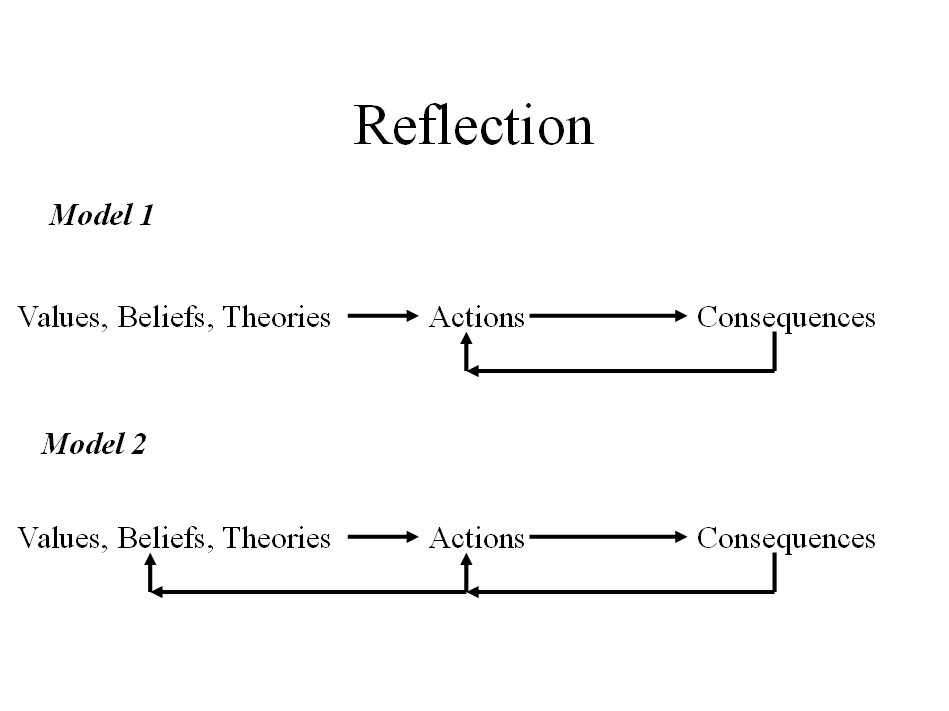
An important part of Flipped Product Design is adding in the component of reflection at all levels of the model.  Argyris and Schon spent most of their academic careers understanding the effects of what they called Model 1 and Model 2 behavior.  The following diagram illustrates the differences between the two:

Reflection modelsAbstracting from all the best research they could find on behavior, the authors described what they called Model 1 behavior.  People or organizations are driven by Values, Beliefs and Theories which lead to actions in the context of those Values.  The actions then have consequences which feed back into further actions.  Most people and organizations stop there and operate on this simple feedback loop.  This kind of model is useful for routine interactions but is very poor at learning or adapting to new opportunities which arise.

Model 2 behavior is characterized by adding another feedback loop of the consequences cycling to the Values, Beliefs and Theories level.  People and organizations that utilize this model are quite adaptive to their environments.  Now that we have unprecedented levels of technology and connectedness in the global economy, it is important that we start wiring in Model 2 behavior into our products and services.

This blog post sheds a little bit of light on a recent history of flipped perspective authors and practitioners.  Future blog posts will look at each of the above contributors and their frameworks of flipped perspectives along with stories of the flipped perspectives in action.

What would your product or organization look like if you flipped your perspective?

For a humorous look at the wonderful world of innovation and new ventures, check out Fl!p and the gang at Fl!p Comics.
Posted in Content with Context, Design, Idealized Design, Learning | 4 Comments

Lifelet: A Tour and Tasting at Beaux Freres

One of the joys of learning about wine is there is always more to learn. A great way to spend a day with friends and family is a tour of a fine wine growing winery like Beaux Freres in Oregon’s Willamette Valley wine country.

Beaux Freres Vineyard

Walking the Beaux Freres Vineyard

For a graceful tour of the Beaux Freres vineyards and the joy of tasting in their upper room, check out our recent visit’s tour and tasting video.

For a humorous look at the wonderful world of new ventures, check out Fl!p and the gang at Fl!p Comics.
Posted in Lifelet, Lifelogging, Wine | Leave a comment

Lifelet: Alice – an angel among us

Today begins a new series of blog posts – lifelets. Lifelets are an experiment in providing glimpses into different aspects of what is going on in the world I encounter each day.

Alice - an angel among us

Alice – an angel among us

What better place to start than with a short myopic glance video of my granddaughter Alice’s first 31 weeks of life.

Our daughter has kindly taken a photo each week of Alice.  What a gift to see her Facebook page and see how quickly Alice grows from week to week.

A special shout out to Kerri Sherwood, a super companion to my colleague and good friend, David Robinson (artist of Fl!p comic fame), for graciously allowing me to add her music to the video.  Today’s music selection is “Angel You Are” from her album As Sure as the Sun. Thank you Kerri for the gift you are to David’s life and for the gift of your music.

Posted in Lifelet | 1 Comment