Several years ago I walked into the office of Skye Hallberg who was the Chief Marketing  Officer at Benziger Family Winery and confronted her with the question “Why can’t you folks in California make a Pinot Noir as good as they do in Oregon?”
Well, you would have thought I had turned on a siren by how quick Skye jumped up and got in my face. She stared down at me through her chic glasses and roared “Who the heck are you to walk in here and talk to me about Pinot Noir? Don’t you know that I am one of only two Americans allowed to buy a vineyard in Gevrey-Chambertin, Burgundy, France? I’ve forgotten more about Pinot Noir than your naive Oregon palate will ever experience.”
After I stopped laughing, we all settled down for a wine geeky discussion on the merits of different Pinots and a wonderful life long friendship started. Skye was kind enough to educate this poor Northwest wine snob in the finer distinctions of Burgundy, California, Oregon and New Zealand variants of Pinot Noir.
A year later Skye asked if my wife, Jamie, and I would like to spend a week with her in Gevrey-Chambertin. She needed to go over and work with her winemakers, the Heresztyns, and check on their arrangement going forward. This visit would be her first since she sold her house in Burgundy and she knew she needed some company. Jamie and I found that we could free up our schedules to join her for the week (how could we not?).
The rest of this blog is a journal of our visit along with a couple of messages to our daily diary from winemaker friends in Oregon and California.
Day 1
We arrived in Paris after an all night flight from Seattle on Air France and took a taxi to Gare de Lyon to catch a TGV train to Dijon. The high speed train is just amazing. It flies so fast through the countryside and yet is so quiet.
We arrived in Dijon where Skye met us for the very short drive to Gevrey-Chambertin. We immediately went to the Heresztyn’s for their traditional Sunday lunch. Chantal and her husband Bernard along with Chantal’s mother Justina kindly hosted us for an unbelievable dinner. We had beef bourgonone and a beef stew with leeks, carrots and cabbage. Unbelievably good and oh yes, we had three types of wine. We started with a 2007 Heresztyn White Burgundy (chardonnay for those of us unattuned to Burgundy) that was better than all of the 20 white burgundies I tasted in Belleveu, WA at a Grand Cru Burgundy event tasting as preparation for the trip. Nice color, nice aroma, good acid. We had the white with a wonderful appetizer dish with homemade mayonnaise.
Then Bernard quietly brought the first of the Red Burgundies, a 2004 from 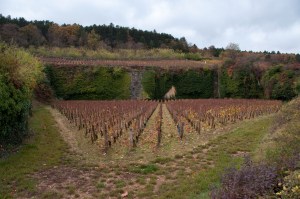 the Les Goulots vineyard which is the highest of the premier cru vineyards above the village of Gevry-Chambertin. About halfway through the meal he brought out a 2002 Champonnet Premier Cru. Both of these wines opened up very nicely over the course of the two hour main course. We then finished the second wine with a sampling of three wonderful cheeses.
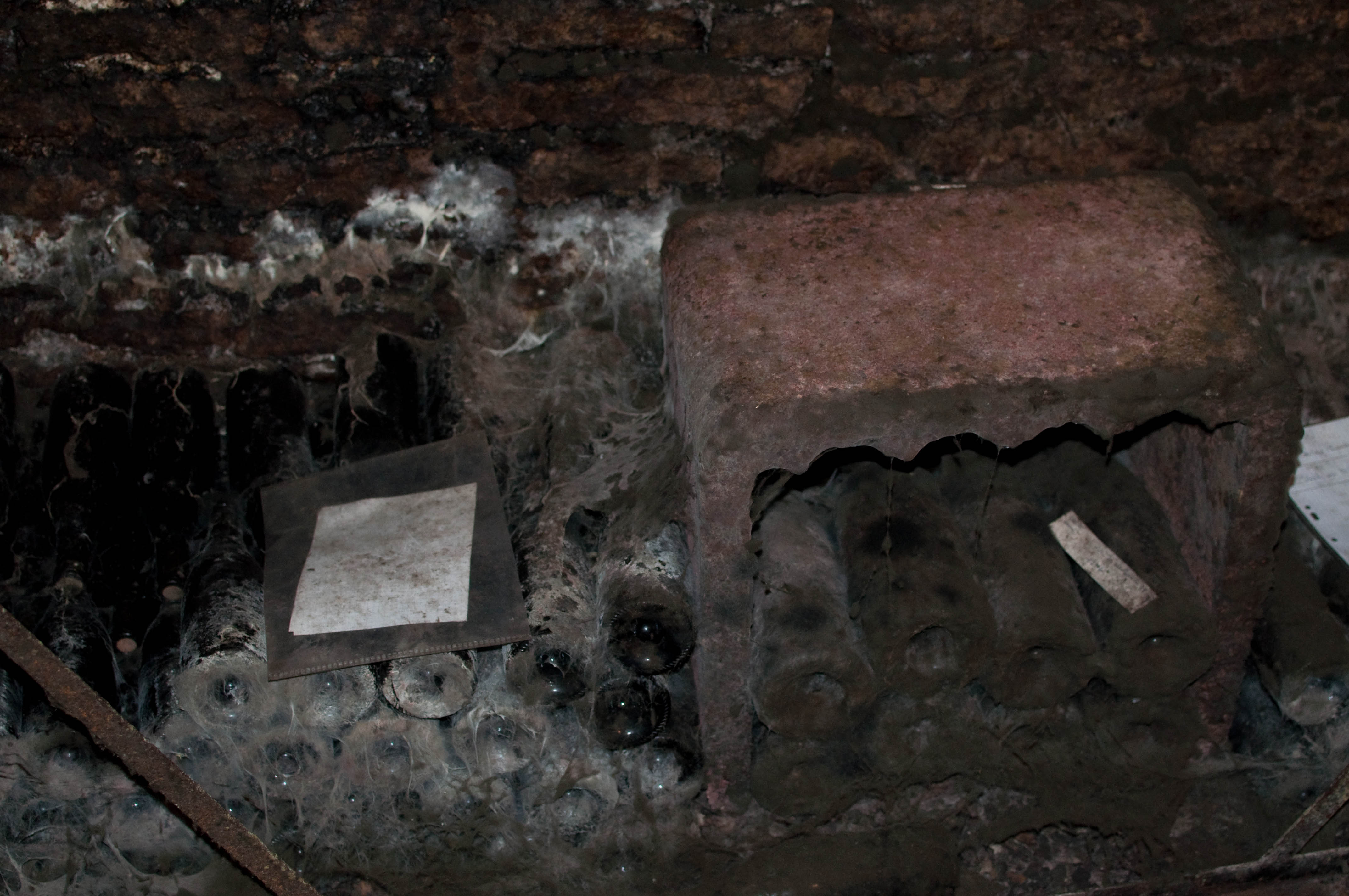
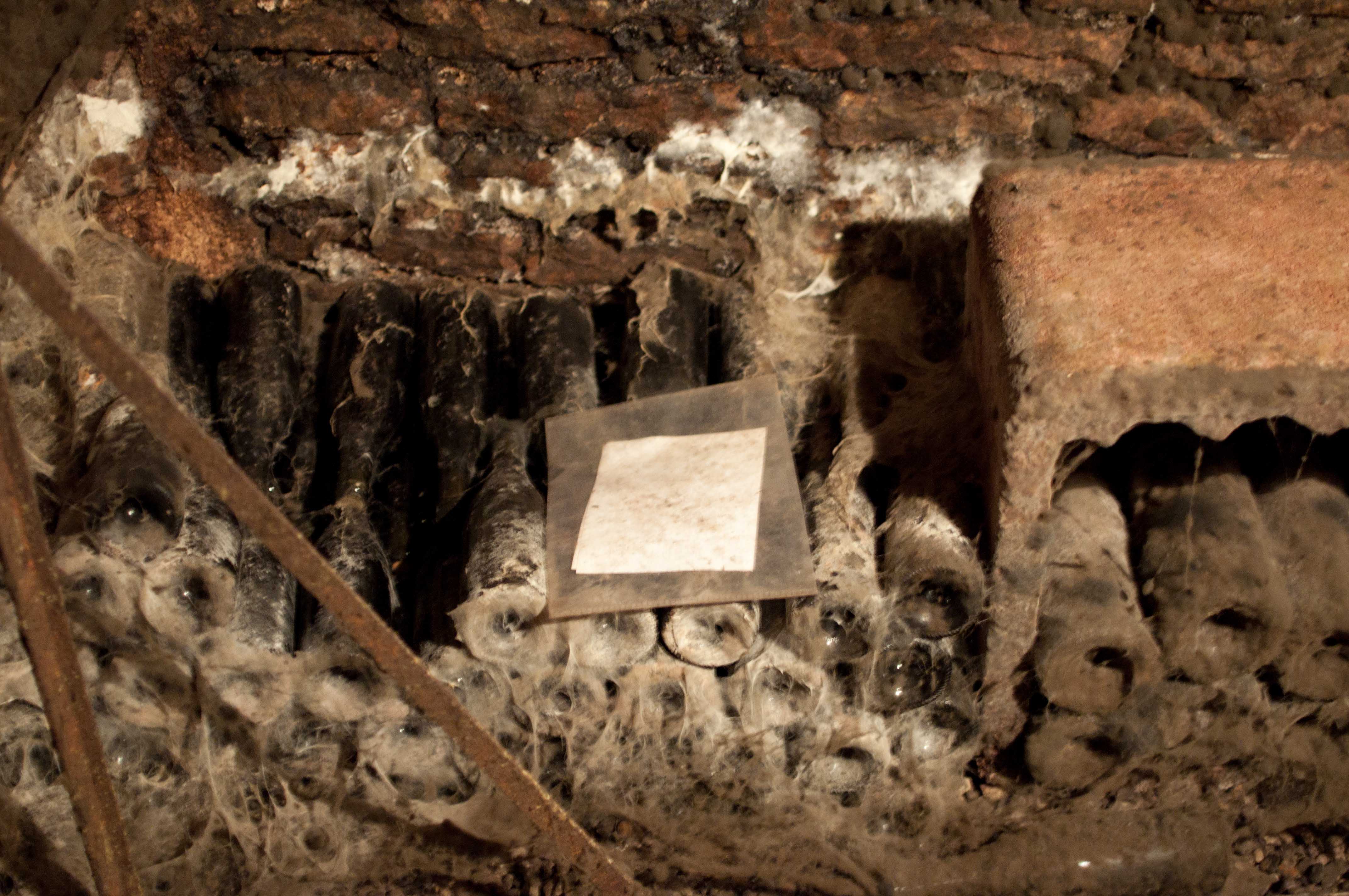
After “lunch” we went to the “cave” below the house where Skye’s wines are stored and  where Bernard keeps his collection of wines. The cave is over 200 years old. Many of the wine bottles were coated with the same mold and accumulated gray white “stuff” clinging to the walls. This cave was the embodiment of everything I’ve read about old French wine caves. Most of the bottles didn’t have labels but rather had a “chalk marker” of the abbreviation for the vineyard and the vintage.
We also got to feast our eyes on a 1972 Domaine de la Romanee-Conti that Skye estimates  is worth several thousands of dollars per bottle. It was a gift many years ago from Bernard to Skye.
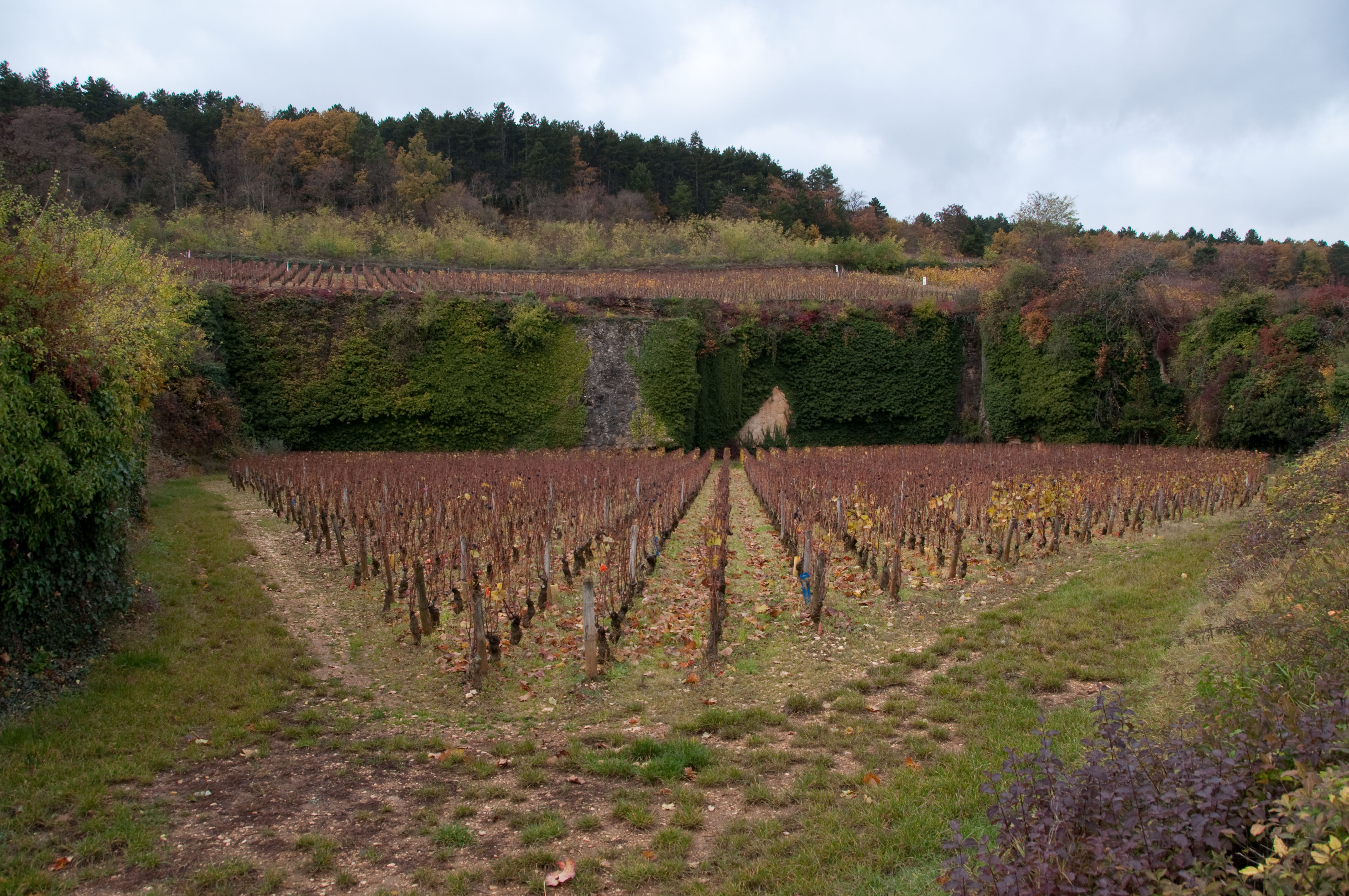
On our drive into Gevrey-Chambertin the unexpected thing was how short the vines are – the main root comes up about 12 inches (clearly old and thick) but the vines themselves are only another 12-18 inches higher. It was hard to believe that these were vineyards. The vines are also planted extremely close together.
Skye then took us for a drive to visit where she used to own a house. It is much farther away from Gevrey than I imagined and much higher up from the valley floor and the main highway, RN74 (which the restaurant chain in the US is named for). The good news is that she was able to drive up to her old house and not get emotional.
We then drove back down from the Haut Nuits to drive through Clos de Vougeot one of the more famous Burgundian vineyards. While the day had been mostly overcast by the time we started our drive the sun had come out and the late afternoon light was just drop dead beautiful on the vineyards.
On our way back to the hotel, we stopped by Skye’s friend at Domaine Denis Mortet to set up a tasting for later in the week. This is one of the more famous Gevrey Chambertin vigneron.
What a way to get introduced to Burgundy. What a masterful hostess, interpreter and tour guide Skye is.
Day 2
We awoke after 13 hours of wonderful mostly sleep to a drizzling cloudy day in Gevrey Chambertin. We slowly came awake and got ready for our first day of serious wine tasting. We had a very nice breakfast at the Hotel Grands Cru and then headed to meet Skye at Phillippe LeClerc‘s winery in Gevrey-Chambertin.
Phillippe is evidently quite the character wearing black capes and being very much the extrovert. The last time Skye visited Phillippe and had dinner she felt something curling around her leg and looked down to see the pet boa constrictor. Unfortunately, Phillippe was not there today so one of his assistants gave the tasting. We tasted four wines at LeClercs:
- 2005 Gevrey-Chambertin En Champ
- 2007 Chambolle Musigny Les Babillains
- 2006 Gevrey-Chambertin La Combe aux Moines
- 1999 Gevrey-Chambertin Les Champeau
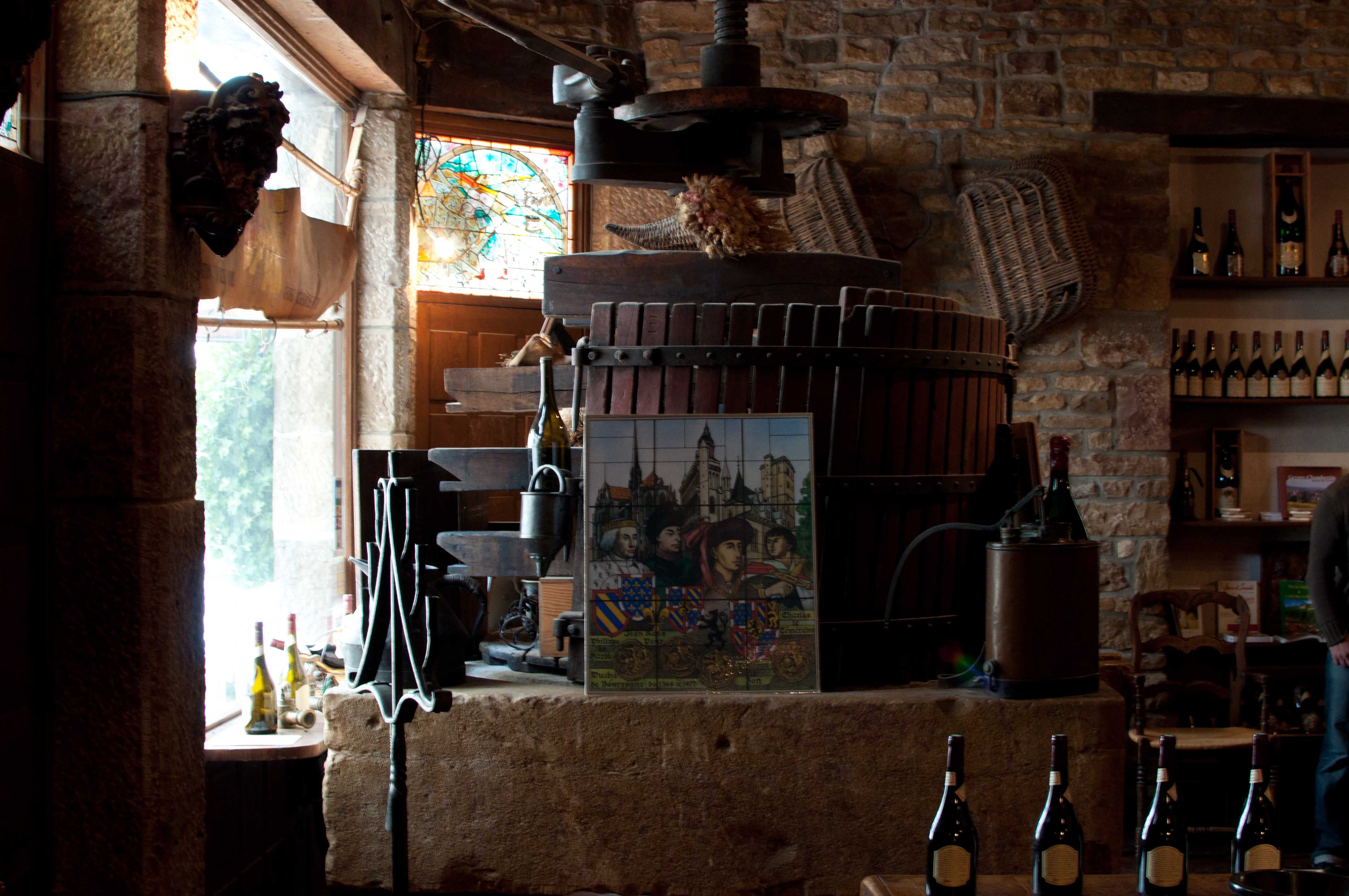
As we tasted through the wines, it became clear that the LeClerc wines were at one end of the spectrum – the non-traditional end. He only uses new oak for his Pinots and you could tell that the 2005 and 2007 still needed two years of age on them to be drinkable. The 2006 was the most drinkable now, but still had too much wood for my taste. The 1999 showed us a bit how his wines might age, but even after 10 years there was quite a bit of wood. From the website photos you can see examples of the wonderful old wine making equipment that is in the tasting room.
Evidently the assistant, who did not speak any English, was somewhat intimidated by all my notetaking. Skye let her know that I was a famous American wine writer in hopes that she might bring out more of the good stuff.
If you want to follow along with which vineyards we are tasting from you can see some excellent maps in Scott Paul’s blog. If you scroll down you will see an overall map of Burgundy and then you can click on the detailed place maps to see the vineyards we are talking about. Click on the Gevrey-Chambertin map (and click again to magnify the map) and you can see the individual vineyard names. In the upper right you can see the vineyards we tasted the last two days Les Goulots, Les Champeau and La Combe aux Moines. If you then scroll down you can see the En Deree vineyard that Skye Hallberg owns a part of.
We bought three of the wines (everything except the 2005 En Champ) and then headed out to Beaune for lunch.
We took the back road most of the way to Beaune (Rue de Grand Cru) and then ended up 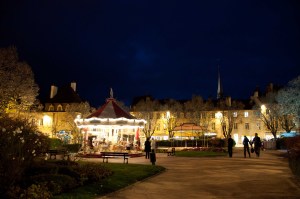 at the Place Carnot in Beaune. The village electricians were busy putting up all kinds of Christmas lights. In the Place was a cute little Carousel. We wanted to eat at Le Gourmandin for lunch but they were busy when we first got there so we went next door to the all things wine bookstore, wine shop and wine paraphenalia. We got a book by Lincoln Russell on Adventures in Burgundy which were a set of wonderful pictures of the vineyards, wines and people of Burgundy. The forward was written by Allen Meadows of Burghound, one of, if not the best authority on Burgundian Wines. Unbeknownst to us in this small world, Allen spent 2.5 hours that day at the Herestzyn caves tasting the current vintages of their wines. The Herestzyn’s were quite excited as their wines are amongst the few that are getting good ratings lately. But we missed him. Oh well.
I also finally bought a large scale map of the Cote de Nuits and the Cote de Beaune so I’m looking forward to framing those when I get back home. In addition, I bought one of the same Pinot glasses that Skye has which is a great glass for exposing any faults in a red wine.
We finally got into lunch and we all splurged on traditional Burgundian dishes. I had a ham type of meat loaf. Jamie had Beef Burgundy and Skye had scallops.
During lunch Skye pointed out some of the big differences between wine talk in Burgundy and wine talk in the US. Here it is all about the land. Everything revolves around where your vineyard is located. The difference of 50 feet can determine whether you can charge $75 for a bottle of wine or $15. It’s almost a planned economy communist kind of thing. It’s not necessarily how good your wine is but whether your vineyard was declared a Grand Cru or a Premier Cru somewhere in the Napoleanic past. So the first question is always where is your vineyard?
On our journey from lunch to Meursault, we passed a really ugly water slide on the edge of a vineyard. Skye laughed and said “Yes, France doesn’t do modern very well.”
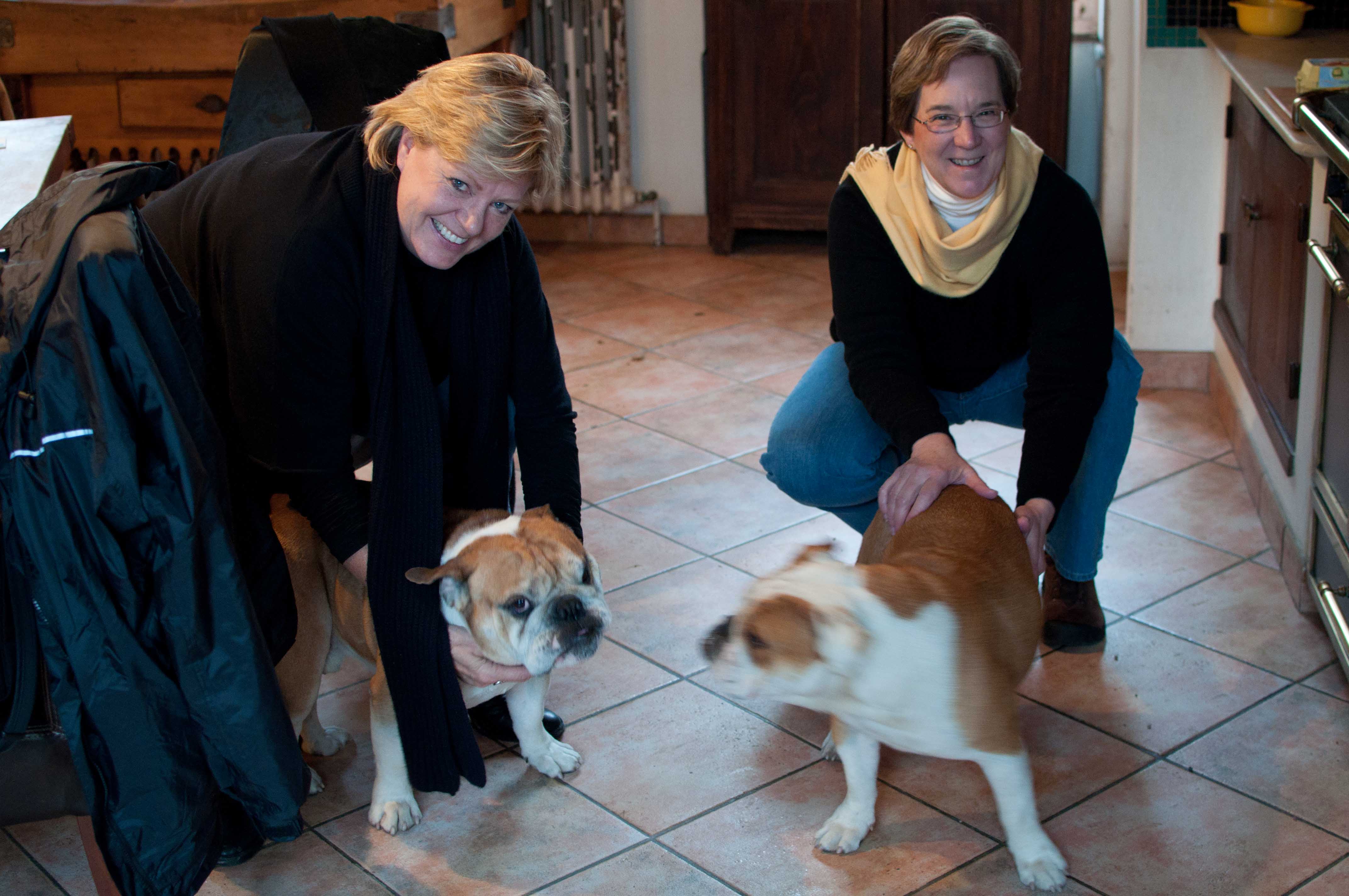
While we were a little late for our afternoon tasting at Hubert Chavy’s Domaine Chavy-Chouet, it was a high point of the day. It took us a while to find the winery. We stopped 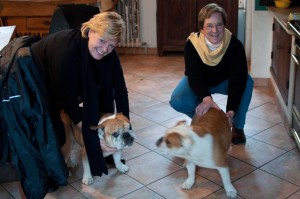 some man to ask directions and it was the French version of “you can’t get there from here.” Even Skye got lost in the sequence of lefts and rights. But we finally made it. Hubert’s wine tastings are held in his kitchen. It was this wonderful mix of a two hundred year old house with an incredibly modern stove that was beyond a Viking stove that took up a large expanse of the main wall. We were enamored with Hubert’s two bull dogs and a large old winery cat.
We tried three wines:
- 2008 Meursault Premier Cru Les Charmes
- 2008 Puligny-Montrachet Premier Cru Hameau de Blagny
- 2007 Pommard Premier Cru Les Chanlins (red)
These are two of the best Chardonnay’s I’ve had in my life. They were both quite well balanced and even though the vineyards are only a couple hundred yards away from each other, each had a distinctive taste.
Hubert was wonderful and switched easily between English and French. We took lots of pictures and enjoyed our 1.5 hour tasting. We got three bottles of each White Burgundy, one of the Pommard and Hubert was kind enough to throw in an extra village wine. I didn’t realize that Pommard was kind of the oddball as it is the only area in the south of the Cote de Beaune that produces red wine. Hubert let us know that he put up a website this year so you can see photos of the house and the winery.
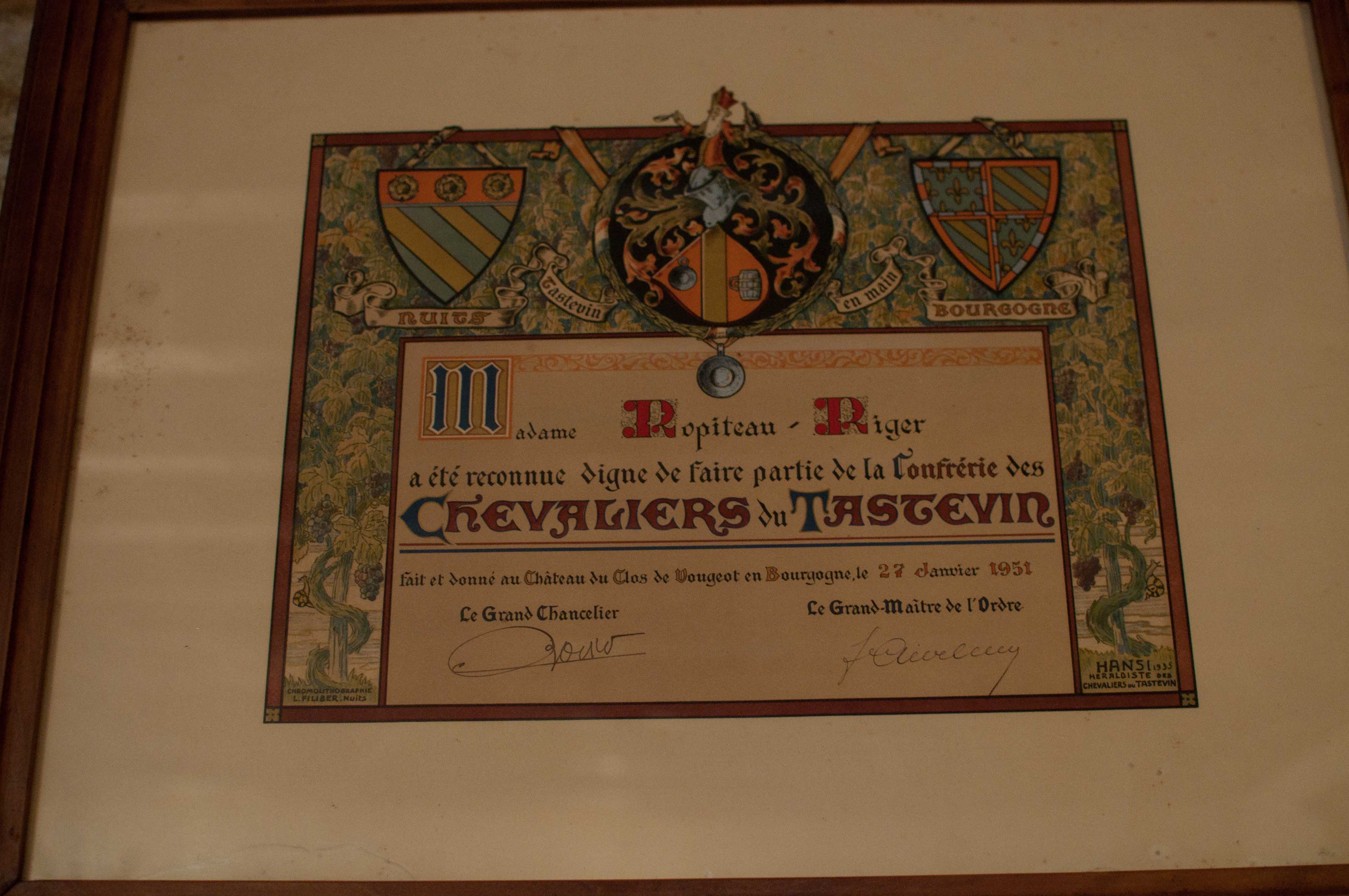
Hubert also made sure that I saw and took a picture of the honorary Burgundian wine 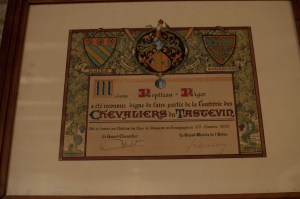 society (Chevaliers du Tastevin) that his grandmother was inducted into in 1951. This was an incredible honor at the time because you were being acknowledged for making great wine and she was a woman – a very rare combination in those days.
All things being equal I was amazed at how well both Jamie and I were staying awake and staying engaged. Jet lag and lots of good wine are not conducive to high brain functioning.
While we were at lunch, Skye confirmed that we could get a tasting at Denis Mortet. This winery is very hard to get into, but Skye has known the wife of Denis for a number of years. Denis committed suicide several years ago and his son Arnaud now runs the winery. Skye used to take Arnaud to school along with the Heresztyn boys when they were five years old. Skye is all excited to taste the wines and see if Arnaud is carrying on his father’s tradition.
After we came back from Hubert’s, Skye dropped us off at the hotel for a short nap. I  checked email and found I a nice note from Leigh Bartholomew
  of Archery Summit and Patrick Reuter Domino IV. Leigh and Patrick had shared how much they loved working in Gevrey when they found out we were going to Burgundy. They stayed at the Hotel Grand Crus for several weeks. So I wanted to let them know that we were finally on the trip and that we really liked the hotel as well.
Leigh shared in her email:
Skip and Jamie!
I am so envious and happy for you that you are in such an amazing place and being taken care of so well. It sounds absolutely amazing and I am sure you are loving every minute of it. This is truly a trip worthy of…a great bottle of wine to put in that lovely cellar of yours, thankfully absent of the mold that makes those Burundian cellars so funky.
You mentioned Domaine Denis Mortet, that is where I worked back in 1999. It was a great experience and Denis was still around during that vintage. Very heartbreak all the way around, he was a lovely guy really. Please say hello to the family for me, I don’t know if they will remember me or not. Arnout was still a kid then.
Thanks for the snapshot of your wonderful visit, I look forward to the next installment. Really, all of that on your first day! I can’t wait to hear more.
Leigh
I immediately wrote her back what a small world it was that we were going to start our day tomorrow at Domaine Denis Mortet. We will certainly pass on a big Bonjour from Leigh.
After our all too short nap, Skye took us to dinner at Le Chambolle in Chambolle-Musigny, which is the village just south of Gevrey-Chambertin. On a rainy, windy night it was quite an interesting collection of international travellers. There were three Japanese women, a couple from southern Germany (or Switzerland), the three of us Americans, and several tables of French citizens. We had a terrific traditional Burgundian meal. We chose a 2005 Chambolle Musigny Domaine Digioia-Royer wine. This wine was classified a Village wine, the classification just below a Premier Cru. There was just a little hint of eau-de-Goodyear (stinky rubber tire) in the wine which gave me a good opening to share with Skye, Anna Matzinger’s experiment with putting Pinot Noir in American Oak barrels from the Archery Summit Red Hills vineyard.
While at dinner Skye asked us if we knew why there were so many different types of forks and knives and spoons when it comes to silverware. She informed us that it occurred in the early 1800s in England when there was a run on silver and households were trying to use silver in a creative way. All of a sudden one of each type of eating utensil wasn’t good enough, you had to have an ever expanding set. Jamie laughed and said that sounds like Riedel glassware with all of their different kinds of glasses to drink each type of wine. Riedel glassware in the 2000s is the silver sets of the 1800s.
It’s time to go to bed and get ready for our exciting day tomorrow starting at 9am at Domaine Denis Mortet. I rationalized that I could drink that early because it will only be midnight by my body clock.
In addition to Leigh’s message, we also got one from Rodrigo Soto, the Chilean winemaker at Benziger Family Winery, and a dear colleague of Skye’s:
Dear Skip,
Thank you for the detailed impressions of your wonderful trip. Of course I must say that I have a healthy envy about your experiences. I would very much like to be there and share those conversations with you, Jamie and Skye. I would like to add some comments to your descriptions and maybe trigger some interesting questions for your next visits.
First of all the conversation about is the US wine higher quality or better stated, the new world approach versus old world styles of wine is very interesting. I really like your comment about  communism, which is very close to true. It is a totalitarian approach which does not allow you to have any chance to expect any miracles in this life to change your destiny. It is almost like caste system in India, no chance to change, it is what it is and you have to live with it. But I must say that it is based on trial and error during centuries, and the best wines, and this is consistent, comes from the best pieces of land in the area. And that is consistent with the price of the bottle.
Please pay attention to the topography of the place – it is full of fractures and the soils are so old, that the minimal difference makes a big one in the wines. There are very few exceptions, like the Clos Veugeot which is a bit unstable and really matters where in the Clos the wine comes from and with Puligny Montrachet which is the same thing, where in the puligny?? That is the only marketing allowed, to know where it comes from – pretty cool!!
Could you imagine if that ever happens over here??? What would happen if you are in the Village and you are charging a lot of money for your Cab??? I am sure there will be a lot of resistance to really identify which are the choice pieces of property. That will never happen in the US or the new world. So I am afraid I think that the communist approach is fair, accurate and honest.
Finally I want you to know that Denis Mortet was really an inspiration for me; I got the honor to meet him a month before he took his terrible decision. I spent a whole evening with him tasting all the different wines, and was one of those memorable days in life. I learned a lot but also engaged more with my profession and with what I do. He was really a fundamentalist of terroir, he really was, even if he was criticized that his wines were a bit new world. I don’t think so, they were cleaner than the rest, that is for sure, but with incredible texture. I hope you enjoy the experience, because it was really incredible for me.
Skip, keep enjoying the experience, look further than what you normally look, put your ear in the ground, smell the soil, touch it, taste it, feel the ancient, generations and generations of farmers have been there. Look at the colors, the exposures, the length of the day, the cold in the morning and in the night, how steep, how flat, its all there, fully explored – there is so much to learn.
Enjoy and Kind Regards,
Rodrigo
I had tears in my eyes remembering all the great conversations I had walking the vineyards of Benziger Family Winery and sitting in on the monthly biodynamic study group with Rodrigo. Rodrigo is an incredible winemaker who has the gift of being able to share his knowledge even with a neophyte. He grounded the context of this trip to Burgundy for me.
Day 3
Yesterday was so fantastic and so long that I couldn’t force myself to write last night. Or maybe it was the aftermath of so many fantastic wines that we tasted in the caves of Gevrey-Chambertin and at the table of the Heresztyns that there was little energy left to write.
Our 7am wakeup call came way too early – the chimes on the church across the street. We have a 9am tasting appointment with Arnaud Mortet at Domaine Denis Mortet. We struggle out of bed and grab a quick breakfast. An Australian couple stopped us to chat and ask us about our trip. They were on their way to Normandy for the war remembrance celebration the next morning (10/11/09). They run a ski area in Victoria, Australia. This is clearly the slow time of the year as there are only a few rooms occupied in the hotel.
Skye picks us up just before 9am for the 100 yard drive to the Domain Denis Mortet  winery. What a surprise when we enter the new winery (less than 6 years old) and it is pristinely clean. It felt like we were walking into the very clean winery at Archery Summit. The staff at the hotel couldn’t believe that we were able to get a tasting appointment at Domaine Denis Mortet. They shared with Skye that nobody gets in to do a tasting.
Arnaud met us as we walked into the winery and gave Skye a big hug. His smile lit up the room. And we followed Allen Meadows by a day again. He had spent 2 hours with Arnaud the night before.
We started with a tour of the caves. There was a new section built five years ago and an older section that was 35 years old. The new section was free of the mold on the walls, while the older section already had a good growth going. Compared to American wineries, the barrel rooms are much smaller and provided another indication of how small the productions are of each of these wineries.
Clearly, Arnaud and Skye had quite a bit of catching up to do so there was little in the way 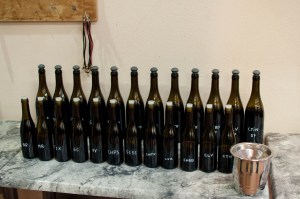 of translation while they were remembering old times. However, Arnaud spoke quite excellent English and he was kind enough to include us when the talk got to wine.
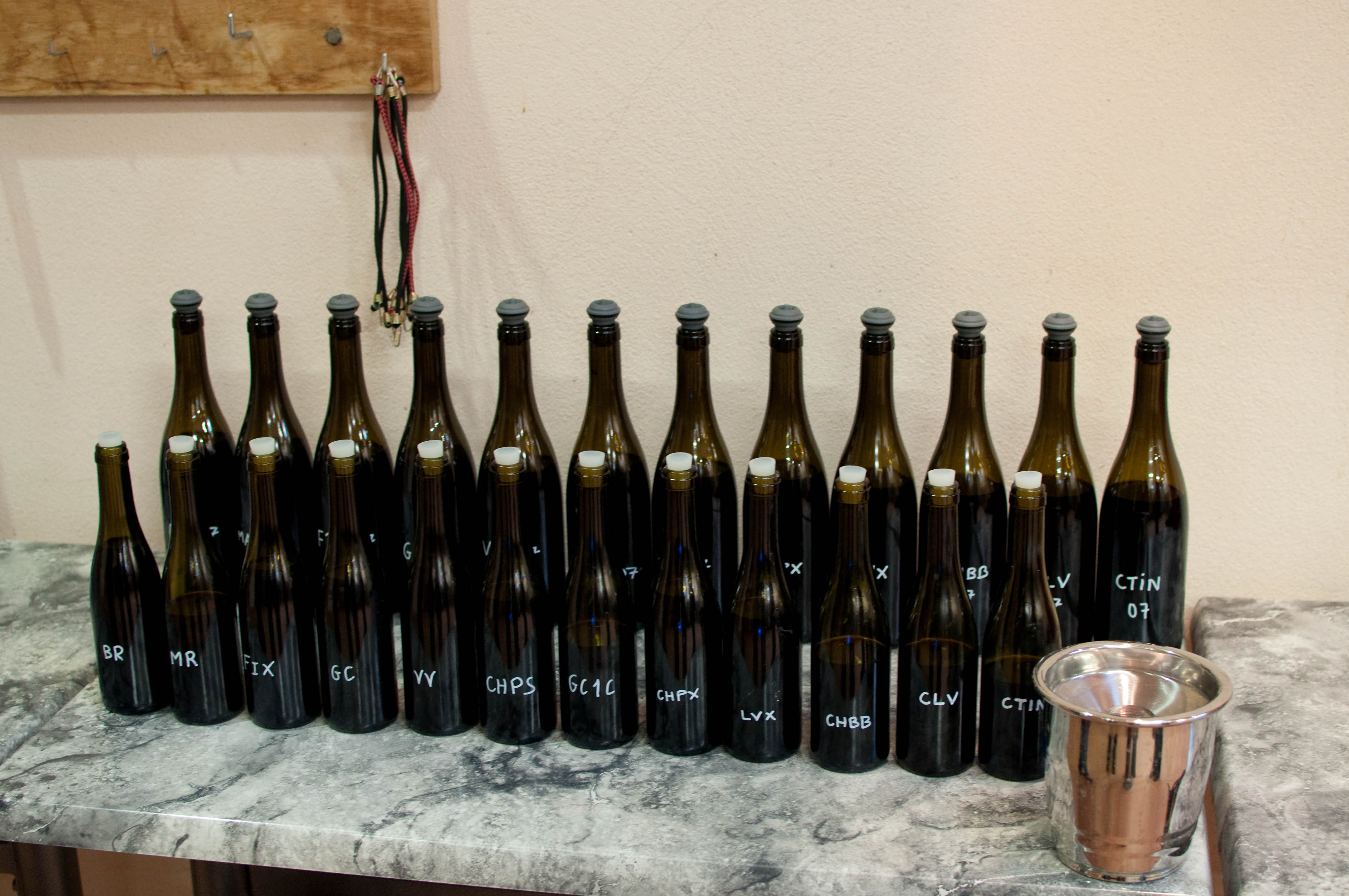
I’ve included a picture of Skye and Arnaud in front of the main door to the winery. In addition here is a picture of the wines we tasted at Mortet.
As we came back upstairs and went over to the tasting table, it suddenly dawned on us that we were going to be tasting through all 24 of the bottles. Following Allen Meadows isn’t such a bad thing afterall. The bottles in front were from the 2008 wines that were still in malolactic fermentation. The second row of bottles were from the 2007 vintage. Arnaud suggested we just try the 2008 wines that were mostly finished with malolactic fermentation, and then we would try all of the 2007s. Clearly this was going to be a taste and spit day. Which somehow seems a tragedy with all of these great Burgundies in front of us. However, we decided that we’d just have to make the best of it.
The wines we tasted were (please forgive the spellings as I’m sure I’ve got several of these a little off):
- 2008 Marsannay Village
- 2008 Gevrey-Chambertin Premier Cru – a blend of four premier cru parcels
- 2008 Chambolle Musigny Les Beaux Bruns Premier Cru
- 2008 Clos Veugeot
- 2008 Chambertin Grand Cru
- 2007 Bourgogne Rouge (made from his grandfather’s vineyard just west of Dijon)
- 2007 Marsannay Village
- 2007 Fixin Village
- 2007 Gevrey Chambertin
- 2007 Gevrey Chambertin Vielle Vigne – old vines village wine that comes from grapes very close to Skye’s vineyard
- 2007 Gevrey Chambertin En Champ
- 2007 Gevrey Chambertin Premier Cru
- 2007 Gevrey Chambetin Champeaux Premier Cru
- 2007 Gevrey Chambertin Le Clos Saint Jacques Premier Cru
- 2007 Chambolle Musigny Beaux Bruns
- 2007 Clos Veugeot
- 2007 Chambertin Grand Cru
While we were trying to do a taste and spit, there was no way I wasn’t going to savor the Premier Crus and the Grand Crus. Amazing wines and now I have to somehow find these wines and pay outrageous prices in the US.
Arnaud is working to find his own style to differentiate himself from his father. The first thing he is doing is to reduce the amount of new oak on his Pinot Noirs. Each year since he took over the winery he is putting less new oak on the wines. He’s down to about 50% new oak in his 2009 vintage.
Arnaud did an internship in Oregon when he was 16 at Witness Tree and he shared that he had visited Seattle when he was there. Of course we invited him to come visit us the next time he was in Seattle. He also shared that he comes to San Francisco once a year for his distributor and loves to ride a big Harley Davidson one day each visit into the Sonoma and Napa Valleys.
We had to cut the tasting short at 2 hours (are you kidding me) as Arnaud had to meet a New York journalist and famous restauranteur in Fixin. Simply amazing.
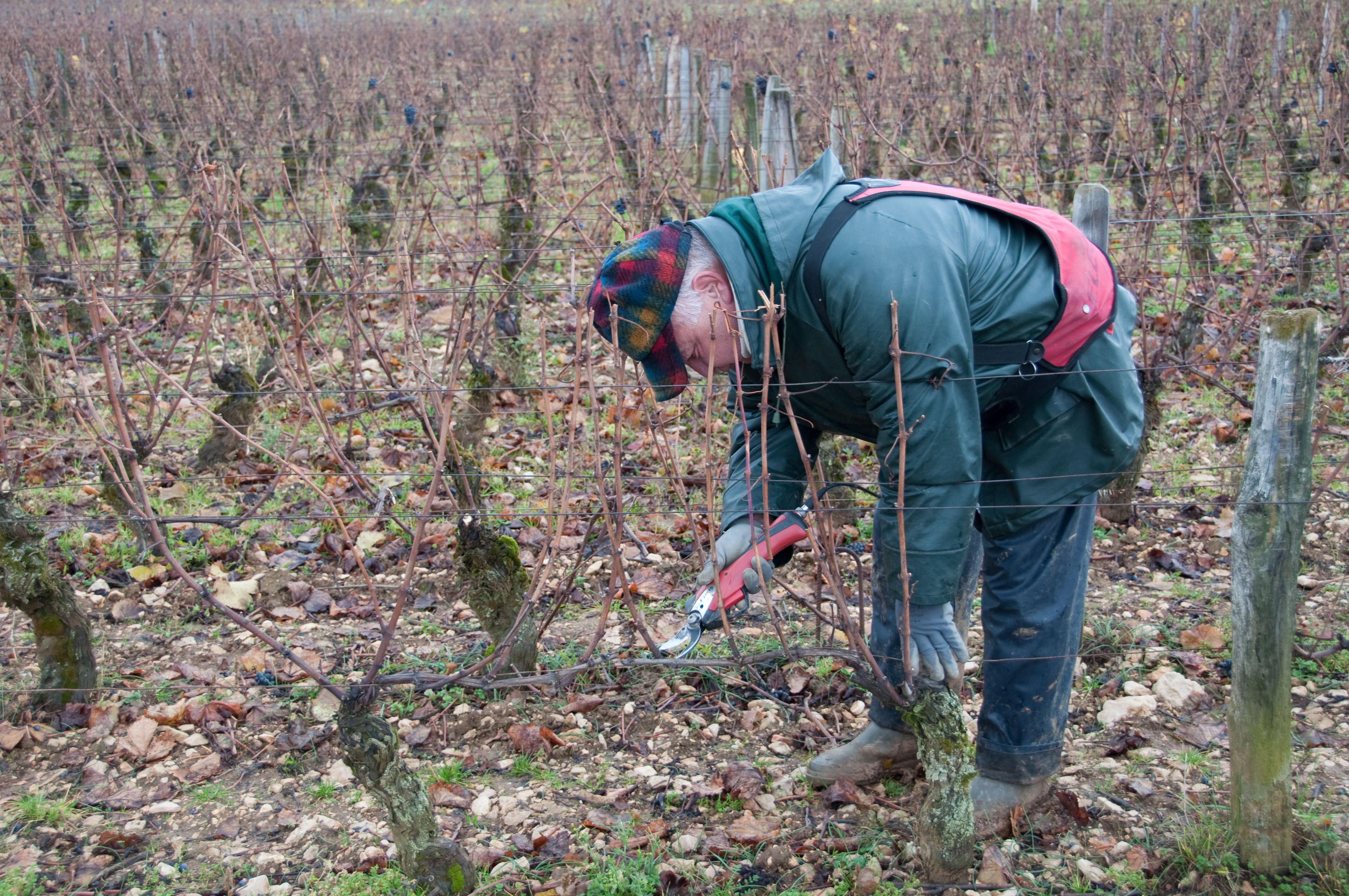
We then headed back into the rain and went to visit the Heresztyns as they were pruning one of their vineyards east of Gevrey. Bernard and Chantal were in the vineyard along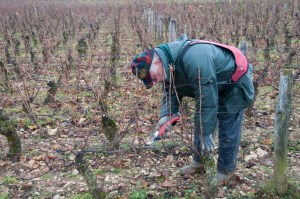 with his brother’s wife, Eva, and his brother’s daughter Florence. I got to see why the vines were so short – they are pruned that way. Every couple of vines, Bernard would saw off several inches of the top. Bernard shared with us that they were cutting all but two of the shoots to prepare for next year. The Burgundians prune twice a year, where most of the US vineyards just prune once a year. I still have no idea how they figure out which two canes to leave. In the
  spring they will come through and prune to just one cane which will produce that year’s grapes. Each of the family members was using a battery operated pruner that has helped with their hands. It is really amazing to see that the family does everything in the vineyards and in the winery and running the business. They only bring a few temporary workers in for harvest. Given that it was drizzling and quite cold, it is not very fun work.
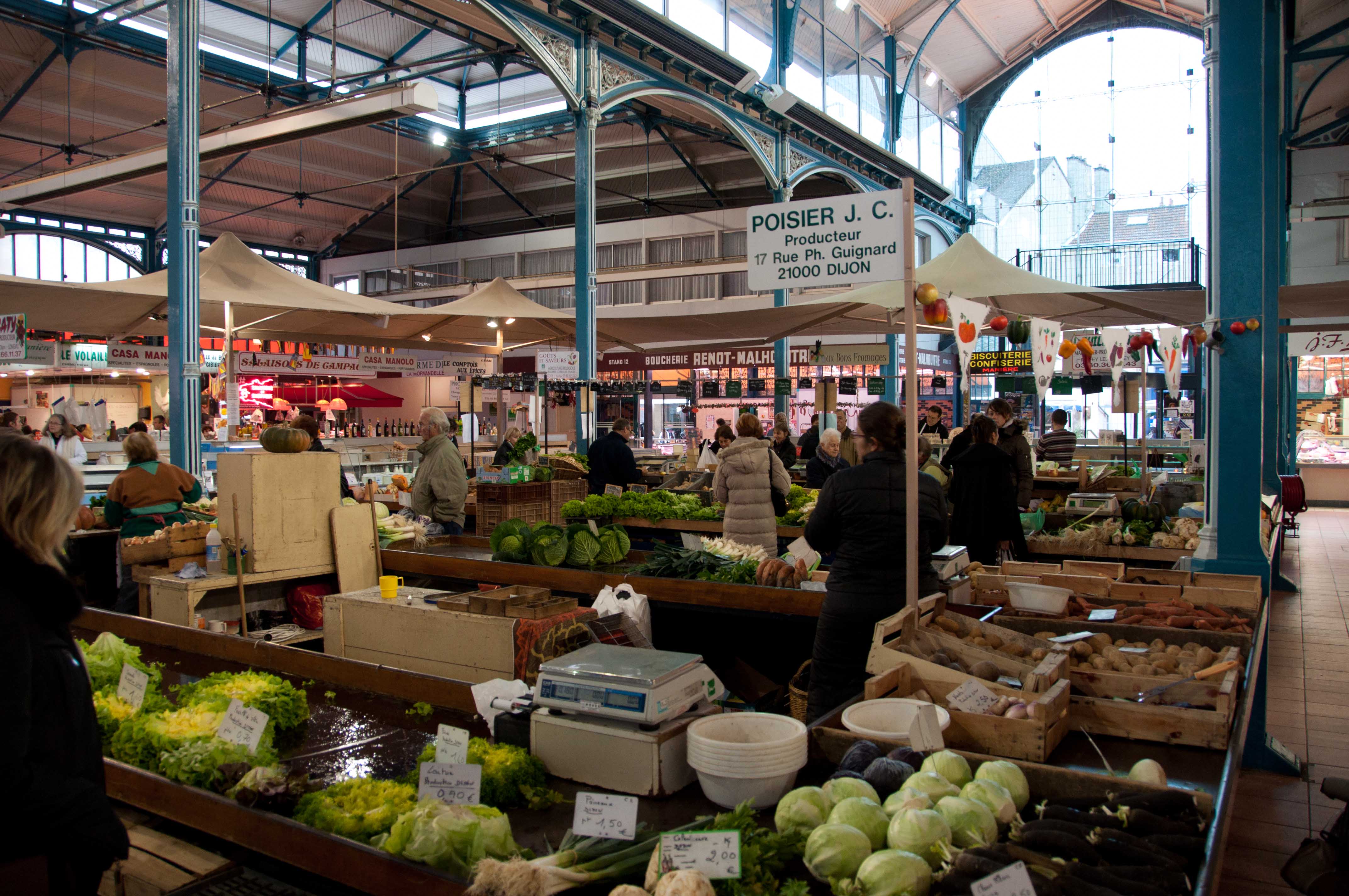
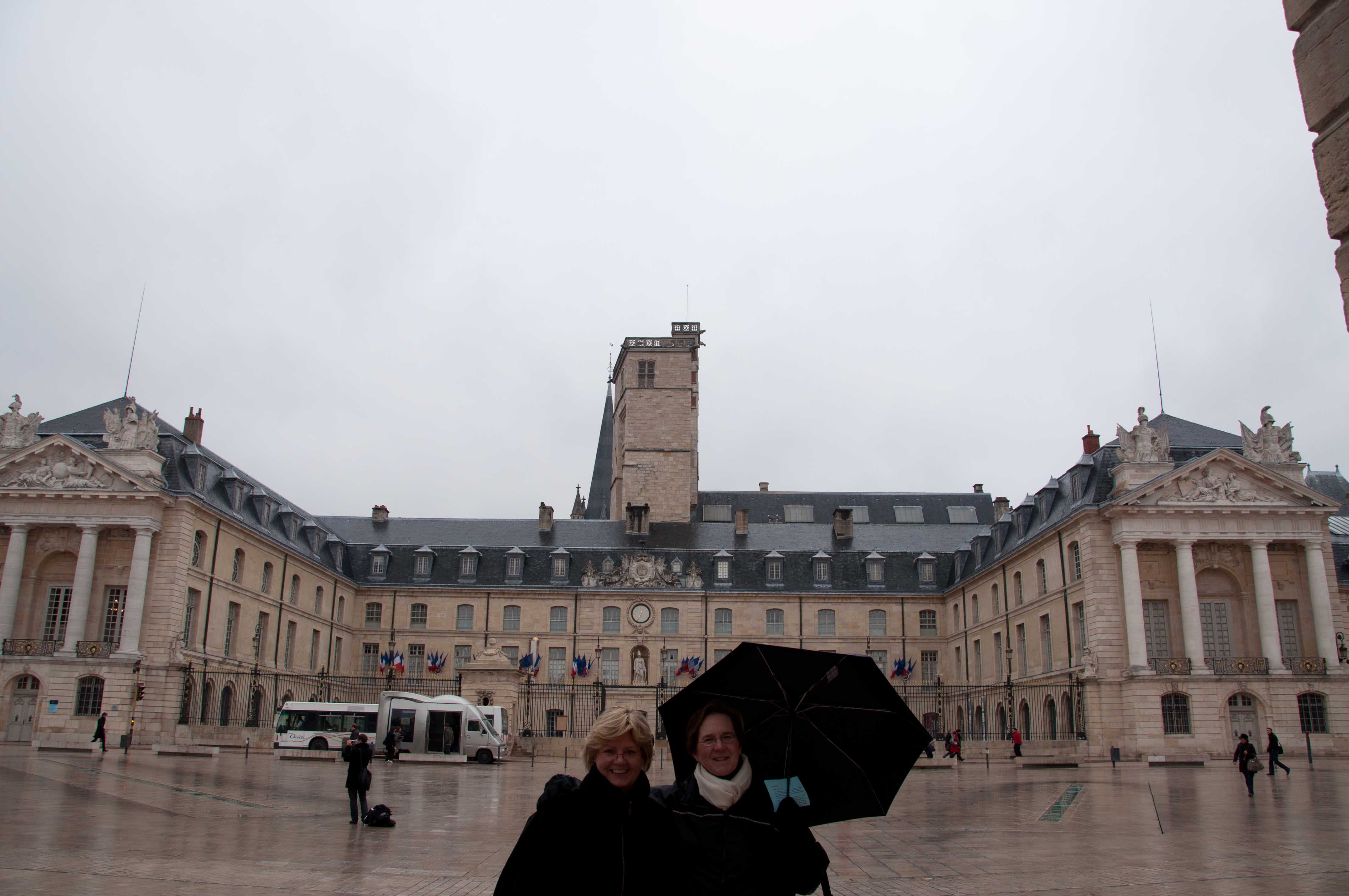
We then head off to Dijon to visit a traditional French market day. Skye heads to one of 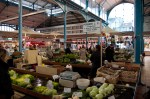 the cheese shops and we grab some cheese for some walking around nourishment. We wander the town and make sure we rub the owl for good luck on the side of the Notre Dame of Dijon cathedral. We walk through the Place Liberte which is the home
 of the regional government. It is now time for lunch. We head to Osteria Enoteca Italiane restaurant where Skye knows the owner and we grab a nice Italian lunch – a change from the Burgundian food of the last couple of days.
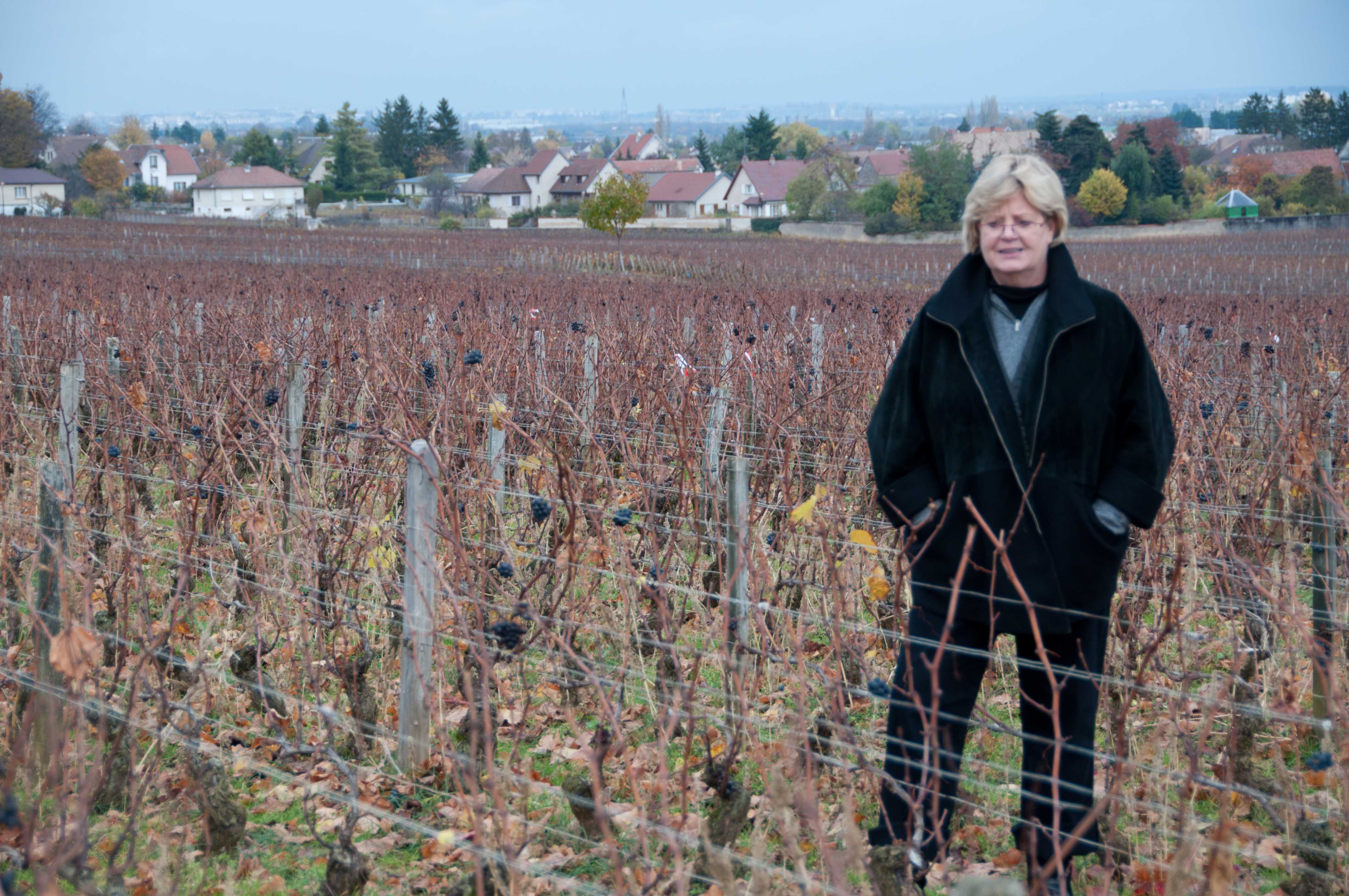
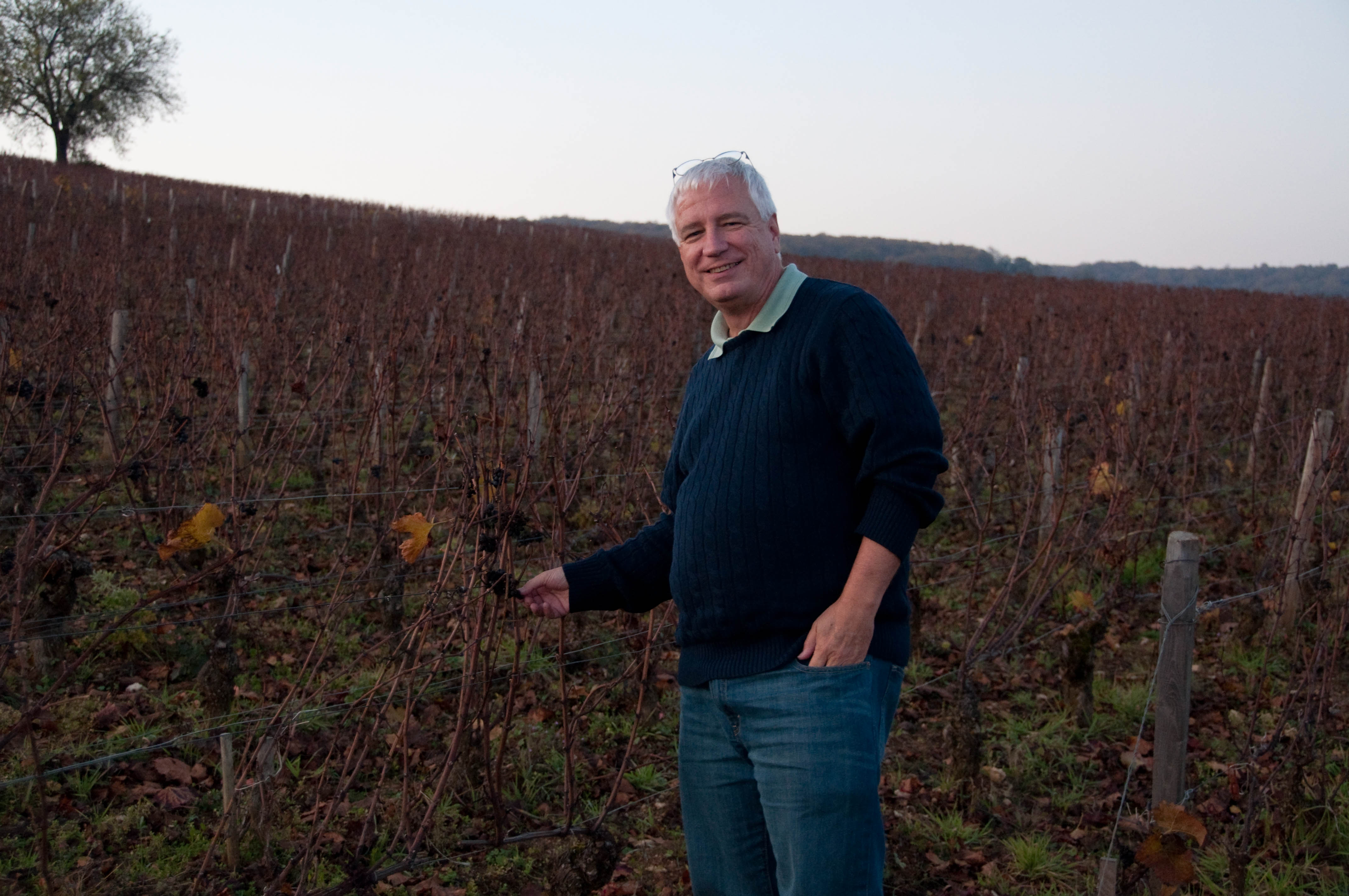
The rain and drizzle has let up but it is still overcast. Jamie got some stamps for the post cards and we head back to Gevrey Chambertin to grab some photos of Skye’s ten rows of vines in the En Deree vineyard. The vines are just north of the Gevrey Chambertin 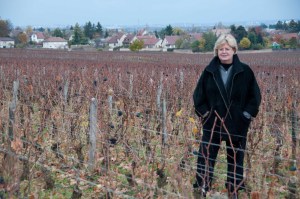 cemetery. We get out and start walking the rows and tasting some of the grapes that have been left for the tax man (a story for another day). Before long we realize that we’ve gained two pounds of muddy, clay soil on our shoes. These vines and rocky soil are amazing. Rodrigo Soto in an email message last evening had strongly suggested that I get to know the soil – the smell and taste of the terroir. Well, today that soil has become a part of me.
I take lots of pictures, but want to take a picture of every vine. Each vine is a 60 year old 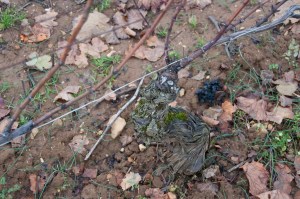 sculpture of the weather and growing seasons of Burgundy. Some of the vines are straight, but many are twisted into these amazing S shapes. Most of these vines are older than I am.
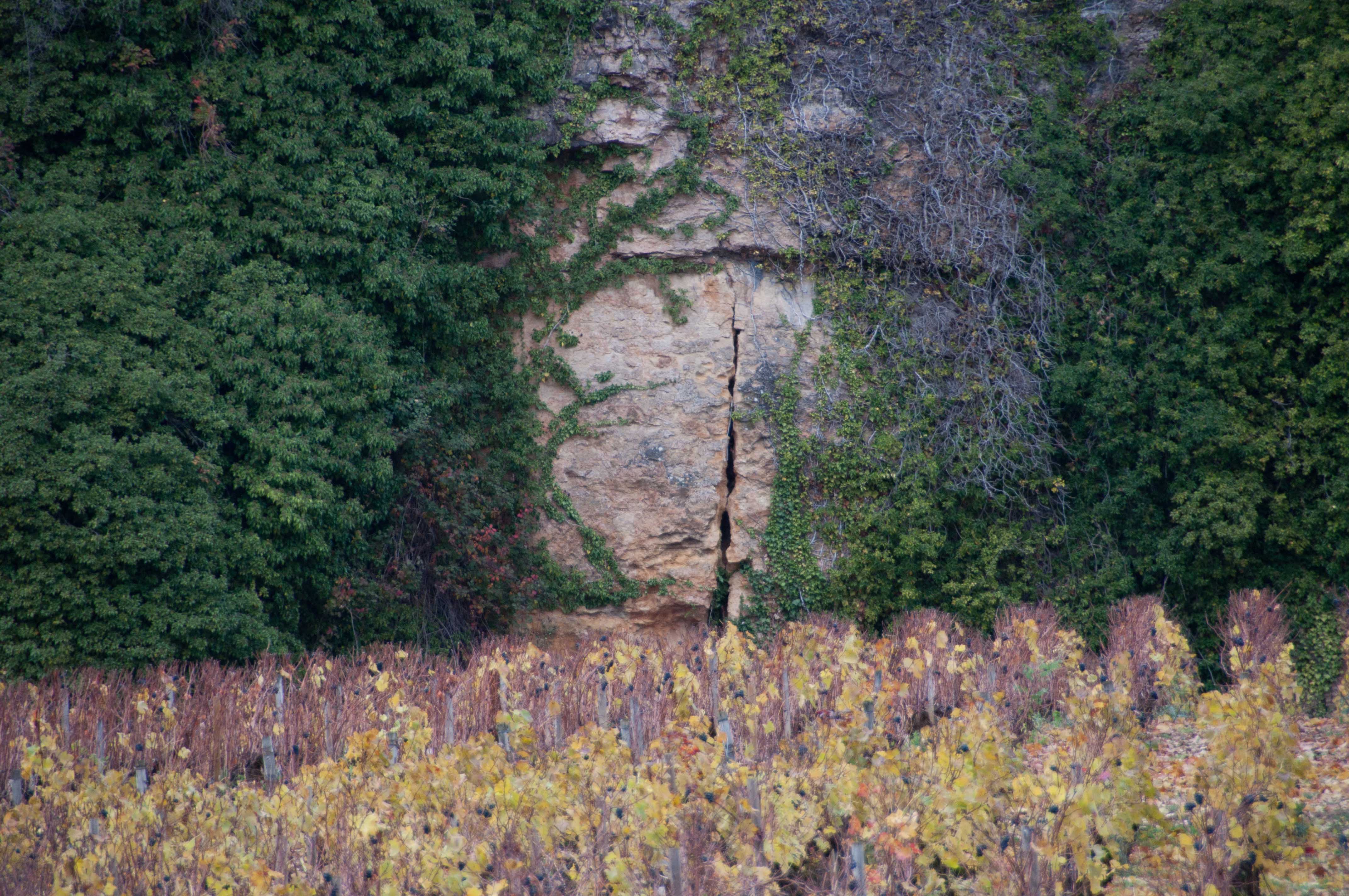
We then head up above the En Deree 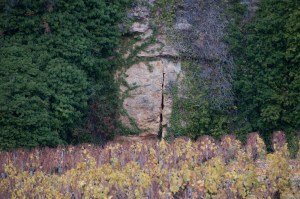 vineyard to find Les Goulots vineyard which has this amazing limestone wall over 20 feet high that breaks the vineyard into an upper and lower piece. This whole area is unbelievably beautiful. Then we turn around and look the other way down the slope and across the valley. Lots more pictures to capture as we look over the Premier Cru and Grand Cru vineyards. It’s clear that we are not going to get an afternoon nap.
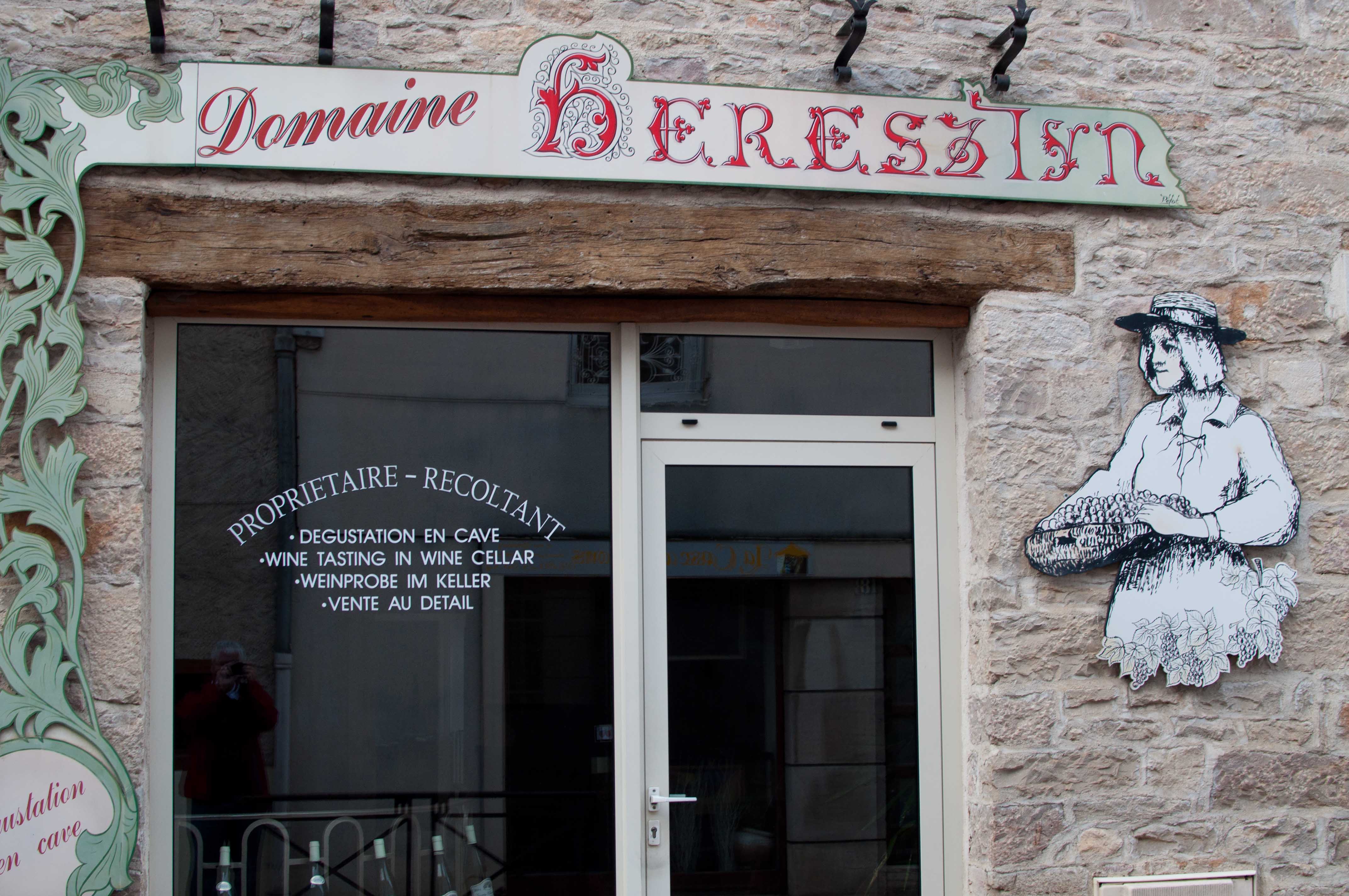
Skye drops us off for a quick freshen up and a chance to catch up on email. After ten  minutes we then walk down the hill to the Heresztyn’s winery for our 4:30pm tasting. Stani (Bernard’s brother) who is doing most of the cellar work is doing the tasting for us.
  We start in the tasting room which Stani and Bernard rebuilt several years ago. He shows us their tasting table made out of barrel wood which they used growing up to make bread. He shows us how the table top lifts up to reveal a half of a barrel where they used to kneed the bread and then let it rise. There is a nice fire in the fireplace which he points out is fueled by barrel staves from their old barrels. It turns out they are no longer able to sell their old barrel staves so they burn them to heat the tasting room.
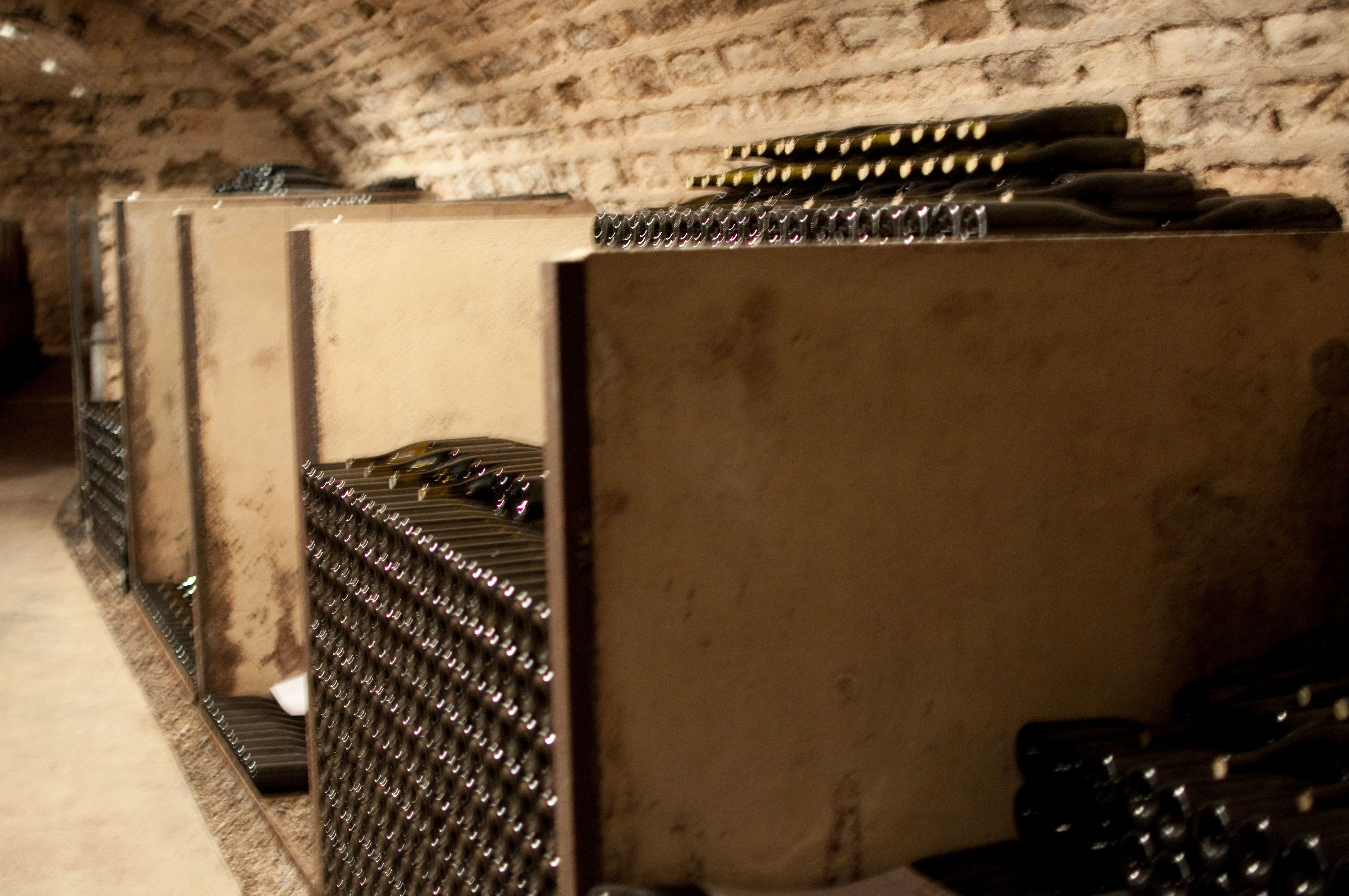
 We enter the winery and see about nine very large old concrete fermenters along with several of the newer stainless steel fermenters. We then head down to the caves where we are treated to the wonderful smell of aging red wine. In the corner is some plastic surrounding a few of barrels and Stani tells us this is where they are aging their white wines and the whites need a little more heat and humidity. So they have warm water flowing into that area from a hose.
We wind our way around to the oldest cave in the back through lots of metal cages holding those wines that have already been bottled. We arrive at the tasting part of the show and encounter another 12 bottles of 2008 wines drawn from their barrels for us to taste along with six bottles of 2007 wine that is already in bottle and released. What a day – over 40 different Cote d’Nuits wines to be tasted and savored. Am I in heaven or what?
While we are tasting, Stani gives us a nice history of the Heresztyn family. His father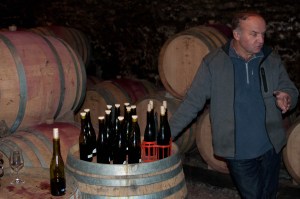 immigrated to the region in 1935 working for other wineries. In the early 1950s he started buying his own land and started making wines. The wines were mostly sold in barrels to other negotiants with 80% going to Switzerland and most of the rest going to England and France. Early on they also grew onions and Stani can remember sorting onions at their kitchen table.
Stani is in the process of turning the winemaking over to his daughter Florence and her husband Simon. Florence and Simon took charge of the 2009 vintage and made most of the decisions on winemaking with Stani providing gentle guidance. It was interesting to see that both of the tastings today were done with wineries that were in transition between generations.
The wines we tasted with Stani were:
- 2008 Bourgogne Red
- 2008 Gevrey Chambertin Clos Village (the vineyard right behind the winery)
- 2008 Gevrey Chambertin Vielle Vigne (from the En Deree vineyard) – this is Skye’s wine
- 2008 Chambolle Musigny Village
- 2008 Gevrey Chambertin La Perriere Premier Cru – this is the sunken vineyard that is just east of the Rue de Grand Cru
- 2008 Gevrey Chambertin Les Goulots Premier Cru
- 2008 Gevrey Chambertin Les Corbeaux Premier Cru – the blackbirds vineyard
- 2008 Gevrey Chambertin Champeaux Premier Cru
- 2008 Chambolle Musigny Les Borniques Premier Cru
- 2008 Morey Saint Denis Les Milandes
- 2008 Morey Saint Denis Grand Cru
- 2007 Chambolle Musigny Village
- 2007 Moray Saint Denis Les Millandes
By this time we’d spent three hours with Stani and we could hear his wife’s chair scraping the floor above our heads so Stani knew it was time to finish. What an amazing couple of 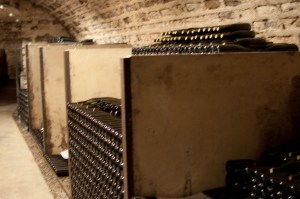 hours learning about the family and tasting this wonderful portrait of the Cote d’Nuits. Clearly we will be paying lots of attention to Gevrey Chambertin wines in the future. On our way out, Skye shared how exhausted she was from the combination of tasting wine and having to translate wine geek speak for me (terminal analytic that I am).
We walked out of the winery and across the street to the Heresztyn’s to have some of Skye’s wine before we went out to dinner. We wandered down into Bernard and Chantal’s cave and Skye chose two wines for us to taste:
- 1996 Gevrey Chambertin Village – Skye’s wine
- 1993 Clos Morey Saint Denis Grand Cru
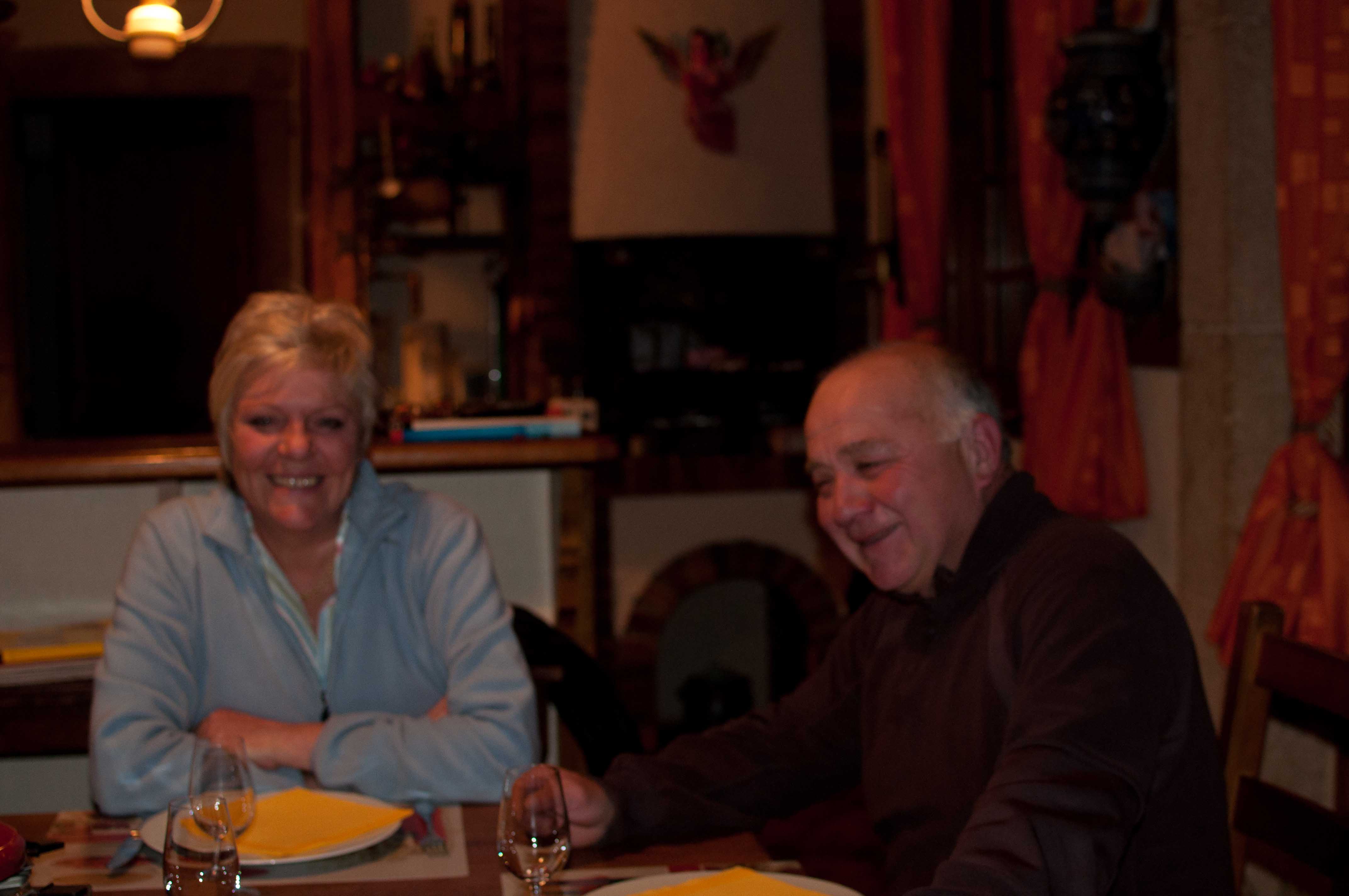
While we started tasting, Chantal made dinner reservations for us. But then her brother called her from Paris on his way back from the Maldive Islands to let us know that the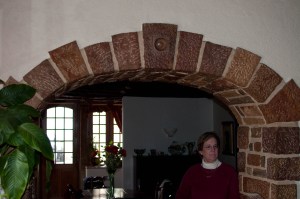 French train system had gone on strike and he couldn’t get to Dijon. He wanted Bernard’s help to find him a hotel for the evening. As a result Chantal asked us if we would rather stay for dinner at the house so they could continue to talk to her brother. We replied we’d love to but only if it was something simple like cheese and bread.
 Instead, Chantal quickly created another wonderful meal of an omelet and smoked jambon with French bread. While we weren’t looking, Bernard went down to the cave and brought up three more wines.
So in addition to the wonderful wines we’d already tasted, we were treated to two more at dinner:
- 2001 Gevrey Chambertin Les Corbeaux Premier Cru (right next to a Grand Cru if you look on the detailed map)
- 1990 Gevrey Chambertin Les Champonnet Premier Cru
A great time was had by all and as the wine flowed Bernard loosened up. Skye decided to finally harras me about my ugly glasses. Bernard laughed and said they were Mickey Mouse Walt Disney glasses. He then brought out his even larger version of my aviator glasses. Skye shared several Burgundian songs for drinking wine and we had a great time sharing our silly French prhases we learned so long ago along with the silly English phrases that Bernard had learned.
What a great evening with new found friends. Thank you Skye.
It was time to go and Bernard handed me the last bottle of the evening to take home – a 1988 Gevrey Chambertin Les Goulots Premier Cru. I was speechless. Even better it had that wonderful layer of Burgundy mold on it.
How do you ever thank someone for such an unbelievable evening and the privilege of drinking great wines and sharing the table in the winemakers home.
It was with misty eyes that we walked back up the hill from the village to the Hotel Grands Crus in the late night. The stars were out and tomorrow promised to be a beautiful day.
Day 4
This morning we awoke to an absolutely stunning blue sky and sunshine. What a welcome relief from the cold and rain and drizzle of the last several days. Today is a holiday in 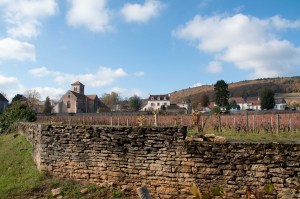 France, their equivalent of Veterans Day. As a result, we couldn’t find any wineries open to do tastings, so we decided to play tourist. We also decided since we had a late night yesterday that we would have a late start.
Skye picked us up at our hotel about 11am and we headed to Beaune. However, it was getting on lunch time so we needed to eat before we could do the tourist thing. The concierge at our hotel recommend a restaurant along the way – La Miotte in Ladoix Serrigny. We found the restaurant off the beaten path and it was another traditional Burgundian restaurant. Jamie and I had our “final” Burgundian meal of Coq au vin, chicken cooked in red wine sauce. We’ve felt like guests of Julia Child all week with this wonderful traditional French cooking.
Since we were in a new town, Skye picked a local wine for us. A 2005 Ladoix Clos Des Chagnots form Pierre Andre. It was an acceptable Pinot Noir. After our repast we headed to Beaune.
I really wanted to see the Hospice de Beaune and the wonderfully colored tiled roof. The 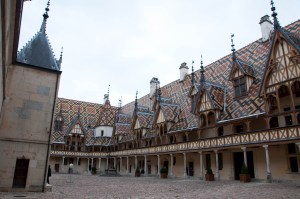 picture gives you some idea of the colors of the roof. What I didn’t realize is what a wonderful medical museum it was. Each room in the museum was primarily a display of what medical life was like in the 1600 -1800s. Each room had an altar and a place to hold mass as the philosophy was – just because you are sick, it doesn’t mean you shouldn’t be able to go to mass and receive the sacraments. We took lots of pictures for our MD nephew Drew to show him the old medical ways.
We then went back to our favorite wine book store and picked up a very detailed wine map and Atlas set of books which describe all of the vineyards and the different owners within each vineyard and how much each vineyard produces on average. Quite fascinating and now all these maps mean something.
We also picked up a lunar calendar that Stani showed us from the previous evening that he has been using for the last 10 years. It is our familiar biodynamic calendar. He uses it to determine when to prune and when to rack and bottle the wines.
We tried to take in a tasting on our way back at a small village renowned for its whites but none of the winemakers that Skye was familiar with were open. On our way back I really 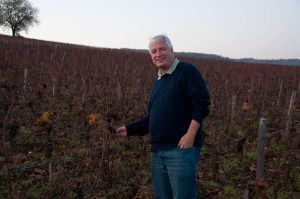 wanted to see the vineyards of Domaine Romani Conti (DRC) which is generally the most expensive wine in the world. As I mentioned on Sunday, Skye has a 1972 DRC in her cellar which is estimated to be worth several thousand dollars. Come on, It’s just grape juice.
So we found the vineyard as the light was fading and got a picture of the stone marker and then ventured into the vineyard to pick and taste some of the grapes that were left over from the harvest. The picture above is of one of the world’s most famous and expensive vineyards. It wasn’t until we were leaving that we saw the sign that asked visitors to please stay in their cars.
Our next stop was Clos Veugeot to take a look at the big hall where the Chevaliers meet and induct new members like Skye was many years ago. But we got there 20 minutes too late and the main hall was closed.
We came back to the hotel and tried the Pommard from the other day – 2007 Pommard Les Chanlins Premier Cru. What a nice way to end the day sitting in front of a warm fire in a small hotel in Burgundy sipping a wonderfully soft and feminine Premier Cru.
After our brief respite we headed to the Herestzyns for our last meal together. Chantal  prepared a simple meal of raclettes – a traditional swiss dish of melted raclette cheese over new potatoes and garnished from some pearl onions and capers.
We started the meal with the 2007 Herestzyns white wine and then had two of Skye’s wines:
- 1997 Gevrey Chambertin Vielle Ville Domaine Ciel
- 1994 Gevrey Chambertin Vielle Ville Domaine Ciel
Both were a wonderful addition to the meal and went well with the dessert that we bought in Beaune – a layer cake with chocolate mousse on the bottom and creme brule on the top. Ummmm.
After dinner, I started asking all kinds of questions about the history of the Heresztyns and about Bernard’s father, Jean who immigrated from Poland in the 1930s. Bernard was kind enough to indulge my questions and we learned many wonderful stories about their past.
Pretty soon it became clear that Skye was exhausted from translating for us. It is easy to see how hard it is for someone to keep their energy up and do not only the language translation but also the cultural translations. What a gift.
It’s now bed time and we have to face having to pack everything up and head to Paris for 1.5 days of ABW – anything but wine.
Anything But Wine
Today was one of those days I dislike while travelling – the moving from here to there – the packing and the unpacking. Or stated another way, I really just wanted to savor some more of these wonderful Burgundian wines.
The day dawned foggy and drizzly as we got up pretty early as we knew we had a bunch of packing to do. We had tried to get some photos of the entering and leaving Gevrey Chambertin the night before but they didn’t turn out very well.
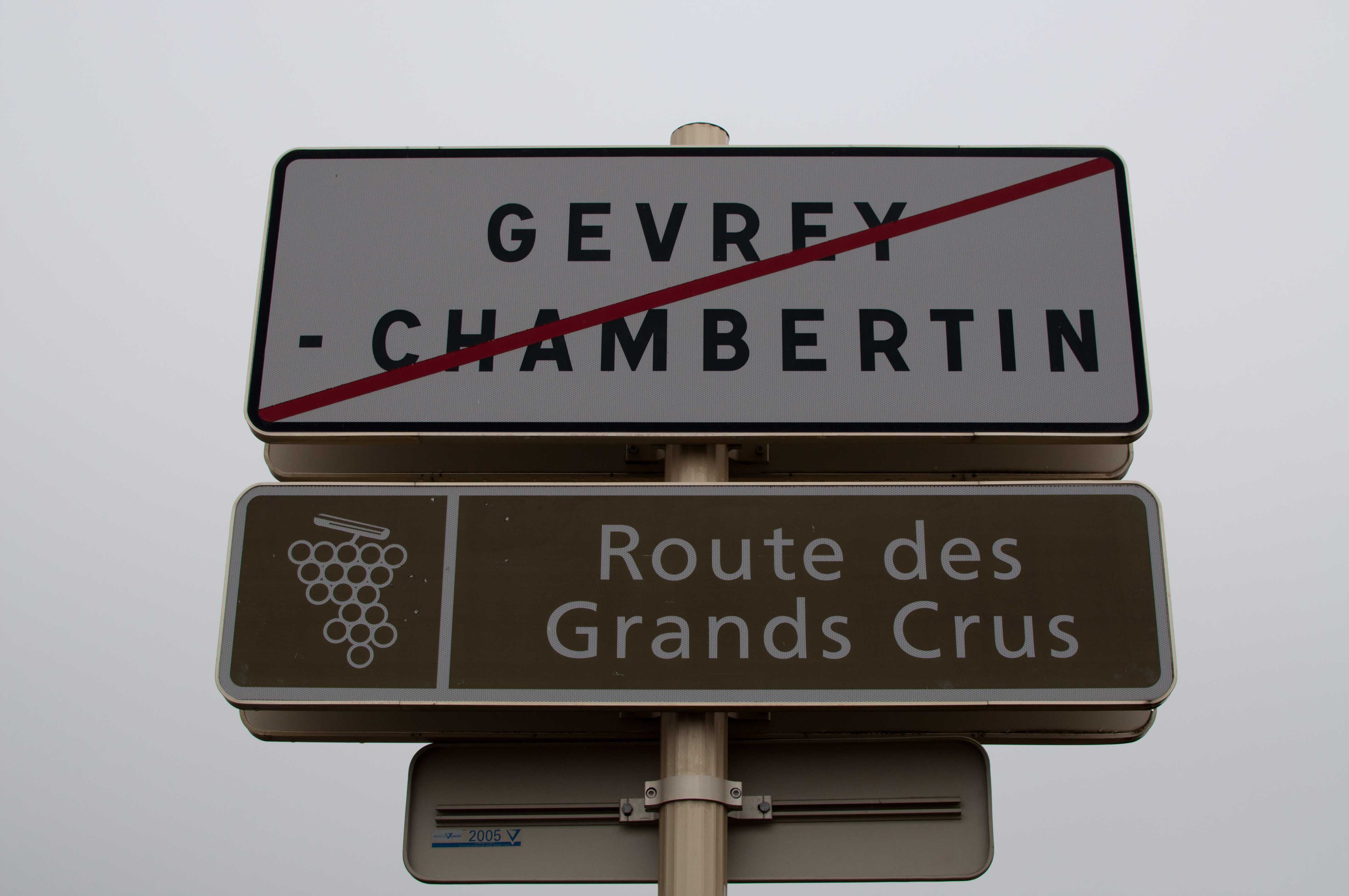
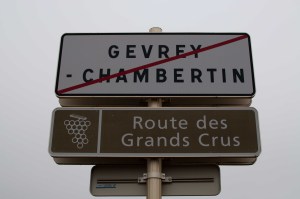 I then got the shot of the coming and going sign for Gevrey Chambertin. It took me all week to figure out that a town name with a red line through it meant that you were leaving, not that the town ceased to exist. It was also sad to think that we were leaving the land of the Grands Crus.
We did a lot of “la bise” (French air kisses) as we said good bye to Chantal, Bernard, Stanni and a whole host of Heresztyn relatives. Fortunately, we’d found a taxi cab to take us to the Dijon TGV train station that could hold all of our luggage. I felt like Jed Clampett from West Virginia loading up our taxi with all the wine and souvenirs we’d bought – god, what tourists we’d become.
We made it to the train station in Dijon a little the worse for wear. Skye informed us midway on the trip that a “toothbrush was not a friend” of the taxi cab driver and every time he talked it was harder for her to breathe. It was a good thing that Jamie and I were in the back. We made the train on time and even had time for a last minute “half beer” to toast and celebrate missing Kate on this trip. We had a minor moment of panic when they posted the track that the train was supposed to leave on after we’d hauled all our heavy bags up a long set of stairs only to find out that they’d delisted the train from our track. We had an anxious 15 minutes while we obsessed about having to haul our bags back downstairs and up another long stairs to board the train. But all was saved when they said that the train would arrive where we already were.
Jamie and I will be forever grateful to Skye Hallberg for inviting us to come on this “trip of a lifetime.” The trip was a fantasy come true for me and a great way to get to know one of the finest wine growing regions in the world. More importantly, I got to meet such wonderful people in what Skye kept calling – “profoundly France.” This is the translation of a French term for the real France or the agricultural part of France. This trip erased the incredibly negative experience I had 30+ years ago when my sister was in an auto accident in Auxerre, France, not far from Burgundy.
Jamie was just amazing as she started recalling so much of her high school French and with the clear encouragement from everyone including her “professor”, the manager of the Hotel Grands Crus, she was holding her own.
At every turn, the French citizens were very helpful and appreciative of every attempt on our part to speak French. Jamie and I like to sample the local food and experiences and Skye was impressed with how much we ordered Burgundian food at every turn and enjoyed it.
I’m clearly going to have to change my negativity about the French which is the most amazing part of this trip and another of the many gifts that Skye gave us.
We learned an incredible amount about the Burgundy wine industry through the incredible graciousness of the Heresztyns and the many family members who work the vines and the wines. I am reminded of a quote from Edward T. Hall that I first came across on a Japan Study Mission I was on back in the 1980s.
“Culture hides much more than it reveals, and strangely enough what it hides, it hides most effectively from its own participants. Years of study have convinced me that the real job is not to understand foreign culture but to understand our own. I am also convinced that all that one ever gets from studying foreign culture is a token understanding.
“The ultimate reason for such study is to learn more about how one’s own system works. The best reason for exposing oneself to foreign ways is to generate a sense of vitality and awareness – an interest in life which can come only when one lives through the shock of contrast and difference.”
– Edward T. Hall, The Silent Language
Over my lifetime, I experience the gift of travelling far and wide around the world. However, it is always special to travel and be invited into the homes of people who are of the place. Thank you Chantal and Bernard for opening up your life to us for a wonderful week in “profoundly” France.

 I hate it when I come across a book, buy it, and then have it get lost in my other Amazon Kindle book purchases. Such was the case with Cathy Davidson’s Now You See It: How the Brain Science of Attention Will Transform the Way We Live, Work, and Learn. I bought the book in August, but did not find it again until starting a collaboration on innovating on the future of the university with colleagues from the University of Washington Bothell.
 how people couldn’t type, the worry of OA was that we would turn every office worker into a secretary. Here we are 26 years later and for the most part there are no more secretaries and we all know how to type. We are much more efficient and probably more effective with the current tools than we ever were with paper and secretaries. In the process we also became our own travel agents and graphic designers (well OK, Powerpoint slide generators).












 all the time. Several years ago thanks to the trusting invitation of
  asked how he had improved his graduate school teaching. He suggested that I should look up