Integrity – Easily Lost, Hard to Regain

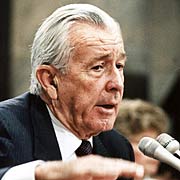
In writing the blog post on “Succumbing to the Ultimate Power Trip,” I was reminded of a bookend to this experience. One of the more interesting players in the Watergate affair was Egil “Bud” Krogh. Bud was the 32 year old Nixon White House staffer who was put in charge of the Special Investigation Unit (The Plumbers) which led to the Watergate Scandal.
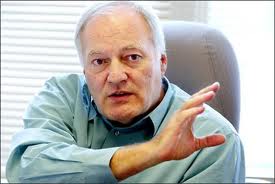
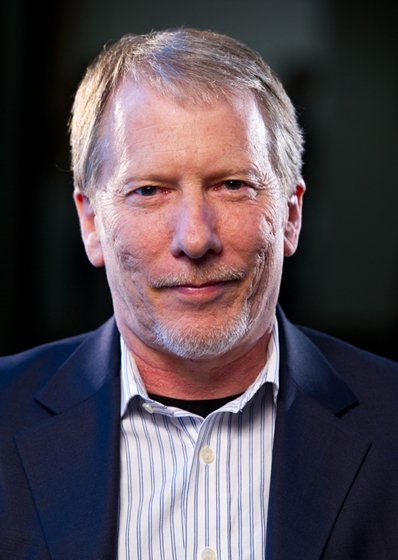
Egil "Bud" Krogh

Bud’s story is wonderfully captured in his book Integrity: Good People, Bad Choices, and Life Lessons from the White House. I was fascinated by the Watergate break in and Bud’s role in it, but had lost track of him.  A couple of years ago, my colleague Marty Smith from Attenex days, invited my wife and I to dinner with several other families and Bud Krogh.  I had no idea that Bud lived in Seattle and had been practicing law here.  Marty shared that Bud had just written a book about his experiences and was starting on a book tour.  I immediately ordered the book to be better prepared for the dinner.

As one who values integrity but struggles to meet my own high standards, I was enthralled with the book. With the distance of time in writing this book, Bud captured so wonderfully his own aspirations, his integrity lost, and the life long struggle to regain his own integrity.

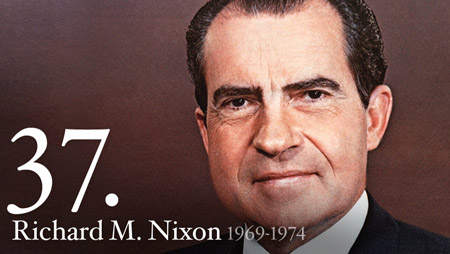
Wrapped around Bud’s story is also the story of Richard Nixon. Bud revealed many different sides to Nixon that I’d never read about. Chapter 7 in the book relates the amazing story about Nixon going to the Lincoln Memorial in the midst of Vietnam war demonstrations.

The interesting correlation with Bud’s story is I had come up to DC with my roommates from Duke University to protest that weekend, but we didn’t stay on the Capital Mall.  We spent the night with my roommate who lived in Silver Spring, MD.  So I missed this moment of history.  When Bud and I were talking about the event at dinner, all of a sudden he looked over at me and said “You were there weren’t you?”  I nodded.  And then with a gleam in his eye, he asked if I was on the “other side” like his current wife.  “Of course,” I shared.

Here is a glimpse of Nixon from Chapter 7:

“Although Richard Nixon was important to me as an authority figure, I became much closer to him personally when I followed him during one of the most moving, bizarre, and potentially dangerous ventures of his presidency. For the first time, I observed him in a crisis mode digging deep into his reservoirs of intellect and emotion. What I saw him say and do that day affected me strongly and bound me more closely to him than ever before. The episode began with an alarming message from a Secret Service agent.

“‘Searchlight is on the lawn!’ I looked up in shock as these tense words about the location of ‘Searchlight,’ President Nixon’s Secret Service code name, crackled over the loudspeaker in the Service’s command post in the Old Executive Office Building. It was 4:15 A.M. on May 9, 1970.

“A few hours before, in the evening of May 8, the president had explained in a news conference why he had ordered a military “incursion” into Cambodia. His comments had added fuel to the firestorm of frustration and rage among tens of thousands of students and other antiwar activists around the country. Those activists and students who lived closest to the District of Columbia were headed directly to the capital to vent their anger and grief. We had good reason to fear a violent and possibly lethal confrontation.

“The president’s news conference the night of May 8 followed the tragedy at Kent State University in Ohio just a few days before on May 4. The Kent State protest, like others on campuses throughout the country, was organized after news of the president’s decision to attack Cambodia first became public knowledge on April 29. At Kent State, Governor John Rhodes had called up the National Guard to help maintain order on the campus. When the inevitable clash occurred, young, frightened National Guardsmen, who had been issued live ammunition, fired on a rock-throwing group of angry students, killing four of them. The picture of one girl kneeling next to the bodies and looking up in shock and anguish had already been widely reprinted, searing the minds of millions around the country. The Kent State killings were a painful and forceful reminder to me not to allow our government defenders to overreact and precipitate a worse tragedy. In The Haldeman Diaries, former chief of staff Bob Haldeman noted that when Nixon heard the news about the Kent State killings on May 4, he was “very disturbed.” He was “afraid his decision set it off.” Haldeman and the president talked that day about how they could get through to the students but came up with no plan.

“I had just come into the command post to ensure that preparations to fortify the EOB and the White House were completed in preparation for the potentially violent protest that was brewing outside. Right after the first Secret Service announcement that “Searchlight is on the lawn” came a second: “Searchlight has asked for a car.” These two announcements made no sense to me and sounded extremely ominous. The president was supposed to be asleep in the White House residence. All of our security precautions were predicated on keeping him safe within the White House grounds. Not once in our crisis management group meetings did anyone envision the possibility that the president would venture out on his own during this volatile, potentially incendiary day. Certainly not two hours before dawn. . .

“Right after the second announcement that the president had called for a car, I phoned the White House signal operator and asked him to ring John Ehrlichman immediately. When John answered and mumbled, “What’s up?” I told him that the president was at large and had called for a car. “Go over to the lawn and see if you can render assistance.” “Yes, sir!” I answered and then warned the Secret Service duty officer that I was going to be moving at speed over to the West Wing. I ran across West Executive Drive, sprinted past the White House police desk inside the ground-floor West Wing entrance, took the steps two at a time up to the first floor, and arrived at the Rose Garden lawn just in time to see the president’s limousine disappear out the south entrance next to the Northwest Gate.

“After checking quickly with the Secret Service agent on duty, I learned that the president was heading to the Lincoln Memorial. I called Ehrlichman to let him know the president’s destination and then immediately called for a car and directed the driver to take me there. After a high-speed ride, we arrived at the Memorial about four minutes later and stopped right behind the president’s limousine, which was idling against the curb on the street between the Reflecting Pool and the Memorial. I ran up the steps but then slowed down when I saw the president talking with a group of students just inside the Memorial to the front and right of the famous statue of a brooding Lincoln sitting in a chair. It was still dark.

“President Nixon was talking earnestly to about eight or ten students who had formed a loose circle around him. Manolo Sanchez, Nixon’s valet, and Dr. Tkach, the physician who usually accompanied the president, were standing off to the side. Dr. Tkach looked tired and very worried. Other students were gradually moving over to join the circle when they realized who was there. Most disturbing, I counted only four Secret Service agents in the president’s detail-a frighteningly small number for such a potentially dangerous situation. They were positioned around him so that they could maintain a 360-degree observation. I could tell from their faces that they were as fearful as I was. As Nixon wrote later, “I have never seen the Secret Service quite so petrified with apprehension.” He certainly got that right.

“From the back of the circle of students, I leaned in closer to observe the president and hear what he was saying. As I wrote later that day, “It appeared that he was trying very hard to reach out and into the students, to communicate with them…. He did carry the conversation for the most part … but this was necessary as the students themselves had hardly anything to say, and were too stunned to respond at all. His manner was reminiscent of the campaign where he would go into a group of people, shake hands and comment on those things which popped into his mind.”

“And a lot popped into his mind. The vast range and mastery of the subjects he discussed was monumental. That he could offer these ideas around 5:00 A.M. after just an hour of sleep made it an even greater tour de force of intellect, compassion, and focus. Although I could not hear every word he spoke, I was awed and moved by what I did hear. All of my previous meetings with the president had been somewhat formal briefings in the Oval Office or the Cabinet Room. This was the first time I had heard the president speak extemporaneously and straight from the heart.

“In a memo Nixon dictated on May 13 about “what actually took place at the Lincoln Memorial,” he expressed frustration that neither Ron Zeigler (who didn’t join our traveling group until we were just leaving the Capitol) nor I got a clear understanding of what he was trying to communicate. He felt that we were too focused on the practical aspects of the visit-when he got up, how he looked in reaching out to the students, what he had for breakfast-than what was really important. He wrote that his staff “are enormously interested in material things, what we accomplish in our record … [but] very few seem to have any interest and, therefore, have no ability to communicate on those matters that are infinitely more important-qualities of spirit, emotion, of the depth and mystery of life which this whole visit really was all about.”

“The important thing was to communicate deeply significant ideas about our country, its problems, and their lives to students who might never have a chance to see and hear a president again. He told the students that his favorite spot in Washington was right there-the Lincoln Memorial at night.

“He then asked if any of them had seen his press conference. Because most of them had been traveling the night before to get to D.C. to protest against him, only a few hands went up. He said that he was sorry they had missed it because he had explained during the conference that his ‘goals in Vietnam were the same as theirs-to stop the killing and end the war to bring peace. Our goal was not to get into Cambodia by what we were doing but to get out of Vietnam.'”

The whole book is just incredible reading. Bud and I got about 30 minutes to ourselves during the picnic dinner.  He talked about many things he couldn’t put in his book about Nixon and the enigma that he was.

I also wanted to know how Bud could possibly make it through the prison sentence.  He shared that he took one book with him to prison – Frankl’s Man’s Search for Meaning which is one of my favorite books.  I was also fascinated to understand how as a convicted felon he could get reinstated to the practice of law.  Chapters 11 and 12 described his long process to readmission to the Washington State Bar.

Donald Rumsfeld

However, what really galvanized the discussion is how many of the Richard Nixon and Ronald Reagan advisers were invited back by Donald Rumsfeld to provide advice on how George W. Bush should deal with the mess in Iraq.  Bud was astounded at their arrogance and unwillingness to take any input from the folks who had made a mess with Nixon.  Bud was appalled as he watched the same patterns repeat even when he’d pleaded with the Bush folks not to make the same mistakes.

After the dinner with Bud, I was in DC a couple of weeks later for a conference.  I spent several hours one evening seated in Lafayette Park trying to imagine then president George W. Bush walking down to the National Mall to meet with demonstrators.  How much the world has changed in 40 years.

Bud’s book is an incredible story and the man is even more interesting (actually both Bud and Nixon).
Posted in Content with Context, organizing, Relationship Capital, social networking, Values | 3 Comments

Succumbing to the Ultimate Power Trip

While at lunch with a colleague the other day, we got to talking about different aspects of power.  I asked if my lunch partner had ever experienced the “power trip” that is the White House environment. “No, why?” was the answer. So I shared my own small introduction to the White House experience as an example of how easy closeness to power changes your behavior.

In the late 1970s, I read every book I could find about what went wrong with the “best and the brightest” that were running the White House during the Nixon years.  I couldn’t understand how such supposedly ethical men could mess up and create the Watergate scandal.  Woodward and Bernstein’s All the Presidents Men was one of the key books but there were lots of others like Jeb Stuart Magruder’s An American Life: One Man’s Road to Watergate.

While I could understand the stories at one level, I still didn’t understand how these professionals could go so astray so quickly. Then in one short week, I got my own glimpse of how being at the seat of US power – the White House – can change your behavior so quickly.

One Friday night in 1985 while heading up the development of DEC’s ALL-IN-1 in Charlotte, NC, I got a call which started with “this is the White House calling.”  I immediately hung up the phone because I didn’t have any time for joking around.  The phone rang again and started “don’t hang up this is indeed the White House calling.”  I still wasn’t having any of it so hung up again.  The phone rang for the third time and I decided to play the game to get done with it.  These two guys got on the phone (the next week I found out they were two captains seconded from the Pentagon) and demanded that I get on a plane and come up to DC that night to install ALL-IN-1 on their VAX machine in the Old Executive Office Building.

I told them “No, that is not how we work.”  I told them I would be up Monday morning.  I shook my head and went back to work.  Over the weekend I laughed and realized they could send the IRS and FBI after me.  What was I thinking?

Don Regan

So Monday morning I go up to DC and meet with these two young military eager beavers.  It turns out that Don Regan had just been named Chief of Staff for Ronald Reagan and when he got to the West Wing he was appalled to find out that there were no computers, only typewriters.  From his days on Wall Street, Regan couldn’t imagine how any organization could function with out computers.  So he yelled and somebody at the Pentagon came running and assigned the two captains to make an “office automation system happen.”

The two captains hired a truck and went over to NASA and wheeled out one of DEC’s largest VAX/VMS 780 machines and brought it to the Old EOB.  They then called up the number two executive at DEC, Win Hindle, and asked him what software they should run. Hindle suggested they give me a call and that ALL-IN-1 was the software that they needed.  I spent the morning with them trying to understand what their needs were.  Their goal was to get the system up and running so they could demo the software to Regan at the end of the week.  Everything out of their mouths was Regan ordered this and Regan ordered that.

As usual, a lot of things weren’t working.  So I got on the phone and started calling for help – back to the team in Charlotte and to our support folks in Massachusetts.  Nobody was paying any attention to me and the Captains were breathing down my neck.  Here I was seated in the Old EOB at the center of US political power and it took about 3 hours for me to become like everything I’d read about the best and the brightest at the Nixon White House.  Everything was god awful important and I wanted immediate answers and expected immediate actions.  In three short hours I’d become one of “them.”

The other thing that fascinated me is how little security there was in the Old EOB.  I just had to show my drivers license to get in.  I was escorted to the computer room but nobody stayed with me.  I could wander the halls with ease.

We worked round the clock for a couple of days and then while waiting for software to install, I asked the captains how long they’d known and interacted with Regan.  They looked at me sheepishly and finally confessed “Well, actually we’ve never met or talked to him.  The demo on Friday is going to be the first time we will meet with him.”

I looked at them and went “You mean you’ve been jerking me around all week and telling me Don Regan demanded this and Don Regan demands that and you’ve never even met the man?”

Not looking at me, they said “Yes, that’s right.”

I picked up the phone and called the local DEC office and asked if they had somebody that was trained on ALL-IN-1 and had a security clearance and was used to dealing with government agencies.  They did indeed.  So I politely asked them to get the person over to Old EOB as soon as it was reasonable.  I turned to the Captains and said “You don’t need me.  I’ve arranged for somebody who is used to dealing with your power trips to come help out.  I’m headed back to North Carolina to get back to developing the next version of ALL-IN-1.”  And I walked out shaking my head at how quickly I had become one of them.

The postscript to this story was a couple of years later the Ollie North Iran-Contra affair blew up because of an email that wasn’t deleted when Ollie hit delete.  The email software was ALL-IN-1.  We put the automatic archiving feature in as a way to distinguish our software from our competitors.  We thought every user knew that.  Clearly Ollie didn’t.  For many months we lived in fear that the press would point out that it was DEC’s ALL-IN-1 software that was used.  I don’t think it ever became public.

Since that time when I am at my patient best and in the middle of the vortex of power environments of senior executives asking me to do something “immediately,” I pull out the Deming “5 Whys” to get the back story on why we are being asked to do something. It amazes me how this simple process can calm things down and get at the intent of what is needed versus a “knee jerk” demand.

Posted in ALL-IN-1, Content with Context, organizing | 1 Comment

Easy Productivity Boost – Multiple Monitors

Seeing this NY Times article, I was reminded of one of our key recommendations for boosting productivity in eDiscovery – make sure each lawyer reviewer has multiple monitors. From a capital investment standpoint, multiple monitors are very inexpensive and pay for themselves in a matter of weeks. From the study at the University of Utah:

“At the very least, Professor Anderson said, more monitors cut down on toggling time among windows on a single screen, which can save about 10 seconds for every five minutes of work. If you have more than one monitor, he said, “You don’t have to toggle back and forth. You can take in everything with the sweep of an eye.'”

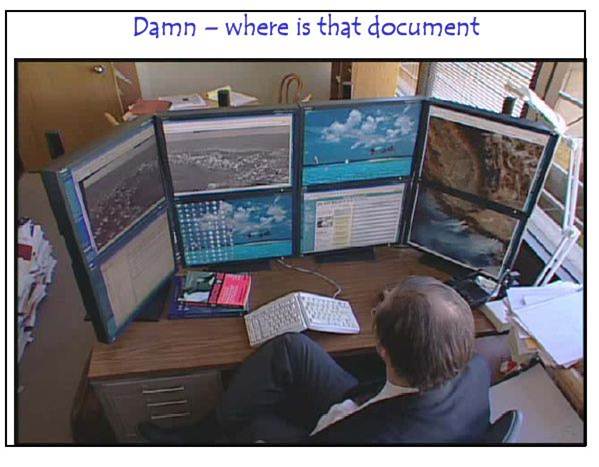
John Seely Brown used to make the point about multiple monitor productivity by showing Esther Dyson’s office versus Stu Card’s office.

A typical day at Esther Dyson's Office

I had eight screen envy when I saw Stu’s setup (I only had three monitors at the time).

Stu Card's Desktop Command Center

However, if you look closely at Stu’s setup in the lower left you can see the documents he moved off the desktop for the photo shoot.  Indeed, multiple monitors aid productivity but they never get rid of the paper.

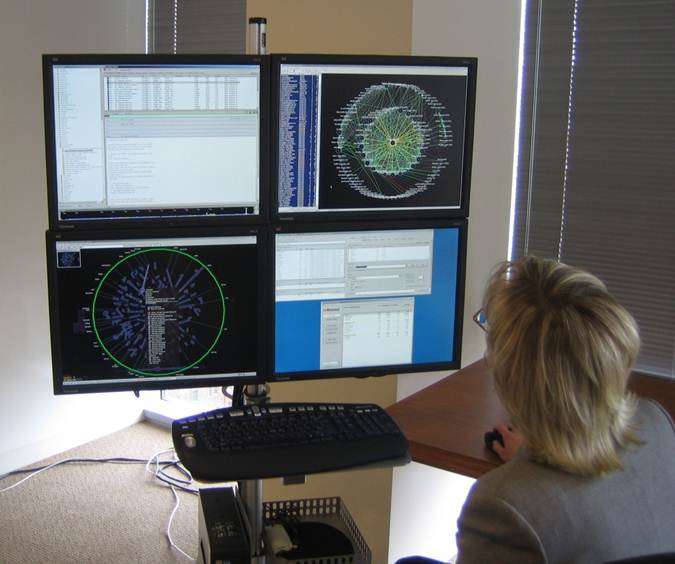
At Attenex, we recommended at least three screen for productivity and always demoed our product on a four screen system:

Attenex Patterns Demo System

So for a quick productivity boost, add an extra monitor.

Now the next technology boost I want to see is to get the benefit of the terrific resolution of iPads across multiple displays.

Multiple iPads Ganged Together?

Keep dreaming Skip.

Posted in Attenex Patterns, Big Data, Content with Context, Human Centered Design, iPad, User Experience | 1 Comment

Idealized Design Qualities for a University

In many ways our universities are a four hundred year old anachronism.  In the last twenty years with the expansion of the Internet for content, connections, and communications, the world of learning is in a different state.  As Brynjolfsson and McAfee point out in Race Against the Machine, with computing we are on the second half of the chessboard.

So knowing what we know now, how would we re-design the university if we could start from scratch.  Russ Ackoff suggests starting an Idealized Design process with the articulation of the qualities you would like to bring into being for the system under study.

The following is my list of qualities for the new university:

  1. Learner centered design.  Everything about the new university is aimed at creating life long learners.
  2. Project Centered learning.  Using the “collaboration by difference” promoted by Cathy Davidson, the primary mode of learning is to engage the students in real world projects. The projects would be diverse horizontally (multiple disciplines from the digital humanities to eScience to the arts) and vertically (undergraduates, graduate students, post-docs, and professors).
  3. Computational foundation. Building on the 4th “R” recommendation of Cathy Davidson, each student would develop a computational competency.
  4. Content and context come forward to replace the structural forwardness of today’s university. Students will be assessed on the competencies they build rather than the credit hours they attend (see Jennifer Turns comments on structural forward aspect of the university).
  5. Students as teachers. The person who learns the most in the classroom is the teacher. Change the role of the student as passive learner to active teacher.
  6. Tangible knowledge production and “publishing” as core competency. Instead of “make work” artificial assignments, the students and professors should use all contact time to “produce” digital media content (including the physical realm with 3D printing).
  7. Focus on the development of critical thinking skills. Move up the learning hierarchy from rote multiple choice assessment learning to critical thinking.
  8. Systems thinking. In addition to learning the skills of analysis, students should learn to see and think in terms of systems.
  9. No walls and no silos. Instead of constructing sterile classrooms, we should be building virtual environments that are supported by project meeting spaces (virtual and physical) and eating/gathering spaces. Multi-disciplinary teams should have project spaces and shared cooking/eating spaces. Instead of the silos of narrow knowledge departments, organizing should occur around real world projects.  (See MG Taylor Corporation examples of built environments for project and innovation teams.)
  10. Art producing. Make art together every day.

What is your list of the qualities you would want to have for an idealized design of the university?

Posted in Content with Context, Human Centered Design, Idealized Design, Innovation, Intellectual Capital, Knowledge Management, Learning, organizing, Teaching, University, User Experience | Leave a comment

Growth Partners

Growth Partner

Working with startup entrepreneurs, I am often asked “What else should I be thinking about?” Invariably the answer is “what are you doing to create growth partners?”

The experienced startup entrepreneurs will think through and develop plans for a channel strategy to get to market.  Yet, most entrepreneurs don’t think in terms of growth partners in the insightful way that Mack Hanan has published for 20 years.

Mack Hanan in Competing on Value describes the importance of a Growth Partner:

“How can you grow your business?

“You cannot.

“You can only grow someone else’s business.  His business growth will be the source of your growth.  By growing, he will force growth back upon you because he will want you to grow him again.

“The businesses you can grow have a name.  They are called your major customers.  Their growth must be the objective of your business.  The capabilities you require to grow them must be your asset base.

Growth requires a partner. A growth partner is a special kind of customer.  He is a customer whose costs you can significantly reduce or whose profitable sales volume you can significantly increase.  In one or both of these ways, you can improve his profits.  This is the basis for his growth.  It is also the basis for his contribution to your own growth.  As the two of you grow each other, you will become mutually indispensable.

“If you cannot grow a customer, you cannot partner him.  You can continue to do business with him, buying and selling, but the maximized profits of growth will elude both of you.  If all your cusotmers are buyers instead of growers, you will be a slow-growth or no-growth business.  None of your customers will be growing you because you will not be growing them.”

It is a joy for me to see the “Ah Hah!” expression after a few moments of thought on the part of the entrepreneur.  Until this moment of comprehension, I think most entrepreneurs believe they are in control of their own business. Hanan’s simple question “How can you grow your business?” with the counter-intuitive response “You cannot” is an eye opener for the entrepreneur.

As you think about your business, who are your growth partners? How are you helping them grow their business every day?

Posted in Idealized Design, Innovation, organizing, Relationship Capital, Value Capture | 3 Comments

Visuals Speak to Me – Quite Loudly as it Turns Out

I am a very visual person, although I have more of an ability to recall those things I’ve seen rather than being very good at creating visuals.

This week my cup overfloweth with colleagues and students pointing me to some great uses of visualization – Amazon Books and VisualsSpeak.

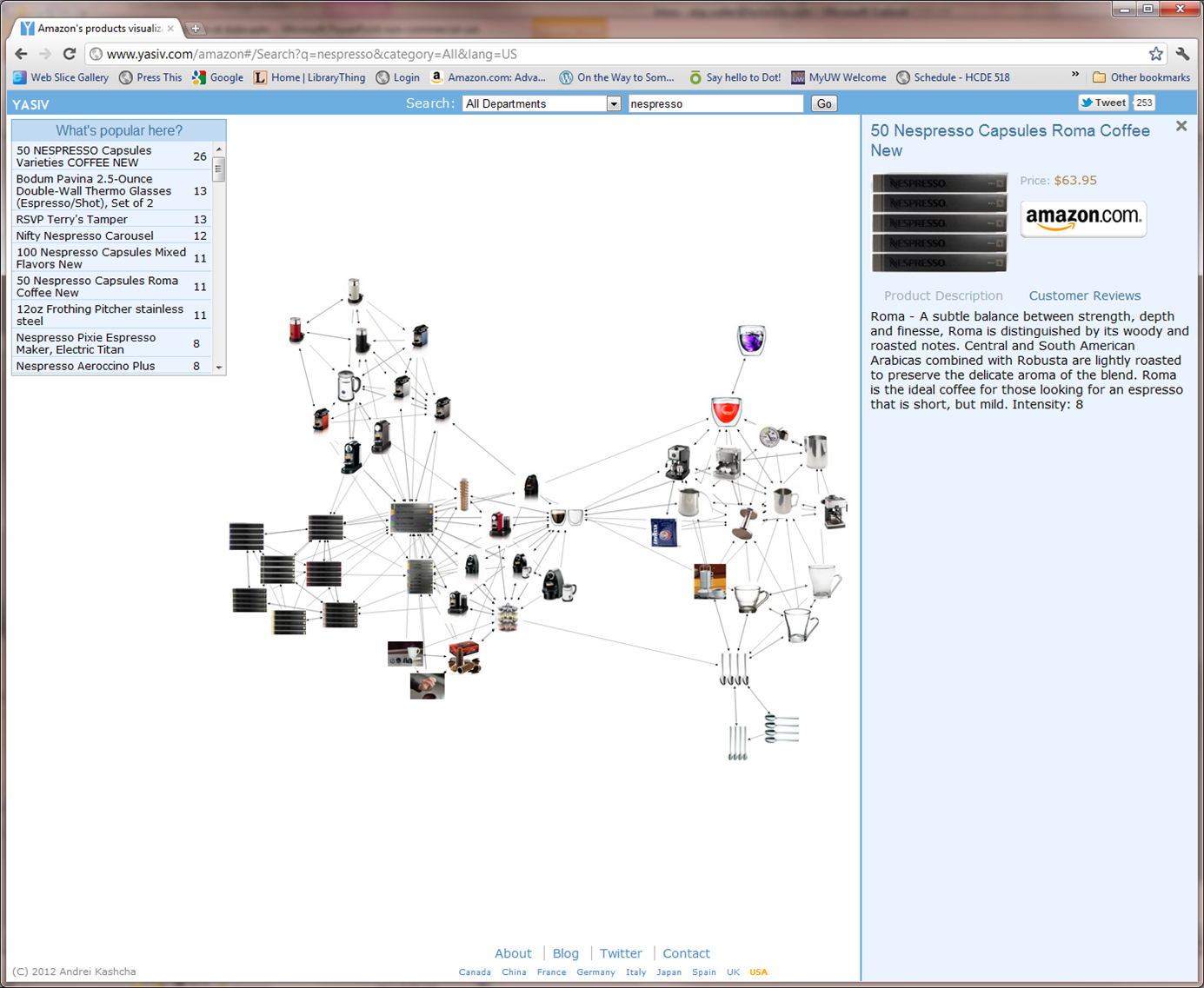
Dan Becker, a student in Professor David Socha’sEvidence Based Design” course at UW Bothell sent a pointer to a new service to visualize book linkages from the Amazon data feeds.  He’d come across the service in an article on mediabistro.  So I cranked it up and as a test put in Russ Ackoff’s name as a test.  It was with amazement that I saw what feels like a good portion of my business library of books come out in the diagram.  I particularly love the rank ordering and information on any specific selected book.

Ackoff Books on Amazon

The developer, Andrei Kashcha, rapidly responds to user feedback and a recent innovation allows you to bookmark the feature and when you are at an Amazon product page you can click on the visualize option to see what the product is related to.  It was a hoot to visualize all of the Nespresso products at Amazon:

Nespresso on Amazon

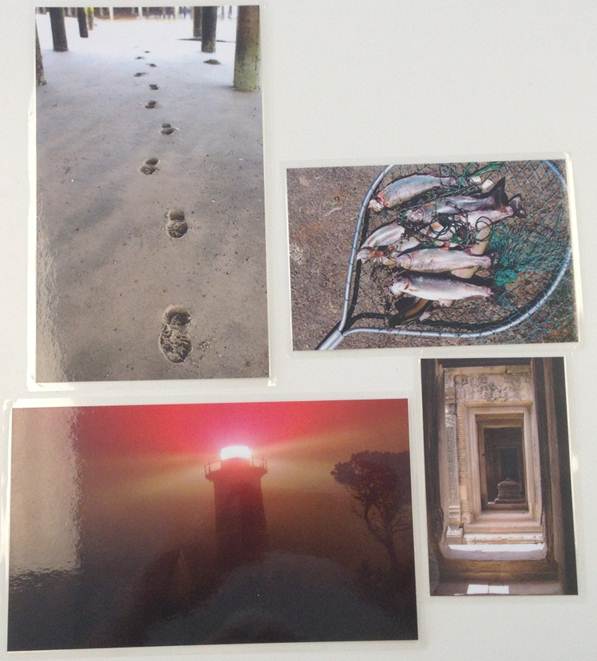
As part of a team visioning process last weekend, Sylvia Taylor introduced the VisualsSpeak Image Set. She spread out 200 images on a couple of tables.  The idea was for each of us to explore the question of “What we want for our future?” and then find in a few minutes the images that spoke to us.  Then we were to arrange the images to be able to tell a story. I selected the four images below:

What does Skip want in the future?

I wanted to take my photo editing tool and resize some of the photos so I could get the layout I wanted, but this was a one size fits all. So I arranged the photos in a “Z” eye movement arrangement.  The story I told went something like:

“I am standing in the present looking backwards at my footprints in the sands of time at the journey that I’ve been on for these sixty years.  As I turn around to look at my future, I see the ‘net of knowledge’ that reminds me that my passion in life is teaching others to ‘fish’ like the old Chinese Proverb ‘Give a man a fish and he won’t starve for a day.  Teach a man how to fish and he won’t starve for his entire life.’

“In teaching others about their future path, I try to be the light that is both attractive and yet warns of the surrounding dangers. Yet, as I walk through the doors of the years, I can now glimpse the end game of live.  I wonder what the carving in the stone over the final resting place will have to say about my life’s legacy.”

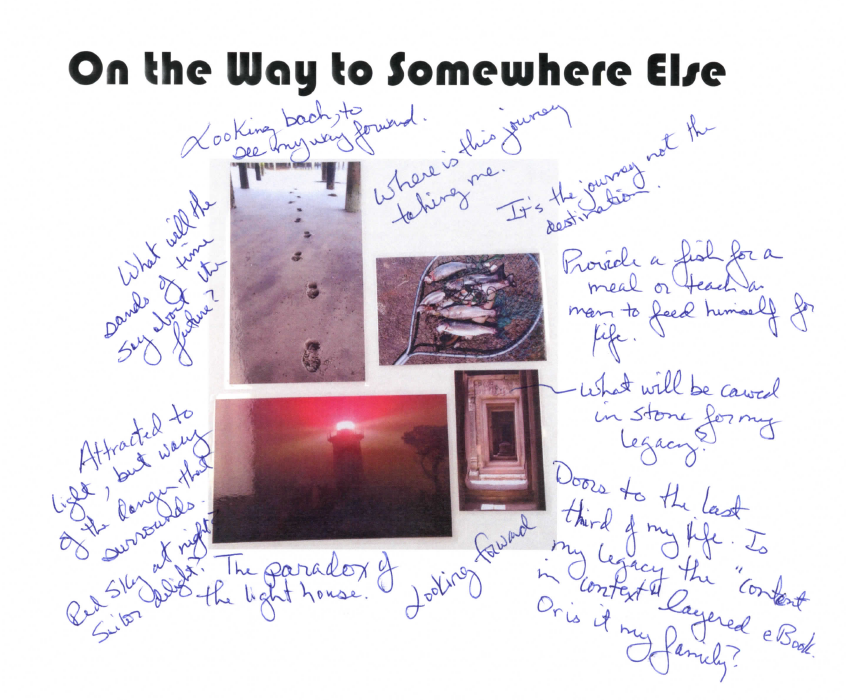
Sylvia suggests we take a picture of our images so that we can print them out and do additional work reflecting on what those images mean.  A couple of days later, I print out the images and write what comes immediately to mind.

What I want?

Amazing.  The visuals really do elicit a different set of thoughts and ideas than what is coming out of my “writing my way into existence.” I start thinking of this process as “visualizing my way into existence.”

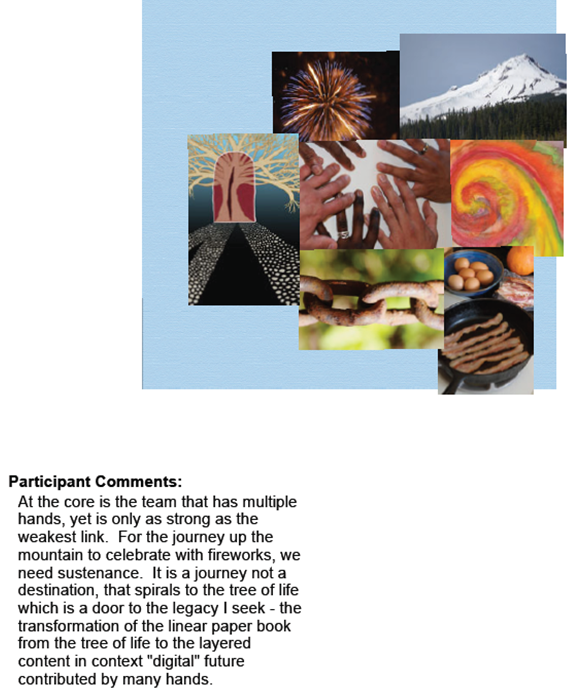
I am interested in trying out the online version as Sylvia shared that the ImageCenter has images of paintings that the founder Christine Martell created.  I was secretly hoping that I would have the same images to choose from so that I could recreate what I did with the Image Set and be able to resize the images.  However, the images were completely different.  OK, Skip, go with the flow.  So I picked the same question we’d used at the start of the group envisioning process “What do I want in the future?” Out came the following (see full PDF):

What do I want in the future?

I couldn’t believe how easily the text flowed out of the images to describe what I was thinking and feeling in the moment. However, the rest of the team that participated in the group exercise will notice some related imagery to the group future visual we produced – many hands, sustenance, and the tree of life.

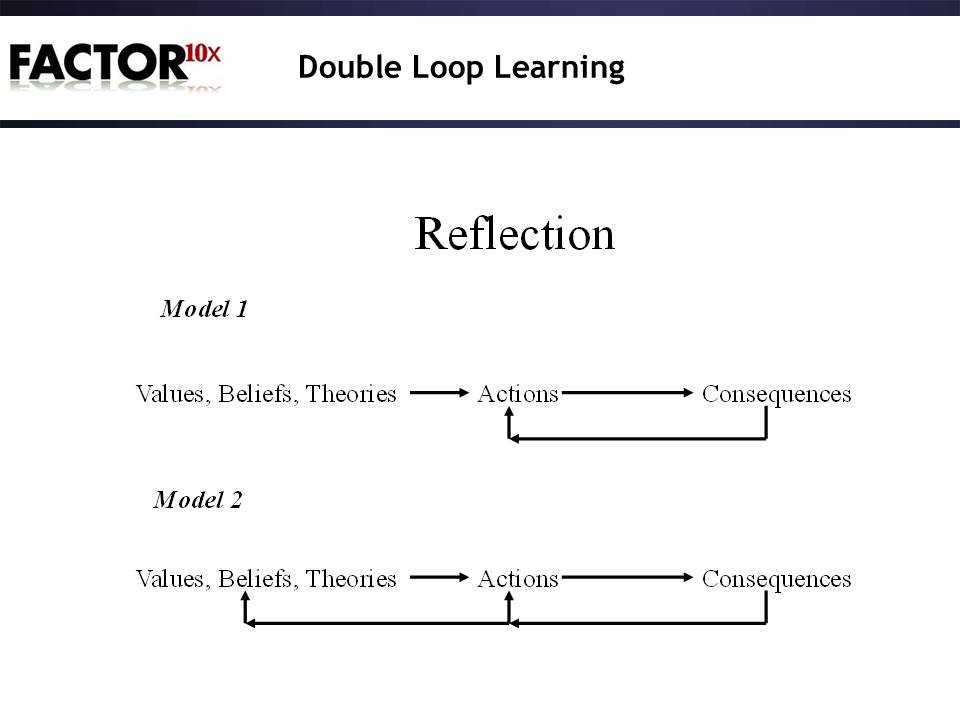
The VisualsSpeak images, process and tools fit all my criteria for a good process – it is quick, it is creative, it brings together the visual, auditory, and kinesthetic, and it reflects my inner state.  The process meets Chris Argyris definition of double loop learning that Schon describes in The Reflective Practioner: How Professionals Think in Action.

Double Loop Learning

It must be the unseasonable warm sunshine that is suffusing Seattle the last couple of days that is creating the context for all of these wonderful visuals and visualizations to show up.

The visual world is speaking loudly today.

Posted in Content with Context, Human Centered Design, Idealized Design, Learning, Nature, organizing, Visual pattern Language, Working in teams | 4 Comments

Walter’s Laws

While creating and developing ALL-IN-1, I wrote down my first law of software development – “Any product not used by its developers ain’t worth squat.” In building our system, we depended on ALL-IN-1 to coordinate the work among the developers. We used our product every day. When we looked at our internal and external competitors, it was clear that the developers of the systems were not users.  Our competitors systems were neither useful or usable as a result.

Over the years, I accumulated other laws of software development and of business. While laws are a bit presumptuous, principles or heuristics just don’t have the same level of pithiness.

The following are the current collection of laws with a little bit of explanation.

  1. The usefulness of any product is directly proportional to its use by its developers. The Southern Version of this law is:  “Any product not used by its developers ain’t worth squat.”
  2. Version 2 of any application is a pseudo Javascript compiler.  The application developers get confused over who is the customer – an end user or another software developer.
  3. The version 1.5 of any application product is a replacement for whatever the current desktop metaphor is.
  4. When in doubt about what do to next, start at the end goal and work back to the present.  This law is a derivative of Russ Ackoff’s Idealized Design where Russ points out that in artificial intelligence terms it is very difficult to do forward chaining to solve a problem.  Backward chaining works much better.
  5. Words mean something but almost never the same thing to different people. Words are the ultimate abstraction.  A movie is never as good as the book.  A product never looks like the specification.

    Interpreting User Needs

  6. When the process you are doing isn’t working, reverse the steps.  Most of us learn a change process that Bob Biller describes as bedrock – hold a system steady for long periods, make massive changes all at once, and then bring the system back to steady state.  Biller describes a better process for environments which change rapidly – swamp mode.  Here you make small changes all the time, much like you would traverse a swamp.
  7. If you are agonizing over picking the optimum choice from a list, implement all of them (move from either/or to BOTH/AND).  Time after time I see software engineers spend days to weeks trying to figure out by themselves (without involving real users) what is the best choice.  By implementing all of the possible ways (usually takes far less time building than trying to decide), choice is preserved until you do get the product in front of real users.
  8. If you can’t decide which option to pick, pick any of them and get started, but be specific.  Ken Olsen’s variant:  When in  doubt JUST TRY!
  9. Produce your product or service every day even during development. Worry about real problems, not artificial ones. Keep the sense of urgency high. Keep the focus on producing value high.  Get paid for the product that is produced. Enable continuous improvement.
  10. Never assume you are the top or bottom application.  Assume the computer is a valid user too. This law is a reminder to make sure that all of the functionality you implement can also be used by other developers.
  11. Open architectures always win, particularly plug in architectures.  The power of others being able to add value provides far more rapid growth than your own development team.  Imagine our surprise when we did the Aldus-Adobe merger when we revealed our respective product revenue streams.  Industry pundits estimated the size of the photo editing market at $15M.  With their plug-in architecture, Adobe was generating >$250M a year – and no one knew.
  12. Integrating applications are a bitch – ALL-IN-1, PageMaker.  You are at the mercy of every other developer and their product release cycles that you are trying to integrate with.  Filters are always out of date.  Testing is a combinatorial impossibility.  The V1 integrating application always looks terrific, but the lifecycle costs of continuing to maintain the product are horrendous.  This law is all about dependency management.  V1 attracts a hot market if done right; but things get combinatorially harder in future versions.
  13. Integrating applications always suck.  They are never good at any function.  The balance of integration versus good functionality versus interaction with other programs always gets done wrong (there is never a right mix for a large enough audience).
  14. When developing a comprehensive system specification which includes APIs, always develop the authoring tool as well.  Authoring tools are always left out in a race to get the product out, but it is the authoring tool which points out the holes in your API and system definitions.
  15. Messages and communications are not media neutral.  The translation between media helps sharpen your ideas and content.  There is a two way flow between what you are trying to communicate and the form you communicate it in. For example, the thesis student projects are generated in multiple media at the Institute of Design – slide show, video, brochure, and 16 page paper.  Doing the thesis in multiple media helps the student understand their ideas much better.  If you want people to edit for ideas and content do it on a crummy printer (low resolution and fidelity).  To edit for typos, do it on a laser printer (high resolution and fidelity).  If you want business executives to understand product concepts do sketches and storyboards, not high resolution prototype applications.
  16. Ends/Means Confusion. When you are with a customer it is easy to focus on Ends.  When you are not, you get immersed in Means.  Picking the customer(s) is the art form to developing a successful product.  Find tangible surrogates for the development team to always have the customer present in any design or product development activity.
  17. If an organizational function or role is not represented in a meeting, their input will be sorely missed. It’s not who is present that is important; it’s who is missing.
  18. Life is a medium scale number problem. Large scale number problems can be treated statistically.  Small scale numbers can be treated analytically.  Most wicked and difficult problems in business are medium scale number problems.  Most professionals convert a medium scale number problem into a large scale number problem and try to sub-optimize everything.  Goldratt brilliantly showed how to convert a medium scale number problem into a small number problem with his Theory of Constraints.

As I shared the list of laws with colleagues, Andy Cargile graciously added the laws that he has accumulated to the list:

  1. Whenever you are brainstorming for solving a problem, always do one pass at reframing the problem and solving it orthogonally.
  2. If you have to explain how to use the interface to the user (who has basic knowledge), it’s not designed well enough yet.
  3. Open systems are a bitch in practice – in “theory” everything “should” work with everything else. Or, the equivalent: have the vendor prove the compatibility of their “open system” instead of you.
  4. In evaluating products, you have to “build” something similar in each one (versus just playing) or you’ll miss the gotchas.
  5. The first people to talk to in redesigning/enhancing an app is the customer service (answer line) folks. They can point out all the problems (without trying to fix them).
  6. Committees can’t create good names. Corrollary: Margaritas can (get away from the day to day work environment).
  7. If one person says it sucks, get a second opinion. If two say it sucks, you have some problems to deal with. If three say it sucks, it sucks.
  8. Beware the functional demo to executives (they’ll plan to ship it in a week).
  9. In estimating, it’s the tasks you forget that kills the schedule, not the individual task estimates being off.
  10. Let the resource doing the task tell you how long it will take.
  11. Have your mom test a system for you (or other completely uninvolved and uninitiated person); you’ll learn something.
Posted in ALL-IN-1, Content with Context, Software Development, WUKID | 2 Comments

Organizations Don’t Tweet, People Do – Euan Semple

Once you figure out how to dip your “knowledge net” into the stream of search engines, blogs, Facebook, LinkedIn and Twitter, the world just shows up at your doorstep (oops, I mean browser window).  Well, sort of.  It helps a lot to have great colleagues who keep pointing out where the gold nuggets are.

A couple of years ago, Mason White pointed me to Pinhawk Legal Technology Daily Digest. He explained that of all the resources that he has come across this daily email provided the best and quickest summary of what was important to read in the area of eDiscovery and Knowledge Management.  Over the last couple of years, this is one of the few daily emails that I read religiously.

While you could lose yourself for hours if you clicked through all of the resources, the editor does a great job of highlighting the three or four blog entries that drew his attention the previous day.  The amazing thing is that the quality of the blog has stayed high even through a change in editors.

I usually end up clicking through to one of the highlighted articles each day.  On January 30, 2012, the entry that caught my eye was “Jack Vinson talks about Euan Semple’s book Organizations Don’t Tweet, People Do.” As I am in the process of trying to understand the role of Twitter in my online knowledge streams, the title caught my eye. In the first couple of paragraphs, I realized that I needed to get Semple’s book.

So I switched over to the Amazon Kindle iPad app and ordered the book.  Instant gratification is such a wonderful thing.

I felt right at home as I started into the book with its introduction by Andrew McAfee, whose book Race Against the Machine, I’d just finished. To my wonderful surprise, Semple frequently quotes David Weinberger who I’d recently reconnected with after reading his book Too Big to Know.

The more I read, the more I realized that Euan must have been living in my head the last ten years.  Rarely, do I come across a writer who not only has had similar experiences, but who is eloquently able to express those experiences in text. So many of my experiences and thoughts just stay jumbled up and never make it through my typing fingers to the keyboard.

Jack Vinson set expectations appropriately that this wasn’t a book about Twitter or technology:

“Funny enough for a book with this title, the book really isn’t about Twitter – or any other specific service.  Twitter simply serves as the most familiar vehicle to have a discussion around how we operate in the world of blogging and forums and Twitter and Facebook and all the other social services that are out there.  And how we need to operate has been changing for a while – it’s just that there have been too many people with a hierarchical or command-and-control mindset to be able to see it.”

The book was exactly what I was looking for to understand the organizational implications of social media and the impact on both individual contributors and management in the age of the blog.

Then I realized that I needed to understand who Jack Vinson was and tracked back to his biography and website.  Low and behold he has a strong background in knowledge management and Theory of Constraints.  I’d been writing a lot about both lately so I sent off an email and yet another conversation has started.  I can’t wait to make my spring trip back to Boston to meet with Jack and other colleagues from my invisible university.

One of the measures I used to determine what my top books from 2011 would be is how much I highlighted and made notes within the book.  It’s clear that Semple’s book will make the Top 10 as I made at least 116 highlights and 17 notes.  I made so many highlights that Amazon would only show me a portion of them because “for some books the publisher allows only a limited percentage of a book to be ‘clipped’ and stored separately from the main body of the book, as normally happens when you add a highlight. If you exceed this limit then you will see fewer highlights on this website than you actually marked on your Kindle.”

My favorite chapter in Semple’s book was “Writing Ourselves Into Existence.”  The book title comes from a quote of David Weinberger’s from The Cluetrain Manfiesto.  The phrase and the chapter captured exactly what I’ve been doing the last three months – finding my voice so I can write the layered digital media text I am working on. Euan summarizes the chapter:

“Developing your own skills and knowledge has never been easier. In fact it has never been more in our own interests to build skills and capabilities as the world of work becomes more unpredictable. The web gives us access to all sorts of wonderful resources for learning but it does more than this. It helps us understand ourselves and the world around us in context. It helps us make sense of things. It helps us ‘be’ more. There is something about the process of blogging that makes you more self-aware. You become more thoughtful about yourself and your place in the world. In the reactions of others to your writing you get a different perspective, possibly for the first time, on how others see you.”

Semple combines this insight with arguing that the Internet with emails, blogs, Facebook, and Twitter is exploding a renaissance of writing literacy back into society.  More people are writing AND publishing more than ever in history.

Being able to name what I am doing as “writing myself into existence every day” is so liberating.

The wonderful surprise at the end of the book is Semple’s impassioned plea for us to open our eyes to what the Internet and the web are enabling in today’s workplaces:

“Some time back David Weinberger wrote that the motivating force behind the internet was love. It was the basic human desire to connect that made it all hang together. At the time I admired his idealism and indeed bravery at being so open about something we have all been trained to dismiss as at best personal and at worst a sign of weakness.

“In contrast I have just finished reading Joel Bakan’s The Corporation in which he exposes the fact that corporations are legally bound to do just one thing – maximise shareholder value and that in fact to be motivated by higher ideals, or indeed love, could be considered detrimental to that overriding purpose if it impacts the bottom line in anything but a positive way.

“Where did all this come from, where did the idea that the most powerfully motivating force in the world had nothing to do with business? We spend most of our adult lives in the workplace and at work we bring about the most important and long lasting changes to our society and our planet – and yet we are not encouraged to talk in terms of love. OK we just about get away with “loving our job” or “loving success” but start talking about loving colleagues or loving customers and you’ll have people running for the door. And yet isn’t this what makes great people and great places tick? A deep sense of connection with each other, a depth of purpose beyond the everyday that sees customers as more than merely stepping stones on the way to returning that value to the shareholders? . . .

“Maybe love does have a place in business after all. Maybe more and more of us will start to have the courage to begin to talk about what really matters to us about work and our relationships with each other and to push back the sterile language of business that we have been trained to accept. Maybe we will realise that accepting love into the workplace reminds us of the original purpose of work – not to maximise shareholder value but to come together to do good things, to help each other and hopefully to make the world a better place. Maybe. …

“Oh and by the way if the above is too new age and namby pamby for you I reckon social computing is capable of taking 25% out of the running costs of most businesses – so there!”

What a way to end the book with the intertwining of workplace and love.  What a concept.

Would we have more great leaders working in great teams producing great results if we regularly wrote ourselves into existence with love in our hearts and minds? That is a super question for this Super Bowl weekend.

Posted in Content with Context, Knowledge Management, Learning, organizing, Relationship Capital, social networking, User Experience | 4 Comments

Is the university experience wasted on the young?

Every now and again, the universe conspires to free up some time to do some face to face learning with terrific resources in the academic world.  After a whirlwind set of face to face meetings with professors at UW Seattle and UW Bothell where I learned a boatload, I reflected on my university experience at age 18 versus today.

While I am deeply grateful for my four years as an undergraduate at Duke University, I mostly went through the motions of attending the required classes and getting through to a degree.  Most of my learning occurred in my part time jobs programming lab computers in a psycho-physiology lab and for an automated medical records research group.

I viewed the classes as the penalty I had to pay to be able to do the part time work with the lab computers.  I did the minimum to get by or as I shared with my children “when I was in college, I made the upper half possible.”

In the set of interactions with a diverse collection of professors today, I come at the meetings with a notebook full of questions as I try to make sense of the rapid rate of knowledge production changes in the university world.  How wonderful it is to see computational thinking and practice infuse almost every discipline.  How eye opening it is to see what is going on in the digital humanities and the shift from science as theory and simulation to science as making sense of Big Data. I walked away with a notebook full of references to chase down and even more good questions then I walked in with.

After forty years of creating companies and products, I am finally ready for a true liberal arts education.  Yet, not the kind of “dolt in a seat” education of my youth.  Every idea that comes streaming through from the professors is cross referenced against forty years of business experience and family living.  Each assertion raises deeper and deeper questions.

Alan Wood

I am having the time of my life exploring topics and digging deep into areas I never had the time for or frankly the least bit of interest – Chinese history for example (thank you Professor Alan Wood for opening up such an interesting and relevant topic).

This excitement in the immersion of learning made me wonder if we have the university experience backward – shouldn’t we come back at age 60 or so for what would be a real liberal arts and sciences education?  What if we looked at the university experience as interesting bookends on a life – start us off on the life long learning pursuit at age 18 and then make sense of our life experiences at age 60?

Most of us at age 60 are still lively and vibrant and have generous amounts of time with our children now grown and on their own and our financial responsibilities lessened. The time freedom could allow us to come back to truly educate ourselves so we can devote the remaining third of our life to working on the big problems of global society.  What would a classroom experience be like with a mix of young adults and the worldly wise – for the students and the professors?

Sue Kraemer

The 24 hours of learning immersion started with a couple of hours getting the story behind the story of how Sue Kraemer transitioned from a world class bioinformatics and genetics researcher to getting her MBA at Seattle University and now teaching a management course in the CSS Department at UW Bothell.  We both realized we have a shared passion for understanding how to create great teams working in “healthy” corporate or academic environments.

Gray Kochhar-Lindgren

Gray Kochhar-Lindgren

Then it was on to a meeting with Gray Kochhar-Lindgren to thank him for introducing me to Kate Hayles and to get his perspective on the digital humanities.  Gray is the Associate Vice Chancellor for Undergraduate Learning at UW Bothell. Gray has written several fascinating books that reflect his passion for “Philosophy in the Streets” that he teaches.  As I described my journey so far in learning about the digital humanities, Gray let loose with so many wonderful references that I couldn’t write fast enough.  I am learning that each 1 hour session with a good professor leads to at least 100 hours of reading and study for me.

Ed Lazowska

Next up was a meeting with Ed Lazowska to follow up threads that he introduced in his talk at a recent MLA conference in Seattle.  Ed was finishing up a conference call at our appointed time so I had several minutes to explore the artifacts in his office and see what kind of books he had on his shelf.  I was immediately drawn to a 2 foot by 3 foot poster board that had the “genealogy” of the professors who taught Ed in his pursuit of his PhD and the students that Ed has advised in his 30 years as a computer science professor at UW.

My heart melted inside as I looked at Ed’s PhD students, grand-students, great grand students, and great great grand students.  What a fantastic visualization of a professor’s 40 year impact on the academic world and the world at large.  When Ed finished up his call, I had to ask about the visualization.  In his high energy way, Ed shared the story of the surprise birthday part at MIT where many of the family tree of his students gathered to present the genealogy diagram as one of their gifts.

Ed is an incredible gift to Washington state for his academic prowess and generations of students he has taught and advised.  However, his greatest gift to Washington state is his tireless advocacy for STEM (Science Technology Engineering Mathematics) Education.  Ed is ever present with his message of how much we are under funding university education in the state.  When I shared with my wife that I met with Ed, she immediately brightened and shared “I remember Ed from a presentation he gave to our guidance counselor conference.  He was engaging, vibrant and I could even understand him.  I’d expected a lot of technical jargon from a computer science professor, but he was far and away the best speaker at the three day conference.”

The 90 minutes flew by with a wide ranging discussion that included the potential coming together of digital humanities and eScience along with the problems of how do you teach computational thinking.  Then we looked at the declining funding for STEM undergraduates in the face of overwhelming qualified student demand.  We finished by going through a presentation on the relationship of educational funding and job creation in the state.

Beth Kolko

On the way back to the HCDE Department, I ran into Beth Kolko who is pioneering what she is calling Hackademia.  At our recent HCDE External Advisory Board meeting she described what she was doing with non-engineering students and 3D printers to create medical devices for under developed countries.  She pointed me to her recent presentation at the Berkman Center for Internet and Society at Harvard University.  I’ve been fascinated with what is possible with the coming desktop 3D printing revolution after reading Neil Gershenfeld’s book FAB: The Coming Revolution on Your Desktop – From Personal Computers to Personal Fabrication.  Beth is always so exciting to catch up with as her deep commitment to moving technology from the developed world to the developing world is so inspiring.

Figure and ground illusion

With a hole in my schedule between meetings, I took the time to attend the HCDE 521 seminar where Anne de Ridder was presenting “Making Sense of chaos: An evaluation of the current state of information architecture for the Web.” Buried in her talk was the comparison of a web site she designed for FEI in 2009 and Apple’s current MacBook Air website.  She pointed out that the “design rules” of 2009 were to make sure that the structure of the website was in the foreground and the content was in the background.  Yet, currently the Apple website reverses things and has the content forward (large images and content is king) and the user is drawn into the experience by scrolling through the content.  Her discussion reminded me of the “figure and ground” illusions of Gestalt Psychology.

Jennifer Turns and Family

Content versus structure was a timely insight as this is an aspect of my “content with context” application design thinking.  As I was absorbed with transferring what Anne was describing to the world of the iPad that I am designing for, Professor Jennifer Turns shared that Anne’s insights were broader than just the website.  Jennifer described a recent conference she attended where the discussion was around how structured the university is with each class having a formal syllabus with detailed learning goals that sits in a formal curriculum with so many credit hours required for a degree.  Jennifer pointed out that everything in a university curriculum today is Structure Forward.  Yet all the research is showing that learning is far messier than that – for students the content needs to be forward, not the structure.

OK, Jennifer, you have hurt my head once again.  Fortunately, we both had some time as we headed back to Sieg Hall so that I could ask her to fill in a few of the gaps in the amazing leap of insight between website structure and university curriculum structure.  The next hour disappeared as we leaped from this topic to several of her current research projects. I was particularly intrigued with a research group she is leading looking at academic literature to find either explicit or implicit implications of the research for practitioners.

Professor Turns is one of the most innovative teachers and researchers I’ve come across. She is always thinking deeply about what is going on with student learning and how do we all get better at learner centered design (a variant of human centered design).  And then she takes those insights into practice as soon as she can.  Whenever we get some quality time together, I come away with 2-3 innovative insights on how to do a better job of teaching.  More importantly, I come away with better questions to drive deeper thinking about human centered design than I walked into the interaction with. And lots more books and articles to read.

Jan Spyridakis

The 24 hours of immersion were about to finish up with my last meeting with Professor Jan Spyridakis and Professor Turns to review the insights and advice we’d gained from the recent External Advisory Board meeting.  In less than a month, the HCDE department had acted on the bulk of the advice and were already gearing up for increasing the size of both the undergraduate and the Masters programs.  The quality and number of applicants to each program continue to grow exponentially.  In addition, both professors were really excited about the quality of the candidates applying for tenure track faculty positions to enable this growth.  The administrative items were concluded very quickly so that we could continue to understand what is driving the demand and how we can continue to improve our learner centered design, particularly as we scale the programs.  Yet again in her thoughtful way, Jennifer described her innovative ideas for how to use Teaching Assistants to facilitate learner centered design for the coming year.  I can’t wait.

Whew.  What a 24 hours.  My head was full.  My head hurts at the implications.  I am elated about the better questions I came away with to drive future research and learning.

At the top of my list of questions is wondering how we bring back into the university learning environment the many of us baby boomers with lots of rich life experience to re-engage in learning what we missed the first time around? And more importantly to use that education in service of our global connected society grand challenges.

Posted in Big Data, Content with Context, Knowledge Management, Learning, organizing, Relationship Capital, social networking, University, User Experience, Working in teams | 4 Comments

A Funny Thing Happened in the Tasting Room

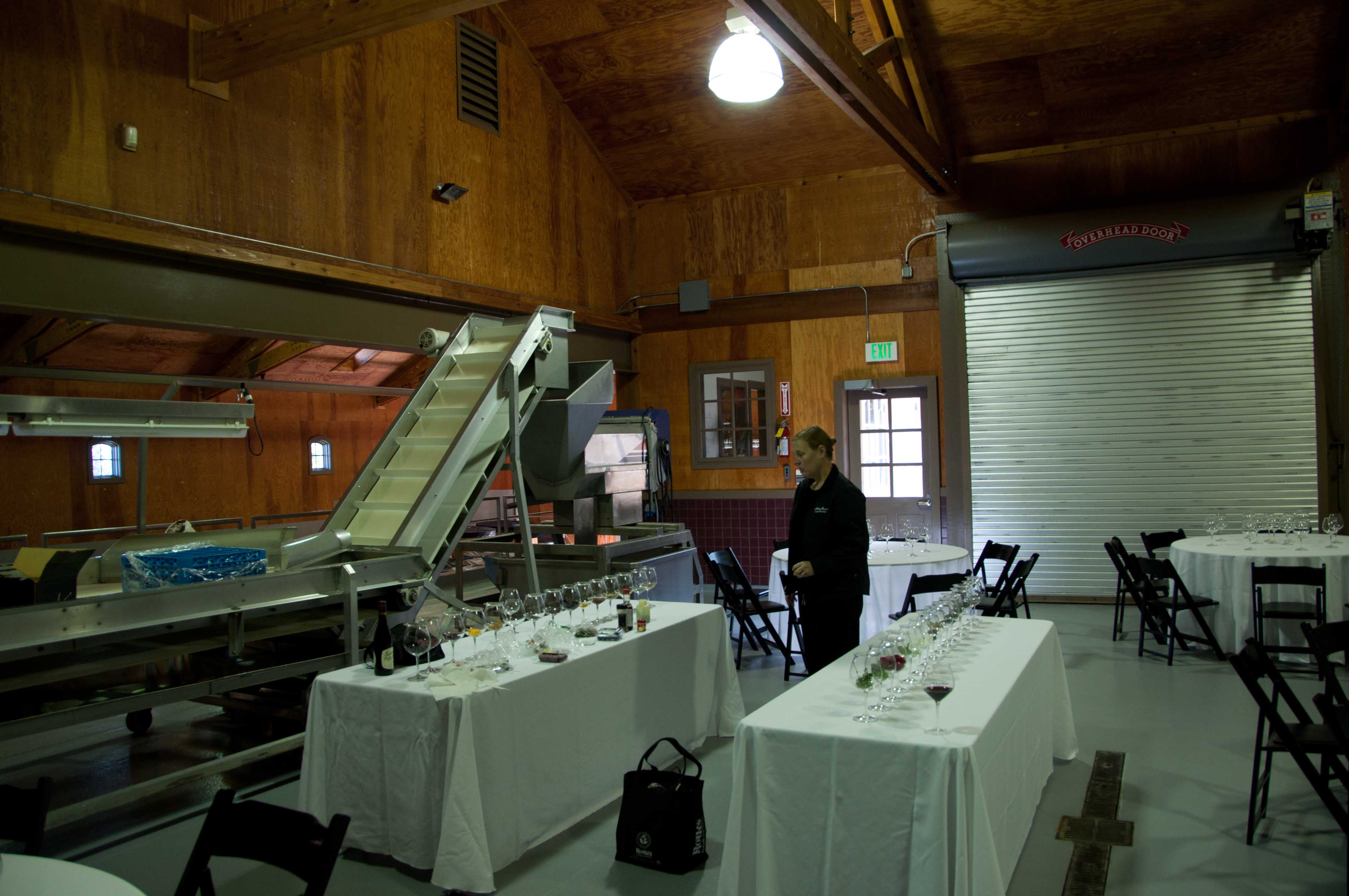
Archery Summit Tasting Room

In my continuing pursuit to keep my “butt in the seat” and pursue the writing life, I endeavor to take insightful moments and capture them by “writing myself into existence.”

Something wonderful happened working in the Archery Summit tasting room in coming out of my introverted head way of selling. I experienced what happens when you start leading more from the heart and one’s passion.  I would never have believed that I was going to learn more about selling in two days at Archery Summit than I’ve learned in a lifetime of professional selling of software products and equity stock to investors in the companies I’ve started.

A couple of months ago I learned that Patrick Reuter and Leigh Bartholomew decided to build a tasting room at the end of their new winery location for Dominio IV.  In talking to Leigh’s mom who handles a lot of the wine club billings, she was excited about the tasting room but worried that Patrick and Leigh might not have any more weekend time together or not afford to hire folks to work on the weekends for the tasting room.  That gave me the idea to help out by volunteering one weekend a month in their tasting room.  So I called Patrick and asked if volunteering would help him out.  He was very excited and I couldn’t wait for the grand opening (which was on a Memorial Day).

After a couple of days reflection, it occurred to me that I didn’t know anything about working in a winery tasting room.  I’d spent a lot of time observing the tasting rooms at Benziger Family Winery and Imagery Winery for their Direct to Consumer project, but I had not stepped across the line and actually worked with paying customers.  So I scratched my head and wondered how I could get some experience.  Finally it occurred to me that Chris Nagy, tasting room manager at Archery Summit, might be kind enough to let me volunteer once a month.  I called Chris and she welcomed the idea.

A couple of weeks later, I drove down to Archery Summit for my first weekend of volunteering.  Chris asked me if I had my Oregon Alcohol Servers Permit.  “What’s that?” I asked.  It turns out you have to attend a half day class and take a test in order to pour alcohol in the state of Oregon.  Chris was kind enough to fill out an application and pay the application fee for me and let me know that I had two months to come to Oregon and take the test.

To warm up for the Oregon test, I attended a class at a seedy pizza joint in South Seattle where I endured three hours of lectures and videos and bad jokes, took a test and got my Washington Alcohol pourers permit.  I asked the instructor if he knew an equivalent course for Oregon and he related that the nice part of Oregon is that you could do everything online.  He pointed me to the website and I signed up online and took the Oregon online classes and test and passed with flying colors (OK, I missed one question).

As I was relating the experience to Patrick, he laughed and said “You dummy, I got all of the questions right.  Don’t you know that you take the test in one browser window and have the tutorial and materials open in another browser window.  You’ve got to be really dumb to miss any questions that way.”

Pinot Gris Vineyard within Red Hills Estate

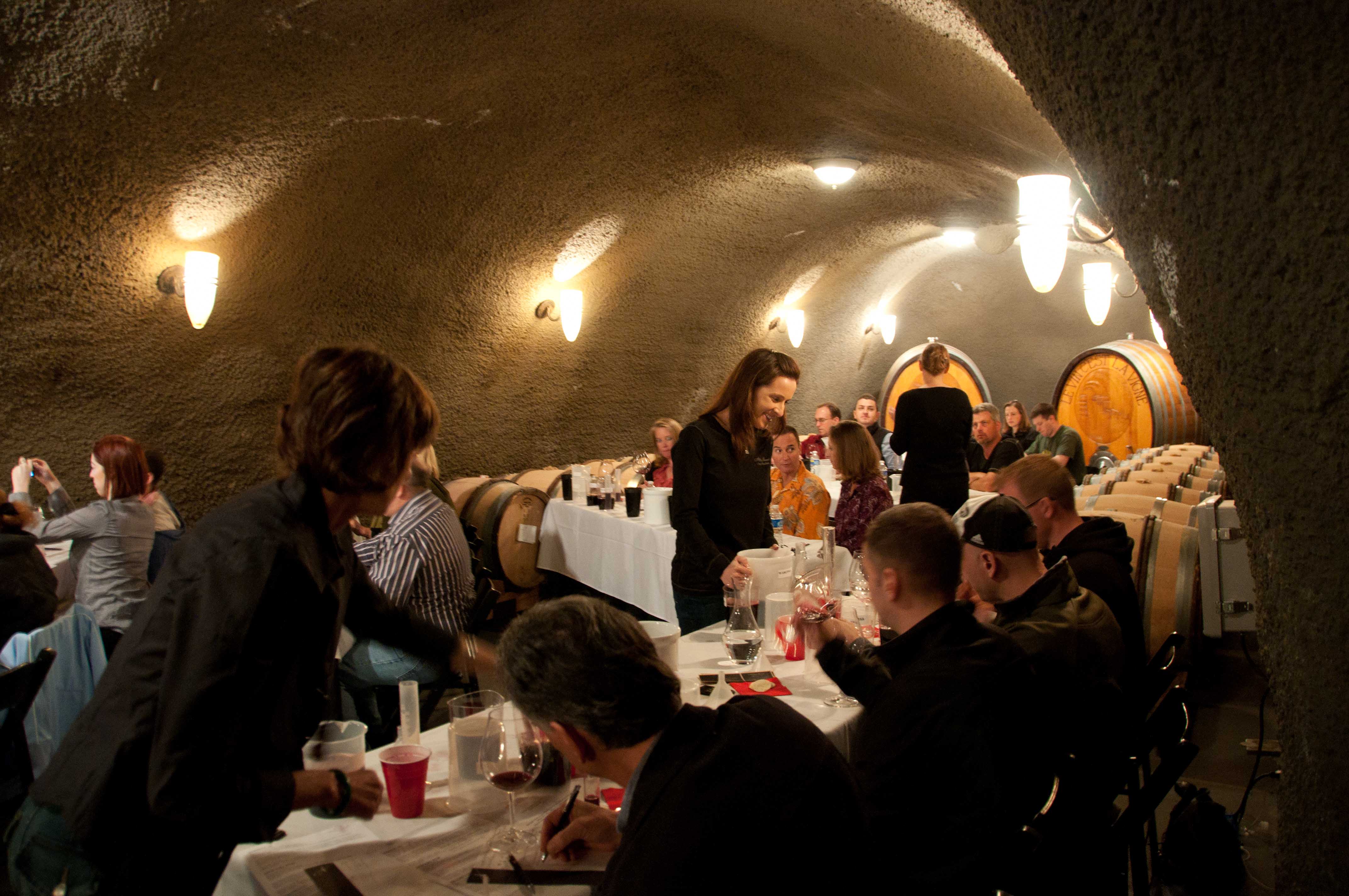
Armed with my new, official, laminated Oregon Alcohol Servers permit, I was ready to go back to Archery Summit and take that next step to really serving and selling consumers.  Of course I would pick a Wine Club (A-List) release weekend to practice my new skills.  Saturday was the Spring A-List release event for customers to pick up their 2009 Pinot Gris, 2009 Vireton Rose, and 2008 Premier Cuvee Pinot Noir.  Those wines would be served at the first three serving stations in the barrel caves underneath the winery.  The last serving station would be for the 2007 Arcus Estate.  I was assigned this last table because presumably as an A-List customer for 10 years I knew a lot about the Archery Summit wines. All the staff knows that Arcus Estate is my favorite of the Archery Summit Pinots.

Along with the wines being poured at each station, there was a food pairing.  On my Arcus table there was a plate of dark chocolate with hazelnuts from Honest Chocolates of Newberg, OR.  The aromas from the dark chocolate and the Arcus Estate Pinot Noir were cruel and unusual punishment.  I knew I couldn’t dive into the chocolates or I’d be munching all day.  Then, I realized I’d be pouring Arcus Estate all day for the guests and I couldn’t have any for myself (Oregon Alcohol Pourers Law – look it up).

At 10am sharp, the guests started arriving.  We’d been advised to do 1 ounce pours to make the wine last as we didn’t know how many guests would be coming for the day.  Over the course of the day, it became clear that I was incapable of delivering a one ounce pour.  The bigger problem was that as I was the last station and had the best wine, the guests kept coming back for second and third pours.  Nobody had warned me about that phenomena.  I didn’t want to turn anyone away and the rest of the staff was so busy there was no one to ask what to do.  I kept on pouring graciously. From the guest perspective they were delighted to find a newbie pourer.  At the end of the day I had gone through 36 bottles of Arcus Estate wine for the 500+ guests.  I gained the dubious distinction of the pourus maximus.

Pinot Noir Grapes Ripening

At the beginning of the day, I assumed that since this was an A-List release event all of the guests would know about the wines, particularly Arcus Estate, since Archery Summit has produced this wine since the early 1990s.  Then I remembered that Chris shared that unlike other wineries, Archery Summit wouldn’t turn non A-List members away if they showed up for a tasting.  So I started “presenting” the wine to each guest and describing a little about the qualities of the Arcus Estate Vineyard.  If they started asking questions, I shared some more.  Pretty soon I realized that relatively few of the guests knew that much about my favorite vineyard.

I started honing my pitch a little more and began engaging with the guests to learn more about their backgrounds.  Where are you from?  What did you think of the Pinot Gris?  Which wine was your favorite today?  All of these were easy warm up questions, and most folks took the questions for what they were – an invitation to a deeper conversation about the wines.  I was really having fun now.  I realized it is easy to be an extrovert when you have a great product that you are holding in your hand and that lots of people want more of (well, OK, I did taste a little of the wine to help the extroversion along).

Tasting through the vintage

Even when the crowds got real dense and I was scrambling to pour wine and open new bottles to keep the flow going, I was having a great time.  My tongue got tied up at times and twisted around and I got a temporary case of “word salad” popularized on Boston Legal.  All in all, it was an invigorating day spending ten hours on my feet interacting with 500 fine wine consumers.

After we cleaned up from the Wine Club event, it was time to stage an experiential seminar for twenty couples who were CEOs of businesses in Southern California.  Anna Matzinger led a sensory experience seminar with some 32 differing “smells” in covered wine glasses and five “spiked” wines infused with different aromatics.  During the seminar, Patrick joined one of the tables and worked his irrepressible magic by going through the seminar with the guests.  When it came time to taste the 2008 Arcus Estate, Patrick created his visual language map of the wine and enthralled the guests at his table.

Tasting a range of Oregon Wines

After the seminar, the couples came down into the fermentation room to taste wines from three wineries of which Dominio IV was one.  I think all of the couples at Patrick’s table immediately started tasting his wines and Patrick did a booming business in the 30 minutes that went by so quickly.  I had the chance to observe and listen to Patrick as he described his wines and extolled their virtues.  I felt like I was in the presence of the pied piper.

After a quick dinner with my daughter, Maggie and her fiance (now husband), Brian, I went back to the hotel and collapsed into bed.  Everything hurt from my feet to the top of my head.  I wonder as I nod off if I will be able to make it through the next day in the Archery Summit Tasting room.

Archery Summit Estate Vines

I showed up in the tasting room the next day at 9am to get ready for the 10am opening.  There would be just three of the permanent staff on duty as it was expected to be a slow day.  In addition, a recent hire who did not yet have her Oregon alcohol server’s permit was there to help out with the glass cleaning and behind the scenes chores.  Because there were several tours and private tastings during the day, it meant that for much of the time there were only two of us in the tasting room to pour and educate as many as twenty five people squeezed into the tasting room.  Because it was pouring rain and cold most of the day, there was little relief for the guests to relax outside on the patio.

In the beginning, I was tentative with my first set of customers.   At least 90% of the consumers were on their first visit to Archery Summit with many of them from out of town (couples from Boston, Dallas, Houston, South Carolina, Seattle …).   As the morning wore on, I became more comfortable and more confident in my delivery of the wonders of each of the four wines we were serving (2007 Premier Cuvee, 2007 Renegade Ridge Vineyard, 2007 Looney Vineyard, 2007 Arcus Estate).  I’d present the bottle to each consumer and describe where each vineyard was located and a little about the aroma and taste profile that each vineyard imparted to the wines.

I would then answer questions as they arose trying hard not to do too much MSU (making stuff up).  Whenever someone indicated that they were interested in buying some wine, I’d hand them the A-List brochure and let them know that the $15 tasting fee would be waved and they could be assured of receiving the fine wines as they are released during the year along with the 20% discount.  At least four of the consumers that I engaged with signed up for the A-List.

I was really having fun now.  As the afternoon wore on and there were only two of us serving, I was hopping between four different groups at a time.  The challenge of figuring out where each group was in their tasting sequence, remembering to do the presentation and a little education on each wine, engaging the consumer in a personal conversation and showing my enthusiasm for the wine was quite a trick.  I loved it.  Every once in a while somebody would recognize the Masters logo on my shirt and we’d have a great discussion about the latest tournament.  About mid afternoon I was getting playful and my description of the Arcus Estate wine included – “note the wonderful aromas that hit you even before your nose gets close to the glass.  Whenever I smell those wonderful floral notes from the Arcus Estate, it just screams time to have a party.”  I’d get a good laugh and the guests would go “Yeah, it is time to have a party.”

“Well, then surely you need to take some Arcus Estate with you,” I’d respond.  Some of the folks even took me up on that silly line.

One of my favorite questions during the day came from a couple who wondered how many bottles of wine the grapes from a single vine would make.  I just happen to know the answer to that one as a result of reading Brian Doyle’s The Grail:  A Year Ambling and Shambling Through an Oregon Vineyard in Pursuit of the Best Pinot Noir Wine in the Whole Wide World.  So I passed on the story that Brian shared in his book and suggested they find the book on Amazon.com.

“Grapevines are amazing life forms when you think about it, they plunge their fingers a hundred feet down into the rocky soil, they can live for hundreds of years, they fend off all sorts of insect attacks, and they have been working with human beings for so long, thousands and thousands of years, that you wonder sometimes who cultivates who, you know what I mean?  Are people manipulating and taking advantage of grape vines, or are grape vines deftly using human beings to take over the world?”

“On my way back uphill to my car I remember what Jesse told me once, that each vine produces enough grapes to make about three-fourths of a bottle of wine, and I chew on the idea that three-fourths of a bottle of excellent wine is probably just the right amount necessary for two or three people to start telling stories fast and furious,so that each of the vines I pass is pregnant with stories, some of which were never born into the world before, and this idea makes me happy also, so by the time I get to the town where I am supposed to give a talk I am cheerful as a chipmunk.”

I shared with this couple that everytime I pick up this book I have to reach for one of my Archery Summit wines and pour a glass to sip while I reread Doyle’s wonderful Dundee Hills descriptions.

Pretty soon it was 4:30pm and the last of the guests were leaving.  The afteroon just sped by.

As a team we were all pretty beat as most of the us had worked both days and two of the team had worked four very busy days straight.  We reflected on the day and I helped a little with the cleanup and then said goodbye for the four hour (turned out to be five hour) drive north.

As I drove out of the red hills of Dundee, I just had to call my friend Barney and share a quick reflection.

“Barney, I just got the best sales education I’ve ever had in forty years of professional life.  What a great learning cauldron is trying to sell something in a tasting room under full load.”  I knew Barney could relate as he’d shared stories of his managing tasting rooms in his early winery career.  It is one thing to hear those stories and another to experience the tasting room selling environment for myself.

I realized there is something so powerful about sharing what you are passionate about with other people who are trying to learn.  Particularly the customers who brought themselves to a remote hard to find tasting room to learn about wine in this place called the Red Hills of Dundee.

Over the last 40 years, I’ve been a part of “selling” in many trade show booths to the masses who come by.  I’ve always hated those shows because it is such hard work to figure out the knowledge level of the person standing in front of you and then adapt your message to fit their needs.  Because I was always selling serious enterprise level software, I figured I had to be even more serious in my presentation.  I always felt it was a losing proposition to present something as complicated as Attenex Patterns in two minutes to somebody who only marginally cares.

As part of my wine education, I’ve had the joy of discovering the incredible complexity that goes into fine wine grape growing and fine wine making that it takes to produce a joyous product like the Archery Summit Pinot Noirs.  The gift of wine is that complexity comes down to the color of the product, the aroma that wafts from the glass, and the taste as the wine’s structure pours onto our palate.  Yet in the tasting room, I was still in my head in describing the wine and trying to figure out how to impart all that I’ve learned about the wine process.  Some folks found that interesting but not compelling.  It wasn’t until I started having fun with the consumers that the breakthrough occurred.  Once I got comfortable getting out of my head and letting all the knowledge and passion come out by being playful and engaging, I started creating relationships that also turned into selling transactions.  Could it be that simple?

There is also a power in being able to repeat a pitch over and over again, much in the same way that Bill Murray got to repeat a day in his life repeatedly in the movie Groundhog Day.  Quickly you realize that each new consumer is a chance to experiment.  The ability to go through 50+ pitches in an afternoon across a wide range of age groups – 22 years old to 75 years old – of both genders and with people from all over the country and with a wide range of knowledge about wine, hones one’s “selling” capability quickly.  Of course, wine also has the nice characteristic of loosening up the consumer as they taste the wine and help them be more relaxed and open to the “relationship.”

In so many of the sales training courses I’ve taken, you might get two or three opportunities to practice your pitch to a “customer”.  Invariably these practice sessions are with other students in the class, not live customers.  With most of the products or companies that I’ve been making pitches for over the years, if you get 5-10 times a week to deliver your pitch that was a busy week.  In two short days, I was able to pitch to over 650 consumers.  I made plenty of mistakes but a quick shrug and a smile would overcome those mistakes in a heartbeat as I’m sure everyone could see how much I enjoy the wines.

There were several questions I couldn’t answer and often there was nobody more knowledgable around, but there is always a way to move the conversation forward.  My favorite question over the weekend was “how does the 2005 vintage year compare to 2006, 2007, and 2008?”

“Gee, I don’t know, I can’t remember back that far, but look over here, we put a vertical together of just those years of the Arcus Estate as a package deal for you today at a great price.  Pick one up and taste for yourself the difference that the vintage made on those wines.”

There is something about being on the firing line with the customer with no backup that brings out a rapid education.  Of course, having a great product that speaks (tastes) for itself helps a lot – “taste the wine and what does each of these wines say to you?”  Being able to turn the question around is so easy with an Archery Summit wine.  Reflecting on this phenomena is when it really clicked what a great way and place to learn to sell is a tasting room.  When in doubt, let the wine speak for itself.

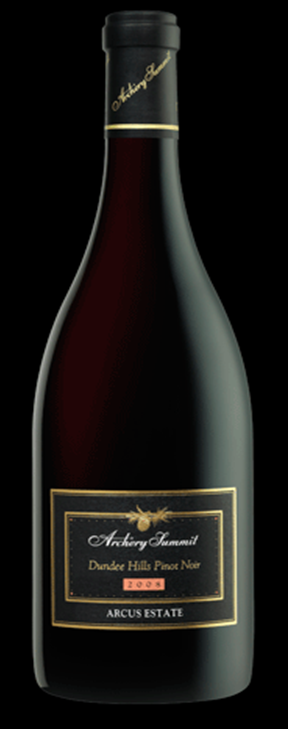
Arcus Estate Pinot Noir

I shared with Barney, how knowing what I know now, I wished I had worked in a tasting room 30 years ago.  Then I realized that for those who are just starting out what a confidence booster working in a tasting room could be.  Over the last several months I’ve noticed how quickly the younger tasting room staff goes from not knowing much about the product and being little more than a server, to being confident in their interactions with the customers and demonstrating a wide range of knowledge.  Could it be that a tasting room selling education is even better than a Dale Carnegie course or a Toastmaster’s course?

And the truly funny thing is that as an alcohol server you can’t drink any of the wine while on duty.  So all of this education is coming while I am completely sober.

The next time you open up a bottle of Archery Summit Arcus Estate Pinot Noir and drink in the floral notes of the wine’s aroma, know that the wine is just screaming “use me to learn to sell.”  Let’s have a party.

Posted in Attenex Patterns, Content with Context, Human Centered Design, User Experience, Wine | Leave a comment