Lifelet: Say “Hello World” Hazel

A tradition for a programmer learning a new computer programming language is to write a “Hello World” program. I cracked up when one of the first photos of our newest grand daughter Hazel showed up with a blanket over her that said “Hello World.” My daughter correctly guessed that photo would be my favorite.

At the time of a new birth, I find myself thinking of all those who came before us who made this birth a possibility. What a heritage Hazel has with the joining of multiple families.

Hello World, Miss Hazel.

Posted in Uncategorized | Leave a comment

And no communication occurs – the perils of mentoring

Communication is the results that you get, not the words that you speak.” – John Grinder

Before teaching a graduate school class at UW, or mentoring an entrepreneur, or giving a workshop, I take a few minutes to repeat the above advice as a simple mantra. It is a reminder to focus on those I am interacting with and not on what I want to say.

People need what they need, not what I happen to be best at.” – Author Unknown

Almost every teaching or mentoring interaction starts with me wanting to give my best, forgetting that may not be what the “student” needs. On my best days, I chuckle and back off and remember to do a little human centered design. My grounding “outcome frame” questions are:

  • What do you want to create today?
  • How will you know that you created it?
  • What resources do you have to get started now?
  • What other opportunities will this lead to?

As the first phase of a longitudinal research study with 9Mile Labs comes to an end, I reflected back to Kauffman Foundation research I encountered at the beginning of the project. In the report “Making of an Entrepreneur” the researchers asked 500+ successful entrepreneurs retrospectively what factors influenced their success. Most entrepreneurs answered “extremely important” or “very important” to all of the factors like:

  • Importance of prior work experience
  • Importance of lessons learned from previous successes
  • Importance of company’s management team
  • Importance of good fortune
  • Importance of Professional and Personal social networks

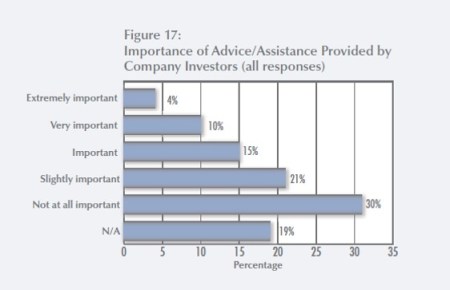
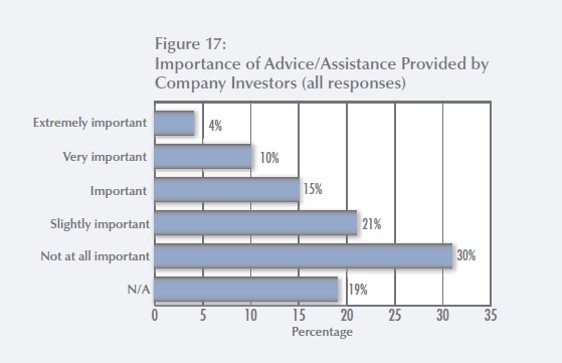
However, the question that caught my attention was “what was the importance of Advice/Assistance Provided by Company Investors (all responses):
Kauffman advice

Over half of the successful entrepreneurs didn’t think that investor advice was important or applicable. I was stunned at these numbers. Then I remembered my own experiences with investors and consultants that were forced upon us by our investors. I wanted their money, not their advice. I listened to their advice and then dismissed it. They didn’t understand my business and my unique circumstances. Much of what they had to say was platitudes. Worse, for every five people giving advice there were ten different conflicting opinions. I would nod and appear interested until the money was deposited and then go about doing what our business really needed.

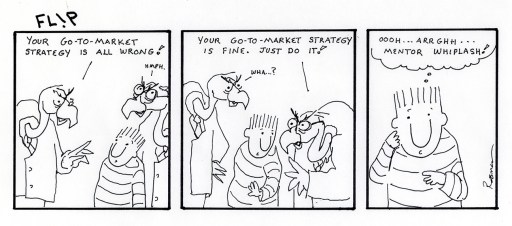
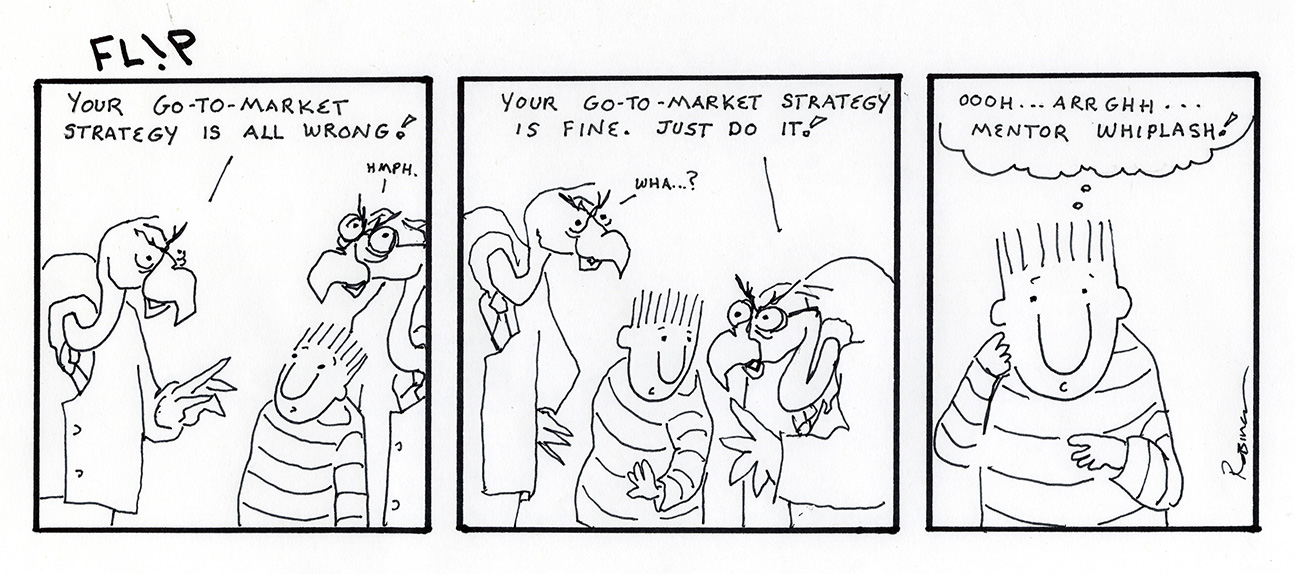
Fl!p calls this mentor whiplash:
mentor-whiplash

Yet, it is not just one directional. Entrepreneurs think that investors and mentors really want to hear their “pitch” rather than have a conversation and an opportunity for mutual learning.

let me practice my pitch

As we started our video ethnography study with the nine companies in the 9Mile Labs accelerator, this key issue of mentor/entrepreneur communication (or lack thereof) emerged as a research focus. Yet there was something about this theme that was important and elusive.

From an unexpected place, The Chronicle of Higher Education, came an important insight in a blog post “Mentoring is a Fantasy.

“Towards the end of grad school, I learned a key lesson about academia. I was discussing a draft of a dissertation chapter with my second reader. Although not my adviser, her work was critical for the arguments that I was building about psychological trauma and technology. Toward the end of the conversation, she said something to the effect of, “You know, this chapter could really use more Heidegger.” Inside, my heart sunk a bit. “Great,” I thought, “more to read. And from an author whose work I don’t really know.” But I dutifully wrote, “More Heidegger,” in the margin of a page, and after the meeting, I checked out a copy of The Question Concerning Technology.

“I read Heidegger and tried to understand how his views on technology fit into his and my larger projects. It wasn’t especially easy going. And perhaps in the third day of thinking about Heidegger, I had an epiphany that was perhaps closer to dasein than technology. As I came to see it, her comments were not so much about the dissertation that I was writing so much as they were about what the dissertation would be if she were writing it. Her comments were built on her wide knowledge of continental philosophy and the fact that she really could have deployed Heidegger effectively in the argument. But it wasn’t reflective of the reality of what I was going to be able to produce at this point in my career. I dropped Heidegger from all but a half sentence in my introduction, and my reader never brought it up again.

“The key lesson that I learned in this interaction is that mentoring is a fantasy, understood in the psychoanalytic sense. When mentors interact with us, their advice frequently comes from a place that reflects what they would do in our situations more than what we can do, given our own specific reality. My adviser had a fantasy version of my dissertation in her head that I simply couldn’t produce. (Her version might very well have been the better version, but that didn’t have much to do with what I was going to write.)

“Importantly, this moment helped me realize not just my mentors’ unrealistic expectations of me but also to see that I often had fantastical expectations of my advisers. The frustration that I felt when I turned in a draft of my first chapter and didn’t have comments within two weeks had everything to do with how I thought the relationship would and should work. Recognizing my expectations as the fantasies they in fact were allowed me to let go of some of what had been hardest for me in the process of writing my dissertation.”

With this insight, we started seeing how little impact the many forms of mentoring were having on the progress of the nine start-up companies. 9Mile Labs had an innovative plan for incorporating mentors into their B2B accelerator:

“We’ve picked the best entrepreneurial, technical, and business minds from the Pacific Northwest and beyond to mentor and coach the 9Mile startups in the program. These mentors aren’t just brilliant, they’re also driven to help propel our startups to the next level.”

The 9Mile Labs partners went further by having several matching processes to link the right mentors with the appropriate start-ups. They even provided financial compensation for the matched mentors. However, the hidden assumption was that the mentors knew how to work with the entrepreneurs and vice versa.

The mentors made recommendations based on how they would do the work, but the entrepreneurs neither knew how to receive the information or what help to ask for in a timely fashion. The entrepreneurs were doing the same thing that I did in my serial entrepreneurial past – do you have some money to invest in my company then I will appear to pay attention to you? If you don’t have money to invest in my company, I will mostly be polite and then completely ignore your advice.

Brant Cooper, author of The Lean Entrepreneur, echoes these observations in “Mentoring Start-ups is Hard: Five Ways to be a Better Mentor.” His five keys to successful mentoring are:

  1. Teach, Don’t Tell
  2. Focus Your Advice
  3. Challenge Assumptions
  4. Beware of Being a Domain Expert
  5. Teach Entrepreneurs how to be Good Mentees

David Robinson, in his book The Seer simplifies the most important part of being a good mentor – provide experience first and make meaning second:

“The tasks will help you develop new patterns of thinking and seeing. To that end, you will also find within the narrative a few related practices. The practices are useful in preparing your mind for the flip to a new way of thinking. This process is like riding a bike: you can read about it and think that you know or you can get on, start pedaling and learn to ride. The practices and tasks will only help if you do them; they can’t help if you don’t engage with them. To reiterate: perspective shifts are not an intellectual exercise; they are dynamic processes. Shifts in perspective are intuitive, experiential engagements made conscious through action and reflection. Effectual entrepreneurs are like artists: engaged in dynamic, fluid creative practices. Get on the bike and ride. Challenge what you think you know. Open your eyes to possibilities. Allow yourself to make meaning of your experiences after you have them. It is, after all, how your brain works so you might as well begin by dropping the illusion that you know something before you encounter it – it’s an important skill for an entrepreneur.”

Experience first; make meaning second.

Yet, there is a foundational issue with mentoring – what is the evidence of credibility of the mentor such that the entrepreneur is interested in listening in the first place. Further, the evidence must be very directly and immediately relevant to the entrepreneur. I didn’t understand this until spending time with Paul D’Antilio (currently COO of GroupTie) when he became CEO of Future Point Systems. He invited me in to share my thoughts on the visual analytics marketplace and what he should do as a CEO.

After fidgeting for an hour while I pontificated on the market and what he should do (violating my mantras above), Paul blurted out “Why should I listen to you? What have you done? How do I know that Attenex was really successful?” I was stunned. I thought I’d just been brilliant and enormously helpful and came face to face with Paul “hearing” nothing because of my lack of credibility. I was stuck because I knew that I couldn’t share that the announcement of Attenex being sold to FTI Consulting for $91M was still a month away.

We chatted for a while longer and then I left. I made a note to send Paul the Attenex acquisition announcement. When the deal closed, I sent Paul the press release and he called immediately and said “Now I’m ready to listen.”

Mentoring and being a mentee is indeed hard work. Yet, when the magic happens, there is nothing more rewarding for a mentor than seeing a mentee push forward. For a mentee, there is the gift of knowing that they have a trusted colleague they can turn to whenever needed.

Communication is the results that you get, not the words that you speak.”

For a humorous look at the wonderful world of innovation and new ventures, checkout Fl!p and the gang at Fl!p Comics.

Posted in Content with Context, Entrepreneuring, Flipped Perspective, User Experience | 3 Comments

Rand Fishkin on Network Effects for raising capital

At the 9Mile Labs Milestone 9 event, Rand Fishkin of Moz was given the Entrepreneurial Einstein award voted on by the nine accelerator companies for his talk on “12 Lessons Learned Building Moz.”

Throughout the talk Rand constantly referenced the TAGFEE values and tenets of Moz. The TAGFEE Values are:

  • Transparent and Authentic
  • Generous
  • Fun
  • Empathetic
  • Exceptional

It is hard to argue with these values and having heard several CEOs pay lip service to values over the last forty years, I stopped paying attention and checked my email. Then, Rand stopped me cold when he shared that while it is good to document and live your values, if they are really good values they will ALWAYS BE IN CONFLICT WITH EACH OTHER. “It is what you do when your espoused values collide, that illustrates to your stakeholders how serious you are about your values.”

He definitely had my attention now and I quickly put my iPhone away.

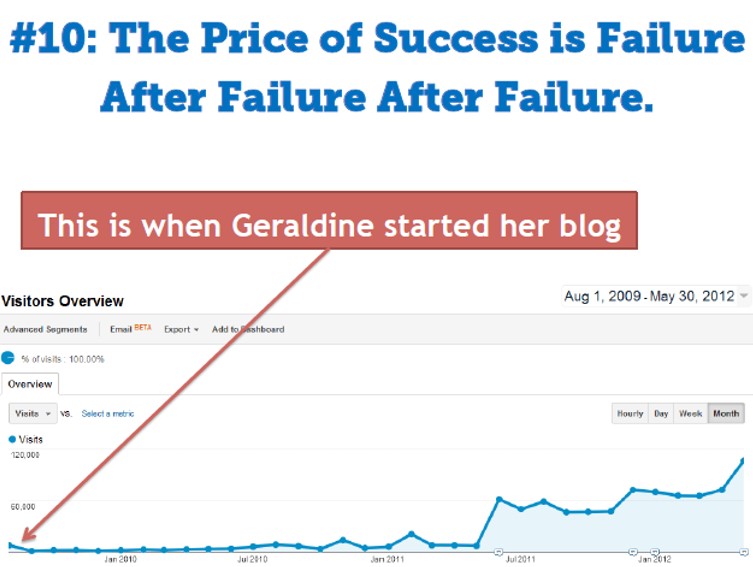
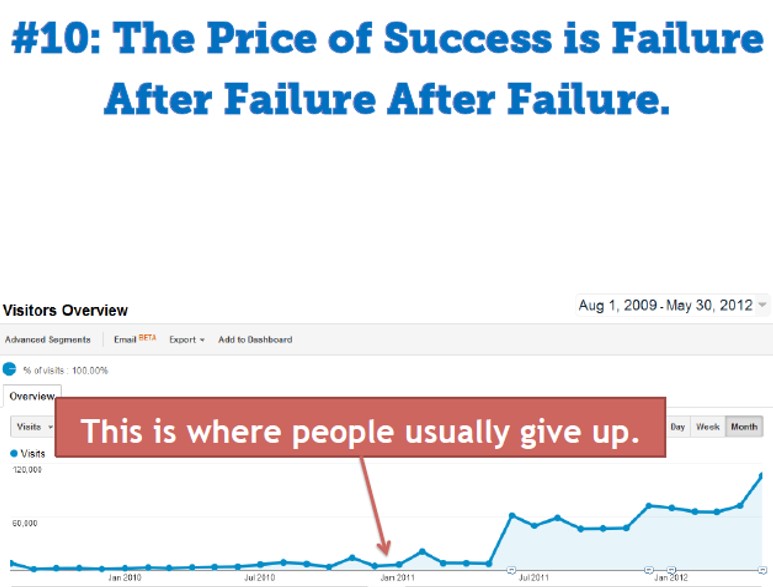
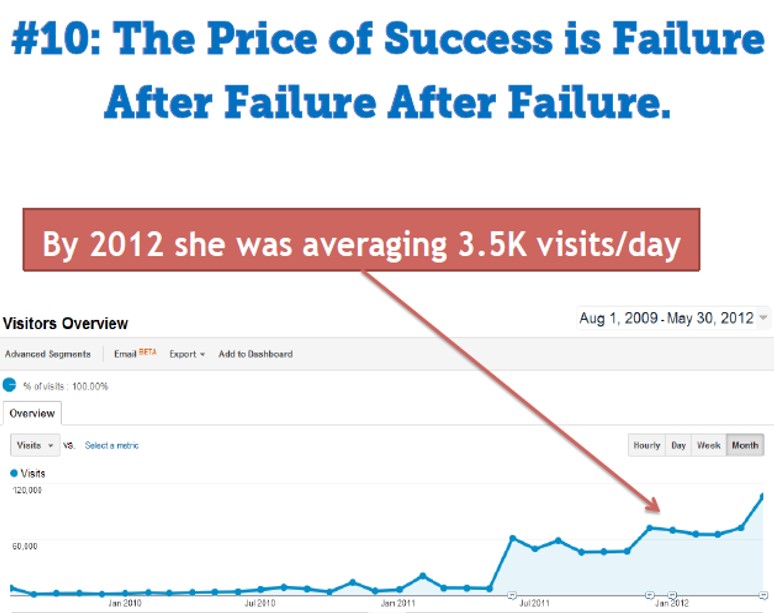
I really liked his example that came with a common bit of wisdom “The Price of Success is Failure after Failure after Failure.” When I teach, I use the term “failing forward.” The Geraldine he references is his wife.

Failing Forward

Failing Forward

Failing Forward

With this lesson as background, Rand moved to a discussion of his latest round of fund raising for Moz where he acquired $18M, with $15M from Brad Feld and the Foundry Group. He shared this process in an insightful blog post:

“Nearly every entrepreneur and person connected to the startup field knows of Brad Feld and Foundry Group through the exceptional reputation they’ve built. Brad’s been named the most respected VC in the business, makes hilarious music parody videos, funds dozens of successful companies, co-founded Techstars, is a two-time entrepreneur himself, runs inhumanly long distances and sponsors lots of public bathrooms. He’s a very awesome, very weird and very Mozzy guy.”

“How do I know Brad? Through three of the more unlikely sources imaginable: first, Brad + Seth had looked at SEOmoz briefly in our 2009 raise attempt, but, like a lot of others, passed at the time; second, through my blog poston failing to raise money (which Brad read and wrote about); and last, through my wife Geraldine, whose blog and tweets are apparently a topic of enjoyment between Brad and his wife Amy. Side note: Next time someone asks what Geraldine’s blog monetization strategy is, I’m replying with “it already made $18mm, what more do you want?!” 🙂

I’d like to repeat his side note: Next time someone asks what Geraldine’s blog monetization strategy is, I’m replying with “it already made $18mm, what more do you want?!” 🙂

Buried in this example is one of the hardest lessons to get across to entrepreneurs as they embark on the funding trail – raising investment money is full of mostly unseen network effects. Entrepreneurs have very little idea who is influencing either positively or negatively their reputation and credibility. Most blindly think that when they are successful that it was all about them, not about the behind the scenes support.

One of the most neglected part of the entrepreneur toolkit is strategic networking and investing in the network long before you need it. Harvard Business Review provided an excellent academic article on strategic networking “How Leaders Create and Use Networks.” Jeffrey Gitomer in Little Black Book of Connections: 6.5 Assets for Networking Your Way to Rich Relationships provides lots of practical advice on how to network. Both resources share the same principle – you have to invest in your strategic network long before you try to get something out of it. Or as my colleague David Robinson would say “you have to flip your perspective and think in terms of what you can BRING to a relationship, not what you can get out of it.”

Gitomer really hits home with the message that it is not “who you know,” rather it is all about “who knows you.”

“Who knows you?”

“This is the most powerful part of making a connection. And also the hardest.

“If you have put yourself out in the marketplace as a person of value, others will want to connect with you. Not all of them will be good. Not all of them will be valuable. Most of them will not lead you to the Promised Land. But some will.

“Your job is to expose yourself to the marketplace in a valuable way so that you create some law of attraction, and some method by which others can connect with you, so that this ‘most powerful element of connecting’ can occur.”

I’m not sure that I really believed this “who knows you” advice until I experienced the strategic network effect at a LegalTech conference several years ago. The manager for the eDiscovery organization (who I’d never met) at one of the “too big to fail” investment banks came up to me and said “You’re Skip Walter, right? You’re the guy that does those Riedel glass tastings at your house? When I’m in Seattle can I come visit you for a glass tasting? I don’t want to talk about eDiscovery, but I am very interested in your thoughts about fine wines.” I laughed to myself and thought about Gitomer – it’s not who you know; it’s who knows you. And I knew we’d talk a lot about eDiscovery and our Attenex Patterns product.

David Robinson in his blog post “Take One More Step” writes about being persistent and investing in your strategic network one day at a time.

Fl!p and the gang get right to the heart of how most entrepreneurs experience network effects:

preemptive rejection

For a humorous look at the wonderful world of innovation and new ventures, checkout Fl!p and the gang at Fl!p Comics.
Posted in Entrepreneuring, Relationship Capital, Teaching, Value Capture, Values, Working in teams | Leave a comment

Grand parenting

Many moons ago I was privileged to spend some time with some delightful colleagues who had jumped on the grand parenting bandwagon. While I was still far away from becoming a grand parent (I trusted), I was interested in the work they were doing.

I asked one of my colleagues what it takes to be a “creative grand parent“? He laughed and shared “Well, first you have to have grand kids.” That’s pretty basic.

Two days ago we were blessed with our second grand daughter born this year. Hazel joins our first grand daughter, Alice, as the next generation of several wonderful families. We can’t wait for both girls to join our extended family for the Christmas holidays.

Today is a day for remembering my grand parents and holding in my memory five generations of the Walter family. What a glorious day to be alive.

Peace.

Posted in Grand parenting, Lifelogging | 2 Comments

Lifelet: Oregon’s Stoller and Cristom Wineries

While ambling and shambling through the Willamette valley, it is a challenge to sort out the wonder of Oregon’s famed Pinot Noirs from the beauty of the vineyards to the grace of the tasting room experiences. Today we take a look at the joys of the Stoller Family Estate Winery and the Cristom Vineyards and Winery.

Of special note in this video is the architect, Ernest Munch, who has designed many of the Willamette Valley’s wineries and tasting rooms. I fell in love with the design of the Stoller Tasting room and the tasting room manager shared that it was the same architect who designed the Winderlea Winery Tasting Room.

What is “form follows function” of these two tasting rooms is that the slope of the roof directs the focus of the customer to the vineyards. On Stoller’s property the vineyards slope upward from the tasting room so the roof directs your attention upward. For Winderlea, the vineyards are below the tasting room so the roof slopes downward to direct attention. In both cases the expanse of windows lets in as much sunshine as possible.

For a humorous look at the wonderful world of innovation and new ventures, check out Fl!p and the gang at Fl!p Comics.

Posted in Lifelet, Lifelogging, Wine | Leave a comment

Lifelet: Arches National Park

As our escape from Seattle dreary weather in 2010 continued from our quick visit to Capitol Reef National Park, we entered Arches National Park.

I got a little carried away with this video because I was so taken by the stark beauty of the Arches and the Elders. As the clouds moved slowly across the landscape the rock sculptures were almost moving with the dance of the changing light.

At the beginning of our trip we’d come across the book Water, Rock & Time which is a photographic record of Zion National Park. Throughout the Utah National Parks, you can see the dance of water, weather, rock, gravity and time. I was moved to write some poetry but would be hard pressed to beat this gift:

Travel Haiku – Arches National Park

Arches National Park
frozen in their dance
the shapely rocks

Arches National Park
i stretch my hands into an arc
to dance

Arches National Park
inspiring me to dance
rocks of all shapes and sizes

Arches National Park
still at their work
the winds

Arches National Park
nature’s hands
in the winds

Arches National Park
i choreograph a
rocky dance

As you observe the world today, what are the arches that bridge the patterns of your life?

For a humorous look at the wonderful world of innovation and new ventures, check out Fl!p and the gang at Fl!p Comics.

Posted in Lifelet, Lifelogging, National Parks | Leave a comment

Lifelet: Capitol Reef National Park

On our escape from the miserable weather in Seattle in 2010, we journeyed from Bryce Canyon National Park to Capitol Reef National Park.  Prior to this trip to Utah, I’d never heard of Capitol Reef National Park. When we looked at the map, we realized that Capitol Reef was more or less between Bryce and Arches National Park which we really wanted to see.

Little did we know that we were in for a treat of many climates.  While it was hot and dry during our hiking through Bryce Canyon, the trip to Capitol Reef was over several mountains where we had to fight thunderstorms, rainbows and open range cattle blocking the road. All in all an incredibly diverse and beautiful landscape.

Capitol Reef is not a heavily visited national park but a beauty and a joy and an anomaly all at the same time. Enjoy the photos of this end of day journey.

For a humorous look at the wonderful world of innovation and new ventures, check out Fl!p and the gang at Fl!p Comics.

Posted in Lifelet, Lifelogging, National Parks | 1 Comment

Daydreaming of Kindle Social Highlights

One of the joys of riding the ferry between Seattle and Bainbridge Island is bumping into the eclectic collection of friends and colleagues somewhat randomly. The other night I had the pleasure of sitting next to John Lange from Amazon.  I met John ten years ago when he was at the law firm that funded our startup Attenex.

We hadn’t seen each other for a while so I wanted to let him know how much I appreciated many of the things his Kindle group was releasing into the world. The following notes are pulled from my one sided conversation with John. He was kind enough to humor my random thoughts (one of the nicer parts of a ferry ride is that you have a captive audience for 30 minutes).

kindle highlighting colorsFirst of all, I love the many different ways that the iPad Kindle app allows me to highlight, annotate and even share on Twitter. I particularly like the color coding of highlights (I am still working out how to use the different color codes).

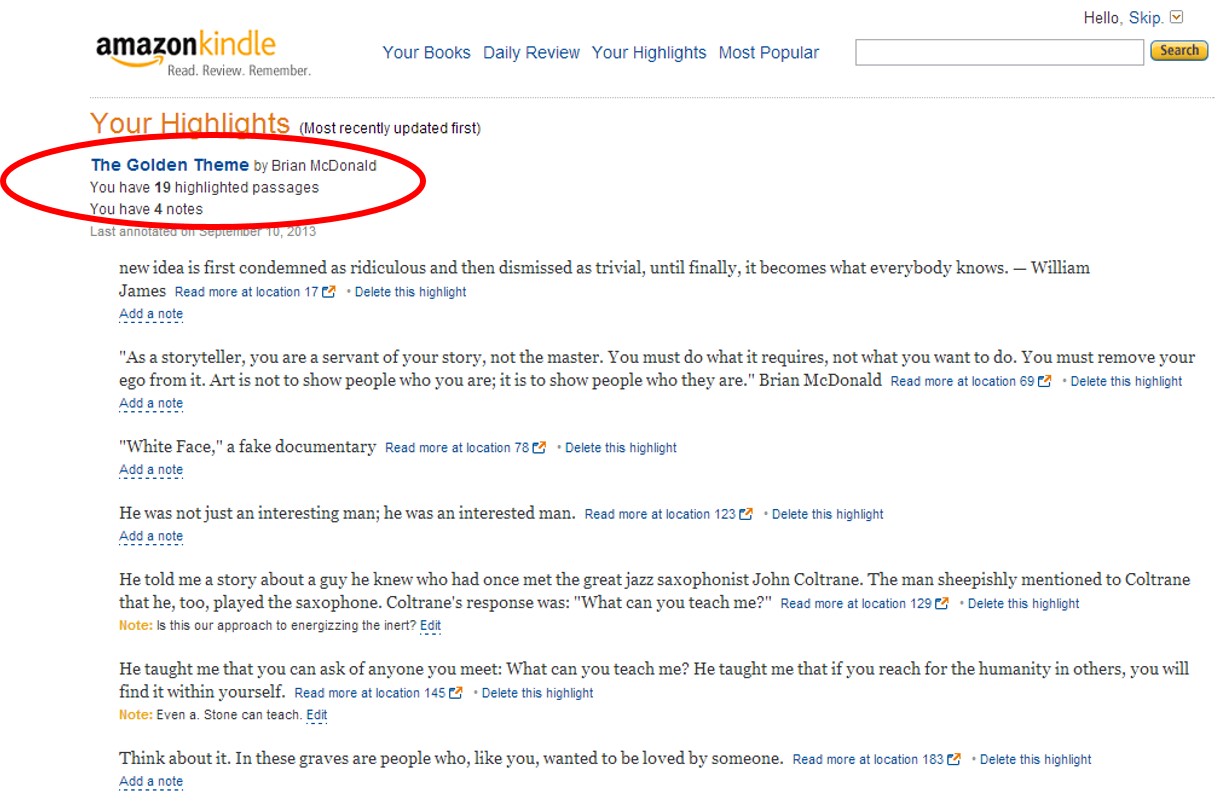
When I do my “Best Non-Fiction Books” of the year annual blog post, I make a preliminary list of the books that had the most impact on me the previous year. Then I go to the online highlights and notes and see which books have the most highlights and notes.  That’s how I rank order the books that I select. [For some reason this feature is little known and hard to find on the Amazon web site.]

highlighting counts

It took me a while to figure out how useful the Kindle Twitter sharing was for having some context and a quote go out to Twitter with a pointer back to Amazon where folks can then follow my book “recommendations.”  It’s just too easy – and a great way for you to sell more books. And a great way for me to easily share relevant information on Twitter.

amazon twitter sharing

amazon twitter landing page

I jumped for joy (almost as much as when I taste a fine wine) when I came across the Kindle Matchbook announcement where I can now add the digital copy to a print copy I’ve already bought.  It is a little late as I have been doing this for years, but it was very frustrating to pay the full amount for both the print and digital versions of a book.  So thank you for helping to make this happen.

kindle matchbook

And I love the ability to see that other readers have highlighted something that I’ve also highlighted.

kindle other liked this

Now that I see these kinds of capabilities and know that you have the cloud databases and servers that can make these kinds of associations, there is so much more that I want in the sharing arena.

Foremost, there are a few close business colleagues who recommend good business reads for me.  I would love to see their highlights and notes in the books we are jointly reading and be able to share my notes and highlights.  These colleagues come from different backgrounds (marketing,executive management, technical…) and we see different things and interpret things differently. While I can copy and paste from the Amazon Kindle online highlighting file, it is not nearly the same as seeing the text highlighted on the same page in the same way that you highlight “xx other people highlighted this part of the text.” Context is important.

amazon highlighting activity

Secondly, for the business books and technical books (usually expensive) that I buy and that have a relatively low, yet highly interested (and interesting) readership, I would love to connect with the 10-20 other people who are highlighting the same things I am.  I understand that there is a privacy issue here, but I know that I want to get in touch with these folks to learn from them. I think you could do some kind of two phase commit process where I indicate that I would like to know who these 20 people are and a message would be sent to them. My information would be available to them, and then they have the option of opting in to share their information with me.  There are so very few people in the world that are driven to explore the content that I am interested in, but I have no way to reach out to them today. Given the features above that you already released and that I love, I know you have the capability to add this kind of feature.

While I am glad that you now have the Matchbook arrangement, I have been frustrated in the past when the Kindle version of a book doesn’t come out at the same time as the hard copy.  And worse, there is no indication on the publisher’s site or from the author that a Kindle version is even in the works.

The book that demonstrated this frustration was Design Way by Nelson and Stolterman.  I have the first edition of the book and recommend it to all of my human centered design students and colleagues.  I loved it so much that I contacted the authors when I found out that they were collaborating on a second edition and asked them if I could observe their collaborative book writing process. I was overjoyed when the second edition came out. Imagine my dismay when there was no Kindle edition. So I reluctantly bought the hard copy (I really wanted the digital version to have with me at all times for reference). When a couple of months later the Kindle version appeared, I was really frustrated. And I wasn’t even notified that the Kindle edition was published (which I hope you will do with the Matchbook program).

I encountered this situation again with a couple of recent books published by Vijay Kumar and Kim Erwin. Both of these books came out in print first and neither author (both former colleagues) knew when or whether there was going to be a Kindle version. Larry Keeley’s book Ten Types of Innovation evidently went through the same process. In all three of these cases, I wanted the Kindle versions to always have with me as references. I really didn’t want the hard copies (although since they are highly formatted I would probably have gotten the print versions of each – oh wait a minute, I did because I didn’t know whether there would be a Kindle version).  While this is more a problem of a pre-Matchbook era, I think it is very important to let someone know that there is going to be a Kindle version when the print version is published, even if I have to pre-order it. And there is a high probability I will buy both.

So while I use the iPad Kindle reader, I only buy Kindle books.  I have over 900 books that I carry around with me all the time on my iPad (it sure saves my back from carrying all these books in my backpack).

I have to share that the coolest feature for my wife is the ability for a dictionary to pop up on any words that she is not familiar with. This feature is now such an ingrained habit for her that I heard her giggling while reading the print newspaper the other morning. I noticed that she had been tapping the print newspaper. She sheepishly shared that she didn’t understand a word in an article and was trying to tap her way through to the Kindle dictionary.

John, thanks for all that you do to continue to make the Kindle and the Kindle content an incredible value add for me.

For a humorous look at the wonderful world of innovation and new ventures, check out Fl!p and the gang at Fl!p Comics.

Posted in Amazon Kindle, Big Data, Content with Context, Curation, Learning, Software Development | 1 Comment

LifeLet: 9Mile Labs Milestone 9

What a great day September 10, 2013 was to see the nine companies of 9Mile Labs Cohort I present their business and products to an enthusiastic audience at Seattle’s Bell Harbor Conference Center.

Benjamin Romano wrote a great article at Xconomy on the presentations. John Cook of Geekwire shared his thoughts on the presentations and companies from Milestone 9.

For a quick look at the presenters and the networking interactions check out the video.

A special shout out to the startup community mentors and supporters of 9Mile Labs for awards voted on by the Cohort I companies:

Thanks to the 9Mile Labs partners (Tom Casey, Kevin Croy, Enrique Godreau III, Sanjay Puri, and Sandy Sharma) for their continuing contribution to the Seattle Startup ecosystem.

With his wonderful way of seeing things with a “flipped perspective,” my colleague David Robinson posted about the event as “Change Your World.” David shared:

“During the event I was interested how many times I heard the phrase, “Change the world.”

“Go out and change the world!”

“We believe our new technology will change the world.”

“Our innovation will change the way business is done. It will change the world.”

What is it in us that needs the world to change? What is it in us that assumes the role of world changer? I hear this phrase daily. I’ve used it myself most of my life. When I was younger I wanted my art to change the world. I’m an idealist so I had (and have) a laundry list of what would make life better. I’m also aware that my list is not universal. In fact, much on my list would seem heretical to many of the people on the planet. What is “better” for me is worse for others. What is the world I wish to change?

A special thanks to Kerri Sherwood for permission to use her song “Count on You” from her album As Sure as the Sun.

For a humorous look at the wonderful world of innovation and new ventures, checkout Fl!p and the gang at Fl!p Comics.
Posted in Entrepreneuring, Lifelet, Lifelogging, Value Capture, Working in teams | 3 Comments

9Mile Labs Cohort I Demo Day

9MileLabs-50pixCongratulations to all the 9Mile Labs Cohort I companies who are presenting at the Milestone 9 Demo Day at the Bell Harbor Conference Center. Each of you has come a long way in six short months.

Congratulations and thank you to the five partners (Tom Casey, Kevin Croy, Enrique Godreau III, Sanjay Puri, and Sandy Sharma) for conceiving of a B2B accelerator. Your commitment and dedication to the greater Seattle startup ecosystem is appreciated every day.

Thanks to each of the Cohort I companies for allowing me the privilege of videoing everything in sight for my longitudinal research study on the factors that influence the success of new ventures. You’ve taught me a lot.

Thanks to each of the many mentors who gave so generously of their time to help the nine companies.

I look forward to following the success of each of the nine 9Mile Labs Cohort I companies as they launch into the future.

A special thanks goes to Seaton Gras and the terrific folks at Surf Incubator for both hosting 9Mile Labs and for contributing in hundreds of ways to the Seattle Startup ecosystem.

For a humorous look at the wonderful world of innovation and new ventures, check out Fl!p and the gang at Fl!p Comics.

Posted in Entrepreneuring, Flipped Perspective, User Experience, Working in teams | 1 Comment