The Four Boxes of Knowing

While reading David Weinberger’s latest book Too Big To Know:  Rethinking Knowledge Now that the Facts Aren’t the Facts, Experts are Everywhere, and the Smartest Person in the Room is the Room, I was reminded of the Four Boxes of Knowing.  At this point, I have no idea where I came across the framework or how I’ve modified it over the years.

One of my favorite exercises when teaching or facilitating a consulting session is to change directions and have some “fun” with the four boxes of knowing exercise.

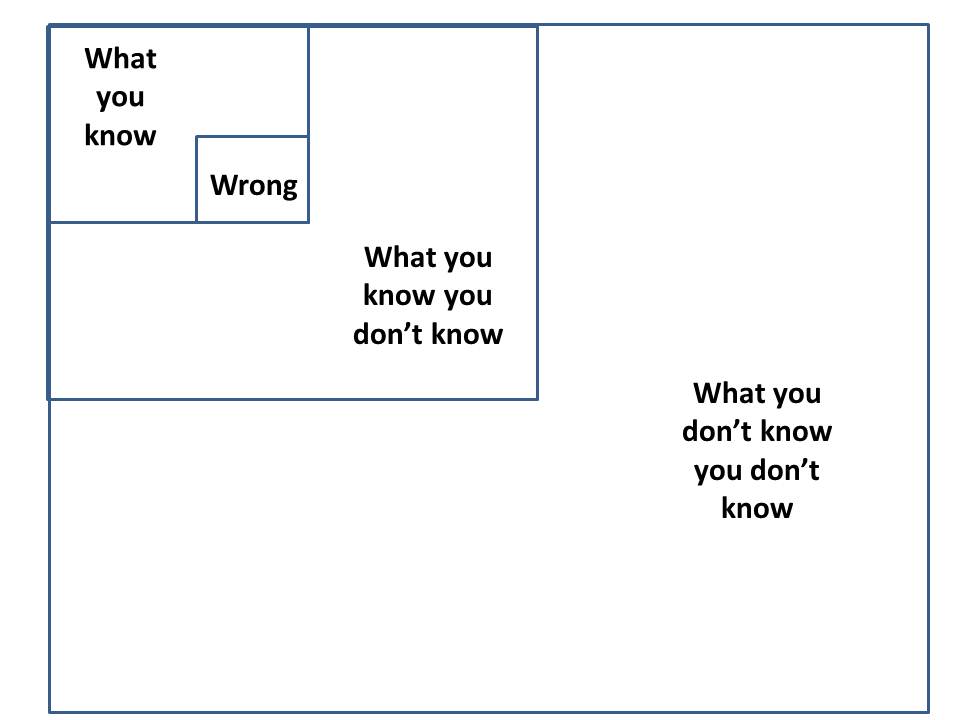
I start out by describing the three boxes of knowing:

  • What you know?
  • What you know that you don’t know?
  • What you don’t know that you don’t know?

Then I ask “in this context, what is the fourth box of knowing?”

Of course, everyone goes directly to trying to add a larger fourth box to surround the other three and do the continued extension to the absurd of “what you don’t know that you don’t know that you don’t know ..”

After teasing out some more ideas, I draw in the smaller fourth box – what you think you know that is wrong.

As we all have a good laugh, I then ask for what are the system dynamics of learning something new?

This question if I am patient enough leads to an engaging discussion.  Soon someone will provide the insight “as your box of ‘what you know’ grows larger, the other boxes grow exponentially larger.  It’s a never ending virtuous process.”

I then have the audience spend 5-10 minutes drawing the boxes and in the context of the subject of the class or consulting engagement, place elements of knowledge in each of the boxes.  Most of the audience can pretty quickly fill in the “what you know” and “what you don’t know boxes” but of course have a difficult time filling out the “what you don’t know you don’t know.”  I suggest that the class speculate on what might be in that third box.

After working quietly for a few minutes, the class shares their results.

What a wonderful time it is to see the “wisdom of the crowd” show up as the participants realize that what they don’t know is known by somebody else in the audience and vice versa.

However, the real learning comes from the “speculations” that are in the largest box.  The blind spots of knowledge for the group show up in this last box.

What are your speculations about “what you don’t know you don’t know?”

Posted in Knowledge Management, Learning, Teaching, Working in teams, WUKID | 5 Comments

Evolving a Personal Software Design Process

Self observing is always a dangerous proposition.  I remember my father-in-law, Dr. Michael Keleher, always remarking “the doctor who treats himself has a fool for a patient.”

The following notes are a result of self-observing myself when I am designing innovative software.  Who knows what the real process is that I use.  Although I am sure that in the real process, procrastination plays a large role.

Over the years I have collected several descriptions of design processes that their authors have either offered as descriptive or prescriptive models.  Recently, I came across a model from Stan Davis and David McIntosh in their book The Art of Business: Make All Your Work a Work of Art.  I have added a few steps to their process description to fit what I go through.  I am not sure at this point whether I would recommend this process, but it fits the types and scale of software product and business design problems that I am most interested in.

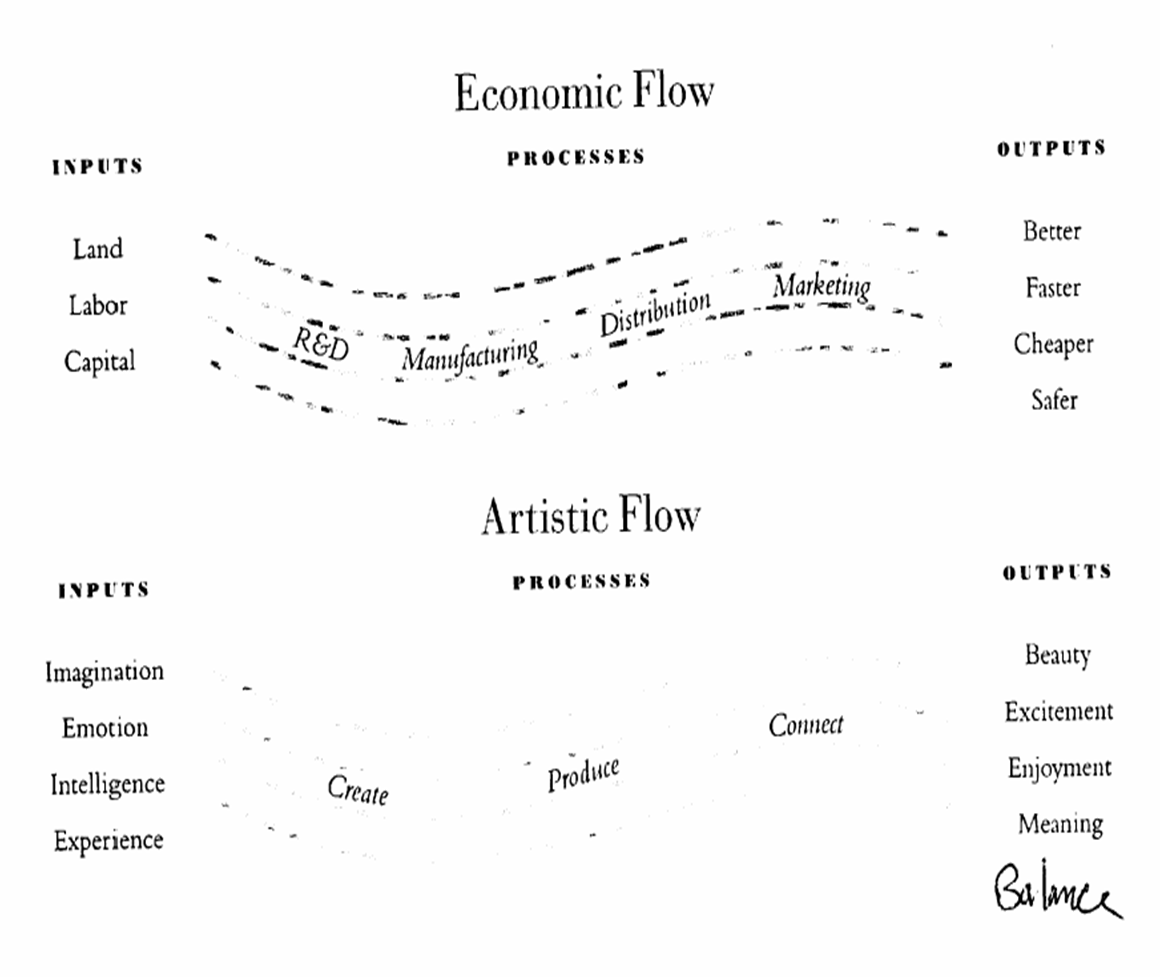
The context of their model arises from the authors comparing “flow” in the economic world and in the world of art.

The core design process model from Stan Davis is:

  • Hunch
  • Immerse
  • Simmer
  • Click! (the Ah Hah step)
  • Verify

To this model I would surround it with two other steps:

  • Unease, discomfort or stuck – something doesn’t feel right.  I’m frustrated and don’t know why
  • Hunch
  • Immerse
  • Simmer
  • Click!
  • Verify
  • Find the productivity metric

A brief explanation of the steps follows (some from Davis, some from me):

  • Unease
    • I get this background discomfort that something isn’t right in my thinking or in the world.  It could be a more general issue like with business design or it could be specific to a product I’m working on.  Or it could be part of switching from analysis to synthesis mode while working on a business problem.
    • It is like a dissociated pain.
    • The symptoms that help me recognize this state are:
      • I find that I am reading a phenomenal amount of fiction junk books
      • I really do not want to take part in any social situations
      • Very low energy
    • To get out of this state, I do one or more of the following:
      • Take an unrelated seminar
      • Teach or mentor
      • Go hiking
      • Seek out an old friend for a discussion on what is new or different in the world
  • Hunch
    • Scientific breakthroughs often occur when there’s an exception to a rule.  Scientists and stock market mavens both call these anomalies.  In other fields they are called insights.
      • Example from The Art of Business:  “On a trip to Europe, Howard Schultz noticed the abundance of cafes.  Unlike their counterparts in the US, they served a range of drinks that extended beyond regular and decaf.  They had a comfortable place to sit for as long as they wanted.  And they had plenty of customers who were happy to pay a little extra for the experience.  Schultz came back to Seattle and built that hunch into Starbucks.”
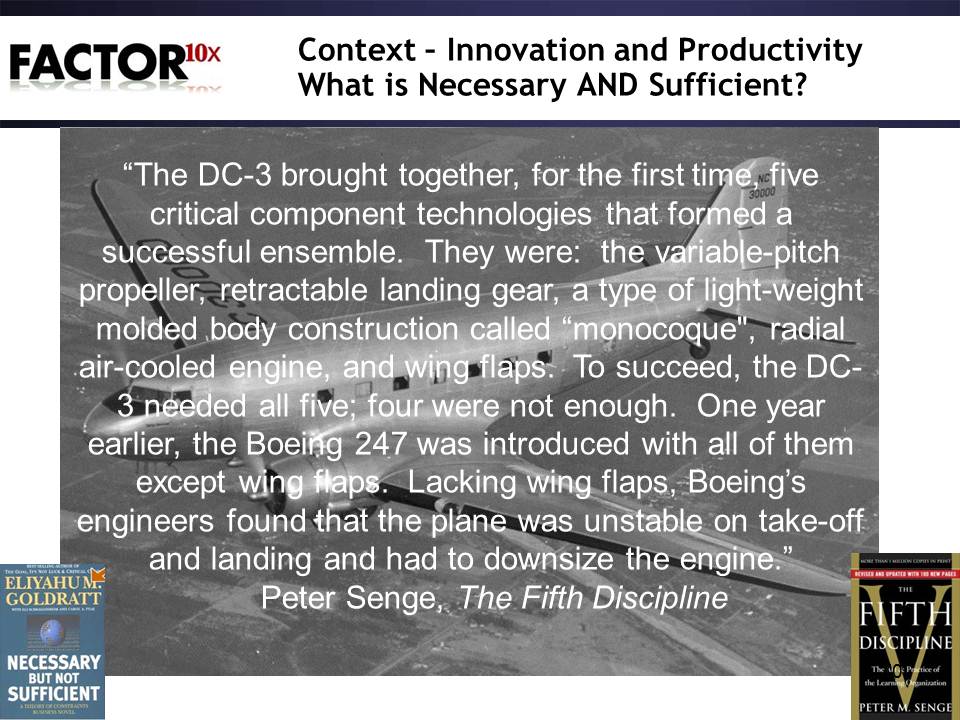
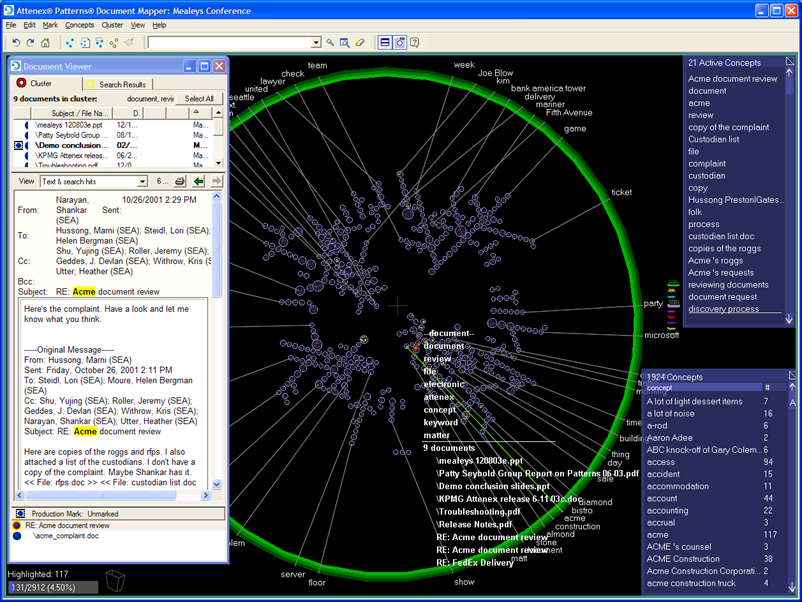
    • For me, a 35 year old hunch has kept me driving to develop a document visualization tool as a way to get extreme productivity for knowledge workers.  After many failed attempts (analogous to the development of commercial airplanes – DC3 described by Peter Senge in The Fifth Discipline to differentiate between what is necessary and sufficient), I finally succeeded in proving the hunch with Attenex Patterns.

  • Immerse
    • “You have to take in all the materials before you start sorting them out and eliminating anything.  You want to open yourself up and take as much in as you can without analyzing it.”  p. 106
    • “Whether you are an artist or a business person, preparing for a piece requires you to take on a student like role, learning what is on your palette, what materials you have to work with, and what effects you can put together.  The best way to learn about something is to learn how to do it yourself.”
    • My ability to immerse myself has grown by leaps and bounds with the advent of the Internet and Amazon.  By the time I get into the simmer stage, I have usually amassed the electronic equivalent of two bankers boxes of articles and have ordered about 50 books related to the topic I’m researching.  With the advent of the Amazon Kindle ebooks and the iPad Kindle Reader, all of this immersion material can be with me all the time.
    • This is also the stage where I enter into dialog with people who have the suspected problem, along with “experts” who have experience in the arena.
    • If possible I try and observe the actions of folks who have the problem.
    • I cast as wide a net as possible to explore the problem space.
    • I look for what are the key questions that people are researching or are struggling to articulate.
    • From the human centered design perspective of user research and observation, I am looking for that “got to have” latent unmet need.
  • Simmer
    • “After you’ve immersed yourself and before you have a breakthrough is that period when you sift, stir, rearrange, and wonder why it’s taking so long to get it right.  This is the stage where chance favors the prepared mind.” p. 106
    • “Software evolves, and it needs time for simmering and debugging.” p. 107
    • This stage is where I start my tentative exploration of the solution space.
    • I like to find similar pieces of software or analogous books, looking at form, function, layout and content.
    • I start exploring the supplier base – what can I buy rather than build.
    • I start the business model and profit patterns exploration along with looking for potential competitors.
    • I pay particular attention to whether my energy continues to build or dissipate.  If my energy dissipates, then I know that the timing is not yet right for the innovation.
    • I alternate quite a bit between the Immerse and Simmer states.
  • Click! or Ah Hah!
    • “This is the most talked about and least understood phase in the creative flow.  In mental terms, it’s the most artistic and least economic part of the process.  It’s also the shortest in duration.  You can’t really plan for an epiphany; what you can do is recognize when you have it.” p. 108
    • “The most frequent kind of epiphany is the retrospective epiphany.  It’s the recognition of what you just did, the enjoyable and emarrassing realization that you didn’t know you were having an epiphany, when you really were.  By the time you notice it, it’s already happened.” p. 109
    • In almost every design that I’ve done there has been a very clear “Click!” state.
    • This is the time of the conceptual prototypes.
    • Almost simultaneous with this state, I try to generalize the insight to see if it scales.  This is my how I know that it is a genuine “Click!”.  I also go through the stage of envisioning myself using it.
  • Verify
    • “Great! So you’ve had an epiphany.  Too bad that’s not enough.  Just having a great idea doesn’t qualify as creativity.  Now you’ve got to vet your big idea.  Creativity does not mean a straight line from idea to completion.” p. 109
    • This is the time of the behavioral prototypes.
    • The key effort for me in this stage is can I explain the creation so that the software engineers will understand it?.  Over the years I’ve learned that it is easier to explain if I’ve been peripherally involving them in the “Immerse – Simmer” cycle.
    • Collections of stories begin to emerge.
    • The one pager description and 30 second elevator pitch emerge.
    • I start putting together slide shows and making sales pitches to see if I can pre-sell the idea even before much expense is spent in building it – both to potential purchasers and potential investors.
    • I look for that moment when the potential customer or investor tries to rip the prototype from my hands, not caring what the price is.
  • Productivity Metric
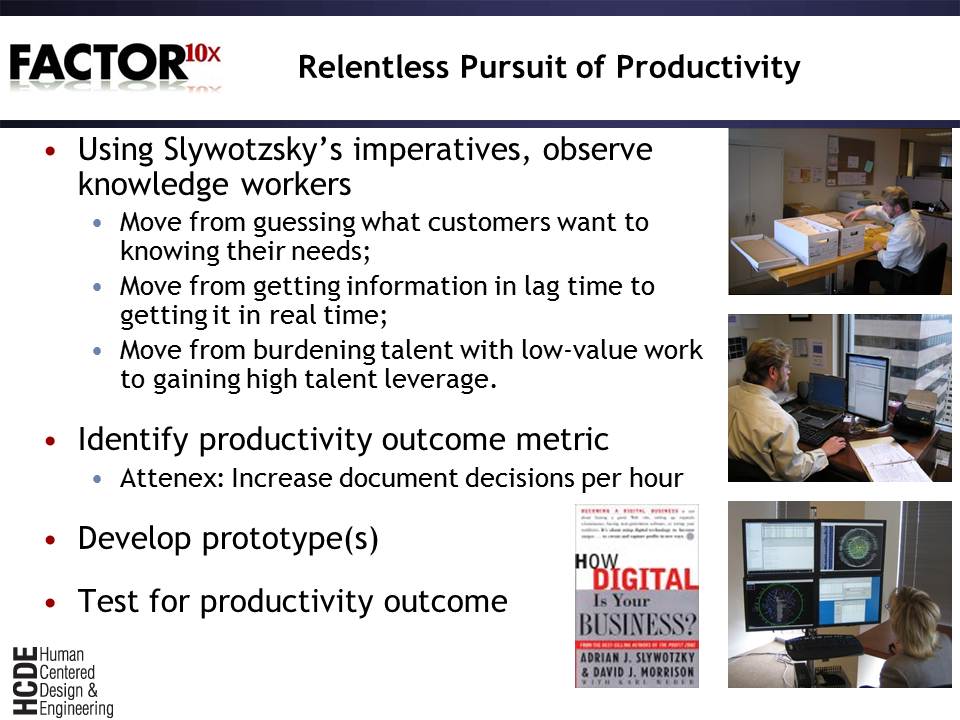
    • One of the things that became clear in the development of the first two Attenex software products (Patterns and Structure) is the creative power that comes from having a clear productivity metric.  With Patterns we discovered a productivity metric very early on – reviewer document decisions per hour.  By adding a productivity test to the standard stages of human centered design, and agile software development, we had an instant guide as to whether a piece of functionality was good or bad for the product – did it increase or decrease document decisions per hour?  With Structure, even after four years, we still had no clear productivity metric (the problem with almost every knowledge management application).  As a result, we had to give up on the development and marketing of Structure.

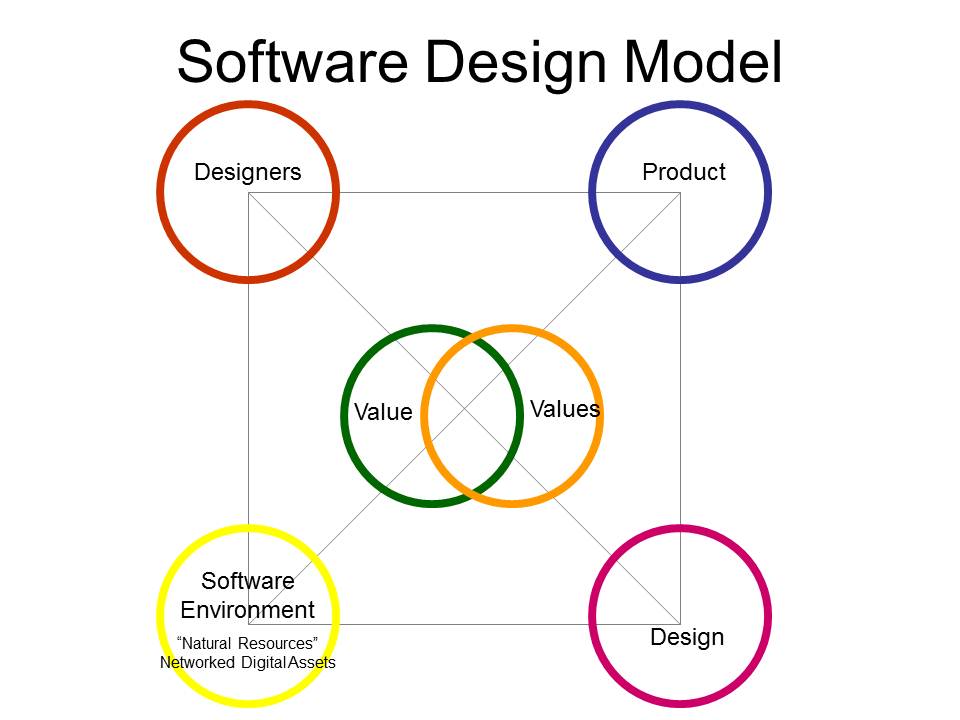
One might ask in looking at the above, how this design process is the same or different than the model I’ve shared before with the six circles?

The Socha-Walter Software Design Model presented above assumes that it is a group process with a multi-disciplinary team.  The personal software design model is unique to the way I think and work within the context of the group model.  There is a mapping between each of the steps that fit into the group design model, and that is a topic for another time.

What is your personal software design model?  How does it work in collaborative design processes?

Posted in Content with Context, Human Centered Design, Knowledge Management, User Experience, Value Capture | Leave a comment

The Power of Metrics to Guide Software Development

One of the big challenges with software product development is how to prioritize which features to add.  Many books and academic papers are written on this topic each year.  From my vantage point, the human centered design process is the best general process that can lead to successful products and product evolution.

Yet, as the feature requests pile up once a product is released, most product development teams succumb to whoever yells the loudest – either leading edge customers or the sales force.  Within Attenex, we stumbled on a more powerful method for guiding product development – the Northstar metric.

We started Attenex intending to build and market two products to the legal market – one for authoring structured documents like contracts (Attenex Structure) and one for discovering the relevant documents in eDiscovery litigation (Attenex Patterns – now a part of Ringtail 8).  As we delivered the products to customers, it became clear that with Attenex Patterns we had a very clear metric that provided both business guidance and feature guidance.  The metric was “document decisions per hour.”  That is, how many documents per hour could the average lawyer reviewer read and place into categories like “responsive”, “non-responsive”, and “privileged.”

With Attenex Structure, we were never able to identify any metric that mattered at both the users business level or at the guiding of feature prioritization.  As a result, we stopped development on Attenex Structure.

Attenex Patterns with the “document decisions per hour” metric proved both a marketing/sales tool to compare our product with other offerings in the market and a way to guide our feature development.

On the feature development side, the process was to continuously observe our users and understand their hassles (see hassle maps by Adrian Slywotzky) or bottlenecks in the workflow (see Theory of Constraints by Eli Goldratt).  As we spotted hassles or bottlenecks we would design a prototype and then test the prototype with the user community.  If the new features improved the “document decisions per hour” we would leave the feature in.  If the new features did not improve productivity, or decreased the productivity, then we pulled the feature out.

On the marketing and sales side, the “document decisions per hour” metric allowed the company to compare the benefits of Attenex Patterns to all of the competitors.  Because the Attenex result was 5-20 times better than other software vendors, Attenex was able to use value based pricing.

Over the 10 year iteration cycle of 450+ prototypes, we improved productivity from our baseline studies from 2X to over 50X productivity improvement in the “document decisions per hour” metric.

Posted in Big Data, Content with Context, eDiscovery, Human Centered Design, organizing, User Experience, Value Capture | 5 Comments

Duolingo – The Second Half of the Chessboard?

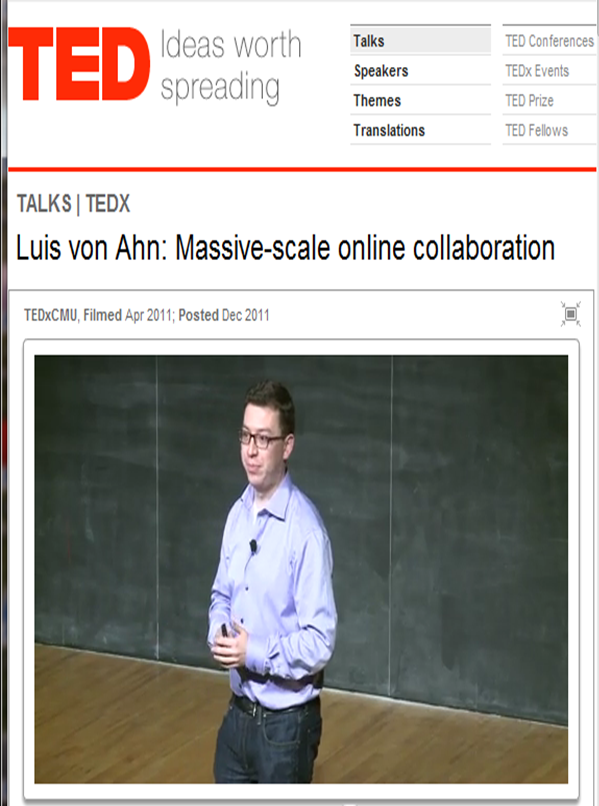
As a result of the mentoring I received from Russ Ackoff, I am fascinated more by really good questions than by the answers.  My colleague, Professor David Socha, pointed me to a Ted Talk by Luis von Ahn on “Massive-scale online collaboration“.  Luis is a professor at Carnegie Mellon and the inventor of the internet security feature captcha and reCaptcha. For a look at the humorous side of captchas, check out CAPTCHArt.

When he found out the millions of hours that were being wasted 10 seconds at a time entering captchas, he asked the question “what value could we provide with that amount of time?”  The answer was to reconceptualize re-captcha as a way to help translate older scanned books where OCR misses 30% of the text.

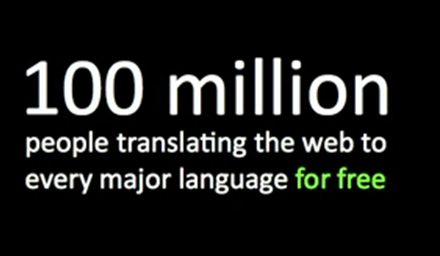
At the core of his research is how to use the value of hundreds of millions of internet users to provide society value a little bit at a time.  His most recent exercise is Duolingo for using the process of learning a language to help translate large parts of the web.  The question he asked of himself and his grad students was “how can we use the talents of 100 million people to translate the web to every major language for free?”

The answer is Duolingo.  His value proposition is to learn a new language while simultaneously translating the web AND learning with real content.  Today the business model for language learning is fundamentally flawed – a student has to pay >$500 to buy a Rosetta Stone course.  While that may work for the rich, it doesn’t work for the poor around the world.  This kind of business model is another aspect of our innovation in the university forum around the for profit university – how to provide value while you learn by paying with your time.

While David shared his excitement about this approach, I was immediately struck with how this is an excellent example of what Andrew McAfee was talking about in my post about Creating Jobs – Racing with Smart Machines.  Duolingo illustrates McAfee’s point about us now being on the second half of the chessboard with technology advances.  Having just written the post, my immediate thoughts went to what about all the jobs that will be lost by putting professional translators out of work?  By making language learning free, you also put a Rosetta Stone out of business (now a $250M per year company).

Yet, as we discussed it some more, we realized that we had not factored in the implication of 100s of millions of people now being multi-lingual.  Is Duolingo providing a huge pool of professional or semi-professional translators?  Or how many more jobs open up to someone with multiple language skills?

For myself, I am delighted that there are brilliant and engaging professors like von Ahn who keep asking these wonderful questions that help drive us farther into the second half of the chessboard.  Duolingo is living proof that you can do well by doing good.

What are other examples of these phenomena?

Posted in Content with Context, Human Centered Design, Intellectual Capital, Knowledge Management, Learning, Teaching, Transactive Content, Working in teams | Leave a comment

Mentoring Idea Stage Startups

One of the joys of teaching project based classes in Human Centered Design is encouraging the teams to explore building their product and starting a company to monetize the product.  This fall’s class project assignment was to research, design and prototype a mobile application for a smart phone or tablet device.

All seven of the teams did a terrific job and the research and designs were the best I’ve experienced in my twenty years of teaching graduate students.  At the start of the quarter I challenged the class to not just prototype their application, but to see if they could actually build a working application.  One group built a fully functioning mobile app on an Android phone that communicated and did intermediate processing in the cloud, and returned the results to the smart phone.  Their results were far more than I had expected.

The team that built the fully functioning prototype met a couple of times after the end of the quarter and decided they wanted to take their app from a prototype to a monetizable app.  So they called over New Years weekend 2012 and asked if they could buy me the proverbial dinner.

I agreed and asked them to send me their full, current resumes along with questions they wanted me to answer or suggest answers to.

The kind of questions they sent and that I get from Idea Stage startups are variants of the following:

  • What do we do next?
  • What’s the best way to move forward in getting this app manifested into a real, genuine app?
  • We know we need to do more user research, how much more? When will we know we’ve done enough?
  • Should we be focusing on usability now or do we need to do more user research?
  • In creating a company for our app, how do we fairly divide up the percentages of ownership?
  • What kind of formal corporate structure do we set up – LLC, S corp, or C corp?
  • Is it time to create a business plan now?
  • We feel strongly about releasing the app on all 3 major mobile smart phones at once (be multi-platform from the start): iPhone, Android and Win8 – is that actually wise, even though our intuition tells me that it is?
  • How do we protect our intellectual property?
  • One approach we talked about is setting an end-date in the future and backwards engineering a schedule from there – does that seem like a good idea to you?
  • We all still have to work full-time (or go to school full-time), but we really want to make this happen and do it right!
  • Can we fund this ourselves or should we seek investment?  If we seek investment, should we get it from friends and family, an incubator, angel investors, or venture capitalists?  How much money should we try and raise?
  • What should our “go to market” strategy be?
  • How do we find a business model that will work?
  • Skip, will you be part of our team?  Will you be on our advisory board?  Will you invest some money in us?
  • How good do you think our idea is?  Can we really make money with it?

With a smile, my standard answer to all of the above questions is “It depends.”

My challenge is figuring out how to balance sharing everything that I know about what they are about to encounter (hitting them with the fire hose of information) versus sharing what they are almost ready to learn (what are the near term next steps).  Or should I just ask thoughtful questions as a way to guide them to their own answers for their own unique situation?

Before meeting with the team, I remind myself to re-read Scott Peck’s “The Rabbi’s Gift” and repeat to myself several times the mantra “I unconditionally accept where you are, but respect you enough to help you strive for your ideal.

As a general process when we meet, I try and work through the questions that they came in with and not get taken too far astray with all of the side conversations and information drill down that a good team will want to ask.  Along the way I mention several books that would be good to read at this stage and let them know that I will follow up with the references after the meeting.  Along with the references, I usually have reflections that I share.

Here are a couple of reflections from our meeting last night:

  • You need to spend time as a group thinking through the implications of building an app versus building a company (like the Stanford iOS video on iTunes we talked about in class with the partner from Kleiner Perkins iFund, Chi-Hua Chien – Lecture 11).  There is a big difference between the building an app and building a company.  You don’t need a lot of formality to build an app.  Building a company (as a product itself) is a different undertaking.  I am always focused on building a company so I forget to stop and ask this question in a serious way versus assuming that of course everyone wants to start and build a company.
  • The comments about starting with Agile techniques are aimed not so much at the technique but building in daily transparency and accountability from the beginning.  With the limited time that you have it is important for everyone to know what is or isn’t going to get done on at least a weekly basis but preferably a daily basis.  The key is accountability and getting at dependencies between each of you, not just information sharing.  These meetings (or emails or skypes) should be separate from working meetings where you are working on some aspect of the business or the app.

The book references in roughly the sequence that I would go through are:

  • Visionary Business by Marc Allen – this book in story form helps you sort through what role everyone is interested in playing and what each person wants to get out of the enterprise.  Often times the founders think that everyone else has the same motivation, but rarely do each of us do things for the same reason.  This is one of several things we would do in the 4-6 hour One Page Business Plan workshop.
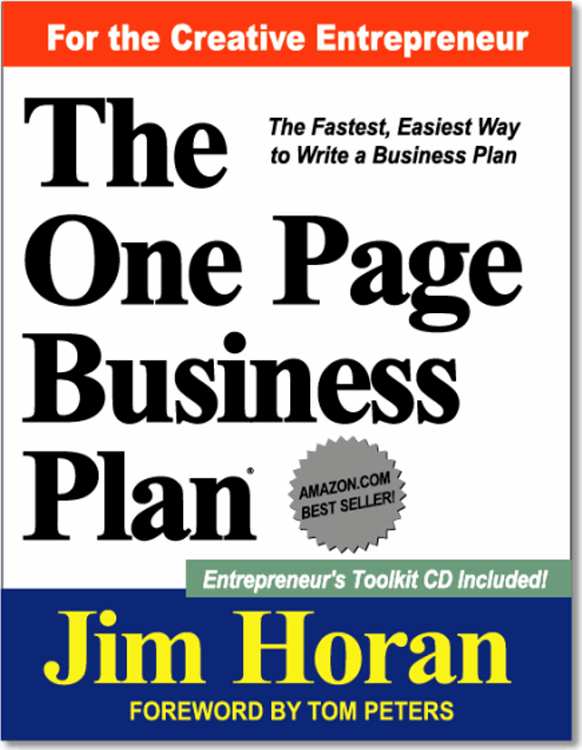
  • The One Page Business Plan for the Creative Entreprenur by Jim Horan – there are several books in this series.  I have most of them and they are basically the same thing.  This one is closest to what you need.  The key thing is to make your business plan a living document that is revised a couple of times a month in your first year.  It is far more valuable than a 40 page business plan.  As a companion to this you need to keep two presentations updated in parallel – one presentation to your customers or partners and one presentation to your potential investors.  What you did for class is a good start for both of these but like the one page business plan as you learn things each week you want to go back and revisit your pitches, your 30 second elevator pitch and your sequence of 4Ps.
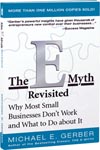
  • E-Myth Revisited by Michael Gerber – this book also gets at the different roles (individual contributor, manager, and entrepreneur) that are needed to make the business successful.  It is also terrific for its emphasis on systematizing everything so that you are always increasing the valuation of your fledgling company and always able to sell the business to someone else.  And the key message is that you have to devote significant time to working ON the business, not just in the business.
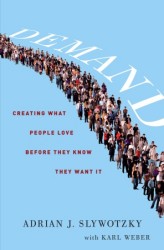
  • Demand by Adrian Slywotzky – this book is an excellent look at the six pillars of what it takes to build a successful product.  It is an excellent expansion of the three pillars of viability, capability, desirability that we talked about in class and is covered in Change by Design.  See the section on this book (number 1 rated) in my blog post:
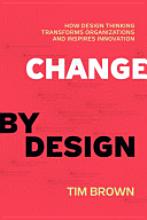
  • Change by Design:  How Design Thinking Transforms Organizations and Inspires Innovation by Time Brown (IDEO)  – This is the companion book to Demand.  While Demand is written by the consummate business professor who has discovered human centered design by working backward from spectacular business results, this book is written by the best human centered design product consulting group who thinks in business terms.
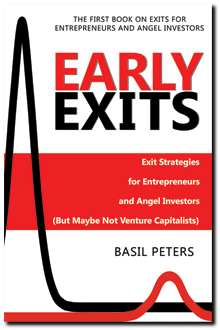
  • Early Exits by Basil Peters – while it is too early for this book, I include it here as a reminder that once you get rolling and start generating revenue and demand there are some administrative and strategy things you need to be doing so that you are always ready for an exit opportunity to realize the valuation of the company that you’ve created.  At Attenex, we were the counter example of everything he recommends.  As a result of not doing what is in this book, we lost over $35M in valuation at exit.  But that is a story for another time.

If you haven’t taken the chance to read the blog entries on Working in Teams Part 1 and Working in Teams Part 2,  I would read them now.  You will be iterating through the forming, storming, norming, performing a lot during the next couple of months both because you are doing this part time and because you have one member who will be remote.  You will need to get good at always keeping each other up to date and be good about understanding when roles are shifting and be explicit about the role shifts.

In our class this fall, we mostly spent our time on generating insights to lead to a desirable and viable mobile app (courtesy of IDEO and Larry Keeley).  We didn’t spend any time on the feasibility or capability part (the what is possible) because it was clear that each teams proposed application could be built.  However, now that you want to go to the next step, we need to focus some quality time on the “possible” part of the equation.

At this point when mentoring, idea stage startups I suggest a 4-8 hour workshop where we work through the One Page Business Plan components together.  The end result of this effort is generating the vision, mission, objectives, strategy, and tactics to get the company formed and the app built.  And that is a story for a future blog post.

Posted in Content with Context, Human Centered Design, iPad, iPhone, Learning, organizing, Teaching, Transactive Content, User Experience, Value Capture, Working in teams | 2 Comments

Through Natures Lens

There’s an app for that.

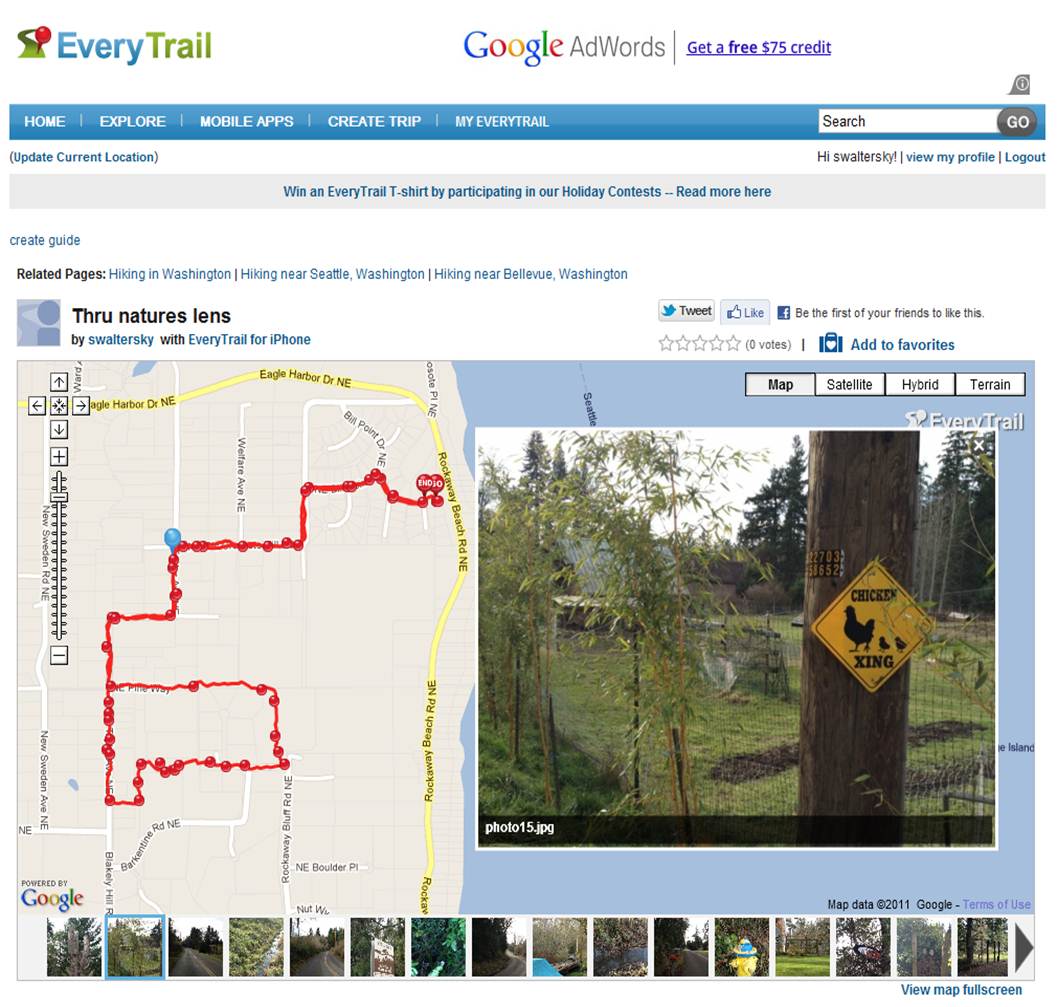
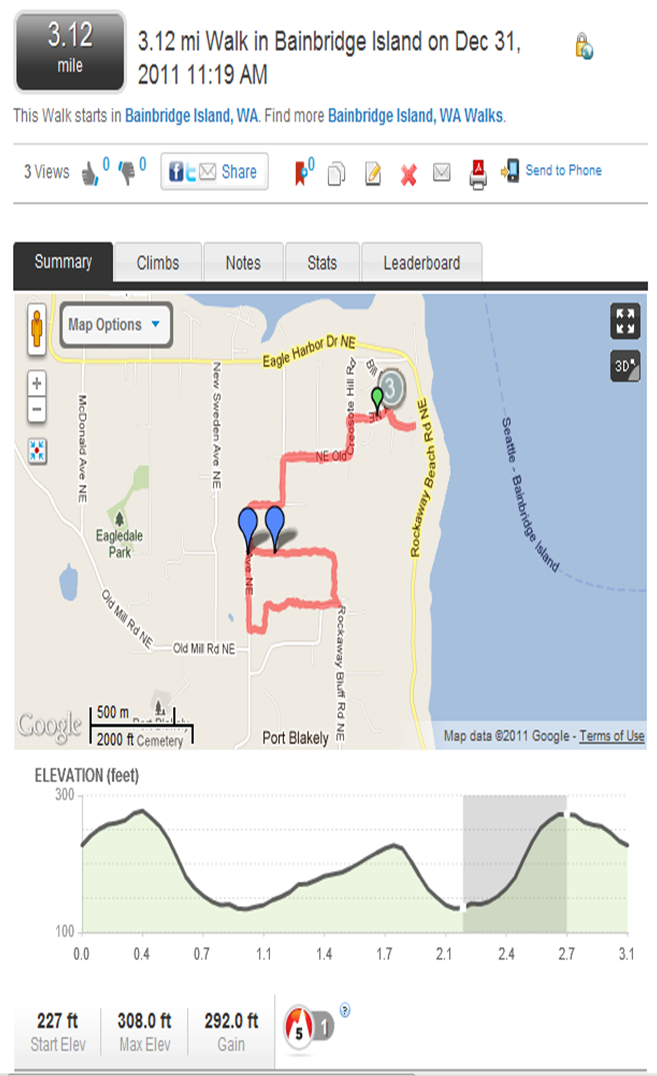
Today, I did my three mile walk with EveryTrail.  I’ve traveled this same trail either walking or running hundreds of times in the last ten years.  Yet, I’ve never taken it with a camera in hand.  So with my iPhone 4s I did my walk this morning, but stopped to actually see this walk through the lens of what I had not noticed before.

It was a completely different walk.  I noticed things that are always there but not when I am out for just exercise.  What a transformational activity when we look through natures lens.

To see the map and a slide show check out the living GPS Photo map.  And don’t forget to click on the different background views of satellite, hybrid and terrain while the slide show is cycling through the photos.

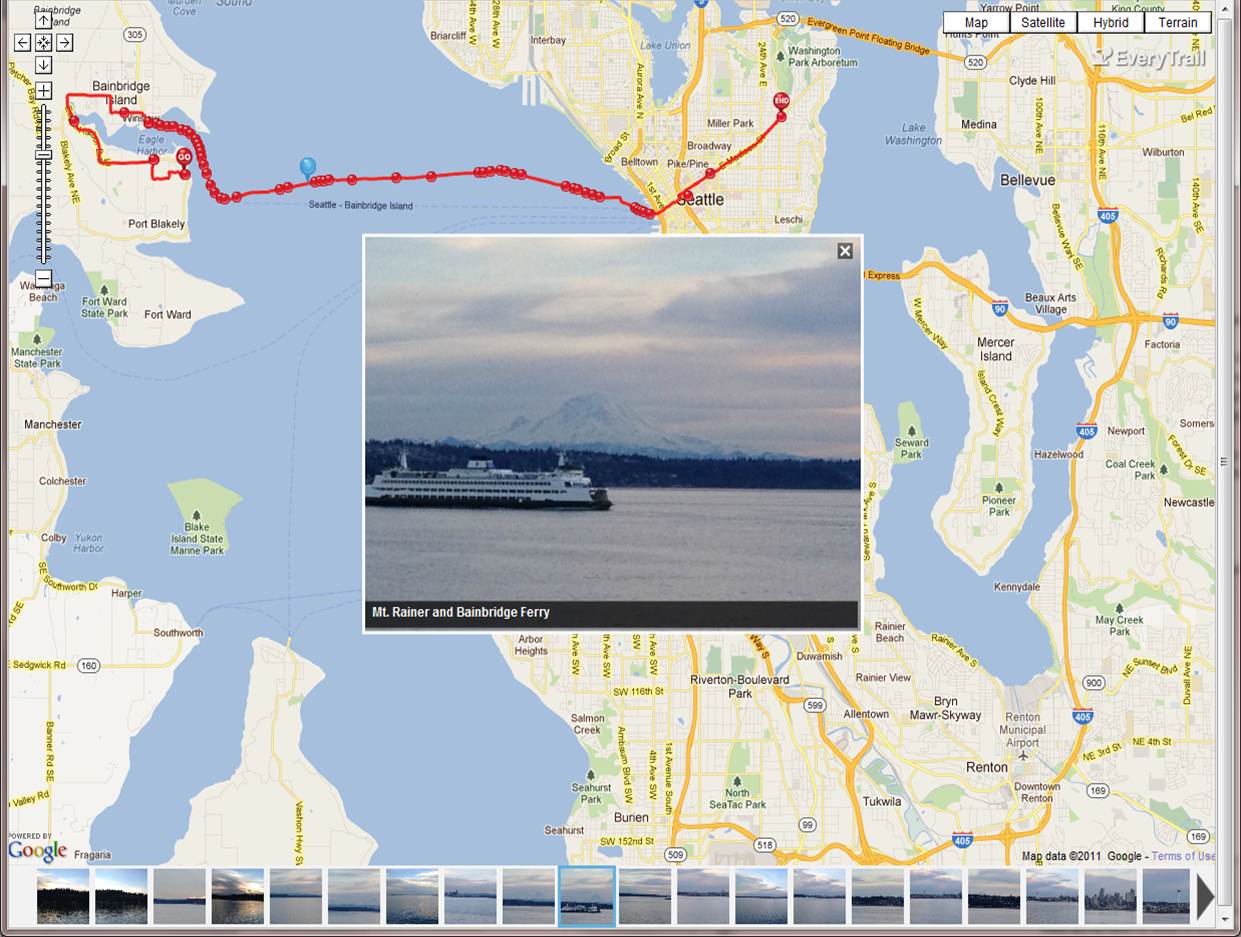
I was so excited about what I could do walking I wanted to see what would happen with the Every Trail when I was driving.  I had to go over to Seattle for a dinner with several of my students from my HCDE class so I took the opportunity to take several pictures along the way to the ferry, some photos from the ferry, and a few photos on the way to the restaurant.  See the results on the web.

Posted in Exercise, iPhone, Nature, User Experience | 1 Comment

Creating Jobs – Racing with Smart Machines

In this silly season of presidential politics and having to listen to the nightly shenanigans of both parties about how important jobs are with the cynical me knowing that none of them have a clue how to improve the job situation, a couple of insightful books have shown up.

Jim Clifton wrote a thought provoking book on The Coming Jobs War.  Mr. Clifton is the Chairman and CEO of the Gallup Organization which is uniquely situated with its polls to understand the key trends throughout the world.  In the introduction to his book, Clifton writes:

“The coming world war is an all-out global war for good jobs. As of 2008, the war for good jobs has trumped all other leadership activities because it’s been the cause and the effect of everything else that countries have experienced. This will become even more real in the future as global competition intensifies. If countries fail at creating jobs, their societies will fall apart. Countries, and more specifically cities, will experience suffering, instability, chaos, and eventually revolution. This is the new world that leaders will confront. If you were to ask me, from all the world polling Gallup has done for more than 75 years, what would fix the world — what would suddenly create worldwide peace, global wellbeing, and the next extraordinary advancements in human development, I would say the immediate appearance of 1.8 billion jobs — formal jobs. Nothing would change the current state of humankind more.

“A good job is a job with a paycheck from an employer and steady work that averages 30+ hours per week. Global labor economists refer to these as formal jobs. Sometimes leaders and economists blur the line between good jobs (formal jobs) and informal jobs. Informal jobs are jobs with no paycheck, no steady work. They’re found in, but not limited to, developing countries and include basic survival activities such as trading a chicken for coal. These jobs do create subsistence and survival, but not real economic energy. They are held by people who are not only miserable but, according to Gallup, suffering their way through life with no hope for a formal job — no hope for a good job.

“Of the 7 billion people on Earth, there are 5 billion adults aged 15 and older. Of these 5 billion, 3 billion tell Gallup they work or want to work. Most of these people need a full-time formal job. The problem is that there are currently only 1.2 billion full-time, formal jobs in the world. This is a potentially devastating global shortfall of about 1.8 billion good jobs. It means that global unemployment for those seeking a formal good job with a paycheck and 30+ hours of steady work approaches a staggering 50%, with another 10% wanting part-time work.

“This also means that potential societal stress and instability lies within 1.8 billion — nearly a quarter of the world’s population.”

Andrew McAfee (Enterprise 2.0) and Erik Brynjolfsson wrote the book Race Against the Machine:  How the Digital Revolution is Accelerating Innovation, Driving Productivity, and Irreversibly Transforming Employment and the Economy.  They recently released an MIT Sloan Management Review article “Winning the Race with Ever-Smarter Machines” which nicely summarizes the key points in their book.

“The second concept relevant for understanding recent computing advances is closely related to Moore’s Law. It comes from an ancient story about math made relevant to the present age by the innovator and futurist Ray Kurzweil. In one version of the story, the inventor of the game of chess shows his creation to his country’s ruler. The emperor is so delighted by the game that he allows the inventor to name his own reward. The clever man asks for a quantity of rice to be determined as follows: one grain of rice is placed on the first square of the chessboard, two grains on the second, four on the third, and so on, with each square receiving twice as many grains as the previous.

“The emperor agrees, thinking that this reward was too small. He eventually sees, however, that the constant doubling results in tremendously large numbers. The inventor winds up with 2 to the 64th power grains of rice, or a pile bigger than Mount Everest. In some versions of the story the emperor is so displeased at being outsmarted that he beheads the inventor.

“In his 2000 book The Age of Spiritual Machines: When Computers Exceed Human Intelligence, Kurzweil notes that the pile of rice is not that exceptional on the first half of the chessboard:

“After thirty-two squares, the emperor had given the inventor about 4 billion grains of rice. That’s a reasonable quantity—about one large field’s worth—and the emperor did start to take notice.

“But the emperor could still remain an emperor. And the inventor could still retain his head. It was as they headed into the second half of the chessboard that at least one of them got into trouble.

“Kurzweil’s point is that constant doubling, reflecting exponential growth, is deceptive because it is initially unremarkable. Exponential increases initially look a lot like standard linear ones, but they’re not. As time goes by—as we move into the second half of the chessboard—exponential growth confounds our intuition and expectations. It accelerates far past linear growth, yielding Everest-sized piles of rice and computers that can accomplish previously impossible tasks.

“So where are we in the history of business use of computers? Are we in the second half of the chessboard yet? This is an impossible question to answer precisely, of course, but a reasonable estimate yields an intriguing conclusion. The U.S. Bureau of Economic Analysis added “Information Technology” as a category of business investment in 1958, so let’s use that as our starting year. And let’s take the standard 18 months as the Moore’s Law doubling period. Thirty-two doublings then take us to 2006 and to the second half of the chessboard. Advances like the Google autonomous car, Watson the Jeopardy! champion supercomputer, and high-quality instantaneous machine translation, then, can be seen as the first examples of the kinds of digital innovations we’ll see as we move further into the second half—into the phase where exponential growth yields jaw-dropping results.”

McAfee and Brynjolfsson go on to demonstrate through their research that the current job crisis that we have is the result of being on the second half of the chessboard.  Even though the economy has improved, due to the exponential doubling of technological capability we are seeing great leaps in many areas of business.  One example is the ability of IBM’s Watson to beat world class chess players.  However, the authors point out there is a surprising twist:

“The action moved to “freestyle” competitions, allowing any combination of people and machines. The overall winner in a recent freestyle tournament had neither the best human players nor the most powerful computers. As Kasparov writes, it instead consisted of

“a pair of amateur American chess players using three computers at the same time. Their skill at manipulating and “coaching” their computers to look very deeply into positions effectively counteracted the superior chess understanding of their grandmaster opponents and the greater computational power of other participants. … Weak human + machine + better process was superior to a strong computer alone and, more remarkably, superior to a strong human + machine + inferior process.

“This pattern is true not only in chess but throughout the economy. In medicine, law, finance, retailing, manufacturing, and even scientific discovery, the key to winning the race is not to compete against machines but to compete with machines.”

The object lesson is then to blend the best of the machine and the human.  This is the

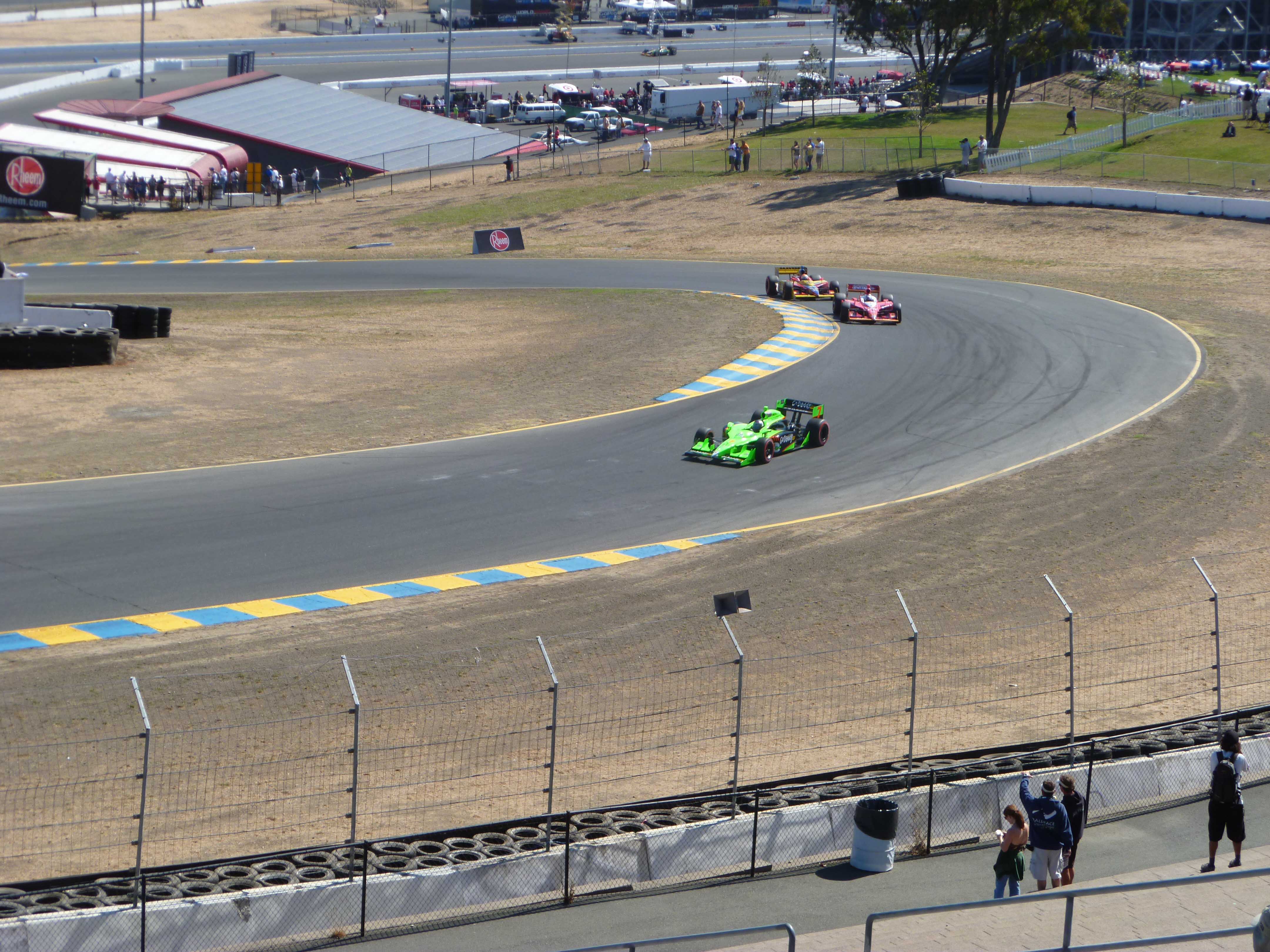
Indy Cars demonstrate man competing WITH machine, not against the machine

approach that we took with Attenex Patterns using a visual analytics approach to electronic discovery in litigation.  With this kind of blended man-machine software, we were able to get from 10-100 times improvement in productivity in reviewing terabytes of electronic emails and documents.

The unfortunate impact of being on the second half of the chessboard is a reduction in jobs for those of low and medium skills at a time when as Clifton points out we need 1.8 billion NEW good jobs.

Where are these jobs to come from.  McAfee and Brynjolfsson offer some hope in how we can use Schumpeter‘s notion of creative destruction once again.  With the explosion of apps in Apple’s, Google’s and Amazon’s App Stores, Threadless allowing the custom design of TShirts, Kickstarter funding new development, and Heartland Robotics providing cheap robots for manufacturing we are seeing many new businesses and lots of new jobs created out of the opportunity that the creative destruction brings:

“Collectively, these new businesses directly create millions of new jobs. Some of them also create platforms for thousands of other entrepreneurs. None of them may ever create billion-dollar businesses themselves, but collectively they can do more to create jobs and wealth than even the most successful single venture.”

The nice result of this kind of thinking is that progress in creating jobs is relatively rapid as opposed to relying on the long term effects of education and retraining.  The authors go on to describe the problems of the educational system:

“Unfortunately, our educational progress has stalled and, as discussed in Chapter 3, this is reflected in stagnating wages and fewer jobs. The median worker is not keeping up with cutting-edge technologies. Although the United States once led the world in the education of its citizens, it has fallen from first to tenth in the share of citizens who are college graduates. The high costs and low performance of the American educational system are classic symptoms of low productivity in this sector. Despite the importance of productivity to overall living standards, and the disproportionate importance of education to productivity, there is far too little systematic work done to measure, let alone improve, the productivity of education itself.

“It’s not a coincidence that the educational sector also lags as an adopter of information technologies. Basic instructional methods, involving a teacher lecturing to rows of passive students, have changed little in centuries. As the old joke goes, it’s a system for transmitting information from the notes of the lecturer to the notes of the student without going through the brain of either.”
Yet there are bright spots like the Khan Academy and novel uses of their approach:

“An increasingly common approach uses the Khan Academy’s tools to flip the traditional classroom model on its head, letting students watch the video lectures at home at their own pace and then having them do the “home work” exercises in class while a teacher circulates among them, helping each student individually with specific difficulties rather than providing a one-size-fits-all lecture to all the students simultaneously. . . “

“In particular, softer skills like leadership, team building, and creativity will be increasingly important. They are the areas least likely to be automated and most in demand in a dynamic, entrepreneurial economy. Conversely, college graduates who seek the traditional type of job, where someone else tells them what to do each day, will find themselves increasingly in competition with machines, which excel at following detailed instructions.”

So where do the insights of this collection of authors leave us?  I think the important lesson for me is that the focus for innovation in the next twenty years should go beyond just commercializing technology to understanding how to generate “good jobs” in addition to creating the new technologies.  Let the “good job innovators” begin now.

Posted in Content with Context, ebook, Human Centered Design, Intellectual Capital, Knowledge Management, Learning, Quotes, Transactive Content, User Experience, Value Capture | 2 Comments

Exercising Again with Technology

In August I made the mistake of trying to run in some of the new “Born to RunNB Minimus shoes from New Balance.  I thought I had made all of the appropriate stride and upright stance running changes.  At the end of the 1 mile trial run, I could barely walk and something was really wrong with my right Achilles tendon.  Several months of rest didn’t help and I was no longer able to exercise which led to me putting significant weight back on.  I was once again in the vicious cycle of weight gain and lack of exercise.

Finally, I asked my chiropractor to check my Achilles tendon out.  He quickly felt the problem and suggested that I probably had at least a partial tear.  I asked him if he had any magic herbs that could help out and he suggested Bromelain (an extract from the stems of pineapples) as it is supposed to relieve tendinitis.  After even a few days of taking it, I was walking without a limp and without pain.

In hopes that with the reduced pain, I might be able to start exercising, I looked for an iPhone app that might help me track my exercising.  After reading several reviews, it looked like iMapMy for iPhone would work best for me.  I was already using the web based app and hoped that this app would work in mobile form.

With a simple push of the button to start the recording I set off on my 3 mile course.  I had no idea whether the GPS would work because one mile of my course is in the woods.  However, everything worked well and the app kept track of my distance and the time I took to walk the trail.

The most pleasant surprise was seeing not only the route but also the elevation profile.  At the end, I just hit the Stop button and then the Save button and my map and exercise workout were automatically saved to the website.

Now I have yet one more reason to take the iPhone with me while I am exercising as I can not only log the exercise but also listen to my music.  Now if I could only take photos and have them appear on my route map – oh wait a minute, there is an app for that – the paid version of iMapMyRun+.  Stay tuned for the next exercise activity – maybe I can grab a picture of the bald eagle I usually encounter or one of the many Bainbridge Island deer.

Posted in Exercise, iPhone, Travel | 2 Comments

Ferry Capacity – Obesity Strikes

You have to love some of the things that the government spends time and money on.  This week we learned that the Washington State Ferries passenger carrying capacity has to be lowered considerably due to the average weight gain of American adults.  Somehow this was important enough or we had a slow news week to make National Headlines.  From the Washington Post:

SEATTLE — The Washington state ferry service isn’t going to start turning away hefty passengers, but it has had to reduce the capacity of the nation’s largest ferry system because people have been packing on the pounds.

“Coast Guard vessel stability rules that took effect nationwide Dec. 1 raised the estimated weight of the average adult passenger to 185 pounds from the previous 160 pounds, based on population information from the Centers for Disease Control and Prevention

“During the past 20 years, there has been a dramatic increase in obesity in the United States and about one-third of American adults are now considered obese, the CDC says on its website.

“The state ferry system has complied with the new stability rules by simply reducing the listed capacity of its vessels, Coast Guard Lt. Eric Young said Wednesday.

“That has effectively reduced the amount of passengers by about 250 passengers or so depending on the particular ferry,” said Young, who is based in Seattle. “They generally carry about 2,000, so it’s down to 1,750 now.”

“With that many passengers, the ferry wouldn’t tip over even if everyone ran to the side at the same time to look at a pod of killer whales, he said.

“The state operates 23 white and green vessels on 10 routes across Puget Sound and through the San Juan Islands to British Columbia. Carrying more than 22 million passengers a year, it’s the biggest ferry system in the United States and one of the four largest in the world, said system spokeswoman Marta Coursey.

“The ferries themselves could be contributing to passenger girth. The galleys cater to customers looking for fast food they can eat while looking out the windows at the scenery and seagulls. Calorie counters typically aren’t buying the hamburgers, hot dogs and chicken strips.

“We do serve light beer,” said Peggy Wilkes who has worked 20 years for the food concessionaire, Olympic Cascade Services, which serves food and drinks on 12 of the state ferries.

“News reports of overloaded ferries sinking in other parts of the world are sometimes a topic of discussion, she said.

“I think it’s cool the Coast Guard is keeping up on that,” she said. “Not that we overload them. A couple of times, like for a Seahawks game, we’ve had to cut off passengers and had to leave them at the dock.”

“Carol Johnston, who has been riding the state ferries since 1972, said she found the rule change perplexing.

“The ferries are not listing, they are not sinking,” said Johnston, who was onboard a Seattle-bound ferry from Bainbridge Island Wednesday afternoon. “How are you going to establish how much weight there is on the ferry?”

“Johnston worried about the potential loss in revenue, which could cause ferry fares to increase further. And she joked she may alter her eating habits.

“That means I will not have popcorn with my wine,” Johnston said.

“The reduced passenger capacity is unlikely to have much practical effect on the spacious ferries, said Coursey, the system spokeswoman. The ferries often fill up with vehicles, but the number of passengers, especially walk-ons, is seldom a problem, she said.

“The new stability rules may have a bigger impact on the smaller charter fishing boats, such as those that take anglers fishing out of the Pacific Ocean ports of Westport and Ilwaco, Young said. Any vessel that carries more than six paying customers has to be inspected and certified by the Coast Guard as a passenger vessel.”

Today’s editorial in The Seattle Times captures the issue with wonderful tongue in cheek humor:

“The rest of the planet is having weigh too much — oops — way too much fun with news Washington State Ferries revised some vessel passenger numbers.

“A widely circulated Associated Press story described how U.S. Coast Guard vessel stability rules were rewritten to account for the estimated weight gain of adult passengers, from an average of 160 pounds to 185 pounds.

“Blame the Centers for Disease Control for noticing the extra pounds, and the resulting Assumed Average Weight Per Person. Oh, and the regulatory arithmetic applies nationwide, across passenger-vessel categories.

“Certainly the torrid interest in a local transportation update by readers in New York, Washington, D.C., San Francisco, television news and the Internet is obvious. Rank jealousy.

“Combine the scenic beauty of Puget Sound with the presence of iconic employers including Microsoft, Boeing, Amazon and Starbucks, world class higher learning, and a well-educated, globally connected and humble populace, and it drives others mad.

“They look for any reason to snicker and giggle. So sad.

“Outlanders do not appreciate the glory and tradition behind the nation’s largest ferry system. For example, they are sized like lattes — super, jumbo and ginormous.

“People cannot understand the high caloric pride in these vessels, from the historic Kremekalakala to the Black Forest Chetzemoka, The Walla Walla Super Sweet, the Chocolate Cathlamet and the Cherries Kittitas. Each is a treat to ride. Especially the seasonal Egg Nog Tillikum.

“Let the rest of the country chortle into their oh-so slimming cheese steaks, three-way spaghetti, Reubens, deep-dish pizzas, Key lime pies and biscuits and gravy.

“We see the crowd shots at televised sporting events. Come and visit and enjoy healthy grilled salmon. But please don’t try to board the ferries, at least not all at once.”

Posted in Content with Context, Human Centered Design, Humor, Nature, Travel | 2 Comments

Keeping up with the Infosphere

Along with the periodic reflection on nodes in my social networks, I like to reflect on what catches my interest in the infosphere and why.  In the past about once a month I would document a “day in the life” of Skip by looking at the meetings, types of email, types of projects, and types of information interactions I encountered in the course of a day.

Feeding my inner infovore

With the current focus on writing daily blog entries and discovering a rich vein of Twitter knowledge connectors thanks to Cathy Davidson, my early morning infovore activities are changing dramatically.  For the past 40 years, every day would start with a cup of coffee and the daily newspaper.  I’d take a quick glance at the front page and then dive into the Sports and Business sections.  My email inbox would have to wait until I got through a look into the wider world.

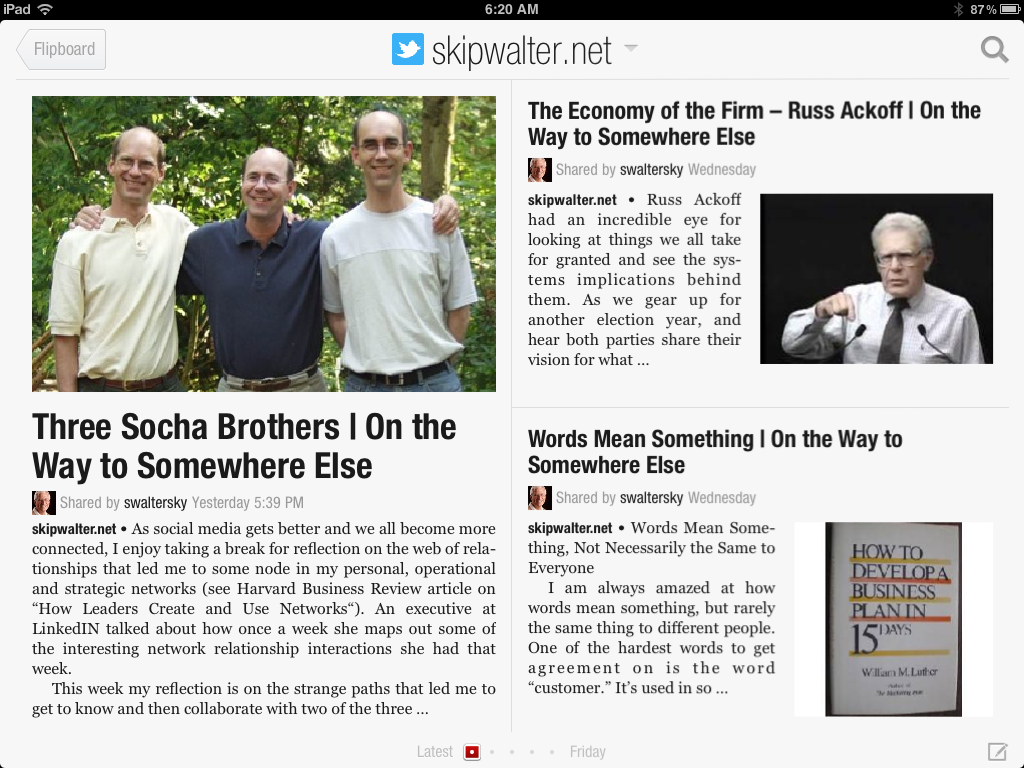
However, with the acquisition of the iPad (and this year the iPad 2), my morning routine has shifted.  Without getting out of bed and without bothering my wife by turning on a bedside lamp, I reach over to the bedside table and grab my iPad.  First I check my email and then I go to the USA Today app to see what is happening in the wider world.  Then I go to Twitter to see what interesting knowledge was pointed to last night and then I head to FlipBoard to do a quick cycle through Facebook, and the other curated feeds (The New Yorker, Harvard Business Review, inarratives, Fast Company, Future Lab, Mindshift, Datavis, and Gamification).

This firehose of information shows up in professionally formatted color glossy mode on my iPad.  It’s just there – 24/7.  I’ve gone from couch potato to bed head.  There is so much here that I have to limit my semi-random information foraging to an hour (or stated another way until my craving for a cup of Nespresso coffee cuts in).

While I am sure there is a better way to capture those things that interest me or that I want to mark for future reference, I just email the link to myself.  Then after my coffee I semi-curate the references into my days To Do List.

The references to follow from this morning’s information foraging are:

With so much luck finding great articles for my many areas of interest, I decide to try once again to see if I can get my blog to connect with Flipboard so that I can view the blog in the wonderful formatting of Flipboard.  Somehow today I achieve success.

My start of day routine information seeking took 1 hour of real time.  This reflections blog post and the associated actions took four hours to accomplish.  Once again Gregory Bateson‘s observations in Steps to an Ecology of Mind triumph:

“Of course, the whole of the mind could not be reported in a part of the mind.  This follows logically from the relationship between part and whole.  The television screen does not give you total coverage or report of the events which occur in the whole televisions process; and this not merely because the viewers would not be interested in such a report, but because to report on any extra part of the total process would require extra circuitry.  But to report on the events in this extra circuitry would require a still further addition of more circuitry, and so on.  Each additional step toward increased consciousness will take the system farther from total consciousness.  To add a report on events in a given part of the machine will actually decrease the percentage of total events reported.”  P.432

Yet, what I went through in an hour this morning while in bed with my iPad 2 and the associated apps would have taken well over eight hours even four years ago.  Even then, I would have to be sitting at my desktop to try and locate all of this information.  However, it still isn’t easy enough to capture the context of each of the things I found interesting and then make those “connections” actionable – both in the immediate sense and in the longer term pattern making sense.  There is an app here somewhere.

Posted in Content with Context, ebook, iPad, Knowledge Management, organizing, Quotes, Transactive Content | Leave a comment